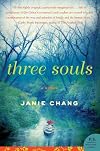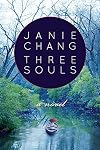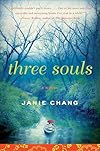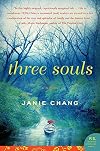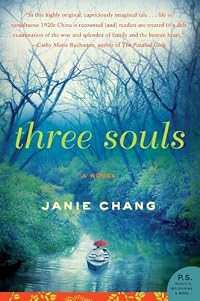
Three Souls
by Janie Chang
On This Page
Description
An absorbing novel of romance and revolution, loyalty and family, sacrifice and undying love We have three souls, or so I'd been told. But only in death could I confirm So begins the haunting and captivating tale, set in 1935 China, of the ghost of a young woman named Leiyin, who watches her own funeral from above and wonders why she is being denied entry to the afterlife. Beside her are three souls-stern and scholarly yang; impulsive, romantic yin; and wise, shining hun-who will guide her show more toward understanding. She must, they tell her, make amends. As Leiyin delves back in time with the three souls to review her life, she sees the spoiled and privileged teenager she once was, a girl who is concerned with her own desires while China is fractured by civil war and social upheaval. At a party, she meets Hanchin, a captivating left-wing poet and translator, and instantly falls in love with him. When Leiyin defies her father to pursue Hanchin, she learns the harsh truth-that she is powerless over her fate. Her punishment for disobedience leads to exile, an unwanted marriage, a pregnancy, and, ultimately, her death. And when she discovers what she must do to be released from limbo into the afterlife, Leiyin realizes that the time for making amends is shorter than she thought. Suffused with history and literature, Three Souls is an epic tale of revenge and betrayal, forbidden love, and the price we are willing to pay for freedom. show lessTags
Recommendations






Member Recommendations
Member Reviews
I was captivated from the very first sentence of Three Souls. I read it in almost one sitting - it was quite hard to put down. It opens with the protagonist Leiyin, watching her funeral. She knows she is dead but wonders why she hasn't gone on to her afterlife. She sees her three souls dancing around almost leading her somewhere, but where? She soon finds out that she has done some serious wrong and she needs make amends before she can get to that afterlife but she doesn't understand. Understanding she learns will come with reflection upon her life. So we are taken on the journey with her a Leiyin narrates her past - explaining her actions, often rationalizing them. Clarity comes in hindsight.
Leiyin was a teenager, a teenager with show more intelligence in a time that did not value women with brains. Nor did it value women that pushed back against tradition. Despite her thinking she had some level of control in her life she soon learned that she did not. But she also refused to accept that perhaps her father might have her best interests at heart.
She was a child of privilege in a time of upheaval. Like most teenagers she had no idea of the politics or coming changes. As she looks back on her life and discusses it with her souls - I know that sounds odd but it works - a bigger picture emerges and Leiyin has the advantage of that hindsight I mentioned above.
I loved the way the character developed even it there were time I really did not like Leiyin. She was a very spoiled little girl. Ms. Chang was able to weave the history and politics into the story without it seeming like a lesson. This is a book I'll keep for a second read as I'm sure I'll find things that I missed the first time through. show less
Leiyin was a teenager, a teenager with show more intelligence in a time that did not value women with brains. Nor did it value women that pushed back against tradition. Despite her thinking she had some level of control in her life she soon learned that she did not. But she also refused to accept that perhaps her father might have her best interests at heart.
She was a child of privilege in a time of upheaval. Like most teenagers she had no idea of the politics or coming changes. As she looks back on her life and discusses it with her souls - I know that sounds odd but it works - a bigger picture emerges and Leiyin has the advantage of that hindsight I mentioned above.
I loved the way the character developed even it there were time I really did not like Leiyin. She was a very spoiled little girl. Ms. Chang was able to weave the history and politics into the story without it seeming like a lesson. This is a book I'll keep for a second read as I'm sure I'll find things that I missed the first time through. show less
“An absorbing novel” is right: it proved incredibly difficult to put this down, even at two in the morning. Even when the story lost drive in the second half, it was still just as absorbing and addicting.
Content warnings:
- pedophilia
- substance addiction
- fatphobia
Representation:
- all characters are Chinese
- one secondary character is a gay/bi man
It’s 1935 China and Leiyin has just died, but she and her three souls (yang, yin, and hun) can’t pass into the afterlife. They all must watch her memories to understand what she had done in life to learn what she can do now to make amends. Unfortunately, if she can’t fix the damage soon and ascend to the afterlife, she’ll lose her three souls and wander the world as a mad, hungry show more ghost.
This is a very easy-to-devour novel and one that kept me up into the well night/morning, despite it not being very action packed. I can’t quite explain it … it’s just very addicting! By far the first half (3/4ths?) is the better part of the story, when Leiyin and her souls relive her memories to find out what it was she’d done that was keeping her in limbo. There’s a clear goal, it’s immediate, and not only that, but we’re also experiencing young Leiyin’s problems and goals as well. Once we learn how Leiyin dies, this drive is lost, and the plot doesn't feel as immediate.
What I also love about this first half--and something I wish would have been explored deeper--is that it shows young Leiyin as a very Western-like protagonist in the way she acts and thinks, and this ultimately leads to her being barred from the afterlife. In a typical US YA novel, she’d be some standard heroine who’d do these same actions--such as disobeying her father multiple times to try to sneak off with her lover instead of being in an arranged marriage, even roping her sister in on an escape attempt--and everything would turn out okay, the father would ultimately understand it’s what she needed to do, hurray individualism, etc. But here, when Leiyin’s choices end up hurting those she loves, their pain is what gets the focus. It’s why she can’t move on.
But there were a couple things that made the reading experience less pleasurable for me. Most noticeably, translating most of the Chinese honorifics. It made dialogue sound horribly awkward and stilted: “Why don’t you come, Eldest Brother”; “Second Son, I approve”; “Consider yourself chaperoned, Third Sister”, etc. And yet a couple honorifics were kept untranslated, like Gong Gong (father-in-law). I promise, we can handle honorifics! Or, at least, we should be able to handle honorifics or names/titles/words in other languages without pitching a fit. There are even some books, like The Firekeeper’s Daughter by Angeline Boulley where no glossary, footnotes, or explanations are provided for readers unfamiliar with the Ojibwe language (the author didn’t want to pander to white readers). Anyway, most importantly, translating the honorifics compromised the sound of the dialogue in this book.
The last thing I have to say is that I wonder why the author chose to make the epilogue an epilogue rather than part of the last chapter (or a separate chapter), because it doesn’t exactly feel like an epilogue, and the previous chapter ending is a terrible way to end the story as is.
But overall, this book is a great read, and I look forward to seeing what else Janie Chang writes/has written! show less
Content warnings:
- pedophilia
- substance addiction
- fatphobia
Representation:
- all characters are Chinese
- one secondary character is a gay/bi man
It’s 1935 China and Leiyin has just died, but she and her three souls (yang, yin, and hun) can’t pass into the afterlife. They all must watch her memories to understand what she had done in life to learn what she can do now to make amends. Unfortunately, if she can’t fix the damage soon and ascend to the afterlife, she’ll lose her three souls and wander the world as a mad, hungry show more ghost.
This is a very easy-to-devour novel and one that kept me up into the well night/morning, despite it not being very action packed. I can’t quite explain it … it’s just very addicting! By far the first half (3/4ths?) is the better part of the story, when Leiyin and her souls relive her memories to find out what it was she’d done that was keeping her in limbo. There’s a clear goal, it’s immediate, and not only that, but we’re also experiencing young Leiyin’s problems and goals as well. Once we learn how Leiyin dies, this drive is lost, and the plot doesn't feel as immediate.
What I also love about this first half--and something I wish would have been explored deeper--is that it shows young Leiyin as a very Western-like protagonist in the way she acts and thinks, and this ultimately leads to her being barred from the afterlife. In a typical US YA novel, she’d be some standard heroine who’d do these same actions--such as disobeying her father multiple times to try to sneak off with her lover instead of being in an arranged marriage, even roping her sister in on an escape attempt--and everything would turn out okay, the father would ultimately understand it’s what she needed to do, hurray individualism, etc. But here, when Leiyin’s choices end up hurting those she loves, their pain is what gets the focus. It’s why she can’t move on.
But there were a couple things that made the reading experience less pleasurable for me. Most noticeably, translating most of the Chinese honorifics. It made dialogue sound horribly awkward and stilted: “Why don’t you come, Eldest Brother”; “Second Son, I approve”; “Consider yourself chaperoned, Third Sister”, etc. And yet a couple honorifics were kept untranslated, like Gong Gong (father-in-law). I promise, we can handle honorifics! Or, at least, we should be able to handle honorifics or names/titles/words in other languages without pitching a fit. There are even some books, like The Firekeeper’s Daughter by Angeline Boulley where no glossary, footnotes, or explanations are provided for readers unfamiliar with the Ojibwe language (the author didn’t want to pander to white readers). Anyway, most importantly, translating the honorifics compromised the sound of the dialogue in this book.
The last thing I have to say is that I wonder why the author chose to make the epilogue an epilogue rather than part of the last chapter (or a separate chapter), because it doesn’t exactly feel like an epilogue, and the previous chapter ending is a terrible way to end the story as is.
But overall, this book is a great read, and I look forward to seeing what else Janie Chang writes/has written! show less
Three Souls tells the story a young woman named Leiyin. The story takes place in 1935 China, against the backdrop of some turmoil. Communism is becoming a popular political movement , set against the current Nationalist Party. Though this is primarily the story of Leiyin, the political backdrop does play a role.
Leiyin is born into well off family , with a fairly progressive father . He allows her to attend school, but keeps close tabs on her , as do her older brothers, the men at that time having absolute power over women. Leiyin also has two older sisters. As an older teenager , Leiyin meets a captivating communist poet named Hanchin. Leiyin is bright student and wins a scholarship to University. However, her father feels that she does show more not need further education and needs to be safely married off. He is also orders Leiyin to to stay away from communist sympathizers. When Leiyin rebels against her father, her comfortable life changes drastically. We met Lieyen as ghost journeying to the afterlife with three souls guiding her, yin, yang and hun. This does does not detract from the story at all, but rather allows us to review Leiyin's rather difficult life from her teen years until her marriage and the birth of her first child and beyond. A fascinating look at a young woman in China and the many challenges there.
Both heartbreaking and hopeful , a wonderful read. Highly recommended.
4 stars. show less
Leiyin is born into well off family , with a fairly progressive father . He allows her to attend school, but keeps close tabs on her , as do her older brothers, the men at that time having absolute power over women. Leiyin also has two older sisters. As an older teenager , Leiyin meets a captivating communist poet named Hanchin. Leiyin is bright student and wins a scholarship to University. However, her father feels that she does show more not need further education and needs to be safely married off. He is also orders Leiyin to to stay away from communist sympathizers. When Leiyin rebels against her father, her comfortable life changes drastically. We met Lieyen as ghost journeying to the afterlife with three souls guiding her, yin, yang and hun. This does does not detract from the story at all, but rather allows us to review Leiyin's rather difficult life from her teen years until her marriage and the birth of her first child and beyond. A fascinating look at a young woman in China and the many challenges there.
Both heartbreaking and hopeful , a wonderful read. Highly recommended.
4 stars. show less
After dying, what if you had to somehow right any wrongs you had committed before your soul(s) could have eternal peace? This is the question Leiyin faces in Three Souls. The opening of the novel finds our protagonist realizing she has died at a young age. She meets her three souls and learns that she must somehow atone for her wrongs in life before she can rest.
Three Souls is an engaging book set in the 1930s in China. Chang manages to weave together a beautiful story of a young woman caught in a time of great turmoil and change in her country along with the history of the time and beautiful Chinese beliefs such as a person having multiple souls.
Leiyin is a woman born in the wrong time. Unable to "accept" the traditional Chinese values show more of her family, she finds herself adrift in life as well as death. With the guidance of her three souls, and the ability to go back and "see" her life from a later perspective as well as "eavesdrop" on life after her death, she learns more in a short period of time after her death than she ever did in life.
Leiyin is a very sympathetic and believable character. Many such women must have struggled in China during that period with the same issues facing Leiyin. Perhaps Changs own Chinese heritage allowed her to write such complex and beautiful characters.
I am anxious to read further works by this very talented author. Three Souls is a wonderful novel and would certainly lend itself to great book club discussions. show less
Three Souls is an engaging book set in the 1930s in China. Chang manages to weave together a beautiful story of a young woman caught in a time of great turmoil and change in her country along with the history of the time and beautiful Chinese beliefs such as a person having multiple souls.
Leiyin is a woman born in the wrong time. Unable to "accept" the traditional Chinese values show more of her family, she finds herself adrift in life as well as death. With the guidance of her three souls, and the ability to go back and "see" her life from a later perspective as well as "eavesdrop" on life after her death, she learns more in a short period of time after her death than she ever did in life.
Leiyin is a very sympathetic and believable character. Many such women must have struggled in China during that period with the same issues facing Leiyin. Perhaps Changs own Chinese heritage allowed her to write such complex and beautiful characters.
I am anxious to read further works by this very talented author. Three Souls is a wonderful novel and would certainly lend itself to great book club discussions. show less
 This review was written for LibraryThing Early Reviewers.
A young Chinese woman watches a funeral procession, and realizes that it is her own. As her tiny daughter mourns the loss of her mother, the woman wonders why she’s still trapped on Earth instead of moving on into the afterlife. The three parts of her soul – the yang, the yin, and the hun - explain, she must relive her life and uncover the wrongs for which she must make amends before she can move on. Song Leiyin, as the woman now remembers she was once called, was an idealistic teenager who defied her father and betrayed her husband, but she has one last chance to make things right. Should Leiyin fail, she will become a hungry ghost, and she’ll be forced to wander the earth forever.
Leiyin was born in the early twentieth century, show more and the first half of the novel, focused on her life, takes place during the late 1920s. It’s one of China’s politically turbulent periods – the monarchy has been abolished and a new republic established, but increasingly left-wing revolutionaries and the invasion of the Japanese in 1932 make her life increasingly difficult. As the educated daughter of a wealthy family, Leiyin has a strong independent streak, but her father’s traditional ways restrict her life. At times, she comes across as extremely spoiled, but I also found her situation very sympathetic because many of the things she wants – a college education, a chance to teach- are things that most American women take for granted today.
The great love of Leiyin’s life is a revolutionary poet and translator named Hanchin. Leiyin’s passion blinds her to Hanchin’s faults and the dangers that his political views bring to his associates. She practically throws herself at him. He is the architect of her downfall and brings about many of her sorrows, but she still clings to him. It would be so easy for her story to become a cautionary melodrama, but somehow Leiyin, in spite of her selfishness and obliviousness, remains compelling and likeable. Maybe this is because we, the readers, know that she’s already dead and that she’s paying for her sins, even as she revisits them with the three parts of her soul.
I don’t know much about traditional Chinese cosmology and religious traditions, so I found the concept of a multi-part soul fascinating. Each aspect of it takes on a different personality; her yang looks and acts like a stern, traditional Chinese scholar while hun is an amorphous, shining light of wisdom. Once Leiyin has finished reviewing her life, she must intervene in the world of the living – but as a ghost, she can neither speak nor move physical objects. She eventually realizes that the only way she can communicate to the living is through their dreams, but they must first dream of her and there’s no guarantee they’ll remember her message in the morning. The challenges of navigating the in-between world and the ever-looming threat of Leiyin’s transformation into a hungry ghost make the story gripping and haunting.
This is not only a great ghost story, but an interesting exploration of life in pre-Communist China for a young woman raised to enjoy the thoughts and independence of “Western” life but still yoked by the traditional role and expectations for Chinese women. It’s also a tale of love and passion and family, all with a supernatural twist that makes it all feel fresh and exciting. show less
Leiyin was born in the early twentieth century, show more and the first half of the novel, focused on her life, takes place during the late 1920s. It’s one of China’s politically turbulent periods – the monarchy has been abolished and a new republic established, but increasingly left-wing revolutionaries and the invasion of the Japanese in 1932 make her life increasingly difficult. As the educated daughter of a wealthy family, Leiyin has a strong independent streak, but her father’s traditional ways restrict her life. At times, she comes across as extremely spoiled, but I also found her situation very sympathetic because many of the things she wants – a college education, a chance to teach- are things that most American women take for granted today.
The great love of Leiyin’s life is a revolutionary poet and translator named Hanchin. Leiyin’s passion blinds her to Hanchin’s faults and the dangers that his political views bring to his associates. She practically throws herself at him. He is the architect of her downfall and brings about many of her sorrows, but she still clings to him. It would be so easy for her story to become a cautionary melodrama, but somehow Leiyin, in spite of her selfishness and obliviousness, remains compelling and likeable. Maybe this is because we, the readers, know that she’s already dead and that she’s paying for her sins, even as she revisits them with the three parts of her soul.
I don’t know much about traditional Chinese cosmology and religious traditions, so I found the concept of a multi-part soul fascinating. Each aspect of it takes on a different personality; her yang looks and acts like a stern, traditional Chinese scholar while hun is an amorphous, shining light of wisdom. Once Leiyin has finished reviewing her life, she must intervene in the world of the living – but as a ghost, she can neither speak nor move physical objects. She eventually realizes that the only way she can communicate to the living is through their dreams, but they must first dream of her and there’s no guarantee they’ll remember her message in the morning. The challenges of navigating the in-between world and the ever-looming threat of Leiyin’s transformation into a hungry ghost make the story gripping and haunting.
This is not only a great ghost story, but an interesting exploration of life in pre-Communist China for a young woman raised to enjoy the thoughts and independence of “Western” life but still yoked by the traditional role and expectations for Chinese women. It’s also a tale of love and passion and family, all with a supernatural twist that makes it all feel fresh and exciting. show less
This review was written for LibraryThing Early Reviewers.When the story starts Leiyin is already dead and she must make atonement for her sins to enter the afterlife. Through clever narration we relive her life through her memories. We are taken back to her childhood where we learn what it was like to be a Chinese daughter of a Nationalist. Leiyin falls in love with Hanin who is a Communist friend of her brother. We are shown the political and social changes that are occurring. The political upheaval of the period is clear and easy to understand and not overwhelming. We find that Leiyin’s brother betrays her trust.
This novel is rich with elements of Chinese culture. We learn their thoughts on spiritual beliefs and the afterlife.We are shown the conflict of traditional vs modern practices. show more Leiyin as a daughter is very powerless and a victim of circumstances. She had hopes of teaching, but her father forces her to decline her university scholarship. This would make a great movie. It is sort of like a Chinese soap opera. I give this book 4 out of 5 stars. show less
This novel is rich with elements of Chinese culture. We learn their thoughts on spiritual beliefs and the afterlife.We are shown the conflict of traditional vs modern practices. show more Leiyin as a daughter is very powerless and a victim of circumstances. She had hopes of teaching, but her father forces her to decline her university scholarship. This would make a great movie. It is sort of like a Chinese soap opera. I give this book 4 out of 5 stars. show less
Not only is this book set in China, it's set in the 1920's and 1930's, a time period during which I know next to nothing about China. As a result, I particularly enjoyed discovering the incredible events shaking Chinese society during this time period. The author did a spectacular job bringing the culture, the society, and the political atmosphere to life. The relationship of personal events to political ones gave the bigger issues a face and made them all the more affecting. The mythology the author created sounded vaguely familiar, but was almost completely new to me. From the reader's guide, it sounds as though this is indeed a new take on an old mythology and I loved the author's version.
The way the author chose to tell the story show more was also unique. The first half of the book is spent learning about Leiyin's life. Her ghostly commentary truly added to the story, making her younger and sometimes more foolish self sympathetic through her ghostly self's explanations. The souls' different perspectives on her actions encouraged the reader to think about all sides of every issue. One of the few things I didn't like about the book were a few decisions she made which even her ghost's explanation couldn't make me sympathize with. I especially disliked that these choices led to a sudden and rather pointless end to her life. The ending to the book was similarly abrupt. I did, however, love the parallels of her life to Anna Karenina and the author's references to that book. I always enjoy literary references to books I love! At the end, I appreciated that Leiyin was able to influence events, despite being a ghost. I dislike characters who lack agency, but that wasn't a concern here. Despite the abrupt endings, I found this a beautiful and thought-provoking read. Perfect for book clubs.
This review first published on Doing Dewey. show less
The way the author chose to tell the story show more was also unique. The first half of the book is spent learning about Leiyin's life. Her ghostly commentary truly added to the story, making her younger and sometimes more foolish self sympathetic through her ghostly self's explanations. The souls' different perspectives on her actions encouraged the reader to think about all sides of every issue. One of the few things I didn't like about the book were a few decisions she made which even her ghost's explanation couldn't make me sympathize with. I especially disliked that these choices led to a sudden and rather pointless end to her life. The ending to the book was similarly abrupt. I did, however, love the parallels of her life to Anna Karenina and the author's references to that book. I always enjoy literary references to books I love! At the end, I appreciated that Leiyin was able to influence events, despite being a ghost. I dislike characters who lack agency, but that wasn't a concern here. Despite the abrupt endings, I found this a beautiful and thought-provoking read. Perfect for book clubs.
This review first published on Doing Dewey. show less
Members
- Recently Added By
Published Reviews
ThingScore 75
Revolutionary and domestic politics collide in this tale of a woman’s ghost attempting to understand her life decisions and make amends for her transgressions.
Set against the Chinese civil war, Chang’s debut novel explores the frustrations of intelligent women valued only for beauty and obedience.
Set against the Chinese civil war, Chang’s debut novel explores the frustrations of intelligent women valued only for beauty and obedience.
added by Nickelini
Three Souls, the debut novel by Vancouver’s Janie Chang, will inevitably draw comparison to the work of Amy Tan and Lisa See. Each author explores the fates of fictional Chinese women against period backdrops, delving into the strictures of time and tradition, but cursory parallels distract from their respective merits as storytellers.
added by Nickelini
Lists

Top Five Books of 2014
1,064 works; 398 members
Author Information

6 Works 2,077 Members
Awards and Honors
Common Knowledge
- Important places
- China; Zhangzhou, China (Changchow)
- Important events
- Chinese Civil War
Classifications
Statistics
- Members
- 284
- Popularity
- 112,910
- Reviews
- 34
- Rating
- (4.11)
- Languages
- English, Italian
- Media
- Paper, Audiobook, Ebook
- ISBNs
- 8
- ASINs
- 2