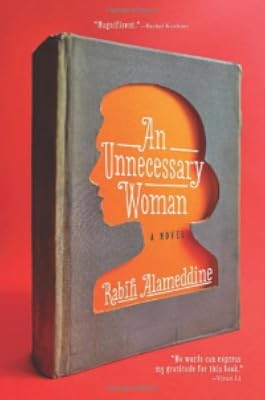
An Unnecessary Woman
by Rabih Alameddine
On This Page
Description
"Aaliya Sohbi lives alone in her Beirut apartment, surrounded by stockpiles of books. Godless, fatherless, childless, and divorced, Aaliya is her family's 'unnecessary appendage.' Every year, she translates a new favorite book into Arabic, then stows it away. The thirty-seven books that Aaliya has translated over her lifetime have never been read-- by anyone. After overhearing her neighbors, 'the three witches,' discussing her too-white hair, Aaliya accidentally dyes her hair too blue. In show more this breathtaking portrait of a reclusive woman's late-life crisis, readers follow Aaliya's digressive mind as it ricochets across visions of past and present Beirut. Colorful musings on literature, philosophy, and art are invaded by memories of the Lebanese Civil War and Aaliya's own volatile past. As she tries to overcome her aging body and spontaneous emotional upwellings, Aaliya is faced with an unthinkable disaster that threatens to shatter the little life she has left" -- show lessTags
Recommendations












Member Reviews
Quiet book about an introverted woman that translates books into Arabic as her life’s work. Almost as if talking to herself, the protagonist, Aaliya, examines her life and what she sees as its limited value. She is divorced, childless, and estranged from family. This book examines the rather esoteric question of what makes a person necessary or unnecessary? What makes life worthwhile?
It is filled with literary, art, and musical references, philosophical musings, and observations on the nature of aging. It vividly portrays with what life was like in Beirut, Lebanon, during multiple civil wars, conflicts with neighboring countries, and the resulting tensions in everyday life. It is an homage to the power of the written word to show more influence lives.
Aaliya is a complex character with a dry sense of humor and strong opinions. She has always been different and sees herself as an outsider. I was somewhat surprised to find this book was written by a man. He has captured the voice of this seventy-two-year-old woman brilliantly.
This book is most definitely not for everyone. It is introspective, very slow throughout, with not much in the way of plot or action. Parts are extremely depressing. The main character meanders off on tangents regularly. It contains no chapters for this weighty material and could have benefitted from inserting natural chapter breaks for the reader to pause and ponder.
I have made visible several of my highlighted passages from this book to give readers a better idea of the content. Recommended to those interested in Literature with a capital “L” or those that enjoy introspection about the meaning of life. I didn’t particularly enjoy the reading experience, but I appreciated this book for the language, depth of characterization, and uniqueness. show less
It is filled with literary, art, and musical references, philosophical musings, and observations on the nature of aging. It vividly portrays with what life was like in Beirut, Lebanon, during multiple civil wars, conflicts with neighboring countries, and the resulting tensions in everyday life. It is an homage to the power of the written word to show more influence lives.
Aaliya is a complex character with a dry sense of humor and strong opinions. She has always been different and sees herself as an outsider. I was somewhat surprised to find this book was written by a man. He has captured the voice of this seventy-two-year-old woman brilliantly.
This book is most definitely not for everyone. It is introspective, very slow throughout, with not much in the way of plot or action. Parts are extremely depressing. The main character meanders off on tangents regularly. It contains no chapters for this weighty material and could have benefitted from inserting natural chapter breaks for the reader to pause and ponder.
I have made visible several of my highlighted passages from this book to give readers a better idea of the content. Recommended to those interested in Literature with a capital “L” or those that enjoy introspection about the meaning of life. I didn’t particularly enjoy the reading experience, but I appreciated this book for the language, depth of characterization, and uniqueness. show less
“I long ago abandoned myself to a blind lust for the written word. Literature is my sandbox. In it I play, build my forts and castles, spend glorious time.”
“I slipped into art to escape life. I sneaked off into literature.”
“Someone shat in my home. I bought a Kalashnikov.”
“Joy is the anticipation of joy. Reading a fine book for the first time is as sumptuous as the first sip of orange juice that breaks the fast in Ramadan.”
“How does the old cliché go? When every Arab girl stood in line waiting for God to hand out the desperate-to-get-married gene, I must have been somewhere else, probably lost in a book.”
Aaliya Saleh is a widower, living alone in her Beirut apartment. She is mostly estranged from her family and show more finds solace in her endless stack of books. She also finds comfort and peace working in a bookstore and translating classic books, for her own pleasure. As she enters her seventies, she begins to muse about her life, her love of literature and the Lebanese Civil War that had rocked her beloved homeland.
This is a beautifully written novel. If the quotes I shared up there seem to be excessive- they are not. I could easily have added many more. I am a book geek after all. I am glad I finally got to this gem and if you have not, please correct that oversight. show less
“I slipped into art to escape life. I sneaked off into literature.”
“Someone shat in my home. I bought a Kalashnikov.”
“Joy is the anticipation of joy. Reading a fine book for the first time is as sumptuous as the first sip of orange juice that breaks the fast in Ramadan.”
“How does the old cliché go? When every Arab girl stood in line waiting for God to hand out the desperate-to-get-married gene, I must have been somewhere else, probably lost in a book.”
Aaliya Saleh is a widower, living alone in her Beirut apartment. She is mostly estranged from her family and show more finds solace in her endless stack of books. She also finds comfort and peace working in a bookstore and translating classic books, for her own pleasure. As she enters her seventies, she begins to muse about her life, her love of literature and the Lebanese Civil War that had rocked her beloved homeland.
This is a beautifully written novel. If the quotes I shared up there seem to be excessive- they are not. I could easily have added many more. I am a book geek after all. I am glad I finally got to this gem and if you have not, please correct that oversight. show less
Rating: 4.25* of five
The Publisher Says: One of Beirut’s most celebrated voices, Rabih Alameddine follows his international bestseller, The Hakawati, with a heartrending novel that celebrates the singular life of an obsessive introvert, revealing Beirut’s beauties and horrors along the way.
Aaliya Sohbi lives alone in her Beirut apartment, surrounded by stockpiles of books. Godless, fatherless, divorced, and childless, Aaliya is her family’s "unnecessary appendage.” Every year, she translates a new favorite book into Arabic, then stows it away. The thirty-seven books that Aaliya has translated have never been read—by anyone. After overhearing her neighbors, "the three witches,” discussing her too-white hair, Aaliya show more accidentally dyes her hair too blue.
In this breathtaking portrait of a reclusive woman’s late-life crisis, readers follow Aaliya’s digressive mind as it ricochets across visions of past and present Beirut. Insightful musings on literature, philosophy, and art are invaded by memories of the Lebanese Civil War and Aaliya’s volatile past. As she tries to overcome her aging body and spontaneous emotional upwellings, Aaliya is faced with an unthinkable disaster that threatens to shatter the little life she has left.
A love letter to literature and its power to define who we are, the gifted Rabih Alameddine has given us a nuanced rendering of a single woman's reclusive life in the Middle East.
My Review: The Doubleday UK meme, a book a day for July 2014, is the goad I'm using to get through my snit-based unwritten reviews. Today's prompt is to discuss your favorite novel in translation. So far this year, this is my hands-down favorite novel translated from the furrin. **CORRECTION** The novel was written in English, but it's so beautiful I don't want to take it down!
What does it mean to be invisible? If you choose not to interact with the world, become a recluse, divest yourself of close relationships and divorce yourself from the life of the boudoir, and seal yourself away in a capsule formed of books and words, you are a freak. Aaliya's neighbors think she's a ruined woman. Aaliya's customers at the bookstore she works at, intellectuals all, don't notice her enough to form an opinion, and her family (absent the dearest companion of her life, her *true* family, a departed friend) hasn't given her much attention at all.
She lives in Beirut, that once-fabulous once-gorgeous ruin on the Mediterranean, an early victim of the endless idiotic religious wars of the region. Aaliya represents Beirut's decline from a world-class cultural center to a shuttered mass of broken buildings holding wary, angry people.
Aaliya is an angry woman, or at least I see her as such, and has walled herself in to avoid the nasty consequences of being angry amid armed and angry men. She would not be isolated if Beirut wasn't what it is, I think, because she is a reflection of the energy of that wounded and dying place. She preserves her sanity by translating her beloved books, the beauties of which she renders into the sinuous sonorous rhythms of Arabic. And then, like she does with her self, she packages them up and puts them away. They are safe. They are invisible.
This is tragic. This is a sin. A woman, a mere woman, cannot be her full self; a book, a useless object, cannot spread its beauties for fear that it will not be appreciated or will be used as a weapon by the religious idiots.
And this is the reason I give this book over four stars. Alameddine has created a literary person's most deeply felt example of why the world appears to be headed directly for the bottom of the septic tank: Aaliya reads and thinks on and renders the majesty and magic of words into the language of her people, and then cannot, will not, dare not allow them out of her keeping.
This book should have made me feel claustrophobic. It appears to be a scream from within the coffin that anti-intellectual religious idiots are all but nailing shut around the world. (Creation SCIENCE?! REALLY?!) Instead I felt...uplifted in a curious way, heartened, encouraged. Alameddine sees it too! He created this most marginal of marginal beings, the unmarried childless woman intellectual in an Islamic society, and set her to singing. Aaliya sings her thoughts, sings her translations, warbles her precious quotes to herself, her best and only audience. She makes beauty from beauty as she sits and rots in the cesspool of gawd.
I don't know if this is a cautionary tale, an elegy, or the queitest jeremiad of all time. I do know that I can't, and don't wish to, forget Aaliya.
This work is licensed under a Creative Commons Attribution-NonCommercial-ShareAlike 3.0 Unported License. show less
The Publisher Says: One of Beirut’s most celebrated voices, Rabih Alameddine follows his international bestseller, The Hakawati, with a heartrending novel that celebrates the singular life of an obsessive introvert, revealing Beirut’s beauties and horrors along the way.
Aaliya Sohbi lives alone in her Beirut apartment, surrounded by stockpiles of books. Godless, fatherless, divorced, and childless, Aaliya is her family’s "unnecessary appendage.” Every year, she translates a new favorite book into Arabic, then stows it away. The thirty-seven books that Aaliya has translated have never been read—by anyone. After overhearing her neighbors, "the three witches,” discussing her too-white hair, Aaliya show more accidentally dyes her hair too blue.
In this breathtaking portrait of a reclusive woman’s late-life crisis, readers follow Aaliya’s digressive mind as it ricochets across visions of past and present Beirut. Insightful musings on literature, philosophy, and art are invaded by memories of the Lebanese Civil War and Aaliya’s volatile past. As she tries to overcome her aging body and spontaneous emotional upwellings, Aaliya is faced with an unthinkable disaster that threatens to shatter the little life she has left.
A love letter to literature and its power to define who we are, the gifted Rabih Alameddine has given us a nuanced rendering of a single woman's reclusive life in the Middle East.
My Review: The Doubleday UK meme, a book a day for July 2014, is the goad I'm using to get through my snit-based unwritten reviews. Today's prompt is to discuss your favorite novel in translation. So far this year, this is my hands-down favorite novel translated from the furrin. **CORRECTION** The novel was written in English, but it's so beautiful I don't want to take it down!
What does it mean to be invisible? If you choose not to interact with the world, become a recluse, divest yourself of close relationships and divorce yourself from the life of the boudoir, and seal yourself away in a capsule formed of books and words, you are a freak. Aaliya's neighbors think she's a ruined woman. Aaliya's customers at the bookstore she works at, intellectuals all, don't notice her enough to form an opinion, and her family (absent the dearest companion of her life, her *true* family, a departed friend) hasn't given her much attention at all.
She lives in Beirut, that once-fabulous once-gorgeous ruin on the Mediterranean, an early victim of the endless idiotic religious wars of the region. Aaliya represents Beirut's decline from a world-class cultural center to a shuttered mass of broken buildings holding wary, angry people.
Aaliya is an angry woman, or at least I see her as such, and has walled herself in to avoid the nasty consequences of being angry amid armed and angry men. She would not be isolated if Beirut wasn't what it is, I think, because she is a reflection of the energy of that wounded and dying place. She preserves her sanity by translating her beloved books, the beauties of which she renders into the sinuous sonorous rhythms of Arabic. And then, like she does with her self, she packages them up and puts them away. They are safe. They are invisible.
This is tragic. This is a sin. A woman, a mere woman, cannot be her full self; a book, a useless object, cannot spread its beauties for fear that it will not be appreciated or will be used as a weapon by the religious idiots.
And this is the reason I give this book over four stars. Alameddine has created a literary person's most deeply felt example of why the world appears to be headed directly for the bottom of the septic tank: Aaliya reads and thinks on and renders the majesty and magic of words into the language of her people, and then cannot, will not, dare not allow them out of her keeping.
This book should have made me feel claustrophobic. It appears to be a scream from within the coffin that anti-intellectual religious idiots are all but nailing shut around the world. (Creation SCIENCE?! REALLY?!) Instead I felt...uplifted in a curious way, heartened, encouraged. Alameddine sees it too! He created this most marginal of marginal beings, the unmarried childless woman intellectual in an Islamic society, and set her to singing. Aaliya sings her thoughts, sings her translations, warbles her precious quotes to herself, her best and only audience. She makes beauty from beauty as she sits and rots in the cesspool of gawd.
I don't know if this is a cautionary tale, an elegy, or the queitest jeremiad of all time. I do know that I can't, and don't wish to, forget Aaliya.
This work is licensed under a Creative Commons Attribution-NonCommercial-ShareAlike 3.0 Unported License. show less
Aaliya is a 72-year-old woman living alone in a Beirut apartment surrounded by books and memories. Estranged from her family, divorced from her impotent husband, and retired from her bookstore, Aaliya is friends with solitude. Every New Year's Day she begins translating a new book, and every year end, she boxes up the translation and stores it in her back room. But Aaliya isn't lonely. She has deep and rich relationships with literature and music that have been her companions throughout her life. Drily humorous and ironic, Aaliya is so well-drawn and lifelike, I feel like I could walk into a Lebanese bookstore and find her reading behind the desk.
An Unnecessary Woman is a book for readers. Almost every page has a reference to an author, show more book, or composer that sent me Googling down rabbit holes and adding dozens of books to my wish list. Yet, it's not at all pretentious. Aaliya isn't name dropping, she's talking about friends. Whether discussing the art of translation or her process for choosing which book to read next, Aaliya is a kindred spirit for booklovers.
The book is also a depiction of life during the decades-long Lebanese Civil War and an exploration of aging and what it means to live a meaningful life. It's a book that I could reread with pleasure because there are so many layers and the ending is perfect. I'm looking forward to reading more by Alameddine, because if this book is any indication, he could become a favorite author. show less
An Unnecessary Woman is a book for readers. Almost every page has a reference to an author, show more book, or composer that sent me Googling down rabbit holes and adding dozens of books to my wish list. Yet, it's not at all pretentious. Aaliya isn't name dropping, she's talking about friends. Whether discussing the art of translation or her process for choosing which book to read next, Aaliya is a kindred spirit for booklovers.
The book is also a depiction of life during the decades-long Lebanese Civil War and an exploration of aging and what it means to live a meaningful life. It's a book that I could reread with pleasure because there are so many layers and the ending is perfect. I'm looking forward to reading more by Alameddine, because if this book is any indication, he could become a favorite author. show less
Just before I began this book I learned that Rabih is a man’s name, a Middle-Eastern man’s name. It means, alternatively, “spring,” or “winner.” I wondered what kind of Middle Eastern man felt he could write a book about the internal life of an aging widow. And now I know. It would be a man who reads.
This is a book about loneliness and connection. Aaliya, a name meaning “the exalted one,” is a translator. That is, she spends her time translating into Arabic books written in English or French. Some of the books she translates are translations of translations. Her entire life since her early divorce from an impotent husband has been consumed with this endeavor, one book a year, sharing the work of literature’s greats. show more She stacks her translations in cartons in the reading room of her apartment in Beirut. She is seventy-two years old.
Not long into listening to the voice from the head of this old woman I began to feel this was the indispensable book: a book I needed to read again and again, to study, to enjoy as refreshment, as instruction, as revelation, sentences changing shade and emphasis depending on the angle of the sun, on the time of year, on the colors in the room in which I sat. Too many sentences needed remarking upon, too many references needed thorough investigation to let it go with only one reading. This was the woman, who by dint of translating the “greats,” had honed her instinct for the critical moment, the real thing, the human condition.
This book about a desperate woman living alone, growing old and infirm in a city riven by dissention and war, is ultimately redemptive, optimistic. It feels like a blessing, a balm. It feels like the sun on a cool day, or a cool breeze when the temperature rockets. It is literature.
I want to read everything by Rabih Alameddine.
Rabih Alameddine is interviewed by Dwyer Murphy in Guernica. show less
This is a book about loneliness and connection. Aaliya, a name meaning “the exalted one,” is a translator. That is, she spends her time translating into Arabic books written in English or French. Some of the books she translates are translations of translations. Her entire life since her early divorce from an impotent husband has been consumed with this endeavor, one book a year, sharing the work of literature’s greats. show more She stacks her translations in cartons in the reading room of her apartment in Beirut. She is seventy-two years old.
Not long into listening to the voice from the head of this old woman I began to feel this was the indispensable book: a book I needed to read again and again, to study, to enjoy as refreshment, as instruction, as revelation, sentences changing shade and emphasis depending on the angle of the sun, on the time of year, on the colors in the room in which I sat. Too many sentences needed remarking upon, too many references needed thorough investigation to let it go with only one reading. This was the woman, who by dint of translating the “greats,” had honed her instinct for the critical moment, the real thing, the human condition.
This book about a desperate woman living alone, growing old and infirm in a city riven by dissention and war, is ultimately redemptive, optimistic. It feels like a blessing, a balm. It feels like the sun on a cool day, or a cool breeze when the temperature rockets. It is literature.
”There are two types of people in this world: people who want to be desired, and people who want to be desired so much that they pretend they don’t.”
I want to read everything by Rabih Alameddine.
Rabih Alameddine is interviewed by Dwyer Murphy in Guernica. show less
An Unnecessary Woman is the story of a 72 year old woman living a mostly self- contained life in a Beirut apartment building that has withstood the devastation of the Lebanese Civil war and many sectarian skirmishes. The divorced, retired bookstore owner has been a translator of literature for 50 years and survived the violence of life in her beloved city and has adjusted to the lack of inclusion in the life of her family. Aaliya (Arabic for "the high one, the above") has created a world view from living words in her apartment “reading room” immersing herself in the world’s great works of philosophy, history, poetry, and novels. She has furnished her room with the large old stained desk saved from the bookstore, and has filled the show more furniture surfaces with books. Aaliya also surrounds herself with recordings of the best performances of classical music, and she has taught herself how to appreciate them. She is accompanied by three women living in separate flats in the apartment building, one of whom owns the building. Aaliya leads a life of solitude in the tenuous comfort of her apartment and minimal social support of her three neighbors whom she observes but keeps at arms-length.
Aaliya’s reading and translating of books are her actions toward enjoying life. She does leave her apartment for solitary walks, errands, and rare family visits. But, Aaliya believes she is unnecessary to others and to herself and finds meaning in her memories, habits, and annual goals. She is disciplined in her work using English and French translations of books as her source of translations into Arabic. She fell in love with the classical language of Arabic while studying the Quran in religion classes as a young girl. Her love was for the structure of the writing rather than the content of what was considered the apex of Arabic writing. Aaliya takes a structured approach to her translations always proceeding in the same way, one book per year. Her results are a combination of the literal English and more emotional French translations that leads to her third-hand interpretation of the original work. She translates classical literature, historical non-fiction, and contemporary books into her own world perceptions. Drawn into a free-ranging life review by advancing age, Aaliya interprets her past and the history of her home in Beirut through the wisdom of writers who enhance her limited world experience. She teaches the reader a way of understanding life using quotations and unique interpretations, almost exclusively in English, drawn from books that she loves. She reminds us of Proust’s idea that when a writer publishes a book, the interpretation belongs to the reader and is correct regardless of the artistic/logical intent. The dilemma Aaliya must resolve is what will she do with her decades of translations when her age and fate require action.
This is a wonderful novel that reinforces the reader’s own choice of the most rewarding method of understanding life and times. Using personal values of the world’s greatest literature and their own “translations” of the work of favorite writers, readers can experience great comfort in the solitude (not loneliness) of imagination. I recommend that readers identify with Aaliya and allow Mr. Alameddine to show them how to create their own cartons of translations. show less
Aaliya’s reading and translating of books are her actions toward enjoying life. She does leave her apartment for solitary walks, errands, and rare family visits. But, Aaliya believes she is unnecessary to others and to herself and finds meaning in her memories, habits, and annual goals. She is disciplined in her work using English and French translations of books as her source of translations into Arabic. She fell in love with the classical language of Arabic while studying the Quran in religion classes as a young girl. Her love was for the structure of the writing rather than the content of what was considered the apex of Arabic writing. Aaliya takes a structured approach to her translations always proceeding in the same way, one book per year. Her results are a combination of the literal English and more emotional French translations that leads to her third-hand interpretation of the original work. She translates classical literature, historical non-fiction, and contemporary books into her own world perceptions. Drawn into a free-ranging life review by advancing age, Aaliya interprets her past and the history of her home in Beirut through the wisdom of writers who enhance her limited world experience. She teaches the reader a way of understanding life using quotations and unique interpretations, almost exclusively in English, drawn from books that she loves. She reminds us of Proust’s idea that when a writer publishes a book, the interpretation belongs to the reader and is correct regardless of the artistic/logical intent. The dilemma Aaliya must resolve is what will she do with her decades of translations when her age and fate require action.
This is a wonderful novel that reinforces the reader’s own choice of the most rewarding method of understanding life and times. Using personal values of the world’s greatest literature and their own “translations” of the work of favorite writers, readers can experience great comfort in the solitude (not loneliness) of imagination. I recommend that readers identify with Aaliya and allow Mr. Alameddine to show them how to create their own cartons of translations. show less
Quiet book about an introverted woman that translates books into Arabic as her life’s work. Almost as if talking to herself, the protagonist, Aaliya, examines her life and what she sees as its limited value. She is divorced, childless, and estranged from family. This book examines the rather esoteric question of what makes a person necessary or unnecessary? What makes life worthwhile?
It is filled with literary, art, and musical references, philosophical musings, and observations on the nature of aging. It vividly portrays with what life was like in Beirut, Lebanon, during multiple civil wars, conflicts with neighboring countries, and the resulting tensions in everyday life. It is an homage to the power of the written word to show more influence lives.
Aaliya is a complex character with a dry sense of humor and strong opinions. She has always been different and sees herself as an outsider. I was somewhat surprised to find this book was written by a man. He has captured the voice of this seventy-two-year-old woman brilliantly.
This book is most definitely not for everyone. It is introspective, very slow throughout, with not much in the way of plot or action. Parts are extremely depressing. The main character meanders off on tangents regularly. It contains no chapters for this weighty material and could have benefitted from inserting natural chapter breaks for the reader to pause and ponder.
I have made visible several of my highlighted passages from this book to give readers a better idea of the content. Recommended to those interested in Literature with a capital “L” or those that enjoy introspection about the meaning of life. I didn’t particularly enjoy the reading experience, but I appreciated this book for the language, depth of characterization, and uniqueness. show less
It is filled with literary, art, and musical references, philosophical musings, and observations on the nature of aging. It vividly portrays with what life was like in Beirut, Lebanon, during multiple civil wars, conflicts with neighboring countries, and the resulting tensions in everyday life. It is an homage to the power of the written word to show more influence lives.
Aaliya is a complex character with a dry sense of humor and strong opinions. She has always been different and sees herself as an outsider. I was somewhat surprised to find this book was written by a man. He has captured the voice of this seventy-two-year-old woman brilliantly.
This book is most definitely not for everyone. It is introspective, very slow throughout, with not much in the way of plot or action. Parts are extremely depressing. The main character meanders off on tangents regularly. It contains no chapters for this weighty material and could have benefitted from inserting natural chapter breaks for the reader to pause and ponder.
I have made visible several of my highlighted passages from this book to give readers a better idea of the content. Recommended to those interested in Literature with a capital “L” or those that enjoy introspection about the meaning of life. I didn’t particularly enjoy the reading experience, but I appreciated this book for the language, depth of characterization, and uniqueness. show less
Members
- Recently Added By
Lists

Best Contemporary Literary Fiction (Around the Last 30 Years)
388 works; 124 members

Recommend the 20 best books you've read in the last five years
2,168 works; 606 members

Top Five Books of 2013
1,562 works; 715 members

National Book Award Finalists 2014
20 works; 16 members

Best of World Literature
434 works; 52 members
Top Five Books of 2014
1,064 works; 398 members

Best 21st Century Books (So Far)
670 works; 86 members

Novels featuring language professionals
98 works; 12 members

Female Protagonist
1,056 works; 57 members

Top Five Books of 2021
604 works; 181 members

National Book Award Finalists - Fiction
377 works; 12 members
International IMPAC Dublin Literary Award
179 works; 6 members

Top Five Books of 2015
811 works; 240 members

Stories of War and Revolution
143 works; 54 members

Summer Reads 2014
207 works; 70 members

Dublin Literary Award Longlist 2016
148 works; 4 members

Middle East Fiction
179 works; 16 members

Books Read in 2014
2,343 works; 89 members

Five star books
1,767 works; 109 members

2017 Goal
18 works; 2 members

Books Read in 2015
3,299 works; 129 members

MBL's Top 5 of 2014
5 works; 1 member

Reading Globally
136 works; 16 members

Arab and Arab Diaspora Literature We Recommend
112 works; 53 members

LitHub's Best Novels of the Decade 2010-2019
39 works; 1 member

Books Read in 2018
4,360 works; 110 members

Kirkus Reviews Best Fiction of 2014
100 works; 7 members

Unmarried women
66 works; 6 members

Not the NYT list of top 100 21st century books
100 works; 6 members
Talk Discussions
Past Discussions
Focus on: An Unnecessary Woman by Rabih Alameddine in Book Focus (April 2022)
Author Information

14+ Works 3,705 Members
He is a writer & artist living in San Francisco. He is the author of the critically acclaimed Koolaids: The Art of War & The Perv. (Bowker Author Biography)
Some Editions
Awards and Honors
Awards
Distinctions
Notable Lists
Common Knowledge
- Canonical title*
- La mujer de papel
- Original title
- An unnecessary woman
- Original publication date
- 2013
- People/Characters
- Aaliya Saleh; Hannah
- Important places
- Beirut, Lebanon
- Important events
- Lebanese Civil War
- Epigraph
- From my village I see as much of the universe as you can see from earth. So my village is as big as any other land For I am the size of what I see. Not the size of my height. -- Fernando Pessoa as Alberto Caeiro, The Keeper o... (show all)f Sheep
Perhaps reading and writing books is one of the last defenses human dignity has left, because in the end they remind us of whawt God once reminded us before He too evaporated in this age of relentless humiliations - that we a... (show all)re more than ourselves; that we have souls. And more, moreover. Or perhaps not. -- Richard Flanagan, Gould's Book of Fish
The cure for loneliness is solitude. -- Marianne Moore, from the essay "If I Were Sixteen Today"
Don Quixote's misfortune is not his imagination, but Sancho Panza. -- Franz Kafka, Dearest Father: Stories and Other Writings - Dedication
- To Eric, with gratitude
- First words
- Podríamos decir que cuando me teñí el pelo de azul estaba pensando en otras cosas, y dos copas de vino tinto no mejoraban mi concentración.
You could say I was thinking of other things when I shampooed my hair blue, and two glasses of red wine didn't help my concentration. - Quotations
- When I read a book, I try my best, not always successfully, to let the wall crumble just a bit, the barricade that separates me from the book. I try to be involved. (p.100)
...Helen Garner says that all women over sixty instinctively learn to pass by a mirror without looking. Why risk it is what I say.(p.49)
I imagine looking at the room through a stranger's eyes...An unframed circular mirror... (show all)--when did I put that up and why had I kept it? --hangs by a nail on the door. I'd completely forgotten about it. Every surface in the room shines with dedicated cleanliness except for the mirror, of course. I've trained my eyes to avoid my reflection so admirably that I forgot it was there. (p.83)
...when I'm translating my head is like a skylight. Through no effort of my own, I'm visited by bliss...Sometimes I think that's enough, a few moments of ecstasy in a life of Beckett dullness...I am no longer my usual self, y... (show all)et I am wholeheartedly myself, body and spirit...i am healed of all wounds...I am where I need to be. My heart distends with delight. I feel sacred...Most often I think I'm delusional. Vanitas vanitatum, omnia vanitas. (p.109) - Last words
- (Click to show. Warning: May contain spoilers.)I take a long breath, the air of anticipation.
- Original language
- English
- Canonical DDC/MDS
- 813.54
- Canonical LCC
- PS3551.L215
*Some information comes from Common Knowledge in other languages. Click "Edit" for more information.
Classifications
Statistics
- Members
- 1,454
- Popularity
- 16,104
- Reviews
- 94
- Rating
- (4.04)
- Languages
- 13 — Catalan, Danish, Dutch, English, French, German, Italian, Norwegian (Bokmål), Portuguese, Romanian, Spanish, Swedish, Turkish
- Media
- Paper, Audiobook, Ebook
- ISBNs
- 38
- UPCs
- 1
- ASINs
- 9