On This Page
Description
Sophie is not happy to be back in the Congo for the summer, but when she rescues an abused baby bonobo she becomes more involved in her mother's sanctuary--and when fighting breaks out and the sanctuary is attacked, it is up to Sophie to rescue the apes and somehow survive in the jungle.Tags
Recommendations





Member Reviews
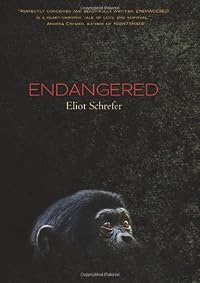
I’ve just closed the cover on a book called Endangered by Eliot Schrefer which totally enthralled me. This book is a YA adventure story set in the Democratic Republic of the Congo. Sophie is a half-American, half-Congolese 14 year old girl who lives in America during the school year and comes to the Congo during the summer months and helps her mother at the Bonobo Sanctuary. As she is both the daughter of the boss and half white, Sophie doesn’t easily fit in with the other workers at the Sanctuary, and she find herself bonding with an abused juvenile bonobo called Otto.
While her mother is away reintroducing some bonobo’s to the wild, civil war breaks out and Sophie finds herself trapped in a country filled with roving bands of show more killers, facing starvation and natural hazards. To keep herself and Otto, her bonobo, alive they must learn to live off the land, travel in secret, and at times coexist with other bonobos all the while trying to reunite with her mother.
This is a YA story for mature readers who don’t flinch from reading about horrific violence against animals and human beings. Sophie comes across as a very real girl, not always making the best of decisions, but she is courageous and has a huge heart. Otto is fun, smart and loving, he is as protective of Sophie as she is toward him. This is a great story set against a compelling background, with characters (both human and ape) that are very well drawn and realistic. Without becoming overly graphic, the author is well able to illustrate the peril that Sophie faces. Endangered was an excellent read with a riveting story-line that I didn’t want to see end. show less
While her mother is away reintroducing some bonobo’s to the wild, civil war breaks out and Sophie finds herself trapped in a country filled with roving bands of show more killers, facing starvation and natural hazards. To keep herself and Otto, her bonobo, alive they must learn to live off the land, travel in secret, and at times coexist with other bonobos all the while trying to reunite with her mother.
This is a YA story for mature readers who don’t flinch from reading about horrific violence against animals and human beings. Sophie comes across as a very real girl, not always making the best of decisions, but she is courageous and has a huge heart. Otto is fun, smart and loving, he is as protective of Sophie as she is toward him. This is a great story set against a compelling background, with characters (both human and ape) that are very well drawn and realistic. Without becoming overly graphic, the author is well able to illustrate the peril that Sophie faces. Endangered was an excellent read with a riveting story-line that I didn’t want to see end. show less
Schrefer, E. (2012). Endangered. New York: Scholastic Press. 264 pp. ISBN: 978-0-545-16576-1. (Hardcover); $17.99.
Bonobos! Who knew? Schrefer’s National Book Award nominated title features bonobos, a close relative to the chimpanzee and the Democratic Republic of Congo, a land torn by violence and corruption. While this book is fiction, it is based on the very real situation in the Congo and Schrefer’s research at the Lola Ya Bonobo sanctuary.
Sophie is Congolese and American. Her mother loves her family, but her family is not as important to her as her work with the bonobos, which has driven her father away. Consequently, Sophie does not feel that she belongs anywhere. While visiting her mother at the sanctuary, she blunders her show more way into taking charge of Otto, a baby bonobo. Bonobos, unlike other apes, unlike chimpanzees, have a peaceful, matriarchal society. Babies do not do very well when separated from mom. When Sophie’s mother is forced to leave early to release bonobos back into the wild, Sophie is supposed to return to her father. When it comes time to leave, however, Sophie cannot bring herself to abandon Otto, knowing what this will mean to Otto who has come to think of her as his new mother. Instead of boarding the plane, Sophie bolts with Otto through the electrified fence into the bonobo sanctuary, a place that no one enters alone. Eventually rebels enter the nursery and kill the staff and many of the babies and newly rescued, quarantined bonobos. They cannot get to Sophie, however, because of the fence. When the electrified fence loses its charge, Sophie must figure out a way to find safety for herself and Otto. She is forced to run. In a land that has people killing and eating bonobos and selling babies on the black market, to say nothing of killing each other, where does one run? Schrefer exposes the political and ecological drama in a country that not many American students know anything about. One of the important questions considered in this white-knuckle drama, is the basic question of why one should care about a bonobo in a country that has so much poverty and pain. Read this story about Sophie and Otto and ask yourself whether you would have been able to abandon Otto. Caring is important and sometimes our hearts refuse to engage in qualitative arguments over the relative value of the object of our love and concern. Readers should be warned that they will fall in love with bonobos. While recognizing the plight of the humans, readers will also care about what happens to these peaceful animals. Perhaps the most important writing Schrefer does in this book is reinforce the fact that we must understand those whom we hope to help FIRST. This is an excellent blend of fiction and nonfiction. Purchase this one for both middle school and high school libraries. Here is a book that we can share with school life science departments. show less
Bonobos! Who knew? Schrefer’s National Book Award nominated title features bonobos, a close relative to the chimpanzee and the Democratic Republic of Congo, a land torn by violence and corruption. While this book is fiction, it is based on the very real situation in the Congo and Schrefer’s research at the Lola Ya Bonobo sanctuary.
Sophie is Congolese and American. Her mother loves her family, but her family is not as important to her as her work with the bonobos, which has driven her father away. Consequently, Sophie does not feel that she belongs anywhere. While visiting her mother at the sanctuary, she blunders her show more way into taking charge of Otto, a baby bonobo. Bonobos, unlike other apes, unlike chimpanzees, have a peaceful, matriarchal society. Babies do not do very well when separated from mom. When Sophie’s mother is forced to leave early to release bonobos back into the wild, Sophie is supposed to return to her father. When it comes time to leave, however, Sophie cannot bring herself to abandon Otto, knowing what this will mean to Otto who has come to think of her as his new mother. Instead of boarding the plane, Sophie bolts with Otto through the electrified fence into the bonobo sanctuary, a place that no one enters alone. Eventually rebels enter the nursery and kill the staff and many of the babies and newly rescued, quarantined bonobos. They cannot get to Sophie, however, because of the fence. When the electrified fence loses its charge, Sophie must figure out a way to find safety for herself and Otto. She is forced to run. In a land that has people killing and eating bonobos and selling babies on the black market, to say nothing of killing each other, where does one run? Schrefer exposes the political and ecological drama in a country that not many American students know anything about. One of the important questions considered in this white-knuckle drama, is the basic question of why one should care about a bonobo in a country that has so much poverty and pain. Read this story about Sophie and Otto and ask yourself whether you would have been able to abandon Otto. Caring is important and sometimes our hearts refuse to engage in qualitative arguments over the relative value of the object of our love and concern. Readers should be warned that they will fall in love with bonobos. While recognizing the plight of the humans, readers will also care about what happens to these peaceful animals. Perhaps the most important writing Schrefer does in this book is reinforce the fact that we must understand those whom we hope to help FIRST. This is an excellent blend of fiction and nonfiction. Purchase this one for both middle school and high school libraries. Here is a book that we can share with school life science departments. show less
14-year old Sophie is half Congolese and half American. She mostly lives in Miami with her father, but comes back to the Democratic Republic of Congo to live with her mother in the summers. Sophie’s mom runs a bonobo sanctuary. On the way to the sanctuary, Sophie insists on buying a baby bonobo from a trafficker. She only wants to save the little bonobo she calls Otto, but she doesn’t initially realize that although she has helped Otto, overall, it’s not a good idea to buy from the traffickers.
In any case, she is now in charge of taking care of Otto and helping him live. Not long before Sophie is to head back to Miami, her mother has to leave to release some of the bonobos back into the wild. Not long after her mother leaves, show more civil war breaks out...
Of course, I love animals, so right off the bat, I’m loving the bonobos and the sanctuary. Once the war starts, it is almost non-stop suspense. Not only – how will Sophie get out of this, but what will happen to Otto and the other bonobos? Keep Kleenex handy. Ugly crying all the way. Loved this book! There is also an interview with the author at the end. And, I am happy to see that this is part of a series. show less
In any case, she is now in charge of taking care of Otto and helping him live. Not long before Sophie is to head back to Miami, her mother has to leave to release some of the bonobos back into the wild. Not long after her mother leaves, show more civil war breaks out...
Of course, I love animals, so right off the bat, I’m loving the bonobos and the sanctuary. Once the war starts, it is almost non-stop suspense. Not only – how will Sophie get out of this, but what will happen to Otto and the other bonobos? Keep Kleenex handy. Ugly crying all the way. Loved this book! There is also an interview with the author at the end. And, I am happy to see that this is part of a series. show less
Schrefer took on an extremely difficult subject and did a tremendous job. This is a real page-turner that I think would captivate a lot of jaded tweens and teens. The gore (I was looking for this especially) is handled very well -- chilling but not gross, effective in heightening the sense of danger and risk facing Sophie on her quest to save the baby bonobo, Otto, and herself.
After rebels take over the bonobo compound, Sophie and Otto sneak back to recover a duffel with food. The workers have been slaughtered:
Schrefer also sets up some compelling questions for readers that would be very interesting to approach in a class. What about Sophie's mother's decision to make a priority of the bonobos over her family? How about Sophie's decision to rescue Otto, thus leading directly to the capture of two more wild bonobo babies (and the likely slaughter of their mother)? How about the fact that Sophie, because she is American, is rescued (but then refuses evacuation) versus the UN's refusal to evacuate native Congolese citizens? This is exactly what happened in Rwanda as the genocide started in 1994.
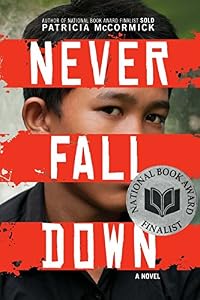
I don't want to seem to have a vendetta against [b:Goblin Secrets|12809970|Goblin Secrets (Zombay, #1)|William Alexander|http://d.gr-assets.com/books/1354035673s/12809970.jpg|17958988], which won the NBA for YA (Endangered was a finalist), but this is also a much better book, on the level of fellow finalist [b:Never Fall Down|12924297|Never Fall Down|Patricia McCormick|http://d.gr-assets.com/books/1330649356s/12924297.jpg|18079742] (yes, I'm a human rights geek, but, again, also a magic, automaton, goblin geek). show less
After rebels take over the bonobo compound, Sophie and Otto sneak back to recover a duffel with food. The workers have been slaughtered:
There, on the far side, was Mama Brunelle's body. A dead body, a thing and not a person. To keep myself going, I didn't let my thoughts rest on that fact. She was facedown, her legs the only part of her that wasn't covered inshow more
dried blood. Bits of her were missing; I couldn't understand, or make myself understand, which ones. Inhale, exhale, inhale.
Schrefer also sets up some compelling questions for readers that would be very interesting to approach in a class. What about Sophie's mother's decision to make a priority of the bonobos over her family? How about Sophie's decision to rescue Otto, thus leading directly to the capture of two more wild bonobo babies (and the likely slaughter of their mother)? How about the fact that Sophie, because she is American, is rescued (but then refuses evacuation) versus the UN's refusal to evacuate native Congolese citizens? This is exactly what happened in Rwanda as the genocide started in 1994.
I don't want to seem to have a vendetta against [b:Goblin Secrets|12809970|Goblin Secrets (Zombay, #1)|William Alexander|http://d.gr-assets.com/books/1354035673s/12809970.jpg|17958988], which won the NBA for YA (Endangered was a finalist), but this is also a much better book, on the level of fellow finalist [b:Never Fall Down|12924297|Never Fall Down|Patricia McCormick|http://d.gr-assets.com/books/1330649356s/12924297.jpg|18079742] (yes, I'm a human rights geek, but, again, also a magic, automaton, goblin geek). show less
This book explores some of the reasons for civil war in the Democratic Republic of Congo, which the main character, Sophie, assures us is neither Democratic nor a Republic. In fact, the government, which continues to be one of the most corrupt on earth, is so ineffective that citizens maraud, capturing children to fight for them and killing almost every living creature they find out of boredom, adventure, hunger or just to terrorize. The YA book is told by a 14 year old half Italian American and half Congolese girl, Sophie, whose parents have divorced because her father preferred to live in the security of the US and her mother felt she needed to stay in Congo and establish a sanctuary for the endangered bonobos who live only in that show more country. Sophie rescues a young, sick bonobo who is being sold by an animal trafficker. She says baby bonobos spend all their time connected to their mothers where they are healthy and happy. When separated from their mothers they are dying. Little Otto is dying, and Sophie becomes his mother. Together they try to survive in war torn Congo, and all Sophie's intelligence and physical strength and endurance is put to the test. This is a great book and a fast read. It would probably be upsetting for sensitive readers because nothing is sugar coated. show less
While visiting her mother’s bonobo rescue center, the main character Sophie & the bonobo Otto she rescued herself become a victim of a violent civil war in the Democratic Republic of Congo. She grows up quickly to escape death and to protect her bonobo. This feels overwhelmingly like a dystopian YA novel; it is not for the weak at heart. Sophie, soon to be a high school freshman, is immature, impulsive, and emotional. It was hard to sympathize with her for much of book. However, I think the point was to demonstrate her growth, fortitude, and intelligence when put to the test. I find it highly unlikely a 14-year-old girl could survive in war-torn Congo, while caring for a young bonobo. But if you can suspend disbelief, it is an show more excellent story. I learned so much about bonobos, and their cruelly being subjected to illegal trade for meat & superstitious beliefs. Vast amount of trigger warnings: substantial amount of violence to people and animals. This book is very well-written and I can understand why it was a National Book Award finalist. I’m now reading (listening to) book 2 in the series and I am impressed how the author has put together another original story, this time about chimpanzees in Gabon. But it does appear it will be as violent as the first book. And I forgot to mention, I cried at the end. show less
Honestly I was surprised because I've never liked monkeys or apes at all, and Schrefer had me caring about a bonobo in the first chapter alone. The bonobos are characters just as the humans are, and I enjoyed getting to know them, their culture, and their individual personalities. I loved seeing Sophie grow and mature and become a selfless caretaker. Though the conflict is fictional, I found the survival aspect of the story surprisingly believable. Schrefer depicts the tragedy and horror of the conflict in a frank and concise way, while still shielding the reader from some of the more sordid and disturbing details. Had I known what the story would be before I read it, I might have passed it over, thinking I would be bored. Instead I show more found myself interested and invested the whole way through. show less
Members
- Recently Added By
Lists

Red Dot 2014-2015 - Mature Readers - Longlist
36 works; 5 members

Favorite Animal Fiction
359 works; 156 members
Author Information

33+ Works 4,326 Members
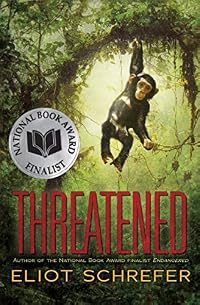
Eliot Schrefer is a notable, best-selling young adult author. Schrefer attended Harvard University, where he graduated with High Honors in French and American literature. Schrefer's first novel, Glamorous Disasters, was a somewhat autobiographical tale of a young man living in Harlem and paying off college debt while tutoring Fifth-Avenue show more families. After writing another novel for adults, he turned to young adult fiction with The School for Dangerous Girls, about a boarding school for criminal young ladies. That book was selected as a "Best of the Teen Age" by the New York Public Library, and his next novel, The Deadly Sister, earned a starred review from School Library Journal. Schrefer's fifth novel Endangered, about a girl surviving wartime in Congo with an orphan bonobo ape, was a finalist for the National Book Award in Young People's Literature, one of NPR's "Best of 2012," and an editor's choice in The New York Times. ELIOT SCHREFER is also the author of Threatened, a finalist for the National Book Award in Young People's Literature in 2014, about a boy surviving in the jungles of Gabon alongside chimpanzees and Rise and Fall, the sixth book in the Spirit Animals Series. Schrefer's works have been translated into many languages including German, Russian, Polish, Taiwanese, Bulgarian, and Japanese. (Bowker Author Biography) show less
Awards and Honors
Awards
Distinctions
Series

Common Knowledge
- First words
- KINSHASA, THE CAPITAL OF CONGO - Concrete can rot. It turns green and black before crumbling away. Maybe only people from the Congo know that.
Classifications
Statistics
- Members
- 727
- Popularity
- 38,650
- Reviews
- 39
- Rating
- (4.12)
- Languages
- English
- Media
- Paper, Audiobook, Ebook
- ISBNs
- 12
- ASINs
- 4