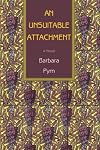
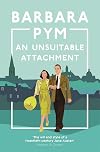
An Unsuitable Attachment
by Barbara Pym 
On This Page
Description
Rupert Stonebird, bachelor anthropologist, moves to a new parish and gradually finds himself becoming interested in the vicar's sister-in-law.Tags
Recommendations






















Member Recommendations

digifish_books Another fine English novel in which a vacation to Italy brings personal relationships to the fore
40
Member Reviews
A guaranteed way to get me to keep reading a book is to start it off with two middle-aged sisters (with at least one unmarried) walking through a parish village, speculating about a new man who just moved into town.
Pym gathers her usual eclectic cast of ordinary and slightly unappealing characters for a back and forth farce - with a classic intermission of English people holidaying abroad. New interactions and complications and misunderstandings arise, as does thankfully some reflective self-awareness. Pym applies a light, humorous touch throughout so that even the most eyerolling of characters (looking at you, Rupert and Mervyn) are bearably ridiculous.
And bless Ianthe! A great way to have me enjoy a book is to have an independent show more woman with a nice job and cosy home living her best life. Second best would be Sophia who, I'm sure in her own opinion, is also having the perfect life. show less
Pym gathers her usual eclectic cast of ordinary and slightly unappealing characters for a back and forth farce - with a classic intermission of English people holidaying abroad. New interactions and complications and misunderstandings arise, as does thankfully some reflective self-awareness. Pym applies a light, humorous touch throughout so that even the most eyerolling of characters (looking at you, Rupert and Mervyn) are bearably ridiculous.
And bless Ianthe! A great way to have me enjoy a book is to have an independent show more woman with a nice job and cosy home living her best life. Second best would be Sophia who, I'm sure in her own opinion, is also having the perfect life. show less
Well worth the read for its wit and sharp understanding of people who dither over their sheltered lives. Accurately sketches the scrimping timid attitudes of the traditional Anglican world of the 1960's. Ms Pym does not hold back exposing the ridiculous self-talk and projected thinking of her characters as they strive to do the right thing to others, but not necessarily to themselves.
I liked it so much I just bought another two Barbara Pym reprints from Virago Press.
I liked it so much I just bought another two Barbara Pym reprints from Virago Press.
This lightly humorous tale is set in a north London parish in the 50s/60s and concerns the marrying off (or not) of some members of that parish. Both the author and the characters in it assume that most people go to church, and that that church is CofE.
It is of its time, so can seem a little twee, with Ianthe being a little shocked that a woman knows about wine and sentiments such as "like many modern young women she had the right old fashioned ideas about men and their work". Pym is perceptive about her characters' inner thoughts, but not as acerbic as more modern writers often are, though there are touches: "indignant that Miss X wasn't conforming more to type", being "fiercely hygienic and protestant" and "teeth that could only have show more been her own".
Propriety and class are major concerns for all the main characters, so there are lots of misunderstandings, wrong assumptions and missed opportunities because everyone is too polite to say anything, though sometimes they nearly do, as when trying to angle for a lift "in the car they did not know he possessed". I found it rather charming that the characters were anxious about whether to refer to the lounge, drawing room or sitting room and whether the evening meal was tea or supper, according to context.
As I read it, similarities with Elizabeth Bowen came to mind, and then Pym described one of her characters as being like an EB heroine. Some of them seem a little stereotypical at first, but as the story progresses, depth and variety are added. On the other hand, a "dress of a rather uninteresting shade of blue" reminded me of Douglas Adams' Hooloovoo, and I'm not sure if that's a good thing or not! show less
It is of its time, so can seem a little twee, with Ianthe being a little shocked that a woman knows about wine and sentiments such as "like many modern young women she had the right old fashioned ideas about men and their work". Pym is perceptive about her characters' inner thoughts, but not as acerbic as more modern writers often are, though there are touches: "indignant that Miss X wasn't conforming more to type", being "fiercely hygienic and protestant" and "teeth that could only have show more been her own".
Propriety and class are major concerns for all the main characters, so there are lots of misunderstandings, wrong assumptions and missed opportunities because everyone is too polite to say anything, though sometimes they nearly do, as when trying to angle for a lift "in the car they did not know he possessed". I found it rather charming that the characters were anxious about whether to refer to the lounge, drawing room or sitting room and whether the evening meal was tea or supper, according to context.
As I read it, similarities with Elizabeth Bowen came to mind, and then Pym described one of her characters as being like an EB heroine. Some of them seem a little stereotypical at first, but as the story progresses, depth and variety are added. On the other hand, a "dress of a rather uninteresting shade of blue" reminded me of Douglas Adams' Hooloovoo, and I'm not sure if that's a good thing or not! show less
Passing Ianthe's house on her way home she now saw that this marriage was inevitable - it had to be. The lemon leaves had been unwrapped and there were the fragrant raisins at the heart.
An Unsuitable Attachment was to be Barbara Pym's seventh published novel until, fatefully, it was rejected by her publisher (Jonathan Cape) in 1963, and by several others. The successful novelist - who had recently had all of her works republished and was picking up steam amongst English librarygoers - was left to 14 years as a relative unknown. After her miraculous "rediscovery" in 1977, Pym published three more novels. Attachment was one of another three published after her early death in 1980.
My paperback (Grafton) edition has a foreward by Philip show more Larkin which, sadly, is not in my hardcover (Dutton) edition. Larkin, a longtime friend and penpal of Pym's, admits that this is not her strongest work. And, indeed, it isn't. The "unsuitable attachment" at the heart of the novel emerges rather slowly, before suddenly feeling like a foregone conclusion. And while there is much of Pym's typically astute character observation, the book doesn't sparkle with the vim and vigour of - frankly - all of her earlier novels (including her then-unpublished first, Crampton Hodnet).
Perhaps this is because Pym - 50 years old when she finished this novel - was drifting from her "early" and "middle" stages as a writer into her "late" period. Her subsequent novels have a darker quality, are certainly less outright comedic, and this feels like an awkward transition, a writer trying to navigate their preferred brand even as their mind and artistry have moved elsewhere. I found myself laughing less frequently, and underwhelmed by the marriage of Sophie and Mark (after the successful investigations of happy-but-bittersweet-in-a-typically-English-way marriages in Jane and Prudence and especially A Glass of Blessings, one feels as if Pym doesn't quite get to the nub of this one), as well as by the character of Penelope as a whole - who should surely be at the heart of things.
Nevertheless, we only have 12 full-length Pym novels (alongside the miscellany of shorter writings) and it's our duty to cherish every one. I shall do so! There are plenty of neat little moments, twists, and historical insights to this bygone age that shouldn't feel so far away. This is still satisfying Pym for those of us who enjoy the complete canon of works, but truthfully would only rank as two-stars outside of the world of Pymheads, I'm afraid. I would suggest new readers leave it until near the end of their journey. show less
An Unsuitable Attachment was to be Barbara Pym's seventh published novel until, fatefully, it was rejected by her publisher (Jonathan Cape) in 1963, and by several others. The successful novelist - who had recently had all of her works republished and was picking up steam amongst English librarygoers - was left to 14 years as a relative unknown. After her miraculous "rediscovery" in 1977, Pym published three more novels. Attachment was one of another three published after her early death in 1980.
My paperback (Grafton) edition has a foreward by Philip show more Larkin which, sadly, is not in my hardcover (Dutton) edition. Larkin, a longtime friend and penpal of Pym's, admits that this is not her strongest work. And, indeed, it isn't. The "unsuitable attachment" at the heart of the novel emerges rather slowly, before suddenly feeling like a foregone conclusion. And while there is much of Pym's typically astute character observation, the book doesn't sparkle with the vim and vigour of - frankly - all of her earlier novels (including her then-unpublished first, Crampton Hodnet).
Perhaps this is because Pym - 50 years old when she finished this novel - was drifting from her "early" and "middle" stages as a writer into her "late" period. Her subsequent novels have a darker quality, are certainly less outright comedic, and this feels like an awkward transition, a writer trying to navigate their preferred brand even as their mind and artistry have moved elsewhere. I found myself laughing less frequently, and underwhelmed by the marriage of Sophie and Mark (after the successful investigations of happy-but-bittersweet-in-a-typically-English-way marriages in Jane and Prudence and especially A Glass of Blessings, one feels as if Pym doesn't quite get to the nub of this one), as well as by the character of Penelope as a whole - who should surely be at the heart of things.
Nevertheless, we only have 12 full-length Pym novels (alongside the miscellany of shorter writings) and it's our duty to cherish every one. I shall do so! There are plenty of neat little moments, twists, and historical insights to this bygone age that shouldn't feel so far away. This is still satisfying Pym for those of us who enjoy the complete canon of works, but truthfully would only rank as two-stars outside of the world of Pymheads, I'm afraid. I would suggest new readers leave it until near the end of their journey. show less
This was a most satisfying read, full of what Barbara Pym does best: satirizing the public and private lives of England's "excellent women." Sophia Ainger is a vicar's wife in a parish in a somewhat dodgy part of London. When she's not supporting her husband's work, she's arranging suitors for her younger sister Penelope. There's a comforting predictability to church work:
Ianthe Broom, Daisy Pettigrew, Sister Dew, and one or two others whose names she could never remember, now sat down round the table and began to discuss the final arrangements for the bazaar, which had always been exactly the same and always would be, except that from one year to another a pint more or less of milk might be ordered for the teas. (p. 53)
Sophia is also show more slightly obsessed with her cat, Faustina, who is always in the background engaging in typical feline behavior:
Her tone was a little agitated for she had also just seen Faustina mount the refreshment table and pick her way delicately among the dishes of cakes and savouries, sniffing the air, ready to pause and pounce when she came upon something that took her fancy. (p. 60)
Sophia finds sympathetic company in Daisy Pettigrew and her brother Edwin, who run a cattery. But when conversation lags or gets awkward, Sophia fills the gap by comparing Faustina to various humans, or wondering aloud what Faustina is doing at that moment. This never seems to help matters, but it made for amusing reading.
Then there's Ianthe Broom, a 30-something unmarried daughter of a curate. She works in a library and recently moved into the parish. Most consider her past her prime, but Sophia is concerned about her competing with Penelope for male attention. Ianthe is oblivious to all of this; she's not looking for a mate, and values her independence. She is both surprised and flattered when a male colleague begins paying attention to her. But is he suitable? Or will others judge her?
A church-sponsored trip to Rome puts everyone out of their element. This heightens anxieties, but new experiences also offer opportunities for self-discovery. Ianthe and Penelope both return to England with a better understanding of what they want from life and their relationships.
Pym's world is familiar to anyone who has ever been involved in church committees, and she simultaneously respects and pokes fun at this slice of society. Sophia's "crazy cat lady" personality made me laugh out loud on several occasions. And so, for that matter, did Faustina (especially since I had a cat in my lap most of the time when I was reading this book)!
I've read most of Barbara Pym's books, and enjoyed them all. An Unsuitable Attachment is now one of my favorites. show less
Ianthe Broom, Daisy Pettigrew, Sister Dew, and one or two others whose names she could never remember, now sat down round the table and began to discuss the final arrangements for the bazaar, which had always been exactly the same and always would be, except that from one year to another a pint more or less of milk might be ordered for the teas. (p. 53)
Sophia is also show more slightly obsessed with her cat, Faustina, who is always in the background engaging in typical feline behavior:
Her tone was a little agitated for she had also just seen Faustina mount the refreshment table and pick her way delicately among the dishes of cakes and savouries, sniffing the air, ready to pause and pounce when she came upon something that took her fancy. (p. 60)
Sophia finds sympathetic company in Daisy Pettigrew and her brother Edwin, who run a cattery. But when conversation lags or gets awkward, Sophia fills the gap by comparing Faustina to various humans, or wondering aloud what Faustina is doing at that moment. This never seems to help matters, but it made for amusing reading.
Then there's Ianthe Broom, a 30-something unmarried daughter of a curate. She works in a library and recently moved into the parish. Most consider her past her prime, but Sophia is concerned about her competing with Penelope for male attention. Ianthe is oblivious to all of this; she's not looking for a mate, and values her independence. She is both surprised and flattered when a male colleague begins paying attention to her. But is he suitable? Or will others judge her?
A church-sponsored trip to Rome puts everyone out of their element. This heightens anxieties, but new experiences also offer opportunities for self-discovery. Ianthe and Penelope both return to England with a better understanding of what they want from life and their relationships.
Pym's world is familiar to anyone who has ever been involved in church committees, and she simultaneously respects and pokes fun at this slice of society. Sophia's "crazy cat lady" personality made me laugh out loud on several occasions. And so, for that matter, did Faustina (especially since I had a cat in my lap most of the time when I was reading this book)!
I've read most of Barbara Pym's books, and enjoyed them all. An Unsuitable Attachment is now one of my favorites. show less
The second Barbara Pym novel I’ve read was just as delightful as the first. This one includes a trip to Italy almost as fraught with delicate awkwardness as [b:A Room with a View|3087|A Room with a View|E.M. Forster|https://images.gr-assets.com/books/1388781285s/3087.jpg|4574872]. I also very much appreciated periodic cameos from Faustina the cat and subtle skewering of gender roles:
As before, the main characters are interesting women dealing with everyday challenges, and inadequate men, while wearing interesting clothes. Pym provides a striking and very amusing insight into social mores sixty or more years ago, full of enjoyable details. show less
”I had thought of getting a young man,” said Edwin, “though perhaps in a way it’s hardly a job for a man. One feels that anything to do with card indexes is more in a women’s line.”show more
“You mean it’s slightly degrading?” said Sophia.
“Oh, no,” Edwin protested, “A card index may be a noble thing, especially if it has to do with
animals.”
Mark watched them arguing with a faint smile on his face.
“Yes, it could be noble work,” Sophia agreed. “Think of Sir Edward Landseer’s portraits of animals,” she added, perhaps irrelevantly.
Edwin did not apparently need to think of them and rose to go.
As before, the main characters are interesting women dealing with everyday challenges, and inadequate men, while wearing interesting clothes. Pym provides a striking and very amusing insight into social mores sixty or more years ago, full of enjoyable details. show less
Although it does have some amusing moments, this is not, in my opinion, up to Barbara Pym's usual standards. There isn't a sympathetic character in it...not even one you can feel sorry for without liking very much. I just didn't like or care about any of them, and the men were so uninteresting I had trouble keeping them straight. Everyone seems to want to love (notice I don't say "love" actually) the wrong person, but the opportunities for humor and insight that ought to provide are mostly missed here. Even Rome comes off a bit tired and uninspiring in this book. Perhaps Pym was bored...she did apparently stop writing for years after this book was published. Much as I love her, I think she laid an egg with this one.
October 2013
October 2013
Members
- Recently Added By
Lists

Top Five Books of 2013
1,562 works; 721 members

Books Read in 2018
4,360 works; 110 members
Talk Discussions
Past Discussions
Barbara Pym centenary - An Unsuitable Attachment in Virago Modern Classics (November 2013)
Author Information

27+ Works 14,787 Members
Novelist Barbara Pym was born in Shropshire and educated at Oxford University. An editor of Africa, an anthropological review, for many years, she published her first novel, Some Tame Gazelle, in 1950. Since then, a number of popular works have been published. Often compared with the works of Jane Austen in both manner and subject, Pym's novels show more are apparently guileless evocations of the foibles of aging and isolated characters. She has a sure, if understated, sense of her characters' psychology and of their unintentionally comic revelations about themselves and their futile lives. After the publication of No Fond Return of Love (1961), all her books were out of print until she was cited, coincidentally by both David Cecil and Philip Larkin, as among the most underestimated novelists of the 20th century. She subsequently completed two successful novels, The Sweet Dove Died (1978) and Quartet in Autumn (1978), the latter a comic-pathetic study of two men and two women in their sixties who work in the same office but lead separate, lonely lives outside. Many of her earlier books have since been reprinted, including Excellent Women (1952) and A Glass of Blessings (1958), both perceptive psychological studies of aging women taken advantage of by others. A posthumous novel, A Few Green Leaves (1980), is a superb comedy of provincial village life. (Bowker Author Biography) show less
Barbara Pym has a Legacy Library. Legacy libraries are the personal libraries of famous readers, entered by LibraryThing members from the Legacy Libraries group.
Some Editions
Awards and Honors
Notable Lists
Series
Belongs to Publisher Series
Perennial Library (P653)
Work Relationships
Is contained in
Common Knowledge
- Original title
- An Unsuitable Attachment
- Original publication date
- 1982 (posthumous) (posthumous)
- People/Characters
- Mark Ainger; Sophia Ainger; Rupert Stonebird; Ianthe Broome; Penelope Grandison; John Challow (show all 10); Everard Bone; Faustina (cat); Sister Dew; Mervyn Cantrell
- Important places
- London, England, UK; Rome, Italy
- First words
- They are watching me, thought Rupert Stonebird, as he saw the two women walking rather too slowly down the road.
- Quotations
- "A card index may be a noble thing."
- Last words
- (Click to show. Warning: May contain spoilers.)For the tears that seem romantic and even fitting in Rome on the Spanish Steps at night would be quite otherwise in St Paul's churchyard at lunchtime.
- Blurbers
- Cantwell, Mary
Classifications
Statistics
- Members
- 753
- Popularity
- 37,518
- Reviews
- 22
- Rating
- (3.96)
- Languages
- English, French, Italian
- Media
- Paper, Audiobook, Ebook
- ISBNs
- 22
- ASINs
- 6