On This Page
Description
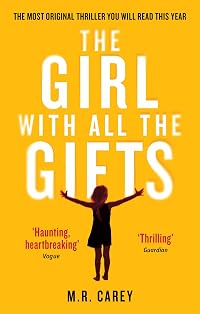
Not every gift is a blessing. Every morning, Melanie waits in her cell to be collected for class. When they come for her, Sergeant Parks keeps his gun pointing at her while two of his people strap her into the wheelchair. She thinks they don't like her. She jokes that she won't bite. But they don't laugh. Melanie is a very special girl.Tags
Recommendations

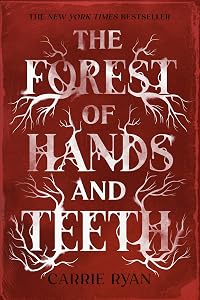
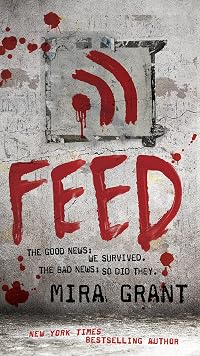
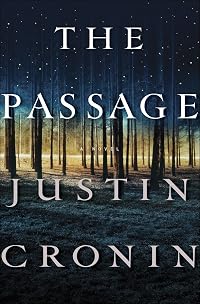
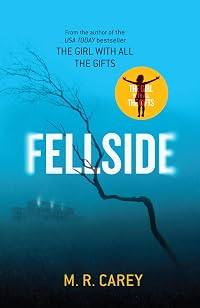




Member Recommendations
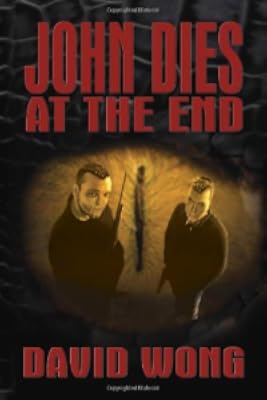
LAKobow Dystopian novel with special kids raised in mysterious circumstances, little knowledge of outside world and who they really are.
31
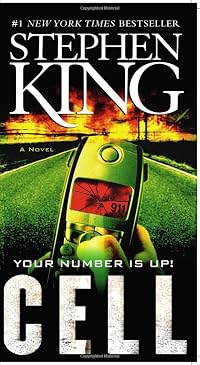
SomeGuyInVirginia Entertaining take on zombies.


Member Reviews
Jon billed this to me as a combination of Matilda, a zombie film and Never Let Me Go. Honestly, that's pretty spot on: there's a first part that is basically a zombie in the Matilda-genre, followed by a longer second part of Matilda in the zombie genre.
The whole idea is a really unique take on the zombie genre, and Carey does a great job using a lot of the old standbys of survival horror to set the scene where he can, allowing most of the prose to really focus in on the protagonists. Using an ensemble cast really allows the idea of zombie sentience to sign -- without the point-of-view of Melanie, a lot of what happens in the book would lose its ethical greyness, but without the point-of-view of the humans, the survival drive would not show more be felt as well, either. The five characters and their relationships between each other really complement each other nicely. By using zombies, rather than a brand new concept of some sort, Carey frees up a lot of time to focus on the existential (or as he calls them, ontological) ideas of the novel: what makes a being a person, what is free will, what people owe to humanity.
Finally, the science, as far as I could tell (not being a mycologist) was very nicely done. It's rare to find science fiction that actually hits science and is simultaneously interesting. I don't think that using Ophiocordyceps isn't a unique idea (I assume -- given that Ophiocordyceps species that actually exist are already called "Zombie Fungus"; I don't actually do zombie usually) but the details that Carey adds, were interesting, plausible, and added to the plot. My one nitpick is regarding the final piece:that vertical transmission of Ophiocordyceps results in children who are neurologically intact was something I'd guessed from about 25% of the way in, if not sooner, so I don't really think discovering it justifies dissecting children. Caldwell was depicted as a brilliant scientist, who only did the necessary harm, but that really fell flat for me at the end. Yes, it was just a hypothesis, but her dissection didn't really expand beyond the hypothesis in any way, and an MRI of Melanie's brain would have been just as good. show less
The whole idea is a really unique take on the zombie genre, and Carey does a great job using a lot of the old standbys of survival horror to set the scene where he can, allowing most of the prose to really focus in on the protagonists. Using an ensemble cast really allows the idea of zombie sentience to sign -- without the point-of-view of Melanie, a lot of what happens in the book would lose its ethical greyness, but without the point-of-view of the humans, the survival drive would not show more be felt as well, either. The five characters and their relationships between each other really complement each other nicely. By using zombies, rather than a brand new concept of some sort, Carey frees up a lot of time to focus on the existential (or as he calls them, ontological) ideas of the novel: what makes a being a person, what is free will, what people owe to humanity.
Finally, the science, as far as I could tell (not being a mycologist) was very nicely done. It's rare to find science fiction that actually hits science and is simultaneously interesting. I don't think that using Ophiocordyceps isn't a unique idea (I assume -- given that Ophiocordyceps species that actually exist are already called "Zombie Fungus"; I don't actually do zombie usually) but the details that Carey adds, were interesting, plausible, and added to the plot. My one nitpick is regarding the final piece:
This is a spectacular book. I was riveted from first page to last, and surprised at virtually every turn. I experienced a "good" kind of surprise, when characters did unexpected things but, in retrospect, things that were absolutely right and appropriate for them. Rare in "zombie" books (don't let that turn you off, BTW), Carey goes into the why of zombiefication, and that explanation plays a major and satisfying role in the story. Usually the "cause" of this is left unexplored, but in this book it's quite realistic and scarily on the edge of the possible. The main character, the girl Melanie, is a revelation -- I won't say more, since this is a spoiler, but Carey is pitch-perfect. Then the supporting characters are all wonderful, show more especially the scientist, Caldwell. Every chapter is breakneck, but there's also a lot -- A LOT -- of really, really lovely, compelling and knife-in-the-gut language. For instance, this passage: "Melanie wanders on through the grey wilderness. It doesn't seem to have a further side; it just keep going. And it keeps getting thicker. After a while, there's only enough space between the trunks for her to slide her skinny body through, and the moonlight is dripping down like dirty water through a raft of threads so tightly intertwined they're almost like a solid mass." For writers, this books ia a masterwork of craft -- tight Act structure, only as much information as you need and precisely when you need it, deep character development, snappy dialogue, the works. And (did I say) it's beautifully, beautifully written. Highly, highly recommended. show less
I finished "The Girl With All The Gifts" today, with that mixture of regret and deep satisfaction that only comes from reading a book that is so masterfully crafted that you don't notice how it works because you're too tied up in the emotions, the action, your deepening understanding of the people and their situation, the shock of the amoral inevitability of the scientific reality and the strong, REALLY strong need to know what happens next.
I'm not going to tell you what happens. I hate reviews with spoilers.
I'm just going to tell you how it made me feel.
I fell in love with the enigmatic Melanie, long before I knew who she was; in fact from the moment that she told me that she, with her very pale skin, shouldn't be called Melanie, show more because it means dark, and wants to be called Pandora because it means the girl with all the gifts and because the real Pandora was hard-wired to follow her curiosity wherever it took her, regardless of the consequences. I'm a man who own three etymological dictionaries. How can I not love a ten year-old girl who is fascinated with the origins of words?
As I started, slowly and stupidly but with great pleasure, (which is why there are no spoilers here) to understand Melanie and her situation, these words came back to me. She is Pandora, the girl with all the gifts: extraordinary, life-affirming, joyous gifts. She is also Melanie, filled with a darkness that belies her pale skin and which can never leave her.
This book is like that. Words have a meaning when you read them, then another meaning when you find out what happens next, and another meaning when you finish the book. That, by itself, is worthy of applause in any novel.
The early part of the book, when the larger context is obscured, and I had no more knowledge of the world than Melanie has in her windowless bunker, is deeply compelling and more than a little horrifying. It is entirely plausible, which is what makes it so disturbing. I was focused on Melanie, fascinated by her, horrified by the adults around her, willing her to survive their plans for her.
The surprising thing was that, when the context changes and the wider world is explored, the book gets better. Carey doesn't indulge in cardboard-cutout evil baddies. The evil in his book is inherently human, committed by people who are doing what they must or even what they believe they should. I enjoyed the fact that the focus didn't stay entirely on Melanie. I got to see the world through the eyes of each of the four main characters who surround her and the view from each of them was fascinating.
The pace of the book is perfect: keeping me on edge while giving me time to think through and speculate about the ideas and letting me get to know the characters better - making my experience mirror that of the people in the story.
"The Girl With All The Gifts" is packed with action and violence and gruesome, hard-to-forget details of cruelty and pain both sophisticated and barbaric. It has all the ingredients of an action-blockbuster but uses them as seasoning rather than the main meal. The meat of the book lies in the reactions of the adults to Melanie and, eventually, in Melanie's reaction to them. That takes this book from a blockbuster to something far more interesting.
The science is beautifully done. No dumbing-down but no worshiping at the altar of Popperian method either. Science is not a prop here - like a sonic screwdriver - infinitely useful and totally unexplained. In this book, science is literally knowledge of the truth. As such, it is completely indifferent to our hopes and our nightmares. It made me think that perhaps Truth was what the insatiably curious Pandora of the myth let out of the box. Which was why there was such a need for hope to be released into the world. It also made me recognize that I can only take so much truth. I KNOW that all of human history is a blip on the life of the planet but I can't/won't integrate that truth into my daily life - it does too much to take away meaning from my actions. This book shows how hard we work at denying the truth and how difficult it is to shape our lives around the truths we've learned.
The strongest impression that "The Girl With All The Gifts" left on me was that we are not defined by our birth or our knowledge or even our darkest actions, but by how we love. If Truth is the evil that Pandora released into the world, then Love is what keeps our hope alive. show less
I'm not going to tell you what happens. I hate reviews with spoilers.
I'm just going to tell you how it made me feel.
I fell in love with the enigmatic Melanie, long before I knew who she was; in fact from the moment that she told me that she, with her very pale skin, shouldn't be called Melanie, show more because it means dark, and wants to be called Pandora because it means the girl with all the gifts and because the real Pandora was hard-wired to follow her curiosity wherever it took her, regardless of the consequences. I'm a man who own three etymological dictionaries. How can I not love a ten year-old girl who is fascinated with the origins of words?
As I started, slowly and stupidly but with great pleasure, (which is why there are no spoilers here) to understand Melanie and her situation, these words came back to me. She is Pandora, the girl with all the gifts: extraordinary, life-affirming, joyous gifts. She is also Melanie, filled with a darkness that belies her pale skin and which can never leave her.
This book is like that. Words have a meaning when you read them, then another meaning when you find out what happens next, and another meaning when you finish the book. That, by itself, is worthy of applause in any novel.
The early part of the book, when the larger context is obscured, and I had no more knowledge of the world than Melanie has in her windowless bunker, is deeply compelling and more than a little horrifying. It is entirely plausible, which is what makes it so disturbing. I was focused on Melanie, fascinated by her, horrified by the adults around her, willing her to survive their plans for her.
The surprising thing was that, when the context changes and the wider world is explored, the book gets better. Carey doesn't indulge in cardboard-cutout evil baddies. The evil in his book is inherently human, committed by people who are doing what they must or even what they believe they should. I enjoyed the fact that the focus didn't stay entirely on Melanie. I got to see the world through the eyes of each of the four main characters who surround her and the view from each of them was fascinating.
The pace of the book is perfect: keeping me on edge while giving me time to think through and speculate about the ideas and letting me get to know the characters better - making my experience mirror that of the people in the story.
"The Girl With All The Gifts" is packed with action and violence and gruesome, hard-to-forget details of cruelty and pain both sophisticated and barbaric. It has all the ingredients of an action-blockbuster but uses them as seasoning rather than the main meal. The meat of the book lies in the reactions of the adults to Melanie and, eventually, in Melanie's reaction to them. That takes this book from a blockbuster to something far more interesting.
The science is beautifully done. No dumbing-down but no worshiping at the altar of Popperian method either. Science is not a prop here - like a sonic screwdriver - infinitely useful and totally unexplained. In this book, science is literally knowledge of the truth. As such, it is completely indifferent to our hopes and our nightmares. It made me think that perhaps Truth was what the insatiably curious Pandora of the myth let out of the box. Which was why there was such a need for hope to be released into the world. It also made me recognize that I can only take so much truth. I KNOW that all of human history is a blip on the life of the planet but I can't/won't integrate that truth into my daily life - it does too much to take away meaning from my actions. This book shows how hard we work at denying the truth and how difficult it is to shape our lives around the truths we've learned.
The strongest impression that "The Girl With All The Gifts" left on me was that we are not defined by our birth or our knowledge or even our darkest actions, but by how we love. If Truth is the evil that Pandora released into the world, then Love is what keeps our hope alive. show less
So this is Mike Carey, writer of Lucifer and the Felix Castor series, apparently being relaunched (the implications for Felix Castor make me sad), which I didn’t know until I had the physical book in my hands. It’s another zombie variant—there’s probably an interesting essay to be written about why so many writers play with the zombie rules, while vampire writers are generally selective from the standard rules but rarely deviate a lot; something to do with the difference between reading a book and watching a movie perhaps. A fungus that takes over ant nervous systems and makes them destroy themselves to spread the fungus crosses over into humans, creating “hungries” with an endless hunger for live meat. Twenty years later, a show more small research facility represents humanity’s last hope. Melanie is a child at the facility; every day they come to point guns at her, strap her in, and wheel her to her lessons. In fact, she and her cohort are infected, but they are also able to reason. Caroline Caldwell—left behind as not quite good enough when the previous last-ditch attempt at scientific victory was launched—wants to know why in order to develop a vaccine or a cure, so she dissects the children, and she’s about to come for Melanie when disaster strikes. Caldwell, Melanie, the teacher on whom Melanie has a crush, and two soldiers are forced to journey across the hungry-infested countryside. It’s all very compelling, and the ending really works, in a classic sf way. show less
I loved this from the very first page. It's the first zombie book I've read where large parts of the book are from a zombie's point of view. She's only a sorta-zombie, so it's not all kill, kill, kill. In truth, it's a very subtle, very lovely book, more about emotion than gore. Highly recommended.
I’d heard this was zombie fiction, and I don’t like me zombie fiction no matter how you spin it, and that includes The Passage, so I had no great expectations for this, even though: a) it was nominated for the Clarke Award (but lost out to Station Eleven, a book I admit I did not like), b) I’ve met Mike Carey and he’s a nice guy, and c) it was on offer at 99p.
There’s a “but” implicit in all that, and yes, I did think The Girl with All the Gifts was actually pretty good. It opens firmly focused on the titular girl, Melanie, who is in some sort of research facility. Clearly, she’s not an ordinary girl - she has to be locked into a wheelchair for classes, she eats once a week (a bowl of worms), and the staff of the show more underground bunker where she lives is scared of her and her classmates.
Carey doles out his information slowly and carefully. The UK - the world - has collapsed following a plague of some sort, which has reduced the bulk of the population to flesh-eating zombies, or “hungries”. But Carey provides a rationale - the zombie fungus which infects ants, takes over their bodies and forces them to climb plants in order to provide a higher platform to spore (and which really exists)... has crossed the species barrier and infected humans.
Melanie is infected, but she is different. As are her classmates. She may crave human flesh, when triggered by pheromones, but she’s not mindless, she can think like a normal human being - if anything, she actually has a genius-level IQ.
Junkers - Mad Max-like survivalists - attack and overrun the military base holding Melanie and her classmates. Melanie escapes with Sergeant, the head of base security, a trooper, Dr Caldwell, the head of the research programme, and Miss Juneau, a teacher on whom Melanie has a crush. They must travel south to Beacon City, the sole bastion of uninfected humans in the UK.
As they make their way through a deserted London, populated only by “hungries”, they learn more about the fungus. Sadly, Caldwell is something of a Mengele figure, happy to sacrifice people if it leads her to a better understanding of the fungus, and her willingness to let the others die gets annoying quickly. Having said that, she does discover Melanie’s secret - although her proposed “cure” would kill Melanie, and the kids like her they’ve encountered as they travelled toward Beacon - but not necessarily save humanity.
I do not, as I said, like zombie fiction much, and The Girl with All the Gifts is pretty much a zombie novel. But the use of the real-life zombie fungus to explain it, the focus on the disease, rather than just using it as a mechanism for menace, lifts this novel above others of its ilk. I rather enjoyed it. A good Clarke nominee, I think. show less
There’s a “but” implicit in all that, and yes, I did think The Girl with All the Gifts was actually pretty good. It opens firmly focused on the titular girl, Melanie, who is in some sort of research facility. Clearly, she’s not an ordinary girl - she has to be locked into a wheelchair for classes, she eats once a week (a bowl of worms), and the staff of the show more underground bunker where she lives is scared of her and her classmates.
Carey doles out his information slowly and carefully. The UK - the world - has collapsed following a plague of some sort, which has reduced the bulk of the population to flesh-eating zombies, or “hungries”. But Carey provides a rationale - the zombie fungus which infects ants, takes over their bodies and forces them to climb plants in order to provide a higher platform to spore (and which really exists)... has crossed the species barrier and infected humans.
Melanie is infected, but she is different. As are her classmates. She may crave human flesh, when triggered by pheromones, but she’s not mindless, she can think like a normal human being - if anything, she actually has a genius-level IQ.
Junkers - Mad Max-like survivalists - attack and overrun the military base holding Melanie and her classmates. Melanie escapes with Sergeant, the head of base security, a trooper, Dr Caldwell, the head of the research programme, and Miss Juneau, a teacher on whom Melanie has a crush. They must travel south to Beacon City, the sole bastion of uninfected humans in the UK.
As they make their way through a deserted London, populated only by “hungries”, they learn more about the fungus. Sadly, Caldwell is something of a Mengele figure, happy to sacrifice people if it leads her to a better understanding of the fungus, and her willingness to let the others die gets annoying quickly. Having said that, she does discover Melanie’s secret - although her proposed “cure” would kill Melanie, and the kids like her they’ve encountered as they travelled toward Beacon - but not necessarily save humanity.
I do not, as I said, like zombie fiction much, and The Girl with All the Gifts is pretty much a zombie novel. But the use of the real-life zombie fungus to explain it, the focus on the disease, rather than just using it as a mechanism for menace, lifts this novel above others of its ilk. I rather enjoyed it. A good Clarke nominee, I think. show less
WELL I FUCKING PLOWED THROUGH THAT.
Picked it up at about 3pm after finishing my other book, thinking I’d just start it, and now it’s 1am and I’ve basically been reading this since with only a few short pauses.
HOLY FUCK. I WOULD DO ANYTHING FOR MELAINE THE SAME WAY HELEN WOULD. I actually came around on Parks. Caldwell, as awful as she was… was also trying to save the world. I’m so upset and also my heat is so full and I have no idea WHAT the second book is going to be but I rlly need melaine to be in it pls and thank.
(Ok I’ve just realized it is a prequel…. And my excitement levels have gone way down. I might hold off on starting it immediately now)
Picked it up at about 3pm after finishing my other book, thinking I’d just start it, and now it’s 1am and I’ve basically been reading this since with only a few short pauses.
HOLY FUCK. I WOULD DO ANYTHING FOR MELAINE THE SAME WAY HELEN WOULD. I actually came around on Parks. Caldwell, as awful as she was… was also trying to save the world. I’m so upset and also my heat is so full and I have no idea WHAT the second book is going to be but I rlly need melaine to be in it pls and thank.
(Ok I’ve just realized it is a prequel…. And my excitement levels have gone way down. I might hold off on starting it immediately now)
Members
- Recently Added By
Published Reviews
ThingScore 75
Lists

Scary Stories for the Season
160 works; 94 members

Recommend the 20 best books you've read in the last five years
2,168 works; 606 members

NPR Reader Poll: 100 Best Horror Novels and Stories
100 works; 20 members

Favorite Science Fiction by Women Authors
737 works; 202 members

Pleasant Surprises: Books That Exceeded Our Expectations
418 works; 143 members

Best Zombie Books
77 works; 9 members

Dystopian and Apocalyptic Literature
350 works; 74 members

It's the end of the world as we know it!
90 works; 23 members

Top Five Books of 2014
1,064 works; 398 members

Summer Reads 2014
207 works; 70 members

Top Five Books of 2015
811 works; 240 members
Top Five Books of 2016
795 works; 228 members

Nonhuman Protagonists
235 works; 34 members

Top Five Books of 2021
604 works; 181 members
Unbound Worlds 100 Best SF Books
100 works; 8 members

Arthur C. Clarke Award Winners and Shortlisted Books
219 works; 14 members

Best Horror Mega-List
342 works; 6 members

Best Survival Stories
97 works; 15 members

Books for Fans of Stranger Things
84 works; 7 members

Books With a Twist
69 works; 46 members

Books Read in 2021
5,361 works; 114 members
io9 Book Club
70 works; 4 members

2022 To Read List
11 works; 2 members

At the Library
217 works; 1 member

Nightmares Not Included
175 works; 3 members
Kate & Cheyanne's Horror Extravaganza
144 works; 6 members

Horror: Creature Features
70 works; 9 members

GoodReads Horror Choice Awards
160 works; 4 members

Books With Girls in Titles
27 works; 2 members

Books Read in 2019
4,052 works; 110 members
Books Read in 2018
4,360 works; 110 members

Top Five Books of 2017
757 works; 231 members

Books Read in 2017
4,249 works; 129 members

Watched the Movie, Probably Won't Read the Book
185 works; 34 members

wish list
61 works; 3 members

Books Read in 2016
4,666 works; 199 members

KayStJ's to-read list
1,616 works; 11 members

Steph Laymon's 2016 Read
34 works; 1 member

Most Frequently Tagged "Read in 2015"
70 works; 1 member

Female Protagonist
1,056 works; 57 members
Books Read in 2015
3,299 works; 126 members

Books Read in 2014
2,343 works; 89 members

Horror: Page & Screen
27 works; 3 members
Author Information

18+ Works 11,339 Members
Some Editions
Awards and Honors
Awards
Distinctions
Series

Belongs to Publisher Series
Work Relationships
Has the adaptation
Is abridged in
Is an expanded version of
Common Knowledge
- Canonical title
- The Girl With All the Gifts
- Original title
- The girl with all the gifts
- Original publication date
- 2014-01-14
- People/Characters
- Melanie; Helen Justineau; Eddie Parks; Kieran Gallagher; Caroline Caldwell
- Important places
- Stevenage, Hertfordshire, England, UK; London, England, UK
- Related movies
- The Girl with All the Gifts (2016 | IMDb)
- Dedication
- For Lin, who opened the box
- First words
- Her name is Melanie.
- Last words
- (Click to show. Warning: May contain spoilers.)Greek myths and quadratic equations will come later.
- Blurbers
- Lindqvist, John Ajvide; Colgan, Jenny; Whedon, Joss; Cole, Martina
- Original language
- English
- Canonical DDC/MDS
- 823.92
- Canonical LCC
- PR6103.A72
Classifications
Statistics
- Members
- 6,326
- Popularity
- 1,950
- Reviews
- 448
- Rating
- (3.99)
- Languages
- 12 — Czech, Dutch, English, Finnish, French, German, Hungarian, Italian, Portuguese, Spanish, Swedish, Turkish
- Media
- Paper, Audiobook, Ebook
- ISBNs
- 41
- ASINs
- 15
