On This Page
Description
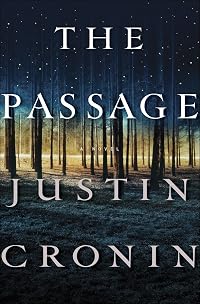
A security breach at a secret U.S. government facility unleashes the monstrous product of a chilling military experiment that only six-year-old orphan Amy Harper Bellafonte can stop.Tags
Recommendations
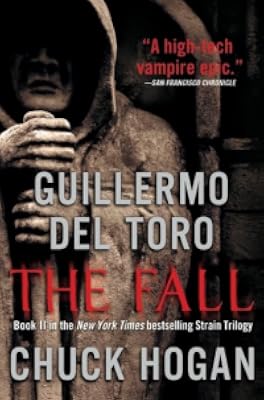
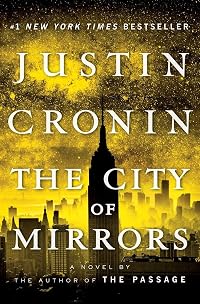
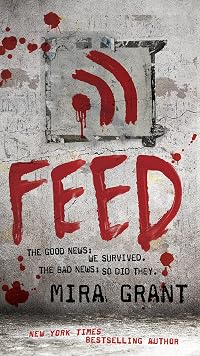
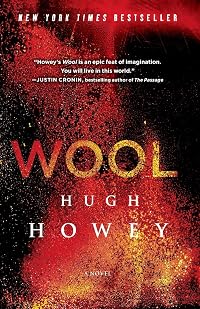
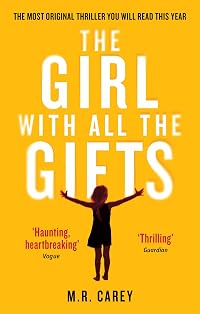
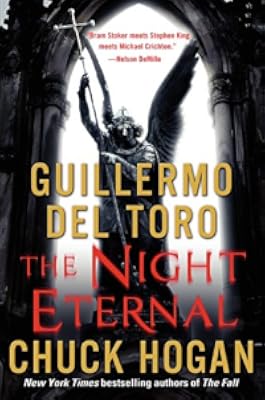

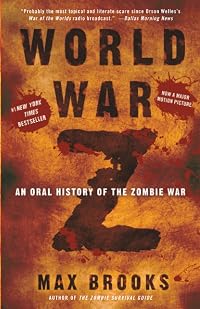
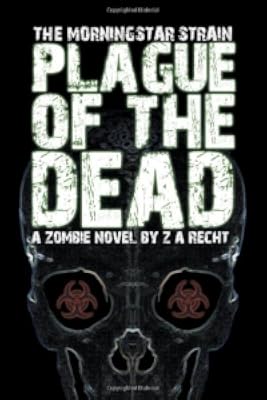
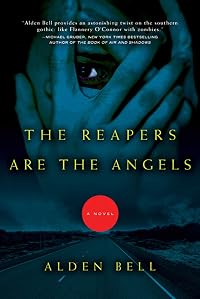
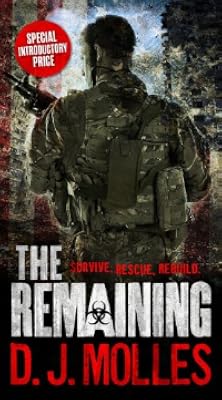
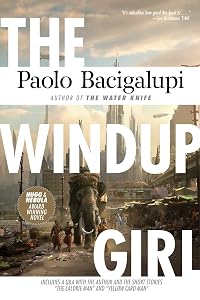
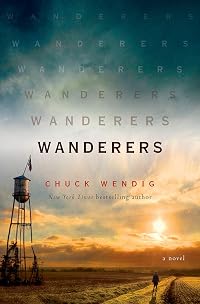

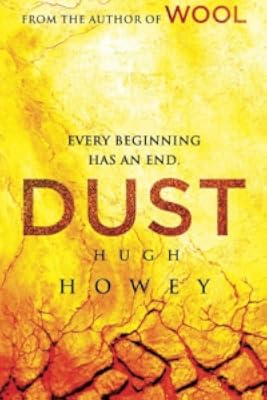
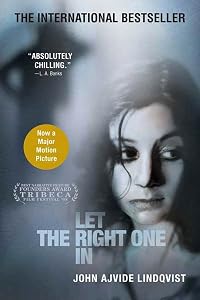
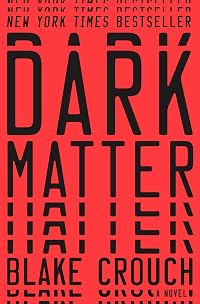
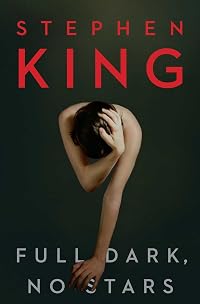
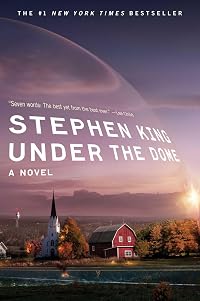
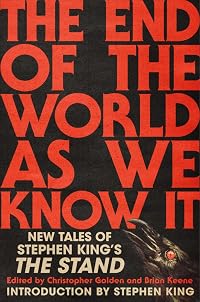


Member Recommendations

kraaivrouw Similar intentions and a lot more fun.
Also recommended by smiteme, questionablepotato
245
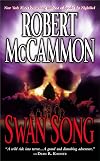
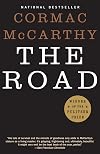
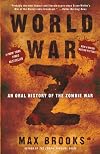
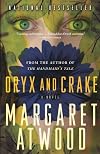
jlparent The Passage reminded me greatly of "Under the Dome", with its intense look at how people cope in a 'new' world. Obviously it's also is hugely reminiscent of "The Stand" as already recommended.
92

RidgewayGirl Both books are inventive dystopian novels of a future after a pandemic collapses civilization.
40

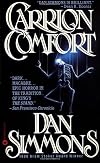
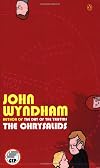
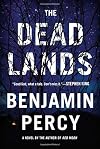
4leschats Both this books and the 2 in The Passage Trilogy (The Passage and The Twelve)address alterations in the natural universe brought on by post-apocalyptic changes.
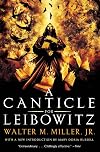
readaholic12 post-apocalyptic multi-generational science fiction, cyclic history, human caused crisis
65
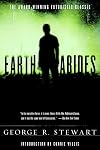
RidgewayGirl This classic dystopian novel explores the world after an unspecified apocalypse. Like The Passage, Earth Abides involves both the scavenging of the remains of civilization rather than production and a journey to see how others have coped. No vampires, though.

MattBoutet More post-apocalyptic fiction, though without the heavy supernatural elements
12
4leschats Similar themes of science/medicine gone wrong and a female protagonist
02
Member Reviews
This is a worthy addition to the genre of post-apocalyptic horror fiction.
While it is a very original and richly detailed take on the genre, readers will recognise familiar elements from other modern classics. The creatures reminded me mostly of The Time Machine's Morlocks, but with a vampire twist, while the narrative of an epic journey across an American wasteland is reminiscent of The Stand, The Road and The Pesthouse.
Some of the scenes of attacks by the "virals" on humans (particularly in the latter sections of the novel) lurch into conventional suspenseful fiction cliche, but it's the patient accumulation of detail and backstory that makes this book worth the 700 plus pages.
If I ever found myself wanting to skip pages, it wasn't show more because I was bored, but I wanted to return to one of the parallel stories to see what was happening, such is the author's deft hand at structuring several story lines - often across several decades of events - into a coherent whole.
Don't let the length of the book put you off - the build up to the truly apocalyptic event at the centre of the story is very well done, the sense of dread never letting up. The journeys of the bands of human survivors across America are wrought with fine attention to detail - the reader gets a solid impression of what has been lost and what can be salvaged from an utterly transformed civilisation.
A wonderfully creepy book for late night reading ("lights out" takes on a whole new, sinister meaning having read this!), although it does tire your arms holding up a brick of a book like this. A good argument for an ebook. show less
While it is a very original and richly detailed take on the genre, readers will recognise familiar elements from other modern classics. The creatures reminded me mostly of The Time Machine's Morlocks, but with a vampire twist, while the narrative of an epic journey across an American wasteland is reminiscent of The Stand, The Road and The Pesthouse.
Some of the scenes of attacks by the "virals" on humans (particularly in the latter sections of the novel) lurch into conventional suspenseful fiction cliche, but it's the patient accumulation of detail and backstory that makes this book worth the 700 plus pages.
If I ever found myself wanting to skip pages, it wasn't show more because I was bored, but I wanted to return to one of the parallel stories to see what was happening, such is the author's deft hand at structuring several story lines - often across several decades of events - into a coherent whole.
Don't let the length of the book put you off - the build up to the truly apocalyptic event at the centre of the story is very well done, the sense of dread never letting up. The journeys of the bands of human survivors across America are wrought with fine attention to detail - the reader gets a solid impression of what has been lost and what can be salvaged from an utterly transformed civilisation.
A wonderfully creepy book for late night reading ("lights out" takes on a whole new, sinister meaning having read this!), although it does tire your arms holding up a brick of a book like this. A good argument for an ebook. show less
The Passage is very much the book of the moment, promising to be as successful as The DaVinci Code or Stieg Larsson’s Millennium Trilogy. It’s a big, thick blockbuster that harks back directly to Stephen King’s The Stand, and it’s every bit as fun and scary, while also being exceptionally well-written. Vampires stalk the earth! But these aren’t your teenage sparkly Twilight vampires, these are savage, hungry beasties who... but let’s not get ahead of ourselves.
Amy Bellafonte, in a wrenching opening section, is abandoned by her mother in the care of some nuns. Unfortunately, Amy has come to the attention of some government scientists experimenting on condemned prisoners, and a pair of FBI agents are sent to retrieve her. show more Despite himself, one of the agents bonds with her and decides scientific and experiments and Amy are two things he doesn’t want to go together, so he takes matters into his own hand. Unfortunately for him, the organisation he works for has a long reach.
The Passage has it all! Drama! Pathos! Science gone mad! Underground lairs! A doomed world! Flawed heroes battling against hopeless odds! It’d all be hopelessly derivative and a bit boring if it weren’t for the fact that Cronin writes like an angel and knows his pulp fiction inside out. so despite the 700 plus page count, he keeps you hanging on every word, right to the bitter-sweet end.
This is epic, world-shaking adventure, and the first in a trilogy that promises to set the trend for blockbusting literary entertainment in the future. No doubt there will be a film version along shortly, but trust me, it won’t be as good as the book. Try it for yourself and see. You won’t be able to put it down. show less
Amy Bellafonte, in a wrenching opening section, is abandoned by her mother in the care of some nuns. Unfortunately, Amy has come to the attention of some government scientists experimenting on condemned prisoners, and a pair of FBI agents are sent to retrieve her. show more Despite himself, one of the agents bonds with her and decides scientific and experiments and Amy are two things he doesn’t want to go together, so he takes matters into his own hand. Unfortunately for him, the organisation he works for has a long reach.
The Passage has it all! Drama! Pathos! Science gone mad! Underground lairs! A doomed world! Flawed heroes battling against hopeless odds! It’d all be hopelessly derivative and a bit boring if it weren’t for the fact that Cronin writes like an angel and knows his pulp fiction inside out. so despite the 700 plus page count, he keeps you hanging on every word, right to the bitter-sweet end.
This is epic, world-shaking adventure, and the first in a trilogy that promises to set the trend for blockbusting literary entertainment in the future. No doubt there will be a film version along shortly, but trust me, it won’t be as good as the book. Try it for yourself and see. You won’t be able to put it down. show less
When I received The Passage by Justin Cronin, I have to admit that I felt a slight twinge of dread. 766 pages.....766!!!! I knew that this book better be a stellar work of fiction, or else the likelihood of me finishing it would be nil.
This book did NOT disappoint! In fact, by page 765, I became almost desperate knowing this adventure was about to end. Thankfully, this is the first book in a planned trilogy (with the next book due to be released in 2012).
The Passage is a novel about a post-apocalyptic world filled with virals (closely related to what we consider vampires) and sequestered clusters of survivors across the American continents. A quick synopsis of this book is virtually impossible since it spans decades and involves many show more different points of views. In a nutshell, it's about a military experiment to create human weapons through injecting a virus into 12 convicts that ends up going horribly wrong. The majority of the population is wiped out by the virals created by the Twelve, but holdouts remain, holding off the virals through primitive weaponry, fortresses, and bright lights that deter the creatures. The majority of the book focuses on The Colony, located in Southern California. When the batteries start getting dangerously low and The Colony is faced with impending darkness, a young girl named Amy makes her way into The Colony, altering the lives of all its inhabitants and setting events into motion that are the beginning of the virals' demise. Amy turns out to be the 13th victim infected by the Army for its experiment, but the effect it has on her body is one completely unlike the Twelve.
I loved that every character's story was told, that they became key players in their own right. Cronin gave each their 15 minutes' of fame, in a way that flowed easily and added depth to an already-deep novel. This book could have ended numerous times and still have left me satisfied. It ended up feeling like a great story built on top of a great story built on top of another great story. My only disappointment was in the ending, as I was ready to keep going for 800 more pages. I was shocked to find that my frustration at the ending turned into admiration for the author at building up the anticipation to his next installment.
I simply could not put this book down. I found myself dreaming of the storyline. It would not come as any suprise if this was turned into a major motion picture.
Cronin has delivered a masterpiece. Stephen King fans will rave over it, and even those who don't particularly like sci-fi (count me as one) will have a hard time not adding this to their top-ten list of favorite books! show less
This book did NOT disappoint! In fact, by page 765, I became almost desperate knowing this adventure was about to end. Thankfully, this is the first book in a planned trilogy (with the next book due to be released in 2012).
The Passage is a novel about a post-apocalyptic world filled with virals (closely related to what we consider vampires) and sequestered clusters of survivors across the American continents. A quick synopsis of this book is virtually impossible since it spans decades and involves many show more different points of views. In a nutshell, it's about a military experiment to create human weapons through injecting a virus into 12 convicts that ends up going horribly wrong. The majority of the population is wiped out by the virals created by the Twelve, but holdouts remain, holding off the virals through primitive weaponry, fortresses, and bright lights that deter the creatures. The majority of the book focuses on The Colony, located in Southern California. When the batteries start getting dangerously low and The Colony is faced with impending darkness, a young girl named Amy makes her way into The Colony, altering the lives of all its inhabitants and setting events into motion that are the beginning of the virals' demise. Amy turns out to be the 13th victim infected by the Army for its experiment, but the effect it has on her body is one completely unlike the Twelve.
I loved that every character's story was told, that they became key players in their own right. Cronin gave each their 15 minutes' of fame, in a way that flowed easily and added depth to an already-deep novel. This book could have ended numerous times and still have left me satisfied. It ended up feeling like a great story built on top of a great story built on top of another great story. My only disappointment was in the ending, as I was ready to keep going for 800 more pages. I was shocked to find that my frustration at the ending turned into admiration for the author at building up the anticipation to his next installment.
I simply could not put this book down. I found myself dreaming of the storyline. It would not come as any suprise if this was turned into a major motion picture.
Cronin has delivered a masterpiece. Stephen King fans will rave over it, and even those who don't particularly like sci-fi (count me as one) will have a hard time not adding this to their top-ten list of favorite books! show less
I have to admit that when I picked this book up to read, I was pretty sure that I wouldn't like it. I read only the short blurb offered by Vine, and it convinced me to request this book. It was only later, that I realized that it was being referred to as a "vampire" story. Since recent vampire books have sent me running swiftly in the other direction, I thought I had made a mistake.
Then it arrived! The size of the thing would once have made my heart go pitty pat with pleasure. So many times in the past I picked up a thick book over another that might have interested me, because it had more pages. In recent years I have more often gone for shorter books and more of them. Then there was the hype. Often, I have found books that were hyped show more as much as this one has been to be a disappointment. NOT so this one.
It all begins ordinarily enough. A story about a little girl living with just her mother, and an absentee dad. That is a situation you find all too often these days. We then go directly to some emails sent from Jonas Lear, a Professor in the Department of Molecular and Cellular biology, Harvard to a friend back home. Where was Lear? That is where the story really begins. Lear was in the jungles of Bolivia. He and his colleagues were conducting research that ended up changing not only his own life, but the lives of everyone in the country..or could it be the world?
This is where things begin to get interesting. We find the FBI involved in having death row prisoners released from prisons, and sent to a compound where they have an important role is research. At least this is what they were told.
This is a post apocalyptic novel, so you know things are going to go bad, very bad, before too long, and of course they do . One things begin to spiral out of control, they go quickly. It isn't too long before life as we know it is no more.
This is where we meet the most important group of characters. This is one of several places where I felt this writer excelled. Not only is his story rich, compelling and just a little too close to possibility for comfort, but the characters are fully developed, likable and very real. None of that oh so earnest stuff, no one is too good or bad to be believed. The characters are like you and me. They are like our uncle, our neighbor and our friend. Even now, when for me the story has been told, and I know where it went and what happened to them all, they linger. This has not happened for me for a very long time. I will miss them.
oh, and I recommend this to anyone who likes a well told and imaginative tale. Never mind the genre, ignore the hype. Pay no attention to the reviews, good or bad... just go and pick it up and start to read. You will not be sorry. show less
Then it arrived! The size of the thing would once have made my heart go pitty pat with pleasure. So many times in the past I picked up a thick book over another that might have interested me, because it had more pages. In recent years I have more often gone for shorter books and more of them. Then there was the hype. Often, I have found books that were hyped show more as much as this one has been to be a disappointment. NOT so this one.
It all begins ordinarily enough. A story about a little girl living with just her mother, and an absentee dad. That is a situation you find all too often these days. We then go directly to some emails sent from Jonas Lear, a Professor in the Department of Molecular and Cellular biology, Harvard to a friend back home. Where was Lear? That is where the story really begins. Lear was in the jungles of Bolivia. He and his colleagues were conducting research that ended up changing not only his own life, but the lives of everyone in the country..or could it be the world?
This is where things begin to get interesting. We find the FBI involved in having death row prisoners released from prisons, and sent to a compound where they have an important role is research. At least this is what they were told.
This is a post apocalyptic novel, so you know things are going to go bad, very bad, before too long, and of course they do . One things begin to spiral out of control, they go quickly. It isn't too long before life as we know it is no more.
This is where we meet the most important group of characters. This is one of several places where I felt this writer excelled. Not only is his story rich, compelling and just a little too close to possibility for comfort, but the characters are fully developed, likable and very real. None of that oh so earnest stuff, no one is too good or bad to be believed. The characters are like you and me. They are like our uncle, our neighbor and our friend. Even now, when for me the story has been told, and I know where it went and what happened to them all, they linger. This has not happened for me for a very long time. I will miss them.
oh, and I recommend this to anyone who likes a well told and imaginative tale. Never mind the genre, ignore the hype. Pay no attention to the reviews, good or bad... just go and pick it up and start to read. You will not be sorry. show less
[The Passage], the first in a series of books by Justin Cronin, is one of those epic and sprawling stories that is a comfort to settle into; one that seems never ending but never tiring. It is a book where the author seems to have settled in with you, taken time to flesh everything out, follow every rabbit trail, describe every sense and every emotion in every setting. The spell allows a reader to completely forget the outside world and step into another, making friends of the characters, tasting and smelling and feeling what they do. But few authors are capable of casting that spell; and even fewer editors or book publishing houses are apt to allow an author to conjure such a spell, shooting instead for the comfort that comes of show more predictability and reading bytes – or bites, either word fits here.
[The Passage] starts with a virus discovered in the dark reaches of a tropical jungle by a scientist. The set-up sounds like any number of other thriller books or movies that have been churned out since 1980, think Crichton. But Cronin distinguishes himself and his story by taking the time to tell a whole story, instead of just writing one of those books that seems like the jacket copy or screenplay was written first and then sent to some hack to fill in. The scientist, James Lear, is distraught from the recent death of his wife from cancer and he hopes to cure the disease and any other that could take a loved one away before their time. He enlists the help of the military and some murky government types, always a sign of trouble to come. But again, Cronin distinguishes his story in the details, focusing on another lost soul, FBI Special Agent Wolgast, who is asked to convince 12 death row inmates to be the first test subjects of the virus. Wolgast’s pain and hopelessness ooze off the page. After he has succeeded, he is then asked to bring Amy, a six year old girl abandoned by her mother at a convent, to the secret Colorado complex where the virus is being tested. But there is definitely something different about Amy, and it's not just her age. Soon after Amy's arrival, the experiment goes awry, as was its destiny, and all 13 test subjects escape into the world. The world collapses into chaos, destruction, and death – the test subjects feeding on and infecting the rest of the country.
Amy and Wolgast's narrative was enough for a full book, if a little dark and unhappy. But for Cronin, the first 300 pages were just aprologue. For the next 500 pages tell the story of what emerged from the chaos and destruction – a small compound of about 100 souls, protected each night from the ‘virals’ by walls and nets and lights, existing outside of time and outside of any hope that life has continued elsewhere. Peter Jaxon, one of the young men of the compound, encounters Amy on a patrol outside the walls. Amy, now a 100 year old adolescent, follows Peter back to the village, and the ‘virals’ follow her. Peter and his friends let Amy into their world but death follows, and the small civilization is again thrown into chaos. Peter and his friends discover some of what Amy is and decide to leave their safe haven for the site of Amy’s quickening, Colorado. On their journey, they discover that other pockets of human life have survived, though not all are hospitable.
None of this does Cronin’s story any justice, as the real beauty is in the unhurried and indulgent manner in which Cronin tells the story. Few authors take their time this way – recently, I’ve read Wallace Stegner’s [Angle of Repose] and there is any number of Stephen King books, including [The Stand], to which Cronin’s book is often compared. If there is a comparison between King’s [The Stand] and Cronin’s [The Passage], it has to exist on a level besides the obvious – a virus causes the country to collapse and a new dystopian way of life emerges. It has to exist in comparing these author’s inclination to take their time, to draw the story out and tell all of it, every detail. No one will begrudge Cronin’s descriptions of place and time and feeling once they’ve given the story a reading. And no one will begrudge him the time and effort in examining every detail of each character’s life, because they all are us – they are all the people we recognize in our lives every day.
Bottom Line: Epic story-telling – unhurried and indulgent in a way that comforts the reader, transports them to another place to commune.
4 1/2 bones!!!!! show less
[The Passage] starts with a virus discovered in the dark reaches of a tropical jungle by a scientist. The set-up sounds like any number of other thriller books or movies that have been churned out since 1980, think Crichton. But Cronin distinguishes himself and his story by taking the time to tell a whole story, instead of just writing one of those books that seems like the jacket copy or screenplay was written first and then sent to some hack to fill in. The scientist, James Lear, is distraught from the recent death of his wife from cancer and he hopes to cure the disease and any other that could take a loved one away before their time. He enlists the help of the military and some murky government types, always a sign of trouble to come. But again, Cronin distinguishes his story in the details, focusing on another lost soul, FBI Special Agent Wolgast, who is asked to convince 12 death row inmates to be the first test subjects of the virus. Wolgast’s pain and hopelessness ooze off the page. After he has succeeded, he is then asked to bring Amy, a six year old girl abandoned by her mother at a convent, to the secret Colorado complex where the virus is being tested. But there is definitely something different about Amy, and it's not just her age. Soon after Amy's arrival, the experiment goes awry, as was its destiny, and all 13 test subjects escape into the world. The world collapses into chaos, destruction, and death – the test subjects feeding on and infecting the rest of the country.
Amy and Wolgast's narrative was enough for a full book, if a little dark and unhappy. But for Cronin, the first 300 pages were just aprologue. For the next 500 pages tell the story of what emerged from the chaos and destruction – a small compound of about 100 souls, protected each night from the ‘virals’ by walls and nets and lights, existing outside of time and outside of any hope that life has continued elsewhere. Peter Jaxon, one of the young men of the compound, encounters Amy on a patrol outside the walls. Amy, now a 100 year old adolescent, follows Peter back to the village, and the ‘virals’ follow her. Peter and his friends let Amy into their world but death follows, and the small civilization is again thrown into chaos. Peter and his friends discover some of what Amy is and decide to leave their safe haven for the site of Amy’s quickening, Colorado. On their journey, they discover that other pockets of human life have survived, though not all are hospitable.
None of this does Cronin’s story any justice, as the real beauty is in the unhurried and indulgent manner in which Cronin tells the story. Few authors take their time this way – recently, I’ve read Wallace Stegner’s [Angle of Repose] and there is any number of Stephen King books, including [The Stand], to which Cronin’s book is often compared. If there is a comparison between King’s [The Stand] and Cronin’s [The Passage], it has to exist on a level besides the obvious – a virus causes the country to collapse and a new dystopian way of life emerges. It has to exist in comparing these author’s inclination to take their time, to draw the story out and tell all of it, every detail. No one will begrudge Cronin’s descriptions of place and time and feeling once they’ve given the story a reading. And no one will begrudge him the time and effort in examining every detail of each character’s life, because they all are us – they are all the people we recognize in our lives every day.
Bottom Line: Epic story-telling – unhurried and indulgent in a way that comforts the reader, transports them to another place to commune.
4 1/2 bones!!!!! show less
I love a good vampire book. At the risk of sounding elitist I need to draw a line in the sand before beginning - Twilight is not a good vampire book. Sorry, it's just not. Vampires are monsters, they don't sparkle. Vampires should be the things in the dark that we fear the most. It should come down to a choice of which we'd rather make kissy face with, a vampire or a werewolf. I can't believe I even have to say that.
I had a professor in college (I miss Prof Dorgan) who said that in literature, vampires were a foil to that which the culture from which it emerges considers the most evil, the most morally corrupt.
It holds out pretty well, and it's a nice tool when approaching vampire literature. ... but not twilight.
Anyway, short review show more on The Passage. Amazing beginning. At about page 100 I was thinking this might be the best vampire book I've read since Anne Rice. Something big happens in the book (no spoilers) and a lot changes. Shortly after that change I almost quit reading. But things got better again. In the end, it was a good vampire book, but not a great one. I'll read the next in the series to see what happens
Okay, here come spoilers. Turn back now, you have been warned...
There were a lot of similarities to the Del Toro "The Strain" series. And a lot of similarities to The Walking Dead too. I wonder if it's an emerging theme. No longer the hidden vampires, but instead vampires as the tool of the apocalypse.
That part interests me, and I think there's an interesting conversation in there somewhere. But here's my qualm, vampires don't fit the 'end of the world' scenario as well as other creatures, like zombies for instance. And in both Del Toro's novel as well as The Passage, the vampires come off as a little... well... Zombie-ish. I like my vampires as solitary, nearly omnipotent nightmare hunters. Not as part of a rampaging horde. But that being said, The Passage and the concept of the Twelve, and the Many was an interesting way to have both. show less
I had a professor in college (I miss Prof Dorgan) who said that in literature, vampires were a foil to that which the culture from which it emerges considers the most evil, the most morally corrupt.
It holds out pretty well, and it's a nice tool when approaching vampire literature. ... but not twilight.
Anyway, short review show more on The Passage. Amazing beginning. At about page 100 I was thinking this might be the best vampire book I've read since Anne Rice. Something big happens in the book (no spoilers) and a lot changes. Shortly after that change I almost quit reading. But things got better again. In the end, it was a good vampire book, but not a great one. I'll read the next in the series to see what happens
Okay, here come spoilers. Turn back now, you have been warned...
There were a lot of similarities to the Del Toro "The Strain" series. And a lot of similarities to The Walking Dead too. I wonder if it's an emerging theme. No longer the hidden vampires, but instead vampires as the tool of the apocalypse.
That part interests me, and I think there's an interesting conversation in there somewhere. But here's my qualm, vampires don't fit the 'end of the world' scenario as well as other creatures, like zombies for instance. And in both Del Toro's novel as well as The Passage, the vampires come off as a little... well... Zombie-ish. I like my vampires as solitary, nearly omnipotent nightmare hunters. Not as part of a rampaging horde. But that being said, The Passage and the concept of the Twelve, and the Many was an interesting way to have both. show less
Some great parts ... the virals, some of the set up -- but jesus, Cronin needs an editor to sit down with him and speak the truth: "Son, you need to Cut, Cut, Cut!" The story struggles to emerge from so much pointless and ultimately completely extra detail that serves no earthly purpose. Read Cormac. Read McHugh. In 3 sentences, either of them pack 10 times the dread of this bloated novel.
Members
- Recently Added By
Published Reviews
ThingScore 75
I turned The Passage's pages feverishly to find out what happened next.
added by simon_carr
Cronin leaps back and forth in time, sprinkling his narrative with diaries, e-mail messages, maps, newspaper articles and legal documents. Sustaining such a long book is a tough endeavor, and every so often his prose slackens into inert phrases (“his mind would be tumbling like a dryer”). For the most part, though, he artfully unspools his plot’s complexities, and seemingly superfluous show more details come to connect in remarkable ways. show less
added by mks27
When all's said and done, The Passage is a wonderful idea for a book that – like too many American TV series – knows how good it is and therefore outstays its welcome. There are enough human themes (hope, love, survival, friendship, the power of dreams) to raise it well above the average horror, but its internal battle between the literary and the schlock will, I
added by simon_carr
Lists

Best Dystopias
280 works; 276 members

Best Science Fiction Novels
816 works; 430 members

Best Horror Books
281 works; 85 members

Best Post-Apocalyptic Stories
143 works; 88 members

Bloody Good Vampire Books
394 works; 28 members

Dystopian and Apocalyptic Literature
350 works; 74 members

Recommended Apocalyptic Novels
53 works; 24 members

Recommend the 20 best books you've read in the last five years
2,168 works; 606 members

Favorite Series
238 works; 94 members

It's the end of the world as we know it!
90 works; 23 members

LibraryThingers' 1001 Books You Must Read Before You Die
442 works; 30 members

Apocalypse Horror: Top 5
5 works; 1 member

Best Horror Mega-List
342 works; 6 members

Dystopian Novels you should read
25 works; 2 members

California
4 works; 2 members

Best Survival Stories
97 works; 15 members

Books for Fans of Stranger Things
84 works; 7 members
Reedsydiscovery 100 Best Horror Books of All Time
100 works; 5 members

Read-alike - Year one by Nora Roberts
19 works; 1 member

Genre Benders: Science Fiction + Horror
15 works; 4 members

Books Read in 2019
4,052 works; 110 members

Novels that you shouldn't waste your time on
94 works; 50 members

Indie Next Picks
196 works; 4 members

Books We Love to Reread
688 works; 296 members

Reading Glasses Podcast
410 works; 3 members

Top Five Books of 2024
795 works; 264 members

Top Book of the Year - 2010s
10 works; 1 member

Books We Discovered On LibraryThing
530 works; 130 members
Best Vampire & Werewolf Fiction
221 works; 146 members

Books Read in 2015
3,299 works; 129 members

Creatures of Various Kinds
15 works; 3 members

Books Read in 2010
631 works; 11 members

2010s
241 works; 3 members

Post-Apocalyptic Fiction
57 works; 3 members
Overdue Podcast
806 works; 9 members

KayStJ's to-read list
1,616 works; 11 members

BingoDOG - Genre Benders
74 works; 14 members

Unshelved Book Clubs
579 works; 5 members

Books To Get From The Library
115 works; 5 members

Vote - Bookmarque's Teetering TBR Tower
33 works; 8 members
Favorite Long Books
330 works; 42 members
Apocalyptic Horror
4 works; 3 members
Favourite Books
1,819 works; 316 members

Books Read in 2026
1,933 works; 66 members

Best 21st Century Books (So Far)
670 works; 86 members
Talk Discussions
Past Discussions
post-apocalypse people living in a enclosure in Name that Book (October 2011)
Author Information

16 Works 19,040 Members
Justin Cronin is a graduate of the Iowa Writer's Workshop, and a professor of creative writing at La Salle University in Philadelphia. His work has appeared in many literary journals. (Publisher Provided) Justin Cronin was born and raised in New England. He is a graduate of Harvard University and the Iowa Writers' Workshop. He has written several show more books including The Summer Guest, The Passage Trilogy, and Mary and O'Neil, which won the PEN/Hemingway Award and the Stephen Crane Prize. He taught creative writing and was the author in-residence at La Salle University from 1992 to 2005. He is currently a professor of English at Rice University. (Bowker Author Biography) show less
Some Editions
Awards and Honors
Awards
Distinctions
Series

Belongs to Publisher Series
Goldmann (46937)
Work Relationships
Common Knowledge
- Canonical title
- The Passage
- Original title
- The Passage
- Original publication date
- 2010-06
- People/Characters
- Amy Harper Bellafonte; Brad Wolgast; Phil Doyle; Peter Jaxon; Alicia Donadio; Theo Jaxon (show all 15); Jonah Lear; Michael Fisher; Sara Fisher; Mausami Patal; Hollis Wilson; Lacey Kudoto; Caleb Hightop; Giles Babcock; Anthony Carter
- Important places
- The Colony (California | California); Telluride, Colorado, USA; Las Vegas, Nevada, USA; California, USA; Colorado, USA
- Related movies
- The Passage (2019 | IMDb)
- Epigraph
- When I have seen by Time's fell hand defac'd
the rich proud cost of outworn buried age;
When sometimes lofty towers I see down-raz'd,
And brass eternal slave to mortal rage;
When I have seen the hungry ocean gain<... (show all)br>Advantage on the kingdom of the shore,
And the firm soil win of the watery main,
Increasing store with loss, and loss with store;
When I have seen such interchange of state,
Or state itself confounded to decay;
Ruin hath taught me thus to ruminate
That Time will come and take my love away.
-William Shakespeare, Sonnet 64 - Dedication
- For my children, No bad dreams.
- First words
- Before she became the Girl from Nowhere- the One Who Walked In, the First and Last and Only, who lived a thousand years- she was just a little girl in Iowa, named Amy.
- Quotations
- He stepped into the stars.
- Last words
- (Click to show. Warning: May contain spoilers.)I am going to look.
- Blurbers
- King, Stephen; Egan, Jennifer
- Original language
- English
- Canonical DDC/MDS
- 813.54; 813.6
- Canonical LCC
- PS3553.R542
Classifications
Statistics
- Members
- 10,426
- Popularity
- 930
- Reviews
- 672
- Rating
- (3.88)
- Languages
- 20 — Czech, Danish, Dutch, English, Estonian, Finnish, French, German, Greek, Hungarian, Italian, Latvian, Norwegian (Bokmål), Norwegian, Polish, Portuguese, Slovak, Spanish, Swedish, Turkish
- Media
- Paper, Audiobook, Ebook
- ISBNs
- 88
- ASINs
- 36
