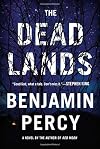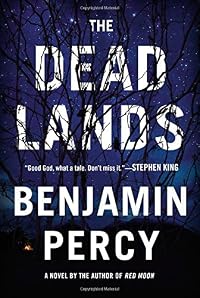
The Dead Lands
by Benjamin Percy
On This Page
Description
In Benjamin Percy's new thriller, a postapocalyptic reimagining of the Lewis and Clark saga, a super flu and nuclear fallout have made a husk of the world we know. A few humans carry on, living in outposts such as the Sanctuary—the remains of Saint Louis—a shielded community that owes its survival to its militant defense and fear-mongering leaders.Then a rider comes from the wasteland beyond its walls. She reports on the outside world: west of the Cascades rain falls, crops grow, show more civilization thrives. But there is danger too: the rising power of an army that pillages and enslaves every community they happen upon.
Against the wishes of the Sanctuary, a small group sets out in secrecy. Led by Lewis Meriwether and Mina Clark, they hope to expand their infant nation, and to reunite the States. But the Sanctuary will not allow them to escape without a fight.
. show less
Tags
Recommendations
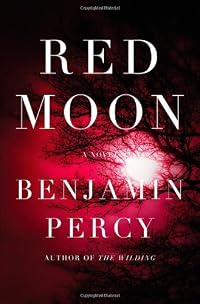


Member Recommendations
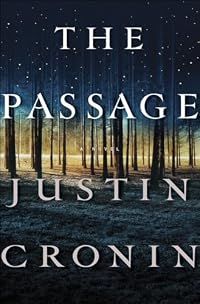
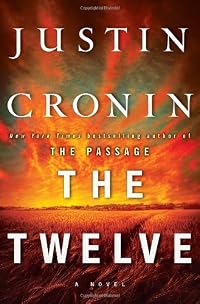
4leschats Both this books and the 2 in The Passage Trilogy (The Passage and The Twelve)address alterations in the natural universe brought on by post-apocalyptic changes. Many common elements: journeying through devastation, survival, overcoming evil, etc.
4leschats Post-apocalyptic water shortage leads to power struggles and fights for survival
Member Reviews
I won the ARC of this novel through the Goodreads' First Reads giveaway.
The Dead Lands is an inventive re-imagining of the Lewis and Clark expedition, only set in a post-apocalyptic America that has been ravaged by a super-virus and then nuked to oblivion. I think this book particularly shines in its character development--they are all deeply flawed, but (mostly) thoroughly endearing as we follow them over the months on the trail as well as within the Sanctuary. I grew to really like the female leads in particular. Percy also did one helluva job balancing such detailed back story with a gripping progression of the plot--I was never disappointed to drop one thread to jump to another, and then back again. And even though this looks to be show more the start of a series, the end wraps up nicely enough to make this a decent standalone novel. I had a few minor quibbles with the set-up of the Sanctuary--being a native St. Louisan, I sometimes found his descriptions a little off, particularly to the layout of the city--and some of the dialogue and characterization at the very end felt a bit too cheesy and unlike our heroes. However, these were, as I said, minor and almost completely overshadowed by the tension and character development. I'm not sure if this adds anything new to the post-apocalyptic canon, but it certainly earns a stalwart placement within it nonetheless. It hits all the marks with great satisfaction.
********
Read as my Read Harder published-this-year challenge. show less
The Dead Lands is an inventive re-imagining of the Lewis and Clark expedition, only set in a post-apocalyptic America that has been ravaged by a super-virus and then nuked to oblivion. I think this book particularly shines in its character development--they are all deeply flawed, but (mostly) thoroughly endearing as we follow them over the months on the trail as well as within the Sanctuary. I grew to really like the female leads in particular. Percy also did one helluva job balancing such detailed back story with a gripping progression of the plot--I was never disappointed to drop one thread to jump to another, and then back again. And even though this looks to be show more the start of a series, the end wraps up nicely enough to make this a decent standalone novel. I had a few minor quibbles with the set-up of the Sanctuary--being a native St. Louisan, I sometimes found his descriptions a little off, particularly to the layout of the city--and some of the dialogue and characterization at the very end felt a bit too cheesy and unlike our heroes. However, these were, as I said, minor and almost completely overshadowed by the tension and character development. I'm not sure if this adds anything new to the post-apocalyptic canon, but it certainly earns a stalwart placement within it nonetheless. It hits all the marks with great satisfaction.
********
Read as my Read Harder published-this-year challenge. show less
It's 150 years after a superflu epidemic and subsequent nuclear missile strike/power plant meltdown have decimated America. When the crisis hit, the city of St. Louis walled themselves off from the rest of the country and called themselves the Sanctuary; no one but the rangers are permitted outside the wall, where it's believed that nothing survives but mutant sand wolves and giant spiders. Then a rider appears, a girl with completely black eyes. She has brought a message of distant Oregon where there is still water and green things grow. Her name is Gawea and she takes Meriweather Lewis, a woman ranger named Clark, her lover and her brother, and a doctor back with her. They are on a mission to meet up with Aran Burr, a sorcerer-psychic show more type. It's a harrowing journey, and when they get there... well, things aren't as they seem, of course.
(Aren't the names just too cute? Lewis and Clark--do you get it? Of course you do.)
This post-apocalyptic/dark fantasy/horror/quest/adventure reminded me strongly of The Stand, Swan Song, and The Passage. I think Percy is earnestly trying to add his own contribution to the mix, but this book just falls short. There is a certain roteness to it, a by-the-numbers feel, that detracts from any suspense that might have been engendered. The characters, with their allusionary names, never really come to life. Percy is definitely of the "anyone can die at any time" school, and that too seems predictable, like he's killing people off just to kill them off. Crucially, the reader doesn't particularly care.
There are a few good scenes. The mutant albino bats part is pretty exciting, but it seems unconnected to anything else. There was one part, where just for a second, when we get in the Gawea's head for the first time, that I felt excited, as if this novel was not heading where I thought it was heading. But that spark was quickly stamped out. I finished the novel not because I wanted to but because I had come too far to give up on it.
This book seems manufactured, as if it were assembled in a factory. It's not badly written, but it doesn't spark emotion. It never feels truly real. Its promising premise enticed me to buy it, but for me, it was a disappointment. show less
(Aren't the names just too cute? Lewis and Clark--do you get it? Of course you do.)
This post-apocalyptic/dark fantasy/horror/quest/adventure reminded me strongly of The Stand, Swan Song, and The Passage. I think Percy is earnestly trying to add his own contribution to the mix, but this book just falls short. There is a certain roteness to it, a by-the-numbers feel, that detracts from any suspense that might have been engendered. The characters, with their allusionary names, never really come to life. Percy is definitely of the "anyone can die at any time" school, and that too seems predictable, like he's killing people off just to kill them off. Crucially, the reader doesn't particularly care.
There are a few good scenes. The mutant albino bats part is pretty exciting, but it seems unconnected to anything else. There was one part, where just for a second, when we get in the Gawea's head for the first time, that I felt excited, as if this novel was not heading where I thought it was heading. But that spark was quickly stamped out. I finished the novel not because I wanted to but because I had come too far to give up on it.
This book seems manufactured, as if it were assembled in a factory. It's not badly written, but it doesn't spark emotion. It never feels truly real. Its promising premise enticed me to buy it, but for me, it was a disappointment. show less
150 years after a flu epidemic and reactionary nuclear war all but destroy the earth, a small party of explorers escape a fortified city at the center of the former St. Louis, bound for Oregon. The leaders of the group, the brains and the brawn respectively, are named Lewis & Clark.
I was immediately sucked in to this world, and overall, I really enjoyed the ride, but the science is a bit wonky (even non-sciency me saw that) and some of the more ridiculous elements(giant spiders, giant albino bats, albino bears) felt unnecessary and didn't really contribute to the plot.
With that said, I really enjoyed the story. I was able to suspend disbelief for the most part and go along for the ride. Lewis, Clark, and all the other main characters show more are brought to life masterfully & the post-apocolyptic world jumps off the page.
The ending is also a little weird/abrupt, perhaps setting up a sequel, which I wouldn't mind at all. I'd love more if this world & these (surviving) characters. show less
I was immediately sucked in to this world, and overall, I really enjoyed the ride, but the science is a bit wonky (even non-sciency me saw that) and some of the more ridiculous elements
With that said, I really enjoyed the story. I was able to suspend disbelief for the most part and go along for the ride. Lewis, Clark, and all the other main characters show more are brought to life masterfully & the post-apocolyptic world jumps off the page.
The ending is also a little weird/abrupt, perhaps setting up a sequel, which I wouldn't mind at all. I'd love more if this world & these (surviving) characters. show less
As Stephen King blurbs on the cover, this is a hell of a story. Easy read, interesting plot. My only reservation: Is the market too saturated with post-apocalyptic novels with mysterious heroines and characters with supernatural powers? Perhaps.
I appreciate what Percy was trying to do with this novel, but it missed the mark for me. I enjoyed his writing style and evocative prose quite a lot, though it didn't make up for everything that the story itself was lacking.
Despite the apparent high stakes, I found it difficult to care much about the characters. I was more invested in the outcome of Simon and Ella's stories than that of Lewis, Clark, Gawea & co. As others have mentioned, the last 50 pages are where things begin to go off the rails a little. I wondered how all of the various ends could be tied up in such a short span of pages, and the answer is: poorly! The ending, especially the epilogue and the few paragraphs immediately beforehand, completely destroys the vibe of the show more rest of the book for me. The pacing of the last 1/4 of the book is very different and really ruined the last bits of enjoyment I was getting from the story.
Smaller nitpicks: I HATE the cutesy naming scheme. It isn't so much a "nod" to the real life Lewis and Clark expedition as it is a slap in the face. I also didn't like the constant references to current culture such as the numerous mentions of 9/11... Is this the only (inter)national tragedy that Percy has heard of? show less
Despite the apparent high stakes, I found it difficult to care much about the characters. I was more invested in the outcome of Simon and Ella's stories than that of Lewis, Clark, Gawea & co. As others have mentioned, the last 50 pages are where things begin to go off the rails a little. I wondered how all of the various ends could be tied up in such a short span of pages, and the answer is: poorly! The ending, especially the epilogue and the few paragraphs immediately beforehand, completely destroys the vibe of the show more rest of the book for me. The pacing of the last 1/4 of the book is very different and really ruined the last bits of enjoyment I was getting from the story.
Smaller nitpicks: I HATE the cutesy naming scheme. It isn't so much a "nod" to the real life Lewis and Clark expedition as it is a slap in the face. I also didn't like the constant references to current culture such as the numerous mentions of 9/11... Is this the only (inter)national tragedy that Percy has heard of? show less
I missed reading Benjamin Percy's last novel, Red Novel. The positive reviews I read had me eager to read his latest release, The Dead Lands.
Percy had me at 'post-apocalyptic'. I love books that explore what the world might be like when what we know ends.
Between a super flu and nuclear fallout, most of mankind and society has been wiped out. But there are pockets of humanity left. One such group has barricaded themselves in what is left of St. Louis and dubbed it The Sanctuary. It's a militant society, but at least the inhabitants are alive behind its walls. (It somewhat reminded me of Woodbury from The Walking Dead) And until the day a young woman on a horse rides through the gates they are satisfied with being alive. But not everyone show more is. A young pair -Lewis Meriwether and Mina Clark decide to go outside the walls. The young woman says there is much more out there - water, crops and a better society.
Lewis and Clark (Aha - just like the explorers!) strike out. But the journey there is arduous, filled with danger from within the group, from The Sanctuary and the land they are traversing. And the girl may have lied....
I loved the idea, I liked the characters - actually my favourite character was Ella - a supporting player from The Sanctuary. I did find the mayor of The Sanctuary and his henchman Sheriff a bit cliched. Percy has done a good job with world building. The journey to the unknown will have you rooting for our explorers. But. Yes, there's a but. No doubt, Percy is a talented wordsmith. But sometimes too many words is just, well too much. I wanted more action, not more descriptions. I started getting bogged down in the details - and I found myself skimming.
Creatures such as albino giant bats seemed more fantastical than apocalyptic. Maybe that's just me - and what I was hoping to find. A good read, but not great for this reader. show less
Percy had me at 'post-apocalyptic'. I love books that explore what the world might be like when what we know ends.
Between a super flu and nuclear fallout, most of mankind and society has been wiped out. But there are pockets of humanity left. One such group has barricaded themselves in what is left of St. Louis and dubbed it The Sanctuary. It's a militant society, but at least the inhabitants are alive behind its walls. (It somewhat reminded me of Woodbury from The Walking Dead) And until the day a young woman on a horse rides through the gates they are satisfied with being alive. But not everyone show more is. A young pair -Lewis Meriwether and Mina Clark decide to go outside the walls. The young woman says there is much more out there - water, crops and a better society.
Lewis and Clark (Aha - just like the explorers!) strike out. But the journey there is arduous, filled with danger from within the group, from The Sanctuary and the land they are traversing. And the girl may have lied....
I loved the idea, I liked the characters - actually my favourite character was Ella - a supporting player from The Sanctuary. I did find the mayor of The Sanctuary and his henchman Sheriff a bit cliched. Percy has done a good job with world building. The journey to the unknown will have you rooting for our explorers. But. Yes, there's a but. No doubt, Percy is a talented wordsmith. But sometimes too many words is just, well too much. I wanted more action, not more descriptions. I started getting bogged down in the details - and I found myself skimming.
Creatures such as albino giant bats seemed more fantastical than apocalyptic. Maybe that's just me - and what I was hoping to find. A good read, but not great for this reader. show less
Didn't hold my interest.
(Full disclosure: I received a free electronic ARC for review through NetGalley.)
DNF at 45%.
As far as they know, the citizens of the Sanctuary - located in what was once downtown St. Louis - are all that's left of humanity. It's been 150 years since the H3L1 flu (HELL - get it?) brought about the apocalypse; and several generations since a refugee has approached the Sanctuary's towering wall, begging for admittance (only to be shot on sight). Surrounded by a desert wasteland crawling with monstrous mutations, squeezed on all sides by an unrelenting drought, what was meant as a place of asylum has devolved into a prison of sorts, marred by hunger, poverty, and inequity.
While some still dare to dream - of show more connecting with other communities, traveling to places where water falls freely, perhaps one day rebuilding the United States of America - giving voice to one's hopes has become increasingly dangerous since Thomas Lancer was elected Mayor. Once reserved for murderers and rapists, public executions have become a means of silencing dissent.
But when a strange young woman, with eyes as wide and black as night, arrives at the gate bearing a cryptic letter, a small group of defectors decides to hasten their escape plan. Led by Wilhelmina "Mina" Clark, a sentry/ranger, and Lewis Meriwether (Lewis and Clark - get it?), the curator of the Sanctuary's museum who seems to possess powers every bit as weird as those of the foreigner Gawea, the group sets off for Gawea's home in Oregon, battling giant spiders and human-sized bats along the way.
And that's the first 45% of The Dead Lands.
I hate giving up on a book, but I just couldn't bear to finish this one. It's difficult to pinpoint why; the writing isn't bad, but it isn't great, either.
There were a lot of little things that rubbed me the wrong way: The forced cleverness (see, e.g., H3L1; Lewis & Clark). The overuse of similes. The repetition of various facts, as if we the readers cannot be trusted to remember the contents of previous chapters. Odd details that are as unbelievable as they are inconsequential.
(How have cans of food been left to spoil in the vault during times of food rationing and starvation? Where did the Mayor get all these colorful birds for his atrium, when the only species that frequent the sanctuary are vultures and crows? Assuming their ancestors were present from the start, shouldn't years of inbreeding coupled with radiation have warped them beyond recognition? You know, just like the wildlife, but worse? And is there seriously a zoo in the Sanctuary? There's also the ridiculousness of farming animals for food during a water shortage, but sadly that one has a strong basis in reality.
Oh, and where's the racial diversity? St. Louis was only 46.4% white in 2013, you know. New para because diversity is totally consequential.)
Worse still, the characters are such roughly drawn caricatures (the world-weary and cynical protector; the kindly doctor; the socially awkward, misanthropic nerd; the corrupt and evil sheriff, propping up the even more corrupt and evil mayor; the mysterious and beautiful stranger) that I had trouble taking them seriously, let alone investing myself in them emotionally. It was when I found myself yawning at a main character's prospective death (Clark vs. the giant albino bats) that I finally decided to throw in the towel.
Other reviewers have likened this to a store-brand knockoff of Justin Cronin's The Passage, and I have to agree. A worldwide pandemic (vampires/the flu). An ancient wall (St. Louis/California). The failing society contained within (dying batteries/a drought). The arrival of a strange yet powerful young girl (Amy/Gawea). The siren call of a psychic, seemingly omnipotent leader (Babcock/Aaron Burr). The comparisons are difficult to overlook.
Over on Goodreads, Gabriella noted: "If you read The Passage and found it too long, perhaps Dead Lands is for you." While The Passage has more than 300 pages on The Dead Lands, it still feels shorter thanks to the masterful writing, detailed world-building, and complex characters. If you haven't yet, go read it. Don't even worry about the length, okay.
Even though I didn't get much out of it, I can't quite bring myself to give The Dead Lands less than three stars - the writing's not my favorite, but neither is it atrocious. It just didn't do it for me and, with a book pile a mile long, I couldn't justify powering through to the end.
http://www.easyvegan.info/2015/04/15/the-dead-lands-by-benjamin-percy/ show less
(Full disclosure: I received a free electronic ARC for review through NetGalley.)
DNF at 45%.
As far as they know, the citizens of the Sanctuary - located in what was once downtown St. Louis - are all that's left of humanity. It's been 150 years since the H3L1 flu (HELL - get it?) brought about the apocalypse; and several generations since a refugee has approached the Sanctuary's towering wall, begging for admittance (only to be shot on sight). Surrounded by a desert wasteland crawling with monstrous mutations, squeezed on all sides by an unrelenting drought, what was meant as a place of asylum has devolved into a prison of sorts, marred by hunger, poverty, and inequity.
While some still dare to dream - of show more connecting with other communities, traveling to places where water falls freely, perhaps one day rebuilding the United States of America - giving voice to one's hopes has become increasingly dangerous since Thomas Lancer was elected Mayor. Once reserved for murderers and rapists, public executions have become a means of silencing dissent.
But when a strange young woman, with eyes as wide and black as night, arrives at the gate bearing a cryptic letter, a small group of defectors decides to hasten their escape plan. Led by Wilhelmina "Mina" Clark, a sentry/ranger, and Lewis Meriwether (Lewis and Clark - get it?), the curator of the Sanctuary's museum who seems to possess powers every bit as weird as those of the foreigner Gawea, the group sets off for Gawea's home in Oregon, battling giant spiders and human-sized bats along the way.
And that's the first 45% of The Dead Lands.
I hate giving up on a book, but I just couldn't bear to finish this one. It's difficult to pinpoint why; the writing isn't bad, but it isn't great, either.
There were a lot of little things that rubbed me the wrong way: The forced cleverness (see, e.g., H3L1; Lewis & Clark). The overuse of similes. The repetition of various facts, as if we the readers cannot be trusted to remember the contents of previous chapters. Odd details that are as unbelievable as they are inconsequential.
(How have cans of food been left to spoil in the vault during times of food rationing and starvation? Where did the Mayor get all these colorful birds for his atrium, when the only species that frequent the sanctuary are vultures and crows? Assuming their ancestors were present from the start, shouldn't years of inbreeding coupled with radiation have warped them beyond recognition? You know, just like the wildlife, but worse? And is there seriously a zoo in the Sanctuary? There's also the ridiculousness of farming animals for food during a water shortage, but sadly that one has a strong basis in reality.
Oh, and where's the racial diversity? St. Louis was only 46.4% white in 2013, you know. New para because diversity is totally consequential.)
Worse still, the characters are such roughly drawn caricatures (the world-weary and cynical protector; the kindly doctor; the socially awkward, misanthropic nerd; the corrupt and evil sheriff, propping up the even more corrupt and evil mayor; the mysterious and beautiful stranger) that I had trouble taking them seriously, let alone investing myself in them emotionally. It was when I found myself yawning at a main character's prospective death (Clark vs. the giant albino bats) that I finally decided to throw in the towel.
Other reviewers have likened this to a store-brand knockoff of Justin Cronin's The Passage, and I have to agree. A worldwide pandemic (vampires/the flu). An ancient wall (St. Louis/California). The failing society contained within (dying batteries/a drought). The arrival of a strange yet powerful young girl (Amy/Gawea). The siren call of a psychic, seemingly omnipotent leader (Babcock/Aaron Burr). The comparisons are difficult to overlook.
Over on Goodreads, Gabriella noted: "If you read The Passage and found it too long, perhaps Dead Lands is for you." While The Passage has more than 300 pages on The Dead Lands, it still feels shorter thanks to the masterful writing, detailed world-building, and complex characters. If you haven't yet, go read it. Don't even worry about the length, okay.
Even though I didn't get much out of it, I can't quite bring myself to give The Dead Lands less than three stars - the writing's not my favorite, but neither is it atrocious. It just didn't do it for me and, with a book pile a mile long, I couldn't justify powering through to the end.
http://www.easyvegan.info/2015/04/15/the-dead-lands-by-benjamin-percy/ show less
Members
- Recently Added By
Published Reviews
ThingScore 50
***
Into The West.
If you have been reading as long as I have, you will have come across more than a few post-apocalyptic novels. I’m not exactly sure what the attraction is, but I think it might be the contradictory pleasure of destroying one world and re-creating another. Whatever the case, a writer needs to find a fresh new take if they want their book stand out. The Dead Lands, by Benjamin show more Percy has some new angles, but it didn’t blow me away.
The Dead Lands is essentially based on the western adventures of the Corps of Discovery; two of its main characters even share almost identical names; Lewis Meriwether and Mina Clark, which is kind of conceptually audacious, but aside from that it doesn’t mean too much.
In the future, one hundred fifty years after war and disease and famine have nearly destroyed the world, St. Louis, now called the Sanctuary, is a shielded community that has managed to survive through a militant defense and draconian leadership. Life there is brutal and harsh, unless you are the Mayor or one of his cronies. For all they know they may be the last city left in the world, until one day a rider shows up, claiming to be from the West, with tales of bountiful water and food, but also the threat of a dangerous army, bent on conquest. Her name is Gawea. The Mayor, who is almost a caricature of the evil bureaucrat, wants to execute her. A guard, Clark, and the town historian/curator, Lewis, decide to sneak out of the city and head West. They are followed by a small yet plucky group of ragtag explorers, and the rest of the novel follows the explorers on their trek, and some of their friends left in the city who decide to rebel and overthrow their dictatorial leaders.
Mr. Percy’s prose is startling, but at times stilted. He knows how to plot, and keeps the various story-lines and characters rolling along. The action scenes were well-handled, and there was a lot of suspense. The main problem I had was with the characters. There are a variety of types, but I found most of them boring. With the exception of Mina, I was pretty much indifferent to their fates. While I kept reading to find out what would happen next, I really didn’t worry about the fate of most of the characters, which damped down the tension a bit. It wasn’t a question of them being likable or unlikeable, but just flat.
My other complaint was that near the end the action felt very compressed compared to the pace of the rest of the novel. It felt like Mr. Percy didn’t want to past a certain length, so he had to cram a lot in at the end. The world was a bit wonky as well, with giant vampire bats and charters developing “super” powers, which took away from what was otherwise a gritty and believable world. What frustrated me was that this book was so close to being a real knock-out, but fell just a little short. The Dead Lands is a solid novel, but I’m really looking forward to see what Mr. Percy does next.
Review by: Mark Palm
Full Reviews Available at: http://www.thebookendfamily.weebly.co... show less
Into The West.
If you have been reading as long as I have, you will have come across more than a few post-apocalyptic novels. I’m not exactly sure what the attraction is, but I think it might be the contradictory pleasure of destroying one world and re-creating another. Whatever the case, a writer needs to find a fresh new take if they want their book stand out. The Dead Lands, by Benjamin show more Percy has some new angles, but it didn’t blow me away.
The Dead Lands is essentially based on the western adventures of the Corps of Discovery; two of its main characters even share almost identical names; Lewis Meriwether and Mina Clark, which is kind of conceptually audacious, but aside from that it doesn’t mean too much.
In the future, one hundred fifty years after war and disease and famine have nearly destroyed the world, St. Louis, now called the Sanctuary, is a shielded community that has managed to survive through a militant defense and draconian leadership. Life there is brutal and harsh, unless you are the Mayor or one of his cronies. For all they know they may be the last city left in the world, until one day a rider shows up, claiming to be from the West, with tales of bountiful water and food, but also the threat of a dangerous army, bent on conquest. Her name is Gawea. The Mayor, who is almost a caricature of the evil bureaucrat, wants to execute her. A guard, Clark, and the town historian/curator, Lewis, decide to sneak out of the city and head West. They are followed by a small yet plucky group of ragtag explorers, and the rest of the novel follows the explorers on their trek, and some of their friends left in the city who decide to rebel and overthrow their dictatorial leaders.
Mr. Percy’s prose is startling, but at times stilted. He knows how to plot, and keeps the various story-lines and characters rolling along. The action scenes were well-handled, and there was a lot of suspense. The main problem I had was with the characters. There are a variety of types, but I found most of them boring. With the exception of Mina, I was pretty much indifferent to their fates. While I kept reading to find out what would happen next, I really didn’t worry about the fate of most of the characters, which damped down the tension a bit. It wasn’t a question of them being likable or unlikeable, but just flat.
My other complaint was that near the end the action felt very compressed compared to the pace of the rest of the novel. It felt like Mr. Percy didn’t want to past a certain length, so he had to cram a lot in at the end. The world was a bit wonky as well, with giant vampire bats and charters developing “super” powers, which took away from what was otherwise a gritty and believable world. What frustrated me was that this book was so close to being a real knock-out, but fell just a little short. The Dead Lands is a solid novel, but I’m really looking forward to see what Mr. Percy does next.
Review by: Mark Palm
Full Reviews Available at: http://www.thebookendfamily.weebly.co... show less
added by thebookendfamily
Lists

Dystopian and Apocalyptic Literature
350 works; 74 members

Books Read in 2016
4,666 works; 199 members
Author Information

434+ Works 4,550 Members
Ben Percy received a BA with Honors from Brown University and an MFA with a teaching fellowship from Southern Illinois University. Percy has taught at the University of Wisconsin-Stevens Point and Marquette University. He currently teaches creative writing at Iowa State University. He is the author of two novels, Red Moon (forthcoming from Grand show more Central in 2012), The Wilding (Graywolf, 2010), and two books of short stories, Refresh, Refresh (Graywolf, 2007) and The Language of Elk (Carnegie Mellon, 2006). Ben lives in Ames, Iowa, with his wife and two children. (Bowker Author Biography) show less
Some Editions
Awards and Honors
Awards
Work Relationships
Common Knowledge
- Canonical title
- The Dead Lands
- People/Characters
- Lewis Meriwether; Mina Clark; Gawea; Aran Burr; Thomas Lancer; Reed
- Important places
- St Louis, Missouri, USA; Astoria, Oregon, USA
- Epigraph
- All stories are in conversation with other stories--Neil Gaiman
- Dedication
- For Lisa
- First words
- She knows there is something wrong with the baby.
- Last words
- (Click to show. Warning: May contain spoilers.)"We're here to help."
- Blurbers
- King, Stephen; Lepucki, Edan; Walter, Jess; Brockmeier, Kevin; Frey, James
Classifications
Statistics
- Members
- 379
- Popularity
- 82,231
- Reviews
- 22
- Rating
- (3.40)
- Languages
- English
- Media
- Paper, Audiobook, Ebook
- ISBNs
- 17
- ASINs
- 4