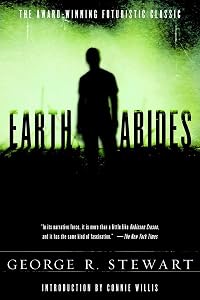
Earth Abides
by George R. Stewart
On This Page
Description
First published in 1949, award-winning Earth Abides is one of the most influential science-fiction novels of the twentieth century. It remains a fresh, provocative story of apocalyptic pandemic, societal collapse, and rebirth. The cabin had always been a special retreat for Isherwood Williams, a haven from the demands of society. But one day while hiking, Ish was bitten by a rattlesnake, and the solitude he had so desired took on dire new significance. He was sick for days--and often show more delirious--waking up to find two strangers peering in at him from the cabin door. Yet oddly, instead of offering help, the two ran off as if terrified. Not long after, the coughing began. Ish suffered chills and fever, and a measles-like rash on his skin. He was one of the few people in the world to live through that peculiar malady, but he didn't know it then. Ish headed home when he finally felt himself again--and noticed the strangeness almost immediately. No cars passed him on the road; the gas station not far from his cabin looked abandoned; and he was shocked to see the body of a man on the roadside near a small town. Without a radio or phone, Ish had no idea of humanity's abrupt demise. He had escaped death, yet could not escape the catastrophe--and with an eerie detachment he found himself curious as to how long it would be before all traces of civilization faded from Earth. show lessTags
Recommendations












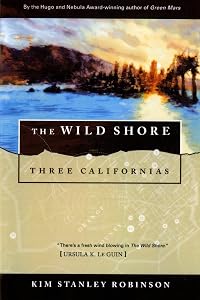

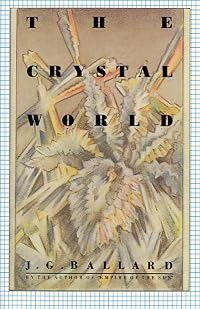
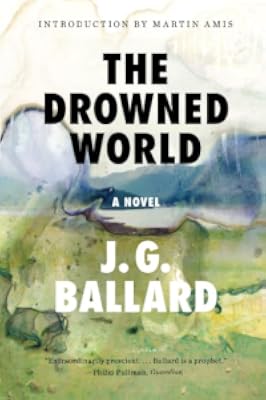
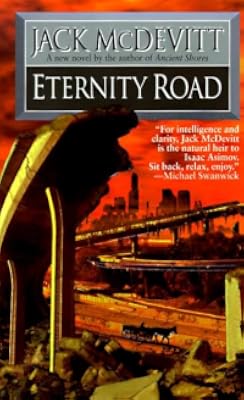
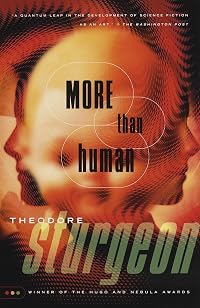
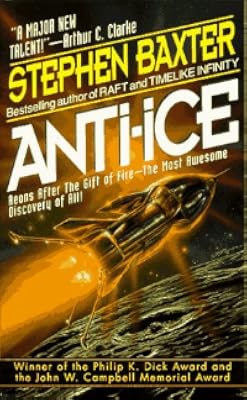


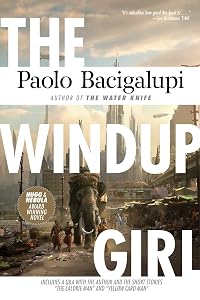
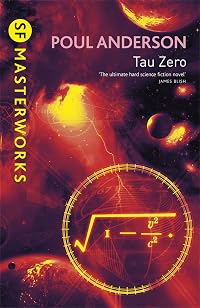
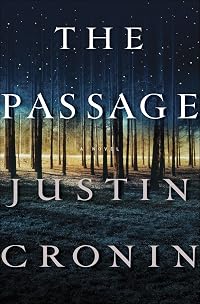
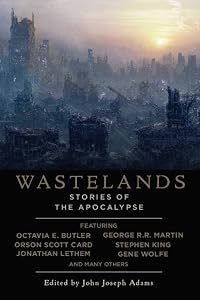
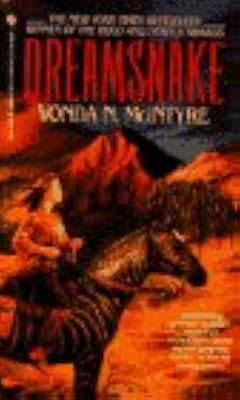
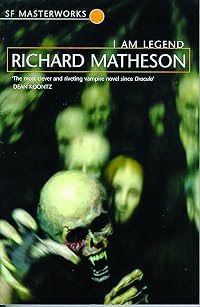


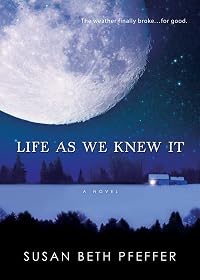
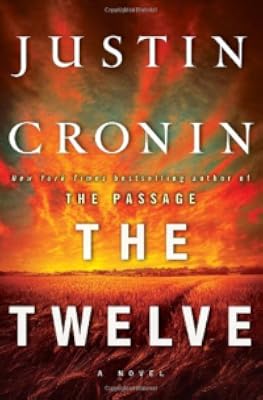
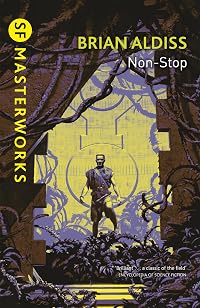


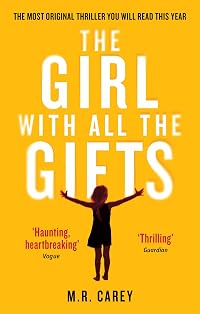
Member Recommendations

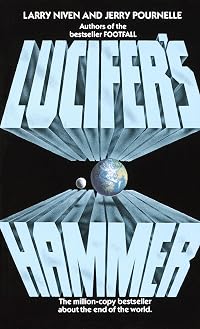
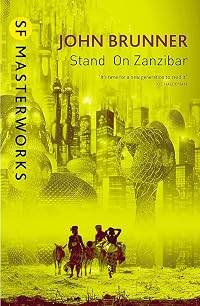
sturlington Stephen King has said that Earth Abides was an inspiration for The Stand.
70
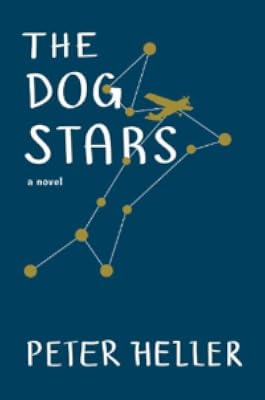
timspalding Another (and far better) classic post-apocalyptic story.
40
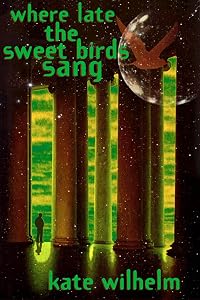
Bookmarque another post-apocalyptic book that takes a more introspective approach to the role of humans on the earth.
20

jlparent Main character witnesses/narrates the fall of civilization and its rebirth over a long time.


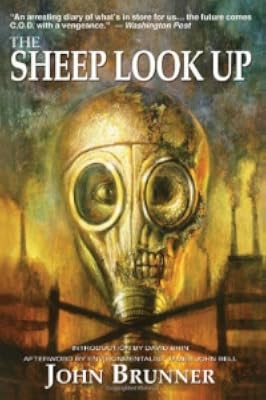
ecureuil Both books share a story based on the world population being wiped out by a deadly disease, and a young survivor left alone trying to survive
Member Reviews
A post-apocalyptic gem. An academic awakes from delirium to find a disease has driven away or killed all except a few who are immune. The following story is more than a tale of survival. It's a thoughtful study of society, environment, and the human condition. What thoughts and urges pass through the survivors? How do their outlooks differ? Do the stragglers work together and, if so, do they form a new civilisation? What tenets or mores do newly founded societies hold? How does the animal extinct to preserve its species manifest itself? These are universal, ageless questions; and the fact Stewart addresses them is why at no point does the novel feel dated.
Earth Abides inspired Stephen King's post-apocalyptic The Stand.
Earth Abides inspired Stephen King's post-apocalyptic The Stand.
Brian Aldiss coined the term "cozy catastrophe" about John Wyndham's work. It being an end of the world event where the character doesn't suffer enough or there's not always impending doom right at the door. In Earth Abides, the main character, Ish, is bedridden throughout the entire apocalypse. Then we follow him when he is clear-headed. No zombies. No aliens. No evil government stooges.
Ish isn't a scientist or a doctor, or a superhuman soldier; he's just a slightly more intelligent person who understands the present and the importance the future holds. Along the way he picks up a few group of survivors. The dynamic of the group is something that is interesting as we see a small society form. Within this, Ish becomes a defacto leader show more and the idealist - but an idealist who has reality smack into him several times, especially when it concerns other people. While you do get a semblance of others actions and reasons, we are constantly following Ish and his internal dialogue. Society is gone and all that remains are the remains.
But now children come into the mix. Society is still in struggle within their group. Ish wants to build the children to take over and remember the times before and achieve order once again. But what does order and society look like when you only have less than a dozen people who existed in the "before times".
There are some amazing juxopositions in this book as well. Ish takes a wife, Emma, names that have origin towards "Adam" and "Eve". We see the story starts out with Ish (Adam) being bitten by a snake and then he's thrust out into a world of disorder but also the Earth continues. Within this, there is small discussions of religion as in Ish is not religious and views it as a distraction from the unity needed among the group and focus on survival tasks. Then to double back, mythology springs up on things that for Ish are common place but for the children who only know the world after the Great Disaster become totems and exalted titles.
There's no big shootouts in this book. There's no stopping the mad bomber or brigand. It is a calm book but the tension and drama are beautifully done. The dealing with an outside stranger to the group and the impact of actions taken is such a high point. But there are little movements that are big deals and then there are big deals where you think the story will focus on but it settles into a more somber and carefree tone. It's amazing.
I almost come to think of apocalypse stories truly bringing questions of the purpose of life and humanity front and center and this one has done it the most by not focusing on the disaster but on the life and humanity. This would be an amazing book for a group discussion or reading group. I was tempted not to finish it as I saw the end coming and didn't want it to end - a sure sign of a good book. A definite recommendendation. Don't let it sit on your shelf. But if you do, the Earth Abides. Final Grade - A+ show less
Ish isn't a scientist or a doctor, or a superhuman soldier; he's just a slightly more intelligent person who understands the present and the importance the future holds. Along the way he picks up a few group of survivors. The dynamic of the group is something that is interesting as we see a small society form. Within this, Ish becomes a defacto leader show more and the idealist - but an idealist who has reality smack into him several times, especially when it concerns other people. While you do get a semblance of others actions and reasons, we are constantly following Ish and his internal dialogue. Society is gone and all that remains are the remains.
But now children come into the mix. Society is still in struggle within their group. Ish wants to build the children to take over and remember the times before and achieve order once again. But what does order and society look like when you only have less than a dozen people who existed in the "before times".
There are some amazing juxopositions in this book as well. Ish takes a wife, Emma, names that have origin towards "Adam" and "Eve". We see the story starts out with Ish (Adam) being bitten by a snake and then he's thrust out into a world of disorder but also the Earth continues. Within this, there is small discussions of religion as in Ish is not religious and views it as a distraction from the unity needed among the group and focus on survival tasks. Then to double back, mythology springs up on things that for Ish are common place but for the children who only know the world after the Great Disaster become totems and exalted titles.
There's no big shootouts in this book. There's no stopping the mad bomber or brigand. It is a calm book but the tension and drama are beautifully done. The dealing with an outside stranger to the group and the impact of actions taken is such a high point. But there are little movements that are big deals and then there are big deals where you think the story will focus on but it settles into a more somber and carefree tone. It's amazing.
I almost come to think of apocalypse stories truly bringing questions of the purpose of life and humanity front and center and this one has done it the most by not focusing on the disaster but on the life and humanity. This would be an amazing book for a group discussion or reading group. I was tempted not to finish it as I saw the end coming and didn't want it to end - a sure sign of a good book. A definite recommendendation. Don't let it sit on your shelf. But if you do, the Earth Abides. Final Grade - A+ show less
More than speculative disaster fiction, Earth Abides is a post-apocalyptic novel about human civilization after a planet wide cataclysm. As revelatory narrative, it is not only sweeping and thoughtful, but also elemental and philosophical enough to show how futile were the backyard fallout shelters of the1950’s, and also the gasoline hoarding, food-stuffed lairs of 21st century doomsday preppers now. Author George R. Stewart travels beyond such temporary human stopgaps to illuminate the depth and breadth of a calamity affecting generations of humans.
Set in the San Francisco East Bay Area, not only does his novel introduce and follow individual men and women characters who grow, develop, and decay across their life spans; but also he show more makes Nature (weather, climate, season, fire, water, birth, growth, regression and succession, population collapse, death, and pandemic) and the Planet Earth brilliant primary characters that drive this tale. Stewart wrote about what he knew: including great 20th century Bay Area icons---the Golden Gate and Bay Bridge, and the colossal Doe Library (built 1910) at the University of California, Berkeley. All play roles as physical links to possibility, connection, and knowledge in Earth Abides, as Stewart attempts to discover what is essential, and what of civilization will or will not atrophy or survive. All three were very familiar to Stewart, who was a professor at the University of California, Berkeley.
Words like “staggering” and “heroic” describe the progress of this work. The result is amazing, considering Stewart’s novel was published in1949, before personal computers, satellites, and spacecraft. In this book he recreates the sympathetic and sobering tone of the prayer, “earth to earth, ashes to ashes, dust to dust” from the Book of Common Prayer, itself derived from Genesis 3:19, and combines it with the poetic perspective of Ecclesiastes. In fact Earth Abides owes much of its point-of-view, including its title, to the voice of the “teacher” Koheleth at the heart of Ecclesiastes, who investigates and ponders the gravity, moral purpose, and meaning of human life. But, this novel is no religious tract. Instead it develops a logical and spiritual consideration of what a devastated humanity set into a fragile landscape, can be or become. Both yesterday’s earthbound, and today’s orbiting, see-all humans can empathize with the hope and sorrow inherent in such an enterprise. As always Mankind’s character must bear the result, whether joy or blame in the end. Either way, no reader of Earth Abides will fail to be moved by the journey.___Val Morehouse, Reviewer. show less
Set in the San Francisco East Bay Area, not only does his novel introduce and follow individual men and women characters who grow, develop, and decay across their life spans; but also he show more makes Nature (weather, climate, season, fire, water, birth, growth, regression and succession, population collapse, death, and pandemic) and the Planet Earth brilliant primary characters that drive this tale. Stewart wrote about what he knew: including great 20th century Bay Area icons---the Golden Gate and Bay Bridge, and the colossal Doe Library (built 1910) at the University of California, Berkeley. All play roles as physical links to possibility, connection, and knowledge in Earth Abides, as Stewart attempts to discover what is essential, and what of civilization will or will not atrophy or survive. All three were very familiar to Stewart, who was a professor at the University of California, Berkeley.
Words like “staggering” and “heroic” describe the progress of this work. The result is amazing, considering Stewart’s novel was published in1949, before personal computers, satellites, and spacecraft. In this book he recreates the sympathetic and sobering tone of the prayer, “earth to earth, ashes to ashes, dust to dust” from the Book of Common Prayer, itself derived from Genesis 3:19, and combines it with the poetic perspective of Ecclesiastes. In fact Earth Abides owes much of its point-of-view, including its title, to the voice of the “teacher” Koheleth at the heart of Ecclesiastes, who investigates and ponders the gravity, moral purpose, and meaning of human life. But, this novel is no religious tract. Instead it develops a logical and spiritual consideration of what a devastated humanity set into a fragile landscape, can be or become. Both yesterday’s earthbound, and today’s orbiting, see-all humans can empathize with the hope and sorrow inherent in such an enterprise. As always Mankind’s character must bear the result, whether joy or blame in the end. Either way, no reader of Earth Abides will fail to be moved by the journey.___Val Morehouse, Reviewer. show less
Rating: 4* of five
The Publisher Says: A disease of unparalleled destructive force has sprung up almost simultaneously in every corner of the globe, all but destroying the human race. One survivor, strangely immune to the effects of the epidemic, ventures forward to experience a world without man. What he ultimately discovers will prove far more astonishing than anything he'd either dreaded or hoped for.
My Review: Call him Isherwood. (Cause that's his name.) On a camping trip in the mountains, Ish gets bitten by a rattlesnake and barely survives. Clearly he can't call for help on his cell because 1) the mountains and 2) 1949. After all his sufferings, Ish drives down the mountain and finds humanity...in Los Angeles...gone. Just not show more there. (Oddly, there are also not heaping mounds of dead bodies everywhere...he's only been gone a week or so, and the Plague killed quick. That nit being picked, I resume.) Ish spends his time alternately looking for survivors and ruminating on the justice and inevitability of the plague:
When he stops being stunned, he sets out to contact and assess his fellow survivors. He spends a lot of the book out a-wanderin', and he picks up here and there some fellow remnants. No one is a medical research genius or a high government official or anything, thank goodness, so no one knows where this plague came from, how many are dead in other places, or any of that other stuff that pockmarks other post-apocalyptic stories I've read. I completely buy that the survivors are shocked and isolated, where I've always been hmmphy about the better-informed-character stories.
Any road, time passes, life goes on, babies are born and people die and food is grown in tune with nature. We revert, in other words, to the way things were for ~10,000 years before monoculture and factory farming. Ish ages, and the younger people without strong attachments to the pre-apocalyptic world start to think about what the meaning of life is:
If there is an apocalypse while I'm alive, I'm makin' this my post-apocalyptic mission: Disestablishing religion. Ish is my soul-brother in this regard. But as you can imagine, he's fighting a rear-guard action despite being the oldest person anyone knows, and also the last survivor of Before in the Now. Having lived through the AIDS apocalypse, some days I feel the same way.
And as it must, Death comes for Ish at last, putting an end to his moanings about the stupidity of the human race for making the same mistakes that cost us so dearly before, his pessimistic views on the sustainability of his made tribe, and his invaluable store of knowledge...despite the fact that the whippersnappers don't listen:
I suspect all of us over a Certain Age feel this way to a greater or lesser degree. Plague or no plague, Youth isn't inclined to listen to Age, and apocalypse is relative. My apocalypse...the endangerment of tree books...is youth's Bright New Dawn, bulkless environmentally sound infinite stories! Yes, I'm going, I'm going, stop pushing me!
This work is licensed under a Creative Commons Attribution-NonCommercial-ShareAlike 3.0 Unported License. show less
The Publisher Says: A disease of unparalleled destructive force has sprung up almost simultaneously in every corner of the globe, all but destroying the human race. One survivor, strangely immune to the effects of the epidemic, ventures forward to experience a world without man. What he ultimately discovers will prove far more astonishing than anything he'd either dreaded or hoped for.
My Review: Call him Isherwood. (Cause that's his name.) On a camping trip in the mountains, Ish gets bitten by a rattlesnake and barely survives. Clearly he can't call for help on his cell because 1) the mountains and 2) 1949. After all his sufferings, Ish drives down the mountain and finds humanity...in Los Angeles...gone. Just not show more there. (Oddly, there are also not heaping mounds of dead bodies everywhere...he's only been gone a week or so, and the Plague killed quick. That nit being picked, I resume.) Ish spends his time alternately looking for survivors and ruminating on the justice and inevitability of the plague:
As for man, there is little reason to think that he can in the long run escape the fate of other creatures, and if there is a biological law of flux and reflux, his situation is now a highly perilous one. During ten thousand years his numbers have been on the upgrade in spite of wars, pestilences, and famines. This increase in population has become more and more rapid. Biologically, man has for too long a time been rolling an uninterrupted run of sevens.
When he stops being stunned, he sets out to contact and assess his fellow survivors. He spends a lot of the book out a-wanderin', and he picks up here and there some fellow remnants. No one is a medical research genius or a high government official or anything, thank goodness, so no one knows where this plague came from, how many are dead in other places, or any of that other stuff that pockmarks other post-apocalyptic stories I've read. I completely buy that the survivors are shocked and isolated, where I've always been hmmphy about the better-informed-character stories.
Any road, time passes, life goes on, babies are born and people die and food is grown in tune with nature. We revert, in other words, to the way things were for ~10,000 years before monoculture and factory farming. Ish ages, and the younger people without strong attachments to the pre-apocalyptic world start to think about what the meaning of life is:
If there is a God who made us and we did wrong before His eyes—as George says—at least we did wrong only because we were as God made us, and I do not think that He should set traps. Oh, you should know better than George! Let us not bring all that back into the world again—the angry God, the mean God—the one who does not tell us the rules of the game, and then strikes us when we break them. Let us not bring Him back.
If there is an apocalypse while I'm alive, I'm makin' this my post-apocalyptic mission: Disestablishing religion. Ish is my soul-brother in this regard. But as you can imagine, he's fighting a rear-guard action despite being the oldest person anyone knows, and also the last survivor of Before in the Now. Having lived through the AIDS apocalypse, some days I feel the same way.
And as it must, Death comes for Ish at last, putting an end to his moanings about the stupidity of the human race for making the same mistakes that cost us so dearly before, his pessimistic views on the sustainability of his made tribe, and his invaluable store of knowledge...despite the fact that the whippersnappers don't listen:
Then, though his sight was now very dim, he looked again at the young men. "They will commit me to the earth," he thought. "Yet I also commit them to the earth. There is nothing else by which men live. Men go and come, but earth abides."
I suspect all of us over a Certain Age feel this way to a greater or lesser degree. Plague or no plague, Youth isn't inclined to listen to Age, and apocalypse is relative. My apocalypse...the endangerment of tree books...is youth's Bright New Dawn, bulkless environmentally sound infinite stories! Yes, I'm going, I'm going, stop pushing me!
This work is licensed under a Creative Commons Attribution-NonCommercial-ShareAlike 3.0 Unported License. show less
What actually happens at a practical level when the majority of the human race is suddenly removed? How long do buildings stand, or the lights stay on, or water continue to flow? Some of these questions are addressed in this story, which grounds it, and stops it becoming just fantasy. Although the book was written in 1949, it has not aged that much, particularly in the light of COVID, and lockdowns. The passage of time accelerates somewhat in two bridge-like chapters, but this seems to work. There are times when the opposite happens, and there is a long period of philosophical reflection, which drags a little. The concern of the main character that the new community should be more creative rather than relying on stores of food and other show more necessities still available in shops, and the lack of response to the challenge of this idea is interesting. As is the rise of a new generation that has known nothing about how the world used to be pre-disaster. Recommended. show less
A worthwhile but ultimately disappointing read, Earth Abides is another of those books where its credibility and reputation comes from its status as one of the first of its genre, rather than of any particular literary merit. This is not to say it is poor: its prose is quite well-written and the themes well-articulated (if flawed). Though it could have done with some more dialogue just to loosen it up a bit, I read through the book as a whole rather quickly and have no complaints on that score.
There were a number of significant drawbacks: the characters were quite inconsequential and served only to advance Stewart's ideas, the prose was quite didactic, it made frequent use of exclamation marks (which always seem to jar with me) and the show more author has a habit of telling us, not showing us, how characters are feeling and how the world is changing. The book starts strongly, and the initial aftermath of the apocalypse with Isherwood, our protagonist, adjusting to his new environment, is compelling. However, after Ish meets up with more and more people and starts a community, the book begins to wobble significantly, even if it manages to avoid breaking up completely.
Earth Abides, after its strong start, is essentially an anthropological treatise in novel form. Ish sees himself as an observer of the new community which has formed (and a reluctant, de facto leader). There are two passages from the book which demonstrate the direction which Ish could have gone as a character – the first would have been compelling and the second underwhelming. The first:
… he thought for a moment of his life, and considered what he had piled up of sins and of virtues. For he realized that a man should make peace with himself, even though all conditions changed, and that a man should face the question of whether in his life he had satisfied the ideas which he had built up within himself as to what he should be…" (pp304-5 – my emphasis in bold)
And the second: "To Ish the whole affair, in spite of a certain horror that he still held of it, came to be a most interesting study in ecology, almost a laboratory problem." (pg. 108)
Unfortunately, Stewart for the most part chooses the second course. We are shown flashes of the first course, which would have made Earth Abides into a sort of post-apocalyptic The Grapes of Wrath (there is even a reference to the 'Okies' on page 122). This could have developed Ish's struggles to form a community, dealing with morality, law and order, love and happiness, and mankind's capacity for adapting to a more challenging environment. A compelling idea, you'll surely agree. As it is, such things as law and punishment, teaching and farming, are covered but only in small scenes; they do not constitute the main force of the novel. And whilst Stewart does avoid most of the clichés of characters and communities in post-apocalyptic fiction (which, at the time the book was written in 1949, wasn't even a thing), he doesn't replace them with anything more believable. Decades after the 'Great Disaster', as it is called, the community is still largely scavenging from the old world (tinned food, metals, piped water, etc.) long after such things could conceivably have been useable. For all the emphasis on community, Ish's group never develops a coherent social structure, nor any teaching for the children, nor even any agriculture. This leads me onto discussion of the second passage.
Ish, and the other characters who survive the disaster, are incredibly apathetic. They have no interest in doing anything more than the bare minimum to get by. Even decades later, there is no long-term planning for the community: as mentioned above, they rely on the old water pipes (which somehow are still working), eat only tinned food (decades-old canned salmon – really? You're going to put that in your mouth?) and don't teach their kids to read, write, or even teach them any basic information about how the world works. If there is no social structure, it is only because no decisions are ever in danger of being made.
Ish is perhaps the worst, and reminded me greatly of the titular character from John Williams' novel Stoner (which, seemingly myself alone, I disliked). Because he's intelligent enough to recognise where things are going wrong. He knows the sort of things that need to be taught. But he makes only half-hearted attempts to shape things in that direction, preferring to observe as if his community was an anthropological case study. Consequently, all of the children grow up illiterate and completely ignorant of any knowledge of the world (they think the sun goes round the earth (pg. 290) and worship a simple hammer as an artefact of divine power (pg. 205)). Ish tries to educate them at first but, considering a lack of support from the other initial survivors and his own disinterest, he soon just says 'School dismissed' and never arranges another class. We are told that in the old life Ish would have been a professor – a professor emeritus, no less – but not with this level of enthusiasm for teaching, he wouldn't.
It was this direction which the novel took which really baffled me, for the author himself was a professor. Surely he would be championing the value of learning and of civilisation to mankind's wellbeing? But no, Ish speculates that "perhaps the brilliant ones were not suited to survive" (pg. 282), admits he has long begun to have doubts in books "and all they stood for" (pg. 304), and that he no longer considered it a 'disaster' that civilisation had been lost (pg. 302). Stewart portrays a civilisation being wiped clean and replaced with a bunch of illiterate, superstitious primitives ("From the cave we came, and to the cave we return." (pg. 297)), and yet portrays this as a good thing. On page 311, Ish thinks on "all that had gone to build civilization – of slavery and conquest and war and oppression." All those hard-won lessons – developments such as freedom of religion, medical treatment, law and order, rationalism – all gone. All would have to be re-learned in the millennia ahead – a mass of unnecessary bloodshed and strife and toil – rather than just maintaining the traditions of the previous world. All just because the feckless Ish didn't want to sit a bunch of little brats down to learn how to read, or to correct a grown man who believes the sun goes round the earth.
Perhaps Stewart was responding to the aggressive consumerism which was just beginning to pick up steam in the post-war era (on page 49, Ish says he "had not realized how much of the noise in the world was man-caused") but unlike, for example, Ray Bradbury's Fahrenheit 451 just a few years later, he misses the mark completely. Perhaps it's just a bunch of academic speculations – an experiment on the author's part – but I got the impression on closing the book that, whilst not a proto-hippyish attempt at making man one with nature, Stewart's themes ran dangerously close to Luddism and anti-intellectualism.
So, all told, it was a rather peculiar read. I enjoy 'Last Man on Earth' type books, and Earth Abides, particularly at the beginning, is a strong addition to the post-apocalyptic fiction genre. It evokes the desolation and loneliness of this new world quite well, even if this part of the book is short-lived. But I'm reluctant to condone what I consider to be a rather suspect theme, and readers should be aware that Earth Abides has many flaws and they may, as I did, find it all rather disagreeable." show less
There were a number of significant drawbacks: the characters were quite inconsequential and served only to advance Stewart's ideas, the prose was quite didactic, it made frequent use of exclamation marks (which always seem to jar with me) and the show more author has a habit of telling us, not showing us, how characters are feeling and how the world is changing. The book starts strongly, and the initial aftermath of the apocalypse with Isherwood, our protagonist, adjusting to his new environment, is compelling. However, after Ish meets up with more and more people and starts a community, the book begins to wobble significantly, even if it manages to avoid breaking up completely.
Earth Abides, after its strong start, is essentially an anthropological treatise in novel form. Ish sees himself as an observer of the new community which has formed (and a reluctant, de facto leader). There are two passages from the book which demonstrate the direction which Ish could have gone as a character – the first would have been compelling and the second underwhelming. The first:
… he thought for a moment of his life, and considered what he had piled up of sins and of virtues. For he realized that a man should make peace with himself, even though all conditions changed, and that a man should face the question of whether in his life he had satisfied the ideas which he had built up within himself as to what he should be…" (pp304-5 – my emphasis in bold)
And the second: "To Ish the whole affair, in spite of a certain horror that he still held of it, came to be a most interesting study in ecology, almost a laboratory problem." (pg. 108)
Unfortunately, Stewart for the most part chooses the second course. We are shown flashes of the first course, which would have made Earth Abides into a sort of post-apocalyptic The Grapes of Wrath (there is even a reference to the 'Okies' on page 122). This could have developed Ish's struggles to form a community, dealing with morality, law and order, love and happiness, and mankind's capacity for adapting to a more challenging environment. A compelling idea, you'll surely agree. As it is, such things as law and punishment, teaching and farming, are covered but only in small scenes; they do not constitute the main force of the novel. And whilst Stewart does avoid most of the clichés of characters and communities in post-apocalyptic fiction (which, at the time the book was written in 1949, wasn't even a thing), he doesn't replace them with anything more believable. Decades after the 'Great Disaster', as it is called, the community is still largely scavenging from the old world (tinned food, metals, piped water, etc.) long after such things could conceivably have been useable. For all the emphasis on community, Ish's group never develops a coherent social structure, nor any teaching for the children, nor even any agriculture. This leads me onto discussion of the second passage.
Ish, and the other characters who survive the disaster, are incredibly apathetic. They have no interest in doing anything more than the bare minimum to get by. Even decades later, there is no long-term planning for the community: as mentioned above, they rely on the old water pipes (which somehow are still working), eat only tinned food (decades-old canned salmon – really? You're going to put that in your mouth?) and don't teach their kids to read, write, or even teach them any basic information about how the world works. If there is no social structure, it is only because no decisions are ever in danger of being made.
Ish is perhaps the worst, and reminded me greatly of the titular character from John Williams' novel Stoner (which, seemingly myself alone, I disliked). Because he's intelligent enough to recognise where things are going wrong. He knows the sort of things that need to be taught. But he makes only half-hearted attempts to shape things in that direction, preferring to observe as if his community was an anthropological case study. Consequently, all of the children grow up illiterate and completely ignorant of any knowledge of the world (they think the sun goes round the earth (pg. 290) and worship a simple hammer as an artefact of divine power (pg. 205)). Ish tries to educate them at first but, considering a lack of support from the other initial survivors and his own disinterest, he soon just says 'School dismissed' and never arranges another class. We are told that in the old life Ish would have been a professor – a professor emeritus, no less – but not with this level of enthusiasm for teaching, he wouldn't.
It was this direction which the novel took which really baffled me, for the author himself was a professor. Surely he would be championing the value of learning and of civilisation to mankind's wellbeing? But no, Ish speculates that "perhaps the brilliant ones were not suited to survive" (pg. 282), admits he has long begun to have doubts in books "and all they stood for" (pg. 304), and that he no longer considered it a 'disaster' that civilisation had been lost (pg. 302). Stewart portrays a civilisation being wiped clean and replaced with a bunch of illiterate, superstitious primitives ("From the cave we came, and to the cave we return." (pg. 297)), and yet portrays this as a good thing. On page 311, Ish thinks on "all that had gone to build civilization – of slavery and conquest and war and oppression." All those hard-won lessons – developments such as freedom of religion, medical treatment, law and order, rationalism – all gone. All would have to be re-learned in the millennia ahead – a mass of unnecessary bloodshed and strife and toil – rather than just maintaining the traditions of the previous world. All just because the feckless Ish didn't want to sit a bunch of little brats down to learn how to read, or to correct a grown man who believes the sun goes round the earth.
Perhaps Stewart was responding to the aggressive consumerism which was just beginning to pick up steam in the post-war era (on page 49, Ish says he "had not realized how much of the noise in the world was man-caused") but unlike, for example, Ray Bradbury's Fahrenheit 451 just a few years later, he misses the mark completely. Perhaps it's just a bunch of academic speculations – an experiment on the author's part – but I got the impression on closing the book that, whilst not a proto-hippyish attempt at making man one with nature, Stewart's themes ran dangerously close to Luddism and anti-intellectualism.
So, all told, it was a rather peculiar read. I enjoy 'Last Man on Earth' type books, and Earth Abides, particularly at the beginning, is a strong addition to the post-apocalyptic fiction genre. It evokes the desolation and loneliness of this new world quite well, even if this part of the book is short-lived. But I'm reluctant to condone what I consider to be a rather suspect theme, and readers should be aware that Earth Abides has many flaws and they may, as I did, find it all rather disagreeable." show less
After I finished Earth Abides, I found out that it was the inspiration for Stephen King’s The Stand. No surprise there because it reminded me of King’s book as I read it. The premise is the same in both – a rogue virus has wiped out civilization as we know it and new societies take shape in the scattered pockets of humanity that survive. Beyond that, the two books are very different. This one isn't post-apocalyptic horror novel like King’s; it’s a thoughtful novel of speculation about how one small group might adapt to an ungoverned world that has been stripped of modern (1940’s era) conveniences such as power and running water. Considering it was first published in 1949, it wasn’t as dated as I expected and parts of it show more seemed almost contemporary due to the way it described how ecosystems would change without humans around to influence them. show less
Members
- Recently Added By
Published Reviews
ThingScore 100
Hervorragendes Werk mit schlechter Übersetzung (zu Heyne 06/10)
added by rat_in_a_cage
Lists

Best Science Fiction Novels
816 works; 430 members

Best Post-Apocalyptic Stories
143 works; 88 members

Best Dystopias
280 works; 272 members
Survey of Classic Science Fiction
171 works; 48 members

Recommended Apocalyptic Novels
53 works; 24 members

Best Books About Plagues and Epidemics
99 works; 17 members

S.F. Masterworks (Complete)
229 works; 15 members

Dystopian and Apocalyptic Literature
350 works; 74 members

Slipstream or Interstitial Fiction
160 works; 19 members

SF Masterworks
193 works; 8 members
SF Masterworks
22 works; 3 members
David Pringle's Science Fiction: The 100 Best Novels
101 works; 9 members

Easton Press Masterpieces of Science Fiction
30 works; 2 members

Post Apocalyptic Novels
13 works; 1 member

Apocalypse Must-Reads
10 works; 1 member
Apocalyptic Classics
11 works; 4 members

An End of the World Reading List
63 works; 4 members

Books Set in California
112 works; 15 members

1940s
221 works; 25 members

Books We Love to Reread
695 works; 298 members

Books Read in 2024
4,727 works; 128 members

Post Apocalyptic Novels
41 works; 1 member

Books Read in 2012
816 works; 34 members

AbeBooks: 50 essential science fiction books
50 works; 6 members

Books With Complete Sentence Titles
501 works; 17 members

Books Read in 2020
4,379 works; 124 members
Viral Outbreaks and Pandemics
82 works; 8 members

Most Depressing Books
69 works; 16 members

Post-Apocalyptic Fiction
57 works; 3 members

Books Read in 2014
2,344 works; 89 members

Frequently sought stories - Name that Book group
149 works; 11 members
Favorite Science Fiction
457 works; 220 members
It's the end of the world as we know it!
90 works; 23 members
Talk Discussions
Past Discussions
George R Stewart's Earth Abides in Post-apocalyptic Literature (July 2010)
Author Information

George R. Stewart (1895-1980) was a professor of English at the University of California, Berkeley
Some Editions
Awards and Honors
Awards
Distinctions
Notable Lists
Series
Belongs to Publisher Series
Work Relationships
Is contained in
Has as a reference guide/companion
Common Knowledge
- Canonical title
- Earth Abides
- Original title
- Earth Abides
- Alternate titles*
- Le pont sur l'abîme
- Original publication date
- 1949
- People/Characters
- Isherwood Williams; Emma; Jack; Robert Williams; Richard; Charlie (show all 15); Evie; Princess (dog); Ezra; Molly; Jean; George; Maurine; Joey; Mr. Barlow
- Important places
- California, USA; New York, New York, USA; San Francisco, California, USA; San Francisco East Bay, California, USA; Doe Memorial Library, Berkeley, California USA; Mojave, California, USA (show all 21); Mojave Desert, California, USA; Arizona, USA; Oatman, Arizona, USA; Kingman, Arizona, USA; Albuquerque, New Mexico, USA; Texas Panhandle, USA; Oklahoma City, Oklahoma, USA; U.S. 56, USA; Route 66, USA; Arkansas, USA; North Little Rock, Arkansas, USA; Memphis, Tennessee, USA; Kentucky, USA; Pennsylvania, USA; New Jersey, USA
- Important events
- Pandemic; Post-apocalypse
- Epigraph
- Men go and come, but earth abides.
- Ecclesiastes 1:4 - Dedication
- To Jill
- First words
- . . . and the Government of the United States of America is herewith suspended, except in the District of Columbia, as of the emergency.
- Last words
- (Click to show. Warning: May contain spoilers.)Men go and come, but earth abides
- Publisher's editor*
- Klein, Gérard
- Original language
- English
- Canonical DDC/MDS
- 813.0876221
- Canonical LCC
- PS3537.T485
*Some information comes from Common Knowledge in other languages. Click "Edit" for more information.
Classifications
- Genres
- Science Fiction, Fiction and Literature
- DDC/MDS
- 813.0876221 — Literature & rhetoric American literature in English American fiction in English By type Genre fiction Adventure fiction Speculative fiction Science fiction Post-apocalypse Pandemic
- LCC
- PS3537 .T485 — Language and Literature American literature American literature Individual authors 1900-1960
- BISAC
Statistics
- Members
- 4,082
- Popularity
- 3,810
- Reviews
- 129
- Rating
- (3.92)
- Languages
- 9 — Dutch, English, French, German, Italian, Polish, Russian, Spanish, Portuguese (Portugal)
- Media
- Paper, Audiobook, Ebook
- ISBNs
- 45
- UPCs
- 1
- ASINs
- 47