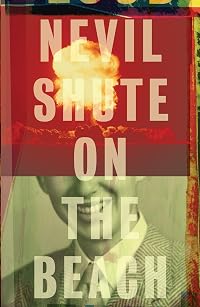
On the Beach
by Nevil Shute
On This Page
Description
A war no one fully understands has devastated the planet with radioactive fallout from massive cobalt bombing. Melbourne, Australia is the only area whose citizens have not yet succumbed to the contamination. But there isn't much time left, a few months, maybe more -- and the citizens of Melbourne must decide how they will live the remaining weeks of their lives, and how they will face a hopeless future.Tags
Recommendations




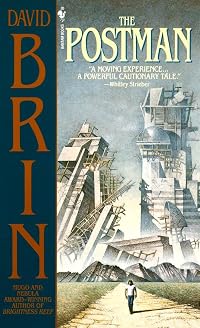
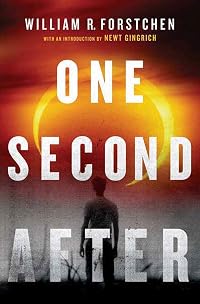
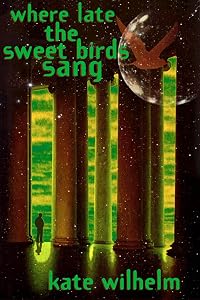
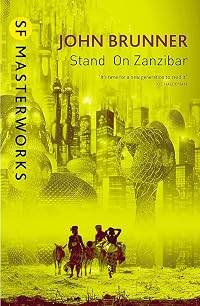
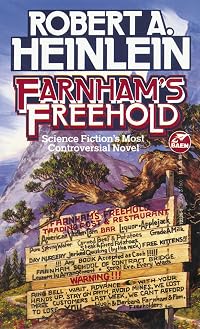

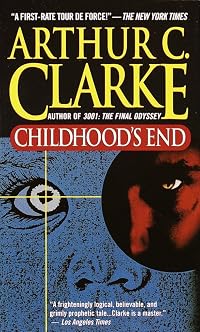
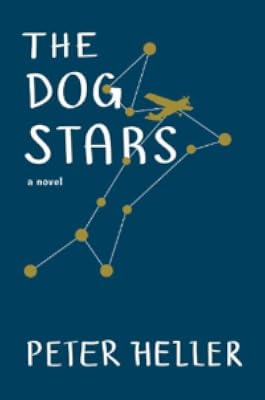
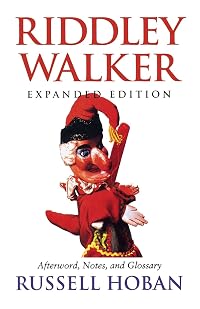


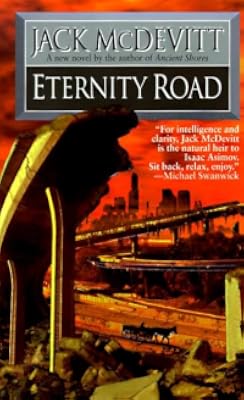


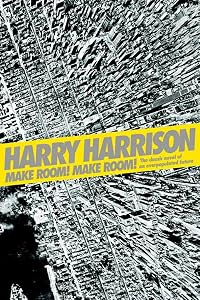
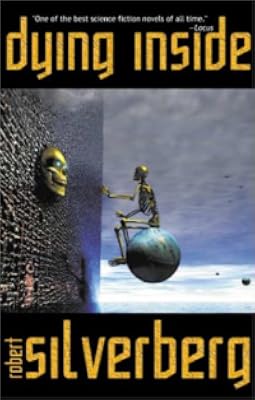
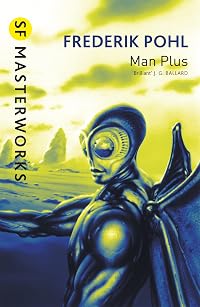
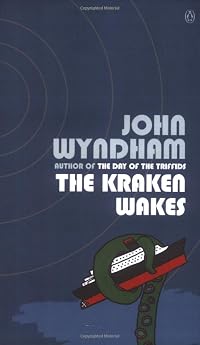
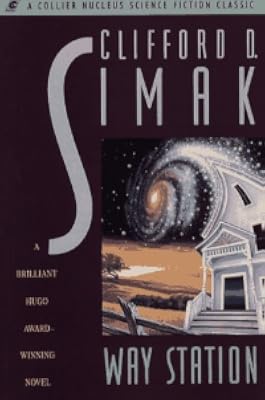
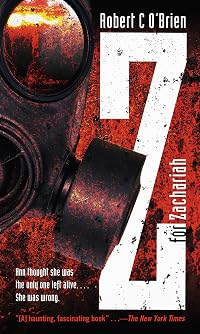
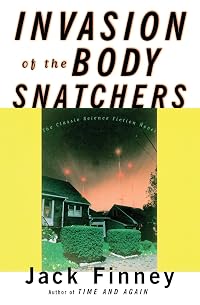





Member Recommendations

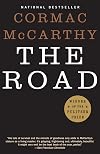
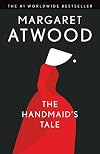
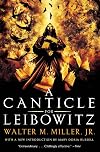
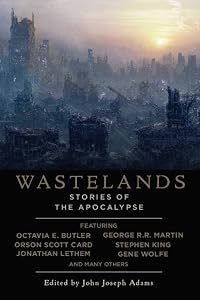
lisanicholas Another post-apocalyptic story, Miller's Canticle takes place centuries after nuclear war destroys the world's civilizations, and a new civilization has arisen from the ruins.
51



anonymous user Free interpretation with lots of new material. Vast improvement on the novel. More dramatic plot, more interesting characters, more bleakness in the end. As intense, powerful and gripping as Mr Shute's mediocre original never is.
11

Kalki by Gore Vidal
anonymous user Another end-of-the-world story. Less plausible but more terrifying. Far better written and far more entertaining than Mr Shute's mediocre and massively boring novel.
Member Reviews
This post-apocalyptic novel was published in 1957 and set in the future – 1963 (though current readers might consider it “historical”). It takes place primarily in and around Melbourne Australia. World War has decimated the northern hemisphere a year or two previously, and the nuclear debris is slowly spreading on the winds to the southern hemisphere. The population knows that the end is coming; in about nine months they will all get radiation sickness and die. But for now … the sun shines, people go to work (albeit on horseback or via bicycle since they have no petrol), babies are born, children attend school, sports matches are played, beach and picnic outings are had … in short, life goes on.
I cannot remember the last time show more I was so affected by a book. Part of my reaction, I’m sure, harkens back to my own days as a child during the Cuban Missile Crisis and the Cold War. I lived in a military town, and we felt we would be a prime target if bombs were launched against us. I remember the “duck and cover” drills, the discussions I had with my parents about what to do if “something happened” while I was at school. On a basic level, this book touched and awakened all those fears and insecurities.
I’ve had dreams about the situation these characters find themselves in. What would I do if I knew I was going to die? Would I plant daffodil bulbs I’d never see flower? Would I start a new course of study I’d always wanted to pursue, knowing I’d never finish it and never be able to get a job in that career field? Would I abandon my duties and obligations to indulge in hobbies? Would I give up and seek the numbing effects of alcohol? Would I embrace the chance at a new love? Would I kill my baby or my elderly parents to ensure they didn’t suffer? Would I end it quickly or die a slow agonizing death, knowing my loved ones, friends, neighbors, countrymen were all dying similarly?
It’s not a “teary” book, but I was in tears at the end. I’m really glad I finally read this book that has been on my tbr list for (literally) decades. show less
I cannot remember the last time show more I was so affected by a book. Part of my reaction, I’m sure, harkens back to my own days as a child during the Cuban Missile Crisis and the Cold War. I lived in a military town, and we felt we would be a prime target if bombs were launched against us. I remember the “duck and cover” drills, the discussions I had with my parents about what to do if “something happened” while I was at school. On a basic level, this book touched and awakened all those fears and insecurities.
I’ve had dreams about the situation these characters find themselves in. What would I do if I knew I was going to die? Would I plant daffodil bulbs I’d never see flower? Would I start a new course of study I’d always wanted to pursue, knowing I’d never finish it and never be able to get a job in that career field? Would I abandon my duties and obligations to indulge in hobbies? Would I give up and seek the numbing effects of alcohol? Would I embrace the chance at a new love? Would I kill my baby or my elderly parents to ensure they didn’t suffer? Would I end it quickly or die a slow agonizing death, knowing my loved ones, friends, neighbors, countrymen were all dying similarly?
It’s not a “teary” book, but I was in tears at the end. I’m really glad I finally read this book that has been on my tbr list for (literally) decades. show less
2/5
Insane to think that at the end of the world, as the nuclear dust settles farther and farther away from the blast sites, as people realize their impending certain and gruesome fate at the hands of radiation poisoning, Nevil Shute thought that what would be most important is to uphold power structures, a stiff upper lip, and continue your role until the bitter end.
On the Beach is almost primordially conservative in its views. The important distinction is that, given this apocalyptic situation, not only would humans cling to the known because of the fear that pervades their last days, but also that doing so will give them the most satisfaction and purpose. Without these structures, we are nothing. Without continuing the monotonous show more tasks, jobs, and duties of everyday life, we will drink ourselves to death, which is really the only way that people lose control in the novel. Shute is completely unconcerned with larger scale changes in society, or any form of civil unrest. Society remains for the large part completely unchanged. There are no revolutions, no spiritual upheavals, nothing. Life goes on much the same as it had been, and this lack of imagination is both a symptom of Shute's worldview and unfortunately creeps into the narrative and prose.
What Shute IS concerned with is following both the explicit and unsaid rules that dictate society and honor. He believes in labor for labors sake, that labor intrinsically gives humanity some of the highest purpose they can experience. In my opinion these views are shallow and pessimistic, a monochrome perspective on what it means to be human. I felt a fundamental disconnect with the work the entire time I was reading it.
For awhile I questioned whether my opinion of On the Beach rested solely on my disagreement with his values, but I think I can concretely say that I had a distaste for the rest of the novel too. Even though it's regarded as a classic of the genre, the meat of the story doesn't really have much to do with anything SF at all. We spend a lot of time seeing the day to day activities of strained yet normal life for a cast of characters that I struggled to connect with. Few characters do anything of real importance outside their normal routines, only taking a day or two vacation during the months leading up to their deaths. It's a dull narrative, one feels very much like soap opera or movie from the 50's.
Most of the characters are so deluded about the current state of events that they plan for the years to come, planting gardens that will never sprout or repairing fence lines weeks before their death. It's an odd way to spend most of the meat of the novel, where only briefly are we granted reprieves in which characters have honest, sober conversations about their circumstances. These sober discussions are the highlight of the entire novel, and something that I wish Shute had spent more time on. Sometimes this delusion is so strong that I couldn't help but feel that everyone is so mentally unwell that I can't take anything they say seriously.
As a sidenote, Shute has a curious tendency to refer to the one infant character as 'it'. I really don't have an commentary about this piece of the novel, outside of it being rather unsettling and cold, but it's so memorably awkward I had to note it.
The ending, while touching, doesn't make up for the fundamental problems with the rest of the work. Perhaps interesting for its historical perspective, but ultimately unfulfilling and baffling. show less
Insane to think that at the end of the world, as the nuclear dust settles farther and farther away from the blast sites, as people realize their impending certain and gruesome fate at the hands of radiation poisoning, Nevil Shute thought that what would be most important is to uphold power structures, a stiff upper lip, and continue your role until the bitter end.
On the Beach is almost primordially conservative in its views. The important distinction is that, given this apocalyptic situation, not only would humans cling to the known because of the fear that pervades their last days, but also that doing so will give them the most satisfaction and purpose. Without these structures, we are nothing. Without continuing the monotonous show more tasks, jobs, and duties of everyday life, we will drink ourselves to death, which is really the only way that people lose control in the novel. Shute is completely unconcerned with larger scale changes in society, or any form of civil unrest. Society remains for the large part completely unchanged. There are no revolutions, no spiritual upheavals, nothing. Life goes on much the same as it had been, and this lack of imagination is both a symptom of Shute's worldview and unfortunately creeps into the narrative and prose.
What Shute IS concerned with is following both the explicit and unsaid rules that dictate society and honor. He believes in labor for labors sake, that labor intrinsically gives humanity some of the highest purpose they can experience. In my opinion these views are shallow and pessimistic, a monochrome perspective on what it means to be human. I felt a fundamental disconnect with the work the entire time I was reading it.
For awhile I questioned whether my opinion of On the Beach rested solely on my disagreement with his values, but I think I can concretely say that I had a distaste for the rest of the novel too. Even though it's regarded as a classic of the genre, the meat of the story doesn't really have much to do with anything SF at all. We spend a lot of time seeing the day to day activities of strained yet normal life for a cast of characters that I struggled to connect with. Few characters do anything of real importance outside their normal routines, only taking a day or two vacation during the months leading up to their deaths. It's a dull narrative, one feels very much like soap opera or movie from the 50's.
Most of the characters are so deluded about the current state of events that they plan for the years to come, planting gardens that will never sprout or repairing fence lines weeks before their death. It's an odd way to spend most of the meat of the novel, where only briefly are we granted reprieves in which characters have honest, sober conversations about their circumstances. These sober discussions are the highlight of the entire novel, and something that I wish Shute had spent more time on. Sometimes this delusion is so strong that I couldn't help but feel that everyone is so mentally unwell that I can't take anything they say seriously.
As a sidenote, Shute has a curious tendency to refer to the one infant character as 'it'. I really don't have an commentary about this piece of the novel, outside of it being rather unsettling and cold, but it's so memorably awkward I had to note it.
The ending, while touching, doesn't make up for the fundamental problems with the rest of the work. Perhaps interesting for its historical perspective, but ultimately unfulfilling and baffling. show less
This is an excellent, horrific and haunting Cold War post-apocalyptic novel written in 1957 and set in the near future of 1963 in a south eastern Australia which is one of the few parts of the world free from the effects of nuclear war that has wiped out Europe, North America and Asia. At the outset of the novel, it is the Antipodean summer and the Christmas-New Year period, and only parts of South America, South Africa and the Antipodes survive, as the deadly radiation inexorably creeps south, with the prediction that the whole world will be wiped out by September. The characters exist in a bizarre half world, in which most people continue to go about their lives as normally as they can, even planning for the future in terms of show more planting crops or trees for the following year. There is little of the panic and extreme hedonistic behaviour that is often seen in post-apocalyptic novels and indeed in real life apocalyptic historical scenarios such as the Black Death. This struck me as somewhat implausible and perhaps a reflection of the mores of the time the novel was written. Nevertheless, it gave the (some what stereotypical 1950s) characters and the narrative through which they moved a certain dignified pathos that I found moving, as events crept towards the final inevitable end, with most people choosing to die through taking officially distributed suicide pills rather than letting the effects of radiation poisoning run their full course. This was an electric and gripping read, fundamentally depressing but very stark and thought provoking about the nature of human relations, loyalty and managing in a crisis. show less
What would you do if you know that you will be dead in a few months? What would you do if you know that humanity will disappear shortly after your death? Most authors will tell you a story of struggle and attempt to save humanity. Shute disagrees - in his novel humanity is doomed, even if they are not ready to admit it.
It all ended quickly - there was a war, someone threw a bomb, someone returned another and before the dust from the first one cleared, all nuclear arsenals of all nations in the Northern hemisphere were empty - and the end of the world began. There is noone left to tell the story - the people that did not die in those first hours died as the radiation settled on the land. And then it started moving south - due to the way show more the air masses move around the world, the Southern hemisphere got a bit longer - but Death was coming for them all. And it won't be easy - all the oil used to come from the North so people have to wait to die while finding a way to live.
And down at the south end of Australia, the last operational submarine of the US Navy tries to assist the last remaining command anywhere in the world - the Australian Navy's command structure is still in tact - even if they don't have any ships left - due to lack of oil. Early in the novel a second submarine is also available - attached to a friendly command in South America but as the winds keep on moving in their never ending cycle, that one is also lost.
The novel is not really about the apocalypse - it is there as a background but it is about the people and how to die with dignity. Some characters are almost cartoonish in their refusal to believe that the end is coming. Some realize all too well that they have no chance so they decide that this is the time to live - and drink all the good booze while at it. A man decides to participate in a car race. Another finds love but decides to resist it because he still feels married to his dead wife. And just because the world ends is not a reason for babies to stop being born or farms to be left untended. And people keep working and trying to find something to do.
The start of the novel drags a little bit - it seems almost pointless but as the novel continues that slow start makes more and more sense - the submarine's tour of the North Atlantic destroys the hope of a miracle and that tranquility becomes the counterpoint of the end. It does not even matter who started the war or the fact that as it turns out the retaliation strike was a mistake. One of the last surviving scientists has the best summary: the nuclear weapons got to cheap so everyone had them... even the country which should have been the last one in anyone's expectation to heat the Cold War - the first bomb was thrown by Albania.
Once the submarine is back, it is just a matter of time. And yet, people continue living. Maybe somewhere someone tries something. Maybe someone people decide to die earlier. But not the characters we get to know and the news do not report anything of the type either. As the stations of the world slowly stopped transmitting, the coming end is almost like a character of the novel.
Reading this in 2022 makes it sound too naive in places but at the same time it made me wonder if that passivity and "it won't happen to me" attitude is really that bizarre. I cannot imagine how that novel (or the movie based on it - apparently there is a movie) read to someone who lived in the mid-50s. And what will stay with me at the end is not the lack of hope but what people cared about at the end - their pets, the farm animals, their children, making sure that everything still looks good. And the big irony that rabbits will outlive everyone (that's Australia - they have interesting history with rabbits) and that Earth will be habitable again in just 20 years - but there won't be anyone and anything left. show less
It all ended quickly - there was a war, someone threw a bomb, someone returned another and before the dust from the first one cleared, all nuclear arsenals of all nations in the Northern hemisphere were empty - and the end of the world began. There is noone left to tell the story - the people that did not die in those first hours died as the radiation settled on the land. And then it started moving south - due to the way show more the air masses move around the world, the Southern hemisphere got a bit longer - but Death was coming for them all. And it won't be easy - all the oil used to come from the North so people have to wait to die while finding a way to live.
And down at the south end of Australia, the last operational submarine of the US Navy tries to assist the last remaining command anywhere in the world - the Australian Navy's command structure is still in tact - even if they don't have any ships left - due to lack of oil. Early in the novel a second submarine is also available - attached to a friendly command in South America but as the winds keep on moving in their never ending cycle, that one is also lost.
The novel is not really about the apocalypse - it is there as a background but it is about the people and how to die with dignity. Some characters are almost cartoonish in their refusal to believe that the end is coming. Some realize all too well that they have no chance so they decide that this is the time to live - and drink all the good booze while at it. A man decides to participate in a car race. Another finds love but decides to resist it because he still feels married to his dead wife. And just because the world ends is not a reason for babies to stop being born or farms to be left untended. And people keep working and trying to find something to do.
The start of the novel drags a little bit - it seems almost pointless but as the novel continues that slow start makes more and more sense - the submarine's tour of the North Atlantic destroys the hope of a miracle and that tranquility becomes the counterpoint of the end. It does not even matter who started the war or the fact that as it turns out the retaliation strike was a mistake. One of the last surviving scientists has the best summary: the nuclear weapons got to cheap so everyone had them... even the country which should have been the last one in anyone's expectation to heat the Cold War - the first bomb was thrown by Albania.
Once the submarine is back, it is just a matter of time. And yet, people continue living. Maybe somewhere someone tries something. Maybe someone people decide to die earlier. But not the characters we get to know and the news do not report anything of the type either. As the stations of the world slowly stopped transmitting, the coming end is almost like a character of the novel.
Reading this in 2022 makes it sound too naive in places but at the same time it made me wonder if that passivity and "it won't happen to me" attitude is really that bizarre. I cannot imagine how that novel (or the movie based on it - apparently there is a movie) read to someone who lived in the mid-50s. And what will stay with me at the end is not the lack of hope but what people cared about at the end - their pets, the farm animals, their children, making sure that everything still looks good. And the big irony that rabbits will outlive everyone (that's Australia - they have interesting history with rabbits) and that Earth will be habitable again in just 20 years - but there won't be anyone and anything left. show less
In his book Rumors of War and Infernal Machines, Charles Gannon argues that "the discourse of nuclear literature has traditionally relied upon images because a personally meaningful quantitative assessment of the bomb’s annihilatory powers is impossible. Its size dwarfs and makes mute any discursive attempt to establish a connection between individual experience and the overwhelming total reality of a nuclear explosion." I definitely think this is true when it comes to On the Beach. It's the images that stuck with me between when I read this in high school (for class), reread it in college (for myself), and rereread it to teach it: the cloud of radioactive particles drifting south, the empty cities of North America, the seaman going show more out for one last fishing trip, the roads taken back over by horses. Shute's perspective on nuclear annihilation is oddly beautiful: even while nuclear war comes from the worst parts of our nature, he uses it to shine a light on our best parts. Everyone in this book does their duty up to the end, even those who didn't have any kind of duty to begin with. I started to cry when I read the last chapter, and that's the first time I've cried at a book in a long while. We no longer fear nuclear war the way we did in 1957, but the book is still a testament to how we all ought to confront death. show less
In this classic 1957 novel, humanity has played a game of global thermonuclear war, and everybody has lost. Everybody. Now, in Australia, the last (temporary) survivors go about their lives knowing that very soon the wind will shift, the fallout from a conflict they had nothing to do with will reach them, and they, too, will die. They approach this ending with a mixture of fatalism and denial, and, if those things fail, large quantities of alcohol.
I first read this as a teenager, in the 1980s. I didn't remember anything about the details of the story or the characters, but I have never, ever forgotten the feeling of it, the bleak, oppressive hopelessness of it all. Well, I don't suppose I could have; it's a feeling that cropped up a lot show more in my nightmares in those days when Mutually Assured Destruction was the law of the land.
Reading this book now is not quite the unbearably harrowing experience that it was back then, when some part of me genuinely believed that the kind of events it describes were not just possible, but a little too likely. And I'm glad of that. It's not something I'm eager to relive. But even now, man, it still hits hard.
It almost seems like it shouldn't. Shute's writing isn't anything special, and features a few stylistic quirks that don't exactly thrill me, starting with his weird refusal to use a scene break when he switches place and POV. And I don't truly believe that people would react to a situation like this exactly the way that the characters in this book do. But none of that matters, because it works. It works distressingly well. The understated, matter-of-fact way that Shute and his characters approach the end of the world is infinitely more devastating than any amount of angsty hair-tearing could ever possibly be. Mostly it's tiny little details that got me, that snuck up on me and kicked me in the heart. But there are a lot of those. Ultimately, perhaps, the entire novel is made up of them. Just one small, subtly heartbreaking detail after another, on and on, until there aren't any more left, ever.
Yeah, it's going to take a while for me to recover from this one. Although, now that I think about it, I'm not sure I ever actually recovered from it the first time.
Rating: I don't think I can rate anything that wrecked me this thoroughly anything less than a 5/5. I sort of feel like maybe I ought to. But I can't. show less
I first read this as a teenager, in the 1980s. I didn't remember anything about the details of the story or the characters, but I have never, ever forgotten the feeling of it, the bleak, oppressive hopelessness of it all. Well, I don't suppose I could have; it's a feeling that cropped up a lot show more in my nightmares in those days when Mutually Assured Destruction was the law of the land.
Reading this book now is not quite the unbearably harrowing experience that it was back then, when some part of me genuinely believed that the kind of events it describes were not just possible, but a little too likely. And I'm glad of that. It's not something I'm eager to relive. But even now, man, it still hits hard.
It almost seems like it shouldn't. Shute's writing isn't anything special, and features a few stylistic quirks that don't exactly thrill me, starting with his weird refusal to use a scene break when he switches place and POV. And I don't truly believe that people would react to a situation like this exactly the way that the characters in this book do. But none of that matters, because it works. It works distressingly well. The understated, matter-of-fact way that Shute and his characters approach the end of the world is infinitely more devastating than any amount of angsty hair-tearing could ever possibly be. Mostly it's tiny little details that got me, that snuck up on me and kicked me in the heart. But there are a lot of those. Ultimately, perhaps, the entire novel is made up of them. Just one small, subtly heartbreaking detail after another, on and on, until there aren't any more left, ever.
Yeah, it's going to take a while for me to recover from this one. Although, now that I think about it, I'm not sure I ever actually recovered from it the first time.
Rating: I don't think I can rate anything that wrecked me this thoroughly anything less than a 5/5. I sort of feel like maybe I ought to. But I can't. show less
The post-nuclear holocaust future portrayed in this book hasn't yet come to pass in the real world. The survivors' actions, feelings, and fears are expertly portrayed by the author. Suspense is created by the activities of a submarine commander and the continuous search for evidence of life in the northern hemisphere. This Australian setting masterfully captures the real lives of those survivors while they wait for the arrival of the nuclear cloud. This book still challenges you to think about the possibility of nuclear annihilation. Commander Dwight Towers, an American submarine captain, clings to the illusion that his family in Connecticut is still alive, even purchasing gifts for a homecoming he knows will never occur. Shute focuses show more on how common people interpret the unimaginable through a "stiff-upper-lip" lens. When radiation sickness strikes Moira Davidson, a young woman who first attempts to drown her despair in alcohol before developing a close, platonic bond with Towers, Peter and Mary Holmes, a young Australian couple, struggle to maintain normalcy for their infant daughter while debating the agonizing necessity of euthanizing her.
A scientist named John Osborne spends his last months racing a Ferrari in the final Australian Grand Prix, a dream he has had all his life.
The story's "Slow Burn" effect has a subdued, objective tone. This eerie calm and the characters' insistence on caring for gardens they will never see bloom are exactly what make the absence of "action" or "rioting" gradually transform into a horror. I found the story to be emotionally compelling. show less
A scientist named John Osborne spends his last months racing a Ferrari in the final Australian Grand Prix, a dream he has had all his life.
The story's "Slow Burn" effect has a subdued, objective tone. This eerie calm and the characters' insistence on caring for gardens they will never see bloom are exactly what make the absence of "action" or "rioting" gradually transform into a horror. I found the story to be emotionally compelling. show less
Members
- Recently Added By
Lists

Best Dystopias
280 works; 277 members

Best Post-Apocalyptic Stories
143 works; 88 members

Survey of Classic Science Fiction
171 works; 48 members

Classics you know you should have read but probably haven't
421 works; 408 members
Best Science Fiction Novels
816 works; 430 members

Read the book and saw the movie
1,170 works; 193 members

Recommended Apocalyptic Novels
53 works; 24 members

Best Beach Reads
99 works; 61 members

Recommend the 20 best books you've read in the last five years
2,168 works; 603 members

Dystopian and Apocalyptic Literature
350 works; 74 members

Favourite Books
1,820 works; 311 members
1950s
340 works; 22 members

Best War Stories
87 works; 16 members

20th Century Literature
1,161 works; 54 members

It's the end of the world as we know it!
90 works; 23 members

Books You Read During High School (For School)
301 works; 52 members

Best books read in 2011
200 works; 50 members

Most Disturbing Books
124 works; 27 members

Australia, New Zealand and Oceania
88 works; 20 members

An End of the World Reading List
63 works; 4 members

Most Depressing Books
69 works; 16 members

Five star books
1,767 works; 109 members

Stories set on Australian Continent
67 works; 5 members

David Brin: Dire Warnings And Self-Preventing Prophecies
17 works; 3 members

Books Set in Australia
41 works; 9 members

Publisher's Weekly Bestsellers - Part II - 1940 - 1979
355 works; 6 members
Apocalyptic Classics
11 works; 4 members

Apocalypse Must-Reads
10 works; 1 member

Books Read in 2022
5,226 works; 112 members

Books Read in 2017
4,249 works; 129 members

Books Read in 2008
336 works; 8 members

Speculative Fiction: The Classics
36 works; 5 members
Viral Outbreaks and Pandemics
82 works; 8 members

Books Read in 2018
4,360 works; 110 members

Post-Apocalyptic Fiction
57 works; 3 members

My TBR list
38 works; 1 member

Allie's Wishlist
217 works; 2 members

Most Popular Books Tagged Australia
35 works; 5 members

Books Read in 2013
1,630 works; 51 members

Global Reads: Books by Australian Authors
5 works; 1 member

Books Read in 2006
424 works; 8 members
Books That Made Us Cry
278 works; 145 members

Read in 2006
140 works; 1 member

Books We Couldn't Put Down
443 works; 197 members

Clues about Australia
38 works; 1 member
Favorite Science Fiction
457 works; 223 members

Books Read in 2025
4,128 works; 98 members

1960s
281 works; 16 members
Author Information

56+ Works 20,337 Members
Nevil Shute Norway was born in Ealing, London, England, on January, 17 1899. At the age of 11, Norway played truant from his first preparatory school in Hammersmith. After he was discovered, he was sent to the Dragon School, Oxford, and from there to Shrewsbury. He was on holiday in Dublin at the time of the Easter rising of 1916 and acted as an show more ambulance driver, winning a commendation for gallant conduct. He then entered the Royal Military Academy, intending to be commissioned into the Royal Flying Corps, but a bad stammer led to his being failed at his final medical examination and returned to civil life. The last few months of the war were spent on home service as a private in the Suffolk Regiment. In 1919, Norway went to Balliol College, Oxford, where he took a third class honors course in engineering science in 1922. During the vacations he worked, unpaid, as an aeronautical engineer, for the Aircraft Manufacturing Company at Hendon, and then for Geoffrey de Havilland's own firm, which he joined as an employee upon finishing at Oxford. He learned to fly and gained experience as a test observer. During the evenings he diligently wrote novels and short stories unperturbed by rejection slips from publishers. In 1924 Norway took the post of Chief Calculator to the Airship Guarantee Company, to work on the construction of the R100. In 1929 he became Deputy Chief Engineer under Barnes Wallis, and in the following year he flew to and from Canada in the R100. After the end of the airship project, jobs were hard to come by due to the depression so Shute started an aircraft manufacturing company, Airspeed Limited. This company was ultimately successful and built a large number of aircraft during the war. Shute remained joint managing director until 1938. When the business became too routine, he decided to get out of the rut and live by writing. The de Havillands, the first aviation job Shute had ever had, wound up buying Airspeed Ltd. He had by then enjoyed some success as a novelist and had sold the film rights of Lonely Road and Ruined City. At the outbreak of war in 1939, Norway joined the Royal Naval Volunteer Reserve as a Sub-Lieutenant in the Miscellaneous Weapons Department. Rising to Lieutenant Commander, he found experimenting with secret weapons a job after his own heart. But he found that his growing celebrity as a writer caused him to be in the Normandy landings on 6th June 1944, for the Ministry of Information, and to be sent to Burma as a correspondent in 1945. He entered Rangoon with the 15th Corps from Arakan. Soon after demobilisation in 1945 he emigrated to Australia and made his home in Langwarrin, Victoria. His output of novels, which began with Marazan (1926) continued to the end. Shute was one of the leading aeronautical engineers in Britain during the 30's and a fellow of the Royal Aeronautical Society. When he began writing in the 20's, he feared that a reputation as a writer of fiction might harm his engineering career. For this reason he published under his two Christian names, Nevil Shute and engineered under his "real" name, Nevil S. Norway. Nevil Shute Norway died in Melbourne on January, 12 1960. (Bowker Author Biography) show less
Some Editions
Awards and Honors
Distinctions
Series
Belongs to Publisher Series
Libros Reno (20)
Signet Books (1562)
Work Relationships
Is contained in
Has the adaptation
Has as a student's study guide
Common Knowledge
- Canonical title*
- De laatste oever
- Original title
- On the Beach
- Original publication date
- 1957
- People/Characters
- Dwight Towers; Moira Davidson; Peter Holmes; Mary Holmes; John Osborne
- Important places
- Australia; Falmouth, Tasmania, Australia; Melbourne, Victoria, Australia; U.S.S. Scorpion (submarine); Tasmania, Australia; Victoria, Australia
- Important events
- World War III
- Related movies
- On the Beach (1959 | IMDb); On the Beach (2000 | IMDb)
- Epigraph
- In this last of meeting places
We grope together
And avoid speech
Gathered on this beach of the tumid river...
This is the way the world ends
This is the way the world ends
This is the way the ... (show all)world ends
Not with a bang but a whimper.
--T.S. Eliot - First words
- Lieutenant Commander Peter Holmes of the Royal Australian Navy woke soon after dawn.
- Quotations
- "I couldn't bear to - to just stop doing things and do nothing. You might as well die now and get it over." ... "I'd like to do things right, up to the end."
As time passed, the radioactivity would pass also ... these streets and houses would be habitable again ... The human race was to be wiped out and the world made clean again for wiser occupants." - Last words
- (Click to show. Warning: May contain spoilers.)Then she put the tablets in her mouth and swallowed them down with a mouthful of brandy, sitting behind the wheel of her big car.
- Original language
- English
*Some information comes from Common Knowledge in other languages. Click "Edit" for more information.
Classifications
Statistics
- Members
- 5,442
- Popularity
- 2,475
- Reviews
- 192
- Rating
- (3.87)
- Languages
- 17 — Chinese, Czech, Danish, Dutch, English, Esperanto, Finnish, French, German, Hungarian, Italian, Norwegian (Bokmål), Norwegian, Polish, Spanish, Swedish, Turkish
- Media
- Paper, Audiobook, Ebook
- ISBNs
- 97
- UPCs
- 1
- ASINs
- 106