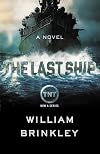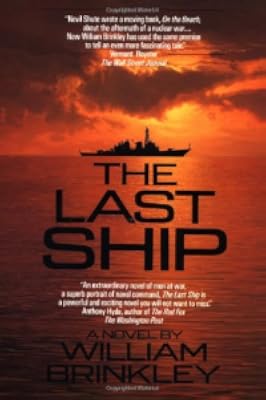
The Last Ship
by William Brinkley
On This Page
Description
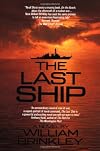
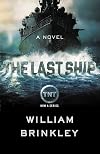
Hailed as “an extraordinary novel of men at war” (The Washington Post) this is the book that inspired the TNT television series starring Eric Dane, Rhona Mitra, Adam Baldwin and Michael Bay as Executive Producer.The unimaginable has happened. The world has been plunged into all-out nuclear war. Sailing near the Arctic Circle, the U.S.S. Nathan James is relatively unscathed, but the future is grim and Captain Thomas is facing mutiny from the tattered remnants of his crew. With show more civilization in ruins, he urges those that remain—one-hundred-and-fifty-two men and twenty-six women—to pull together in search of land. Once they reach safety, however, the men and women on board realize that they are earth’s last remaining survivors—and they’ve all been exposed to radiation. When none of the women seems able to conceive, fear sets in. Will this be the end of humankind? show less
Tags
Recommendations



















Member Reviews
This is a 30+ hour long book. Speech patterns akin to Brit college professor vice gritty sailor. combined with a propensity for verbosity using a plethora of words. This book could be 8-10 hours long with no problem. I learned a new word every day. The story is fascinating. I loved the plot and persevered to the end in spite of the authors writing style.
The Last Ship by William Brinkley is a post-nuclear-apocalyptic novel which focuses on the survival of the crew of the destroyer Nathan James. Although, surprisingly, the actual actions of the crew are secondary to the incessant, introspective, ponderous narrative by the ship's captain. Many of the captain's reflections concern how much more wonderful sailors are, in every respect, when compared to other people. I guess it's good sailors are, perhaps, the only known survivors, huh? Someone did need a good editor for The Last Ship. I concur with the sentiments expressed by Publishers Weekly: "Perhaps the most surprising thing about this apocalyptic novel of the sea is that Brinkley has been able to spin so slender a plot to so great a show more length - more than 500 pages." Or, more precisely for my copy, 616 pages - of small type.
It soon became clear that the key for reading The Last Ship was not to savor every word (as one does when reading a truly great author, where it is clear that every word was carefully chosen), but to quickly skim over many sections of the captain's verbosity, while looking for some forward movement of the plot. Oh, and the captain repeats information too - just in case you missed something. (Kudos to the great vocabulary, even though at times reading it felt like I was at a cocktail party stuck listening to some pretentious jerk talking just to show off. See the last quote, chosen because it was actually a typical sentence.) There was also a rather graphic sex scene late in the novel that felt like an unnecessary addition and was totally out of place. Actually, trying for no spoilers here, the arrangement with the women was totally unrealistic. It would have behooved Brinkley to, perhaps, talk with some real women about it rather than relying on his imagination.
Although this is asking a lot of a reader, set the writing aside and the actual plot is decent. We don't get enough information about what started the war, but the premise that only one ship has survived is intriguing. The dilemma is in whether or not I would recommend this book to others. You might enjoy The Last Ship if you like post-apocalyptic fiction and at the same time are not intimidated by an author's excessive use of a large vocabulary (not always correctly used), and pages of complicated sentences.
Recommended for the plot, so-so for the author's writing show less
It soon became clear that the key for reading The Last Ship was not to savor every word (as one does when reading a truly great author, where it is clear that every word was carefully chosen), but to quickly skim over many sections of the captain's verbosity, while looking for some forward movement of the plot. Oh, and the captain repeats information too - just in case you missed something. (Kudos to the great vocabulary, even though at times reading it felt like I was at a cocktail party stuck listening to some pretentious jerk talking just to show off. See the last quote, chosen because it was actually a typical sentence.) There was also a rather graphic sex scene late in the novel that felt like an unnecessary addition and was totally out of place. Actually, trying for no spoilers here, the arrangement with the women was totally unrealistic. It would have behooved Brinkley to, perhaps, talk with some real women about it rather than relying on his imagination.
Although this is asking a lot of a reader, set the writing aside and the actual plot is decent. We don't get enough information about what started the war, but the premise that only one ship has survived is intriguing. The dilemma is in whether or not I would recommend this book to others. You might enjoy The Last Ship if you like post-apocalyptic fiction and at the same time are not intimidated by an author's excessive use of a large vocabulary (not always correctly used), and pages of complicated sentences.
Recommended for the plot, so-so for the author's writing show less
Unlike some who have dissed this book, I wasn't turned off by author William Brinkley's extensive vocabulary in "The Last Ship". For me, the turnoff was the long, overblown scenes which could have been explained or drawn in far fewer pages. By the time I was 100 pages into the book, I found myself skimming - which I absolutely hate to do to a book.
There were plenty of Navy characters introduced throughout the novel, but very few of them were developed to the point where the reader got to know much about them or their backstory. The lead (and totally dominate) character throughout the book was Captain Thomas (last name never revealed) who took the reader on a long first-person apocalyptic journey in the aftermath of a nuclear war with show more the Soviet Union.
I did get the book years before the television show, The Last Ship, hit the airwaves a few years ago, but never got around to reading it. Because I liked the show so much, I thought maybe this was the time to read the novel that it was (supposedly) based on. Well, the show centers around a Navy Destroyer called the Nathan James and has a captain named Thomas, but that's about as closely connected as it gets to the book. (Spoiler alert: The show is much better!)
Actually, the book picks up a little steam (no pun intended) after the Nathan James meets up with the Russian sub, Pushkin. The final 125 pages or so of the book are quite good (if the reader can make it that far) with a couple of excellent plot twists.
Recommended for those who want to learn a lot of new vocabulary words and serious sailors only. show less
There were plenty of Navy characters introduced throughout the novel, but very few of them were developed to the point where the reader got to know much about them or their backstory. The lead (and totally dominate) character throughout the book was Captain Thomas (last name never revealed) who took the reader on a long first-person apocalyptic journey in the aftermath of a nuclear war with show more the Soviet Union.
I did get the book years before the television show, The Last Ship, hit the airwaves a few years ago, but never got around to reading it. Because I liked the show so much, I thought maybe this was the time to read the novel that it was (supposedly) based on. Well, the show centers around a Navy Destroyer called the Nathan James and has a captain named Thomas, but that's about as closely connected as it gets to the book. (Spoiler alert: The show is much better!)
Actually, the book picks up a little steam (no pun intended) after the Nathan James meets up with the Russian sub, Pushkin. The final 125 pages or so of the book are quite good (if the reader can make it that far) with a couple of excellent plot twists.
Recommended for those who want to learn a lot of new vocabulary words and serious sailors only. show less
This book lingered in my mind for weeks after I read it. I sometimes still flash on it. It is the story of the men on a warship after global thermonuclear war. They travel around the oceans and every time you think something is going to go right for them, something worse happens. Gives you a lot to think about. Well worth the read if you like lots of characters and huge books and post apocalytic fiction.
This is a post apocalyptic novel. The plot moves along at a slow pace, perhaps too slow for some. The writer is rather eloquent. There is much reflection and little action. And it is good so. The main character is complex and invites you to put yourself into his shoes, so to speak. All in all, this is very worthwhile reading and considering it’s length you are in for days of enjoyment.
Although Brinkley's writing style is formal (and positively terrifying in its convolutions and uncommon verbiage), the story is fascinating. Set just after woman were allowed aboard Navy cruisers and an end-of-the-world event, it is an interesting comparison to the television series based on it. In the show, women are so integrated into the crew that gender is rarely an issue, while in the novel, it is a major, major issue. Having a plague to deal with rather than the novel's nuclear fallout changes the dynamics as well. That said, the novel was fun--but warning! It is a long, long read to the last line.
I stupidly picked up the book without reading a review. I thought the book would reflect the TNT series. I was sadly mistaken. There is very little between the two. I found the series to be everything the book was not. I have read and liked Brinkley's "The Ninety and Nine" . Instead The Last Ship proved to be worse in all ways. It had all the fixings for a good post-apocalyptic story, but other than some bright spots of human interaction, it is a dismal affair. A nuclear war being the least of it.
I gave the book to a book drive after finished reading it. That shows how much I felt it was a poor job.
Don't bother to read the book. Watch the series and enjoy the drama. Kudos to TNT for turning a sow's ear into a silk purse!
I gave the book to a book drive after finished reading it. That shows how much I felt it was a poor job.
Don't bother to read the book. Watch the series and enjoy the drama. Kudos to TNT for turning a sow's ear into a silk purse!
Members
- Recently Added By
Lists

Best Dystopias
280 works; 272 members

Dystopian and Apocalyptic Literature
350 works; 74 members
Author Information

8+ Works 911 Members
Common Knowledge
- Canonical title
- The Last Ship
- Original publication date
- 1988
- Related movies
- The Last Ship (2014 | TV Show | IMDb)
- Epigraph
- "A friend may well be reckoned the Masterpiece of nature" -- Emerson
- Dedication
- For Gordon Kingsley
- First words
- In bravura beauty, no ship has ever come off a Navy ways to be compared with the destroyer and she was a fine example of a noble breed.
- Last words
- (Click to show. Warning: May contain spoilers.)But that is another book.
- Canonical DDC/MDS
- 813.54
- Canonical LCC
- PS3552.R49
Classifications
Statistics
- Members
- 686
- Popularity
- 41,950
- Reviews
- 19
- Rating
- (3.44)
- Languages
- English
- Media
- Paper, Audiobook, Ebook
- ISBNs
- 12
- ASINs
- 10