
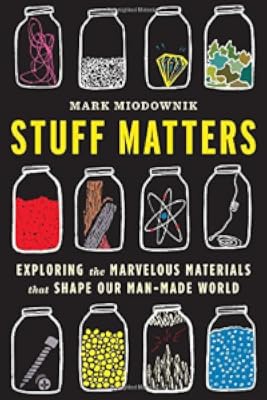
Stuff Matters: Exploring the Marvelous Materials That Shape Our Man-Made World
by Mark Miodownik
On This Page
Description
"Why is glass see-through? What makes elastic stretchy? Why does a paperclip bend? Why does any material look and behave the way it does?With clarity and humor, world-leading materials scientist Mark Miodownik answers all the questions you've ever had about your pens, spoons, and razor blades, while also introducing a whole world full of materials you've never even heard of: the diamond five times the size of Earth; concrete cloth that can be molded into any shape; and graphene, the show more thinnest, strongest, stiffest material in existence--only a single atom thick.Stuff Matters tells enthralling stories that explain the science and history of materials. From the teacup to the jet engine, the silicon chip to the paper clip, the plastic in our appliances to the elastic in our underpants, Miodownik reveals the miracles of engineering that permeate our lives. As engaging as it is incisive, Stuff Matters will make you see the materials that surround you with new eyes"-- show lessTags
Recommendations

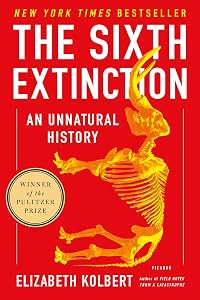


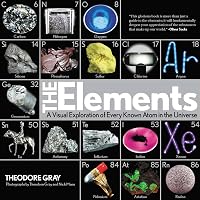
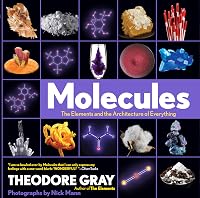
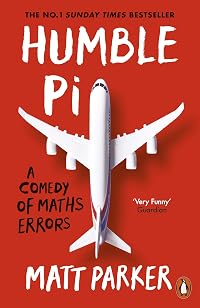
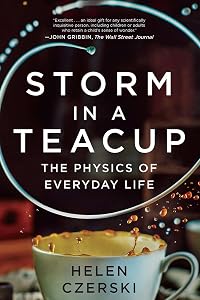

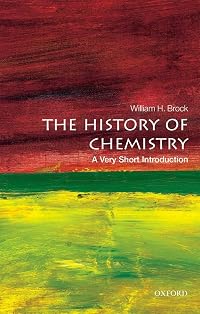
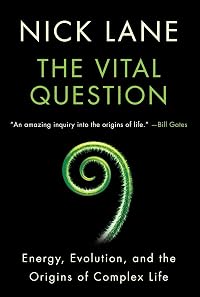
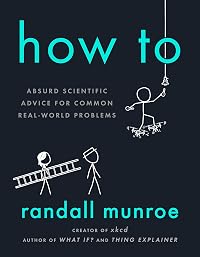



Member Recommendations
Member Reviews
Years ago, in college, I made a conscious decision to stay away from all but the (barely) required science classes. I'd enjoyed science in high school, but at this university, science seemed to be highly competitive, aimed at premed and PhD ambitions. If there had been a track for 'science for poets' as sometimes exists today, I would have taken every course. I was probably afraid of the competition, and the math, and had no ambitions for a scientific career. But in high school, especially in chemistry class (which I basically taught myself, the teacher was so bad), what fascinated me was what I later learned was called 'physical chemistry', the structure and behavior of atoms in substance.
(By the time I'd graduated, my writing was show more poorer for a lack of scientific metaphor and expanded horizons. And when I think of auditing college classes now, it's always the science courses that interests me.)
Well, this book is all about physical chemistry, complete with little pictures of things like carbon hexagons and great explanations of the substances discussed. Don't worry about the chapter on paper - didn't interest me much. But the other stuff, the steel chapter, the carbon chapter! Wow. show less
(By the time I'd graduated, my writing was show more poorer for a lack of scientific metaphor and expanded horizons. And when I think of auditing college classes now, it's always the science courses that interests me.)
Well, this book is all about physical chemistry, complete with little pictures of things like carbon hexagons and great explanations of the substances discussed. Don't worry about the chapter on paper - didn't interest me much. But the other stuff, the steel chapter, the carbon chapter! Wow. show less
This is exactly what a popular science book should be -- engaging for non experts while not being condescending, and containing some interesting information for people at a wide range of familiarity with the topic. I'm not a materials scientist, but pretty into the topic, so nothing on this book was completely new to me, but it was well presented, and there were both some interesting facts and clearer explanations which improved my understanding. My only complaint is that the book didn't go into enough "conventional" materials (where I think it was strongest -- steel, glass, etc -- and the coverage of biomaterials wasn't quite as thorough. Maybe he'll write a sequel.
uff! soy un fanático de los autores que llevan el tedio científico a la prosa agradable y éste es uno de los mejores libros que he leído. Con un formato por capítulos Stuff Matters no sólo nos inicia en el mundo microscópico de los materiales que nos rodean sino que hace un excelente trabajo revelando detalles culturales, históricos y psicológicos de los componentes de nuestro entorno.
Al cierre del libro nos encontramos con una lista de lecturas sugeridas para seguir adentrándonos en el fascinante mundo de la ciencia de los materiales.
Al cierre del libro nos encontramos con una lista de lecturas sugeridas para seguir adentrándonos en el fascinante mundo de la ciencia de los materiales.
Materials scientist Mark Miodownik provides the reader with an extremely accessible, surprisingly enjoyable and mind-blowingly informative treatise about "stuff"...the building blocks of which items we come into contact with on a daily basis are made. Each chapter explores the history, composition, structure and common usage of a different material, such as concrete, chocolate, glass or porcelain. Miodownik treats his subjects lovingly and with enthusiasm, relating seemingly dry subject matter in such a way that whole new worlds are opened up for the reader and one will never be able to look at a spoon or a street in the same way ever again.
Stuff Matters is about the materials that surround us and that we probably barely think about, it all seems so commonplace. The author explores everything from glass to chocolate, focusing on both the chemistry & physics of the substance and the socio-cultural uses and implications of the stuff at hand. So for instance, the chapter on glass talks about the history of glassmaking and how we couldn't really manufacture useful, quality glass until we mastered working with sufficiently high temperatures but then also talks about the impact of glass on architecture (windows), art (stained glass windows!), and science (microscopes and telescopes leading to revolutions in astronomy, chemistry, medicine, etc). I did a combination of reading and show more listening for this one, which meant that I sometimes missed out on the rather humorous photographs of the author surrounded by each chapter's material of focus and other illustrations that I think might have been helpful. But the audio--which is narrated by the author--is also quite good, very engaging and funny. This is one of those books that makes you appreciate everything ordinary just a little bit more -- highly recommended. show less
Materials science – Mark Miodownik made it very interesting! I was fascinated from the get-go by how he came by his interest in metals, and thence to other materials. And hooked by the first chapter – metals. The porcelain, concrete/cement chapters were also interesting. The only chapter that didn’t grab me was Paper; I guess there was nothing new to me there, or else the author wasn’t as interested, because his enthusiasm was felt in all the other chapters but this one. Most fascinating to me was the chapter which discussed the 3D printer and its application in organ transplants.
The author kept my attention throughout the whole book. Well written, engaging presentation of materials science.
The author kept my attention throughout the whole book. Well written, engaging presentation of materials science.
Enthralling and wittily written tour of materials science, beginning with an anecdote about being attacked with a razor blade. Illustrated with the author's endearingly crappy little drawings. Great fun.
Members
- Recently Added By
Lists

Books Read in 2020
4,379 works; 123 members

Sonlight Books
1,487 works; 25 members

The r/Chemistry Recommended Books
87 works; 1 member

Books Read in 2022
5,166 works; 114 members

Books Read in 2025
4,091 works; 97 members

In Our Time books
4,934 works; 2 members
Author Information

6 Works 2,156 Members
Mark Miodownik is a professor of materials and society at University College London, where he is also the director of the Institute of Making, Miodownik writes for the Guardian, hosts regular shows on the BBC, and was chosen by the London Times as among the one hundred most influential scientists in the UK.
Some Editions
Awards and Honors
Awards
Distinctions
Series
Belongs to Publisher Series
Common Knowledge
- Canonical title
- Stuff Matters: Exploring the Marvelous Materials That Shape Our Man-Made World
- Original title
- Stuff matters : The strange stories of the marvellous materials that shape our man-made world
- Original publication date
- 2014 (US edition) (US edition); 2013
- Important places
- London, England, UK
- Dedication
- For Ruby, Lazlo, and Ida
- First words
- As is stood on a train bleeding from what would later be classified as a thirteen-centimeter stab wound, I wondered what to do.
- Quotations
- books en masse are more than a library, they are a statement of identity.
If an atom were the size of an athletics stadium, the nucleus would be the size of a pea at its center, and the electrons would be the size of grains of sand in the surrounding stands.
You might think it not credible that a material as soft as leather can sharpen steel, and you would be right. It is the fine ceramic powder that is impregnated in the leather strop that does the sharpening. - Last words
- (Click to show. Warning: May contain spoilers.)In a very real way, then, materials are a reflection of who we are, a multi-scale expression of our human needs and desires.
- Blurbers
- Sacks, Oliver; Le Couteur, Penny; Ascher, Kate
Classifications
- Genres
- Science & Nature, General Nonfiction, Nonfiction, Technology, History
- DDC/MDS
- 620.1 — Applied science & technology Engineering Mechanical & Civil Engineering Engineering Mechanics and Materials Science
- LCC
- TA403.2 .M56 — Technology Engineering Civil engineering (General). Engineering (General). Civil engineering (General) Materials of engineering and construction.
- BISAC
Statistics
- Members
- 1,705
- Popularity
- 12,990
- Reviews
- 56
- Rating
- (3.88)
- Languages
- 12 — Arabic, Chinese, Czech, English, Estonian, French, German, Italian, Korean, Portuguese, Spanish, Turkish
- Media
- Paper, Audiobook, Ebook
- ISBNs
- 33
- ASINs
- 12