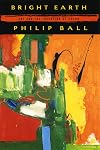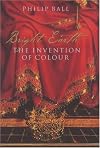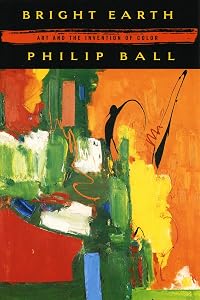
Bright Earth: Art and the Invention of Color
by Philip Ball
On This Page
Description
"Bright Earth provides a glimpse into a little-explored avenue in the history of art and science: the creation of pigments and dyes and their influence on painting, as well as on fashion, merchandising, and the textile and chemical industries. For as long as artists have turned their dreams into images, they have relied on technical knowledge to supply their materials. Today almost every shade imaginable is easily available in off-the-shelf tubes; every hue and tincture is manufactured and show more ready for immediate use by the painter. But up until the eighteenth century, most artists ground and mixed their own pigments, and by necessity had considerable skill as a practical chemists."--Jacket. show lessTags
Recommendations








Member Reviews
Fin dall'inizio della civiltà umana i pittori hanno avuto bisogno di materia per rendere visibili i loro sogni; e di cosa è fatta la materia se non...di sostanze chimiche?
Le pitture rupestri delle grotte di Altamira in Spagna ne sono un primo (ma non primitivo) esempio, mentre il primo pigmento di sintesi fu il blu egizio, prodotto 2500 anni fa non per caso ma attraverso un procedimento che richiedeva una tecnologia complessa. Biacca, minio, blu oltremare, oro: la tavolozza del pittore medievale si amplia e con essa l'abilità dell'artista che vuole rendere durevoli e imperiture le sue opere. La necessità di dipingere fedelmente i colori della natura spinge in seguito il pittore a sperimentare nuove tecniche, cercare nuovi materiali show more che si manifestano sotto forma di giallo limone, arancio cromo, verde smeraldo, blu cobalto, bianco di zinco, solo per citarne alcuni. Colori tanto saturi che diventano essi stessi un mezzo di espressione dell'artista. Chissà se Vincent van Gogh avrebbe utilizzato lo stesso il giallo cromo per i suoi girasoli, sapendo che col tempo questo si sarebbe alterato diventando un ocra scuro.
In questa storia del colore "non ci sono né uova né galline: la scienza e la tecnologia chimiche e l'uso del colore nell'arte sono sempre vissute in una relazione simbiotica che ha determinato il corso di entrambe lungo tutto l'arco della storia". show less
Le pitture rupestri delle grotte di Altamira in Spagna ne sono un primo (ma non primitivo) esempio, mentre il primo pigmento di sintesi fu il blu egizio, prodotto 2500 anni fa non per caso ma attraverso un procedimento che richiedeva una tecnologia complessa. Biacca, minio, blu oltremare, oro: la tavolozza del pittore medievale si amplia e con essa l'abilità dell'artista che vuole rendere durevoli e imperiture le sue opere. La necessità di dipingere fedelmente i colori della natura spinge in seguito il pittore a sperimentare nuove tecniche, cercare nuovi materiali show more che si manifestano sotto forma di giallo limone, arancio cromo, verde smeraldo, blu cobalto, bianco di zinco, solo per citarne alcuni. Colori tanto saturi che diventano essi stessi un mezzo di espressione dell'artista. Chissà se Vincent van Gogh avrebbe utilizzato lo stesso il giallo cromo per i suoi girasoli, sapendo che col tempo questo si sarebbe alterato diventando un ocra scuro.
In questa storia del colore "non ci sono né uova né galline: la scienza e la tecnologia chimiche e l'uso del colore nell'arte sono sempre vissute in una relazione simbiotica che ha determinato il corso di entrambe lungo tutto l'arco della storia". show less
Brimful of facts, the book enhances our understanding of colors, color perception and production, drawing and history of art in general. It portrays interesting intertwinement of painting techniques development and 'hardware' available for artists at various points in history.
I found it impossible to read without an Internet access available around. Despite a number of illustrations the author constantly refers (and for good reasons) to a yet greater number of works. Thus it is more rewarding - both estethically and cognitively - to check those paintings to better understand the points made by this brilliant author.
I found it impossible to read without an Internet access available around. Despite a number of illustrations the author constantly refers (and for good reasons) to a yet greater number of works. Thus it is more rewarding - both estethically and cognitively - to check those paintings to better understand the points made by this brilliant author.
Tracing the history of painting (primarily European) by describing advances in technology and chemistry, this book is excellent. It was relatively easy to read and has many color reproductions to illustrate the various points as well as monochrome figures. I was interested in the evolution of pigments from raw minerals mined from the ground through chemical pigment manufacture in the twentieth century. It was also interesting to learn how methods of painting have changed from fresco and egg tempura through oils and into acrylics and other types of paint. Changes to color theory through time are also described in this volume, which is something I previously knew next to nothing about. Reading this book, artists will learn about chemistry show more and chemists will learn about art. show less
I enjoyed this book very much, as it explains in a clear and chronological way the development of pigments, dyes and other materials. It shows the importance of industry in its continuous search for less expensive and more durable dyes and new art trends.
I found the book so motivating that I bought from Kremer Pigmente (Germany) samples of the pigments used by the artists in the Middle Ages, just to have a "feel" of the real color!
I found the book so motivating that I bought from Kremer Pigmente (Germany) samples of the pigments used by the artists in the Middle Ages, just to have a "feel" of the real color!
A highly entertaining survey for the invention of artist pigments through out the human history.
Wonderful book! Art history focusing on the use of color; and the science and technology of pigments. A bit of color theory also. Full of a wealth of details both significant and just fun.
Erica Kline, 11/20/2002
Erica Kline, 11/20/2002
Lots of information about pigments and dyes and how these are used scientifically to identify a work of art.
Very good information for those interested in delving deeper into the history of color.
Very good information for those interested in delving deeper into the history of color.
Members
- Recently Added By
Lists

Top Five Books of 2015
811 works; 241 members
Author Information

41+ Works 6,159 Members
Philip Ball is a freelance writer who lives in London. He worked for over twenty years as an editor for Nature, writes regularly in the scientific and popular media, and has authored many books on the interactions of the sciences, the arts, and the wider culture, including, most recently, Serving the Reich: The Struggle for the Soul of Physics show more under Hitler, also published by the University of Chicago Press. show less
Some Editions
Awards and Honors
Common Knowledge
- Canonical title*
- Colore. Una biografia. Tra arte, storia e chimica, la bellezza e i misteri del nodo del colore.
- Original title
- Bright Earth: The Invention of Colour
- Original publication date
- 2001
- People/Characters
- Leon Battista Alberti; Aristotle, 384-322; Robert Boyle; Cennino Cennini; Michel-Eugène Chevreul; Eugène Delacroix (show all 29); Max Doerner; George Field; Johann Wolfgang von Goethe; Vincent van Gogh; Wassily Kandinsky; Paul Klee; Yves Klein; Leonardo da Vinci; Henri Matisse; James Clerk Maxwell; Claude Monet; Isaac Newton; Pablo Picasso; Camille Pissarro; Pliny the Elder; Rembrandt, Harmenszoon van Rijn, 1606-1669; Pierre-Auguste Renoir; Rubens, Peter Paul, 1577-1640; Georges Seurat; Titian; J. M. W. Turner; Anthony van Dyck; Paolo Veronese
- First words
- Preface
☸
For the past two years I have been learning to speak a new language.
ONE
THE EYE OF THE BEHOLDER
THE SCIENTIST IN THE STUDIO
☸
"I believe that in the future, people will start painting pictures in one single colour, and nothing else but colour." - Quotations
- One of the Impressionists' numerous bludgeon-witted critics suggested that they might have achieved their results by loading a gun with bright colours and firing it at the canvas.
- Last words
- (Click to show. Warning: May contain spoilers.)Long may it last.
- Blurbers
- Theroux, Alexander; MacAdam, Barbara; Brown, Peter C.; Noble, Kate
*Some information comes from Common Knowledge in other languages. Click "Edit" for more information.
Classifications
Statistics
- Members
- 544
- Popularity
- 54,715
- Reviews
- 11
- Rating
- (4.08)
- Languages
- 5 — English, Finnish, French, Italian, Spanish
- Media
- Paper, Ebook
- ISBNs
- 21
- ASINs
- 7