
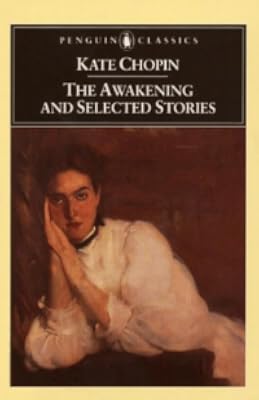
The Awakening and Selected Stories
by Kate Chopin
On This Page
Description
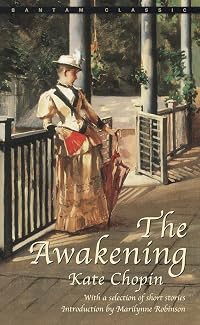
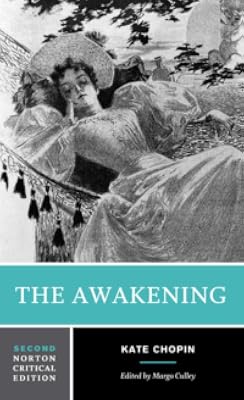
"When Kate Chopin's classic was first published in 1899, charges of sordidness and immorality seemed to consign it into obscurity and irreparably damage its author's reputation. But a century after her death, The Awakening is widely regarded as Kate Chopin's great achievement and a celebrated work of early feminist literature. Through careful, subtle changes of style, Chopin shows the transformation of Edna Pontellier, a young wife and mother, who - with tragic consequences - refuses to be show more caged by married and domestic life, and claims for herself moral and erotic freedom"-- show lessTags
Recommendations










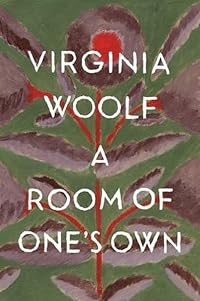

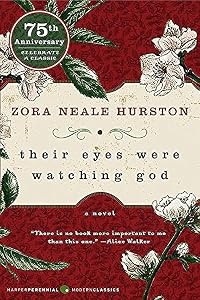
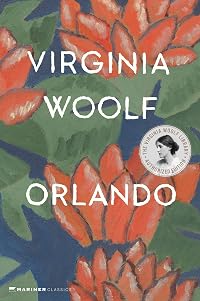
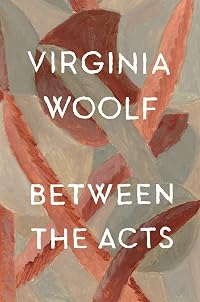



Member Recommendations

Member Reviews
The Awakening is one of those books which my sense is has never quite escaped its national context—Americans, I think, are likely to read it in high school or uni but as a "classic" it's far less known in other countries. I only heard of it, and Kate Chopin's other short stories, a few years ago, and decided to read it out of curiosity about it as a piece of early feminist literature.
Having now read it, I can certainly appreciate why Chopin's work was rediscovered by second wavers, grappling as it does with questions of freedom, control, marriage, and motherhood. Both Edna—the main character in The Awakening—and several of Chopin's other female characters struggle with these questions in various ways. But while Chopin's prose is show more well-crafted, and there are some lovely moments of character observation, I found myself largely unmoved by her work. Her writing is not bad, but it didn't speak to me. I didn't particularly connect with any of the characters in The Awakening itself, and the short stories felt too much like hybrids of O. Henry/Just So Stories with uncomfortable racial undertones (or just... tones) to engage me at all. show less
Having now read it, I can certainly appreciate why Chopin's work was rediscovered by second wavers, grappling as it does with questions of freedom, control, marriage, and motherhood. Both Edna—the main character in The Awakening—and several of Chopin's other female characters struggle with these questions in various ways. But while Chopin's prose is show more well-crafted, and there are some lovely moments of character observation, I found myself largely unmoved by her work. Her writing is not bad, but it didn't speak to me. I didn't particularly connect with any of the characters in The Awakening itself, and the short stories felt too much like hybrids of O. Henry/Just So Stories with uncomfortable racial undertones (or just... tones) to engage me at all. show less
The theme of this book is not so highly original, though the time of its execution was, and the sympathetic light it casts on its protagonist sets it apart from others in what we may as well call a genre. And what genre is that? It is the genre of books about women who realise they have married wrong, through no fault of their own; they have married without love; and they have come to regret that fact. Escaping from such bonds is often an insuperable task, and the reader's motivation to continue reading generally rests on the anxiety we feel as we witness the protagonist's striving for freedom and true love. The fact that Chopin was a masterful writer makes reading this book an even more rewarding experience.
One of the books I read in high school that blew me away. Kate Chopin was so ahead of her time, and I love the language, especially the passages describing the pull of the sea on the main character. This is probably in my all-time top ten books. The fact that I live in New Orleans now and a lot of the places Chopin mentions haven't changed in 100 years is also delightful.
This classic was published in 1899, but many people may not have had the opportunity to read it. Even though it’s over one hundred years old, the themes it raises are very relevant to us today and should spark a lot of discussion.
The Awakening is remembered as an early feminist work. When Chopin published it, its subject was so radical that the book was denounced and the author was shunned by both readers and publishers. It is about a young wife and mother, Edna Pontellier, who finds herself changing during a pivotal summer at the Grand Isle resort in Louisiana.
No longer content to remain in her traditional role, Edna awakens to a desire to live as she feels inside and finds it impossible to conceal her innermost passions from the show more world. But her desires conflict with the conventions of society. Women have come a long way since then, but we can still relate to how Edna feels and the obstacles she faces. show less
The Awakening is remembered as an early feminist work. When Chopin published it, its subject was so radical that the book was denounced and the author was shunned by both readers and publishers. It is about a young wife and mother, Edna Pontellier, who finds herself changing during a pivotal summer at the Grand Isle resort in Louisiana.
No longer content to remain in her traditional role, Edna awakens to a desire to live as she feels inside and finds it impossible to conceal her innermost passions from the show more world. But her desires conflict with the conventions of society. Women have come a long way since then, but we can still relate to how Edna feels and the obstacles she faces. show less
This is at least the second time i read The Awakening, and i'm not sure i liked it or understoodit better. the inroduction claims the book was a takeoff on many classics that i don't remember that well or have not read. I diid like some of the short stories quite a bit and felt they were veryrelevant to present times. all of her writing is excellent!
"I would give up the unessential; I would give my money, I would give my life for my children; but I wouldn't give myself. I can't make it more clear; it's only something which I am beginning to comprehend, which is revealing itself to me." This touching and meaningful passage from The Awakening says everything about the main character's realization that she can be more than an accessory to her husband and children. An early feminist novel, this story is both tragic and telling about the lives of women in the Victorian era.
I want to report that I finished [The Awakening] by [[Kate Chopin]].
Published in 1899, the novel roused quite a bit of shock, horror, righteous scolding, and that whole brouhaha. The story of a young married woman with children who tires of society's stifling customs, routines, and rules, who discovers her diligent, respectable, responsible, and seemingly loving husband is...well...kind of boring, and who awakens to the sensual pleasures of music, art, and, yes, physical love. It doesn't end well for her.
After its initial publication, The Awakening went out of print and was forgotten. In the 1950s (I think) it was reprinted and emerged as a respected novel.
The author, Kate Chopin, was Irish-American, born as Katherine O'Flaherty. She show more married a Creole businessman and settled with him in Louisiana (the setting of The Awakening). Mr. Chopin's cotton brokerage failed. Upon his death, his widow and six children were saddled with considerable debt. She turned to writing.
The Awakening is a low-key, exquisitely written, and only 130 pages long. Chopin tackles the issues and ideas that fuel the novels of Edith Wharton, Theodore Dreiser, Henry James, and other turn-of-the-century writers. She does very well. show less
Published in 1899, the novel roused quite a bit of shock, horror, righteous scolding, and that whole brouhaha. The story of a young married woman with children who tires of society's stifling customs, routines, and rules, who discovers her diligent, respectable, responsible, and seemingly loving husband is...well...kind of boring, and who awakens to the sensual pleasures of music, art, and, yes, physical love. It doesn't end well for her.
After its initial publication, The Awakening went out of print and was forgotten. In the 1950s (I think) it was reprinted and emerged as a respected novel.
The author, Kate Chopin, was Irish-American, born as Katherine O'Flaherty. She show more married a Creole businessman and settled with him in Louisiana (the setting of The Awakening). Mr. Chopin's cotton brokerage failed. Upon his death, his widow and six children were saddled with considerable debt. She turned to writing.
The Awakening is a low-key, exquisitely written, and only 130 pages long. Chopin tackles the issues and ideas that fuel the novels of Edith Wharton, Theodore Dreiser, Henry James, and other turn-of-the-century writers. She does very well. show less
Members
- Recently Added By
Lists

Classics you know you should have read but probably haven't
421 works; 408 members

Female Author
1,235 works; 67 members
Love Triangles in Literature
108 works; 15 members

American Lit for Eng 11 Research Project
368 works; 6 members
Most Popular Penguins
70 works; 5 members

el
1,139 works; 1 member
Author Information

194+ Works 20,953 Members
Kate Chopin was born Katherine O'Flaherty in St. Louis, Missouri, on February 8, 1851. Although she was brought up in a wealthy and socially elite Catholic family, Chopin's childhood was marred by tragedies. Her father was killed in a train accident when Chopin was just four years old, and in the following years she also lost her older brother, show more great-grandmother, and half-brother. In 1870, at the age of 19, she married Oscar Chopin, the son of a wealthy cotton-growing family in Louisiana. The couple had seven children together, five boys and two girls, before Oscar died of swamp fever in 1883. The following year, Chopin packed up her family and moved back to St. Louis to be with her mother, who died just a year later. To support herself and her family, Chopin started to write. Her first novel, At Fault, was published in 1890. Her most famous work, The Awakening, inspired by a real-life New Orleans woman who committed adultery, was published in 1899. The book explores the social and psychological consequences of a woman caught in an unhappy marriage in 19th century America, is now considered a classic of the feminist movement and caused such an uproar in the community that Chopin almost entirely gave up writing. Chopin did try her hand at a few short stories, most of which were not even published. Chopin died on August 22, 1904, of a brain hemorrhage, after collapsing at the World's Fair just two days before. (Bowker Author Biography) show less
Some Editions
Series
Belongs to Publisher Series
Work Relationships
Contains
Common Knowledge
- Canonical title
- The Awakening and Selected Stories
- Original publication date
- 1899
- People/Characters
- Adèle Ratignolle; Alcée Arobin; Robert Lebrun; Edna Pontellier
- Important places
- New Orleans, Louisiana, USA
- First words
- In February 1899, while The Awakening was in press, Kate Chopin wrote a poem called "The Haunted Chamber," in which a male speaker tells the tale "Of a fair, frail, passionate woman who fell." -- from the Introduction
A green and yellow parrot, which hung in a cage outside the door, kept repeating over and over: "Allez vous-en! Allez vous-en! Sapristi! That's all right!" - Last words
- (Click to show. Warning: May contain spoilers.)So the storm passed and every one was happy.
- Disambiguation notice
- Contains the novel The Awakening and 12 other short stories, including "Emancipation" (see description for exact titles)
Classifications
Statistics
- Members
- 1,514
- Popularity
- 15,196
- Reviews
- 17
- Rating
- (3.87)
- Languages
- English, French, German, Hindi
- Media
- Paper, Audiobook, Ebook
- ISBNs
- 18
- ASINs
- 16