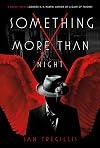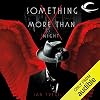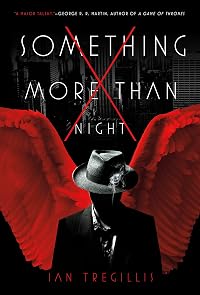
Something More Than Night
by Ian Tregillis
On This Page
Description
"Something More Than Night is a Dashiell Hammett and Raymond Chandler inspired murder mystery set in Thomas Aquinas's vision of Heaven. It's a noir detective story starring fallen angels, the heavenly choir, nightclub stigmatics, a priest with a dirty secret, a femme fatale, and the Voice of God. Somebody has murdered the angel Gabriel. Worse, the Jericho Trumpet has gone missing, putting Heaven on the brink of a truly cosmic crisis. But the twisty plot that unfolds from the murder show more investigation leads to something much bigger: a con job one billion years in the making. Because this is no mere murder. A small band of angels has decided to break out of heaven, but they need a human patsy to make their plan work. Much of the story is told from the point of view of Bayliss, a cynical fallen angel who has modeled himself on Philip Marlowe. The yarn he spins follows the progression of a Marlowe novel--the mysterious dame who needs his help, getting grilled by the bulls, finding a stiff, getting slipped a mickey. Angels and gunsels, dames with eyes like fire, and a grand maguffin, Something More Than Night is a murder mystery for the cosmos"-- show lessTags
Recommendations

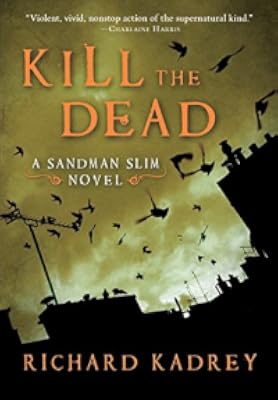

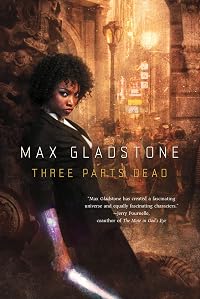
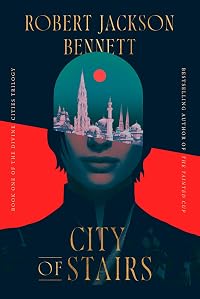
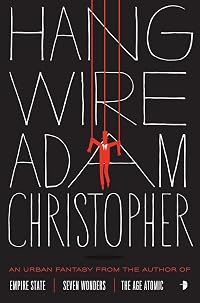

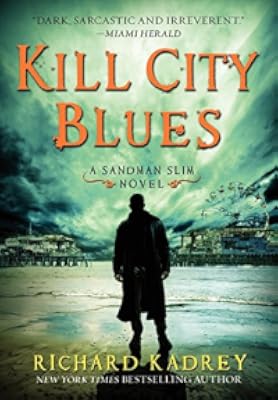

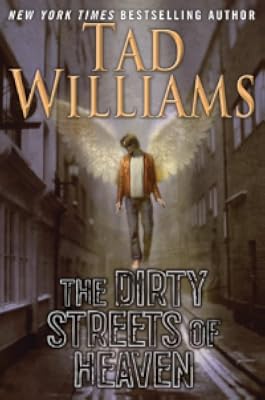
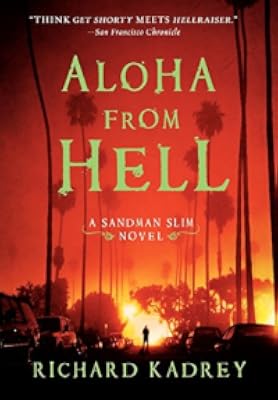
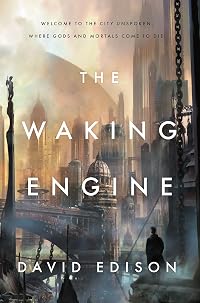





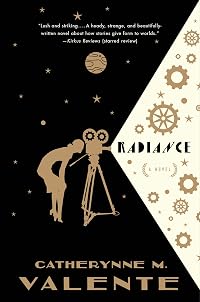
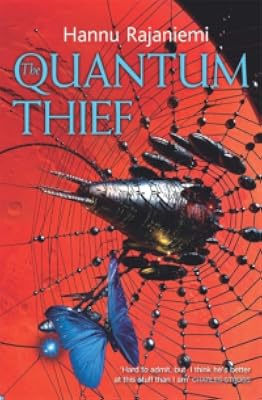
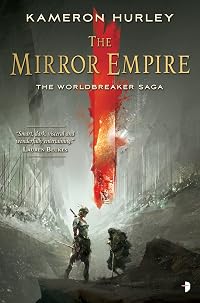
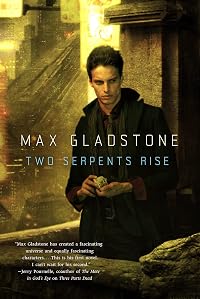



Member Recommendations

Member Reviews
This is a mash-up of near-future science fiction, noir, medieval scholasticism, metaphysics, and quantum theory. And the crazy thing is that it works. It works really well. The mixing of medieval scholastic thought with quantum theory is pretty natural - Aquinas and his fellow scholastics would have absolutely love quantum. Mixing noir in there seems pretty bizarre, but Tregillis pulls it off with aplomb.
Bayliss is an angel wandering earth, who needs to turn a human into an angel. He finds Molly - 'I knew that dame was trouble' - and she doesn't turn out to be the kind of broad he expected (for one thing, she's a lesbian, which I think is a great twist on the femme fatale motif). Bayliss is a Phillip Marlowe/Humphry Bogart type, and show more Tregillis gets his voice just right. Molly is not happy to suddenly be tossed into the angelic realm with no instruction, and soon discovers that Bayliss isn't telling her everything. For one thing, the angel Gabriel ('Gabby') has just been murdered, and she is somehow implicated in his death. It turns out that not only is Bayliss lying to Molly, he is an entirely unreliable narrator.
Tregillis shows off some amazing creativity here: I loved the scenes where Molly's memories were jumbled, and the descriptions of how her life memories were scattered across her apartment. I was also impressed with the world-building, and the mixing of Aquinas's vision of heaven with modern science.
Unfortunately, there were some places where I wasn't quite sure that I was following what was happening, and I wasn't sure whether I was supposed to or not. Molly has some huge lightbulb moments as she works out what is happening, and those lightbulb moments weren't fully explained, and I wasn't sure if I was supposed to be able to put the pieces together myself or not. I couldn't, but by the end it all mostly made sense.
All in all, a very fun and unusual read. I listened to the audiobook, and Scott Brick's narration is absolutely perfect. show less
Bayliss is an angel wandering earth, who needs to turn a human into an angel. He finds Molly - 'I knew that dame was trouble' - and she doesn't turn out to be the kind of broad he expected (for one thing, she's a lesbian, which I think is a great twist on the femme fatale motif). Bayliss is a Phillip Marlowe/Humphry Bogart type, and show more Tregillis gets his voice just right. Molly is not happy to suddenly be tossed into the angelic realm with no instruction, and soon discovers that Bayliss isn't telling her everything. For one thing, the angel Gabriel ('Gabby') has just been murdered, and she is somehow implicated in his death. It turns out that not only is Bayliss lying to Molly, he is an entirely unreliable narrator.
Tregillis shows off some amazing creativity here: I loved the scenes where Molly's memories were jumbled, and the descriptions of how her life memories were scattered across her apartment. I was also impressed with the world-building, and the mixing of Aquinas's vision of heaven with modern science.
Unfortunately, there were some places where I wasn't quite sure that I was following what was happening, and I wasn't sure whether I was supposed to or not. Molly has some huge lightbulb moments as she works out what is happening, and those lightbulb moments weren't fully explained, and I wasn't sure if I was supposed to be able to put the pieces together myself or not. I couldn't, but by the end it all mostly made sense.
All in all, a very fun and unusual read. I listened to the audiobook, and Scott Brick's narration is absolutely perfect. show less
A swell gets rubbed out. A private dick meets a skirt. They're in cahoots. Some mooks get the bum's rush into them. Suppose things aren't what they seem, that it's all a two-bit sideshow, that the real party's going on next door in the big top.
Okay, so I'm no Philip Marlowe, but Ian Tregillis comes close in his most recent novel, Something More Than Night (Tor Books). Tregillis reimagines the hardboiled detective novel as a metaphysical mystery. What's really going on behind the veil of reality, as people pursue their humdrum lives?
Tregillis begins his novel with a bang, as Bayliss, the detective who speaks in hardboiled cliches, witnesses the death of the angel Gabriel. The heavenly Choir needs a replacement (its membership seems show more static at 144,000), and Bayliss recruits Molly, an unsuspecting human, via less-than-forthright means. Bayliss becomes Molly's absentee angelic mentor.
The plot of Something More Than Night involves Bayliss' and Molly's investigation into Gabriel's murder. Who would want one of the most powerful angels dead, and why? And where is the Jericho Trumpet, an artifact of universe-shattering power, now that Gabriel, its protector, is gone? Questions of importance, questions that dwarf the concerns of the hapless "monkeys" (angelic patois for "humans") bumbling their mortal lives away on earth. Our heroes' investigations are further complicated when strange phenomena begin popping up in the Pleroma (where the angels live).
Readers will immediately be taken in by Tregillis' prose. Tregillis does an uncanny job of mimicking (and caricaturing) the cadence and slang of hardboiled detective fiction. Bayliss' narration is spot-on, whether he's "lighting a pill" or "scraping his face." The diner at which Bayliss spends his time, too, is a direct manifestation of our collective impression of 1940s America, complete with a waitress named "Flo."
The story, too, keeps the reader hooked. After all, who wouldn't want to know why an angel was murdered? Much of the mystery, though, is a sideshow to Molly's quest to discover how to be something other than human, a task with which Bayliss is little help. Molly visits a former lover and her older brother, and, eventually, a small Midwestern town where she has a fateful encounter with a library employee. Tregillis makes Molly's supernatural life recognizably human, no small feat given the subject matter.
That's not to say that the book is without its weak points. Because Tregillis deals with the cosmos and the supernatural, he sometimes adopts pseudo-scientific prose or lapses into poetic passages about the nature of the heavenly reality that is the book's setting. I confess that I found these sections tiresome and off-putting; they left me wondering if I had missed something, if Tregillis were speaking over my head. I suspect it's partly that, and, partly also, that he's trying to describe something for which the reader has no reference but Tregillis' imagination.
Ultimately, though, Something More Than Night is a great success. Tregillis slyly uses two seemingly disparate strands, hardboiled detective fiction and angels, to weave a surprisingly coherent whole. The story, both the human and angelic parts, is compelling, and the prose, despite my few quibbles above, is a joy to read. Highly recommended.
Thanks to Tor Books and NetGalley for providing me the opportunity to read an advance reader's copy of this title.
Originally posted at http://wp.me/p3W9KB-2h show less
Okay, so I'm no Philip Marlowe, but Ian Tregillis comes close in his most recent novel, Something More Than Night (Tor Books). Tregillis reimagines the hardboiled detective novel as a metaphysical mystery. What's really going on behind the veil of reality, as people pursue their humdrum lives?
Tregillis begins his novel with a bang, as Bayliss, the detective who speaks in hardboiled cliches, witnesses the death of the angel Gabriel. The heavenly Choir needs a replacement (its membership seems show more static at 144,000), and Bayliss recruits Molly, an unsuspecting human, via less-than-forthright means. Bayliss becomes Molly's absentee angelic mentor.
The plot of Something More Than Night involves Bayliss' and Molly's investigation into Gabriel's murder. Who would want one of the most powerful angels dead, and why? And where is the Jericho Trumpet, an artifact of universe-shattering power, now that Gabriel, its protector, is gone? Questions of importance, questions that dwarf the concerns of the hapless "monkeys" (angelic patois for "humans") bumbling their mortal lives away on earth. Our heroes' investigations are further complicated when strange phenomena begin popping up in the Pleroma (where the angels live).
Readers will immediately be taken in by Tregillis' prose. Tregillis does an uncanny job of mimicking (and caricaturing) the cadence and slang of hardboiled detective fiction. Bayliss' narration is spot-on, whether he's "lighting a pill" or "scraping his face." The diner at which Bayliss spends his time, too, is a direct manifestation of our collective impression of 1940s America, complete with a waitress named "Flo."
The story, too, keeps the reader hooked. After all, who wouldn't want to know why an angel was murdered? Much of the mystery, though, is a sideshow to Molly's quest to discover how to be something other than human, a task with which Bayliss is little help. Molly visits a former lover and her older brother, and, eventually, a small Midwestern town where she has a fateful encounter with a library employee. Tregillis makes Molly's supernatural life recognizably human, no small feat given the subject matter.
That's not to say that the book is without its weak points. Because Tregillis deals with the cosmos and the supernatural, he sometimes adopts pseudo-scientific prose or lapses into poetic passages about the nature of the heavenly reality that is the book's setting. I confess that I found these sections tiresome and off-putting; they left me wondering if I had missed something, if Tregillis were speaking over my head. I suspect it's partly that, and, partly also, that he's trying to describe something for which the reader has no reference but Tregillis' imagination.
Ultimately, though, Something More Than Night is a great success. Tregillis slyly uses two seemingly disparate strands, hardboiled detective fiction and angels, to weave a surprisingly coherent whole. The story, both the human and angelic parts, is compelling, and the prose, despite my few quibbles above, is a joy to read. Highly recommended.
Thanks to Tor Books and NetGalley for providing me the opportunity to read an advance reader's copy of this title.
Originally posted at http://wp.me/p3W9KB-2h show less
In Something More Than Night, author Ian Tregillis has been even more ambitious than he was in his three previous books – a trilogy of alternative history mixed with science fiction set in the Second World War. The 'Milkweed Triptych', as that trilogy was known, was no slouch when it came to mentally taxing its audience, but Tregillis really dials up that taxation by more than a few notches in his follow-up novel. Something More Than Night is, shall we say, complex, even by the standards of speculative fiction.
It is a difficult novel to size up if you have not read it. My own expectations were quite wide of the mark and, like many, I struggled with some of the metaphysical concepts which are the foundation and the explanation of the show more story. Tregillis uses rather dry scientific words and theoretical concepts to explain what is happening in the story and it does seem at times – quite a lot of times, actually – like you'd need a PhD in Physics to understand it. (Tregillis, not coincidentally, has one.) But whilst it sometimes seems like Tregillis is writing a book solely to be distributed among his scientist friends at Los Alamos, that's not entirely true; you do, however, need a respectably above-average IQ and you will need to re-read quite a few passages again before they begin to make sense. This also means you need a thick skin and a lot of patience, so that you don't feel like a fool for not getting it first time and so that you don't give up on an intellectually-stimulating book. Sure, the author is often too clever for his own good here, but science fiction is all about pushing the boundaries. So when I say that Tregillis is really pushing the boundaries even in a genre of boundary-pushers, you know you're in for something different.
Unfortunately, whilst it deserves praise for aiming so high and (mostly) succeeding, it is rather uneven as a piece of fiction, i.e. as entertainment. The hard-boiled detective conceit is decent enough, but even by the end it is less than certain what such an approach accomplished. The same could be said of the post-apocalyptic scenario. This is never overdone – indeed, one can only piece together what has happened from small hints given throughout the novel (it seems it was an environmental catastrophe) – but, again, it has very little relevance to the plot. The prose is dense, even before you account for the physics jargon, which makes it a slow read (and, early on in the book, when you're struggling to engage with the high scientific concepts, this makes it a bit of a slog).
But in other ways it is excellent, testament to Tregillis' story-telling ability as glitteringly illustrated in the Milkweed Triptych. The characters are well-rounded, the plot is compelling and there is no small amount of pathos. The ending, as other reviewers have mentioned, is quite thrilling and the author keeps you guessing right to the end. (The only thing I didn't like about the ending is that I thought the comeuppance of one character was massively disproportionate. But then, the concept of eternal damnation has always rankled with me a bit.) The world-building is good, and I particularly liked how even the angels don't know what 'God' is. Tregillis creates a believable multiverse, even if it is explained in depth in the language of PhD-level physics. He recognises that his concepts are elaborate and difficult for ordinary readers to get their heads around, and so he peppers his story with not-insignificant amounts of humour. These are very welcome when you feel like you're about to drown in what Bayliss, the protagonist, calls 'five-dollar words'.
Essentially, there was enough about Something More Than Night to remind me that this was the same author who wrote the exceptional Milkweed Triptych. It still has some of that earlier magic and at times it socks you with a double-dose of it. The novel is less than the sum of its parts, but one cannot help but admire the mind that could create this story, the artistic courage and confidence that could propel it along, and the craft that could bring it home. show less
It is a difficult novel to size up if you have not read it. My own expectations were quite wide of the mark and, like many, I struggled with some of the metaphysical concepts which are the foundation and the explanation of the show more story. Tregillis uses rather dry scientific words and theoretical concepts to explain what is happening in the story and it does seem at times – quite a lot of times, actually – like you'd need a PhD in Physics to understand it. (Tregillis, not coincidentally, has one.) But whilst it sometimes seems like Tregillis is writing a book solely to be distributed among his scientist friends at Los Alamos, that's not entirely true; you do, however, need a respectably above-average IQ and you will need to re-read quite a few passages again before they begin to make sense. This also means you need a thick skin and a lot of patience, so that you don't feel like a fool for not getting it first time and so that you don't give up on an intellectually-stimulating book. Sure, the author is often too clever for his own good here, but science fiction is all about pushing the boundaries. So when I say that Tregillis is really pushing the boundaries even in a genre of boundary-pushers, you know you're in for something different.
Unfortunately, whilst it deserves praise for aiming so high and (mostly) succeeding, it is rather uneven as a piece of fiction, i.e. as entertainment. The hard-boiled detective conceit is decent enough, but even by the end it is less than certain what such an approach accomplished. The same could be said of the post-apocalyptic scenario. This is never overdone – indeed, one can only piece together what has happened from small hints given throughout the novel (it seems it was an environmental catastrophe) – but, again, it has very little relevance to the plot. The prose is dense, even before you account for the physics jargon, which makes it a slow read (and, early on in the book, when you're struggling to engage with the high scientific concepts, this makes it a bit of a slog).
But in other ways it is excellent, testament to Tregillis' story-telling ability as glitteringly illustrated in the Milkweed Triptych. The characters are well-rounded, the plot is compelling and there is no small amount of pathos. The ending, as other reviewers have mentioned, is quite thrilling and the author keeps you guessing right to the end. (The only thing I didn't like about the ending is that I thought the comeuppance of one character was massively disproportionate. But then, the concept of eternal damnation has always rankled with me a bit.) The world-building is good, and I particularly liked how even the angels don't know what 'God' is. Tregillis creates a believable multiverse, even if it is explained in depth in the language of PhD-level physics. He recognises that his concepts are elaborate and difficult for ordinary readers to get their heads around, and so he peppers his story with not-insignificant amounts of humour. These are very welcome when you feel like you're about to drown in what Bayliss, the protagonist, calls 'five-dollar words'.
Essentially, there was enough about Something More Than Night to remind me that this was the same author who wrote the exceptional Milkweed Triptych. It still has some of that earlier magic and at times it socks you with a double-dose of it. The novel is less than the sum of its parts, but one cannot help but admire the mind that could create this story, the artistic courage and confidence that could propel it along, and the craft that could bring it home. show less
This book is a mystery - but its a mystery within a mystery. It starts off seemingly simple - the archangel Gabriel is murdered, and its up to Bayliss, the lowest of the low in angels, to figure why. But - as you read on, you find out things aren't what they seem - its a great book, with a great, gritty feel to it, interesting, well thought-out angels - and an interesting universe. My only complaint - and it almost ruined the book for me, is the voice of Bayliss. The story is told in mostly first person view, so you know the inner-thoughts of the characters - but, one of the characters lies - so, either he is lying to himself, or this is an authors attempt to stay true to the noir genre, without giving away the ending.
But, either way, show more this is an excellent read. show less
But, either way, show more this is an excellent read. show less
I gotta like a book with a queer lady protagonist. Even if the other protagonist is a sexist dude. And I'm not entirely sure why he had to be sexist other than that he (he's an angel, by the way) decided to build his human identity around 40's mystery novels for some reason. Seems pretty pointless, to be honest, unless that was done so the author could get away with using 40's mystery novel slang...which, to be honest, I actually kind of loved. But no need to carry the sexism with it.
I liked this fantasy world. I liked the old-timey mystery overlying Christian mythology and being real sassy about it. Dogma-esque, I'd say. There is one thing I didn't particularly like:the whole unreliable narrator bit where Bayliss was basically just show more lying to the reader about everything so we'd get strung along just like Molly was. I guess we needed him for the slang. But even that didn't really bother me as much as it normally would have because I didn't take this book very seriously. The slang and mobster angels made it clear that I was not supposed to! All in all, entertaining, would recommend, unless that thing I said in the spoilers would make you too angry/annoyed to be entertained. show less
I liked this fantasy world. I liked the old-timey mystery overlying Christian mythology and being real sassy about it. Dogma-esque, I'd say. There is one thing I didn't particularly like:
Much like the character of Bayliss and Ian Tregillis' explanation of the Christian angelic hierarchy (what Tregillis calls the "ninefold celestial hierarchy"), the novel begins and ends with a clever conceit but falls short of soul and substance.
Great literature is defined by characters you come to know and love. You rejoice with their joys, you weep at their sorrows, you mourn their death. There are no loveable characters in Tregillis' novel, only the conceit of a fallen angel playing to the script of a gumshoe detective and allusions to Raymond Chandler and Philip Marlowe.
The novel was didactic more often than it was enjoyable, going to great lengths to explain the angelic hierarchy described by Pseudo-Dionysius (On the Celestial show more Hierarchy) and Thomas Aquinas (Summa Theologica). Unlike Aquinas, Tregillis is no intellectual, philosopher or theologian, but content to rehash and repeat descriptions without interpretation. Mistaking Tregillis for Chandler would be like mistaking smoke for the cigar... wholly unsatisfying compared to the source.
In the end, "Something More than Night" is an interesting conceit devoid of a soul. It lacks the philosophy of Aquinas. It lacks the heart of Chandler. It's an interesting novel that is more gristle than meat. show less
Great literature is defined by characters you come to know and love. You rejoice with their joys, you weep at their sorrows, you mourn their death. There are no loveable characters in Tregillis' novel, only the conceit of a fallen angel playing to the script of a gumshoe detective and allusions to Raymond Chandler and Philip Marlowe.
The novel was didactic more often than it was enjoyable, going to great lengths to explain the angelic hierarchy described by Pseudo-Dionysius (On the Celestial show more Hierarchy) and Thomas Aquinas (Summa Theologica). Unlike Aquinas, Tregillis is no intellectual, philosopher or theologian, but content to rehash and repeat descriptions without interpretation. Mistaking Tregillis for Chandler would be like mistaking smoke for the cigar... wholly unsatisfying compared to the source.
In the end, "Something More than Night" is an interesting conceit devoid of a soul. It lacks the philosophy of Aquinas. It lacks the heart of Chandler. It's an interesting novel that is more gristle than meat. show less
Much like the character of Bayliss and Ian Tregillis' explanation of the Christian angelic hierarchy (what Tregillis calls the "ninefold celestial hierarchy"), the novel begins and ends with a clever conceit but falls short of soul and substance.
Great literature is defined by characters you come to know and love. You rejoice with their joys, you weep at their sorrows, you mourn their death. There are no loveable characters in Tregillis' novel, only the conceit of a fallen angel playing to the script of a gumshoe detective and allusions to Raymond Chandler and Philip Marlowe.
The novel was didactic more often than it was enjoyable, going to great lengths to explain the angelic hierarchy described by Pseudo-Dionysius (On the Celestial show more Hierarchy) and Thomas Aquinas (Summa Theologica). Unlike Aquinas, Tregillis is no intellectual, philosopher or theologian, but content to rehash and repeat descriptions without interpretation. Mistaking Tregillis for Chandler would be like mistaking smoke for the cigar... wholly unsatisfying compared to the source.
In the end, "Something More than Night" is an interesting conceit devoid of a soul. It lacks the philosophy of Aquinas. It lacks the heart of Chandler. It's an interesting novel that is more gristle than meat. show less
Great literature is defined by characters you come to know and love. You rejoice with their joys, you weep at their sorrows, you mourn their death. There are no loveable characters in Tregillis' novel, only the conceit of a fallen angel playing to the script of a gumshoe detective and allusions to Raymond Chandler and Philip Marlowe.
The novel was didactic more often than it was enjoyable, going to great lengths to explain the angelic hierarchy described by Pseudo-Dionysius (On the Celestial show more Hierarchy) and Thomas Aquinas (Summa Theologica). Unlike Aquinas, Tregillis is no intellectual, philosopher or theologian, but content to rehash and repeat descriptions without interpretation. Mistaking Tregillis for Chandler would be like mistaking smoke for the cigar... wholly unsatisfying compared to the source.
In the end, "Something More than Night" is an interesting conceit devoid of a soul. It lacks the philosophy of Aquinas. It lacks the heart of Chandler. It's an interesting novel that is more gristle than meat. show less
Members
- Recently Added By
Lists

Kirkus Reviews Best Fiction of 2013
99 works; 6 members
Author Information

27+ Works 3,105 Members
All Editions
Some Editions
Awards and Honors
Common Knowledge
- Original publication date
- 2013-12
- People/Characters
- Bayliss; Molly; Martin
- Publisher's editor
- Eddy, Claire
- Blurbers
- Martin, George R. R.; Doctorow, Cory
Classifications
Statistics
- Members
- 337
- Popularity
- 94,184
- Reviews
- 23
- Rating
- (3.68)
- Languages
- English
- Media
- Paper, Audiobook, Ebook
- ISBNs
- 3
- ASINs
- 2