On This Page
Description
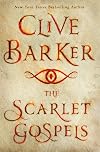
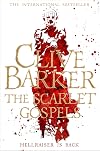
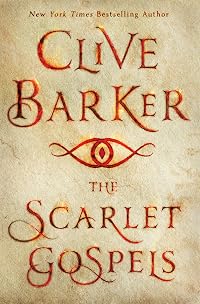
The Scarlet Gospels takes listeners back many years to the early days of two of Barker's most iconic characters in a battle of good and evil as old as time: The long-beleaguered detective Harry D'Amour, investigator of all supernatural, magical, and malevolent crimes faces off against his formidable, and intensely evil rival, Pinhead, the priest of hell. Barker devotees have been waiting for The Scarlet Gospels with bated breath for years, and it's everything they've begged for and more. show more Bloody, terrifying, and brilliantly complex, fans and newcomers alike will not be disappointed by the epic, visionary tale that is The Scarlet Gospels. Barker's horror will make your worst nightmares seem like bedtime stories. The Gospels are coming. Are you ready? show lessTags
Recommendations


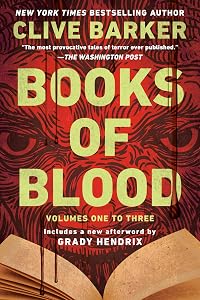
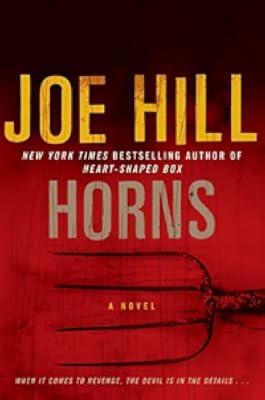

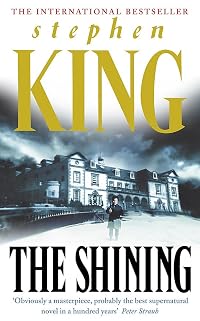
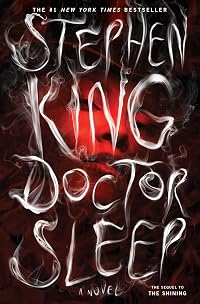


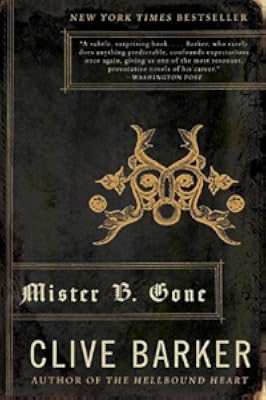
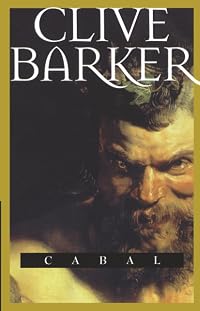



Member Recommendations
Member Reviews
This is a panacea for my horror-starved heart.
You know these two movies? I still continue to love Lord of Illusions and Hellraiser. I gushed blood over these two gems for many years. So what could make my day complete? You got it; a pale scarlet horse comes riding up to my doorstep to hand me this gorgeous little tome featuring Harry D'Amour and Pinhead performing an intricate dance around one another; filling me up with a horrid rooting fascination for anything that Pinhead tries to accomplish, or clean up; and sick pity for the genuinely good man in Harry that is always eventually drawn to hell.
First of all, let me say that Harry is well and truly out of his league for almost the entire novel. He is so hopelessly outclassed that I'm show more forced into a situation where I, the reader, am left as a victim of irresistible bondange to the novel as I, like Harry, get to witness Pinhead's ascension in hell.
Sure, this novel mostly takes place in the bowels of hell, but instead of Mr. Barker trying to goad our increased tolerance of blood and gore, he successfully introduces a kingdom of wonder and awe. That's really hard when it comes to novels about hell, in my experience. There was acknowledgement of an infinity of suffering, and some truly inspiring sights, creatures, and events, but underneath it all was the deep sense of magic and learning and discovery.
Yes. I'm talking about Hell as a place to learn and grow, and never once did I feel like I was being punked.
It continued the same kinds of themes that Pinhead has always been known for. "I will show you exquisite suffering." *shiver* And then it blew my mind with his ultimate scope and ambition. And then there were a few scenes in the book where I had to put it down and jabber excitedly at my poor uninterested family members about how damn cool the scene was. I am not going to ruin it for anyone, but yeah, they were fucking cool.
As for Harry, I learned more about him and his past in a really excellent urban fantasy setting, got to know his good friends, and learned that the lot of them are all damn crazy. If a really good friend gets dragged off to hell by a cenobite, I'm sorry, but I'm just going to have to beg off the question about going after them. First of all, it's PINHEAD. Second of all, it's Hell. I know that they were all going to do the same for Harry after he stupidly played with the box, and how he got out of that was freaking funny, but still! Barker pulls it off. He pulls it all off. It runs cinematically. It's never boring. I kept thinking that this might-might-might make a good miniseries. Maybe. I don't know. I just want to see all the love and detail brought to my tv the same way that I've enjoyed these guys all my life.
As for Mr. Barker, I just want to say Thank you! You've been out of circulation for a bit, but what an awesome way to jump back in. Thank You! Fanboy is very pleased!
If you do continue the adventures of L****** and choose to incorporate Harry, then I'm already drooling. I want to revisit everywhere. It doesn't matter. I want anything you've got, Mr. Barker!
Warning to the wise. The horror market has unfortunately fallen to the wayside to make room for an endless supply of snark and rehashed vamp/were/magic that is reaching a nearly intolerably glut in the market. This is not one of those newfangled novels, although it has some elements of the new breeds.
This novel is epic in scope and quick in execution. As I was reading it, I kept saying to myself, "This is how it's done."
Sure, I have a few issues with the characters, in that they have a bit of a lack of interpersonal conflict, but that's easily ignored because they are, after all, in Hell. As I was reading, I kept thinking about another tidbit I'd heard from another reviewer that said that Barker had written this as a straight-up showdown between Harry and Pinhead, and it was well over twice the final length. What we got was a mute witness, and it worked very well, but I can't help but wish that I could see that other version.
If Harry was a fly, he'd be picking a fight with a nuclear explosion. It's definitely not fair, and I swear it could never turn out well, but I can't help but want to read it anyway.
Here's for hoping that another version gets released someday for those diehard fans.
I could spend the next week trying to devise a plot and resolution, myself, but I fear that I'd probably go mad.
The novel is going to keep me up and wondering for some time. I love it for that. show less
You know these two movies? I still continue to love Lord of Illusions and Hellraiser. I gushed blood over these two gems for many years. So what could make my day complete? You got it; a pale scarlet horse comes riding up to my doorstep to hand me this gorgeous little tome featuring Harry D'Amour and Pinhead performing an intricate dance around one another; filling me up with a horrid rooting fascination for anything that Pinhead tries to accomplish, or clean up; and sick pity for the genuinely good man in Harry that is always eventually drawn to hell.
First of all, let me say that Harry is well and truly out of his league for almost the entire novel. He is so hopelessly outclassed that I'm show more forced into a situation where I, the reader, am left as a victim of irresistible bondange to the novel as I, like Harry, get to witness Pinhead's ascension in hell.
Sure, this novel mostly takes place in the bowels of hell, but instead of Mr. Barker trying to goad our increased tolerance of blood and gore, he successfully introduces a kingdom of wonder and awe. That's really hard when it comes to novels about hell, in my experience. There was acknowledgement of an infinity of suffering, and some truly inspiring sights, creatures, and events, but underneath it all was the deep sense of magic and learning and discovery.
Yes. I'm talking about Hell as a place to learn and grow, and never once did I feel like I was being punked.
It continued the same kinds of themes that Pinhead has always been known for. "I will show you exquisite suffering." *shiver* And then it blew my mind with his ultimate scope and ambition. And then there were a few scenes in the book where I had to put it down and jabber excitedly at my poor uninterested family members about how damn cool the scene was. I am not going to ruin it for anyone, but yeah, they were fucking cool.
As for Harry, I learned more about him and his past in a really excellent urban fantasy setting, got to know his good friends, and learned that the lot of them are all damn crazy. If a really good friend gets dragged off to hell by a cenobite, I'm sorry, but I'm just going to have to beg off the question about going after them. First of all, it's PINHEAD. Second of all, it's Hell. I know that they were all going to do the same for Harry after he stupidly played with the box, and how he got out of that was freaking funny, but still! Barker pulls it off. He pulls it all off. It runs cinematically. It's never boring. I kept thinking that this might-might-might make a good miniseries. Maybe. I don't know. I just want to see all the love and detail brought to my tv the same way that I've enjoyed these guys all my life.
As for Mr. Barker, I just want to say Thank you! You've been out of circulation for a bit, but what an awesome way to jump back in. Thank You! Fanboy is very pleased!
If you do continue the adventures of L****** and choose to incorporate Harry, then I'm already drooling. I want to revisit everywhere. It doesn't matter. I want anything you've got, Mr. Barker!
Warning to the wise. The horror market has unfortunately fallen to the wayside to make room for an endless supply of snark and rehashed vamp/were/magic that is reaching a nearly intolerably glut in the market. This is not one of those newfangled novels, although it has some elements of the new breeds.
This novel is epic in scope and quick in execution. As I was reading it, I kept saying to myself, "This is how it's done."
Sure, I have a few issues with the characters, in that they have a bit of a lack of interpersonal conflict, but that's easily ignored because they are, after all, in Hell. As I was reading, I kept thinking about another tidbit I'd heard from another reviewer that said that Barker had written this as a straight-up showdown between Harry and Pinhead, and it was well over twice the final length. What we got was a mute witness, and it worked very well, but I can't help but wish that I could see that other version.
If Harry was a fly, he'd be picking a fight with a nuclear explosion. It's definitely not fair, and I swear it could never turn out well, but I can't help but want to read it anyway.
Here's for hoping that another version gets released someday for those diehard fans.
I could spend the next week trying to devise a plot and resolution, myself, but I fear that I'd probably go mad.
The novel is going to keep me up and wondering for some time. I love it for that. show less
This book is, in a word, ridiculous.
I was a fan of Barker back in the day. In the early nineties, I couldn't get enough of the new, darker wave of horror, and Barker was the poster boy for this particular brand. I still remember the terrible covers of the Books of Blood, gummy worms on plastic masks... but the stories haunted. In the Hills, the Cities remains in my subconscious.
So I was quite pleased to hear that he was returning to the horror world with this long -awaited book. So imagine my disappointment when I found the amateurish, pointless writing within.
There are a lot of things I could look at: the needless characters, the bizarre metaphysics, the pathetic attempts at humor... but let's talk about the wordcraft.
Clive Barker show more has been a professional writer for decades. He's got experience, and some talent. So why the hell is he writing sentences like :
As the water poured over him, Harry imagined that it cleaned him not only of his body’s naturally collected oils but also of the events of the past few days.
"Naturally collected oils. " such elegant writing!
or:
"Do not bother to run, Harry D’Amour,” said the Cenobite, releasing Harry from the chain’s grip. “For there is nowhere to go."
or
" Your modesty nauseates me. Be boastful while you have the breath for it. You are Harry D’Amour: private investigator, scourge of Hell."
or my favorite:
"The stomach of one had been hooked and hauled up through his throat; the face of another was emerging from his butt hole like a prodigious bowel movement."
Such cliche!
It's ugly. It's riddled with stupid adverbs ("the door was severely locked"?!) and there is a character whose sole means of communication seems to be dick jokes.
On the whole, it reads like Clive Barker fanfiction. Harry D'Amour meets Pinhead! (But don't use that name! it's stupid and insulting but everyone uses it so oh well...) There is no real plot, just a string of events that have no reason to happen and a word insistence on specific details (it took Harry less than ten seconds to pick a lock, it was four steps from the door to another room, pinhead cut the legs off seven demons at once, etc.).
It's not unreadable, hence the 2nd star, but it's not good. It's barely mediocre. And coming from the one time dark prince of horror, that's pretty bad. show less
I was a fan of Barker back in the day. In the early nineties, I couldn't get enough of the new, darker wave of horror, and Barker was the poster boy for this particular brand. I still remember the terrible covers of the Books of Blood, gummy worms on plastic masks... but the stories haunted. In the Hills, the Cities remains in my subconscious.
So I was quite pleased to hear that he was returning to the horror world with this long -awaited book. So imagine my disappointment when I found the amateurish, pointless writing within.
There are a lot of things I could look at: the needless characters, the bizarre metaphysics, the pathetic attempts at humor... but let's talk about the wordcraft.
Clive Barker show more has been a professional writer for decades. He's got experience, and some talent. So why the hell is he writing sentences like :
As the water poured over him, Harry imagined that it cleaned him not only of his body’s naturally collected oils but also of the events of the past few days.
"Naturally collected oils. " such elegant writing!
or:
"Do not bother to run, Harry D’Amour,” said the Cenobite, releasing Harry from the chain’s grip. “For there is nowhere to go."
or
" Your modesty nauseates me. Be boastful while you have the breath for it. You are Harry D’Amour: private investigator, scourge of Hell."
or my favorite:
"The stomach of one had been hooked and hauled up through his throat; the face of another was emerging from his butt hole like a prodigious bowel movement."
Such cliche!
It's ugly. It's riddled with stupid adverbs ("the door was severely locked"?!) and there is a character whose sole means of communication seems to be dick jokes.
On the whole, it reads like Clive Barker fanfiction. Harry D'Amour meets Pinhead! (But don't use that name! it's stupid and insulting but everyone uses it so oh well...) There is no real plot, just a string of events that have no reason to happen and a word insistence on specific details (it took Harry less than ten seconds to pick a lock, it was four steps from the door to another room, pinhead cut the legs off seven demons at once, etc.).
It's not unreadable, hence the 2nd star, but it's not good. It's barely mediocre. And coming from the one time dark prince of horror, that's pretty bad. show less
So, this wasn't quite the wow novel I was hoping for, yet it wasn't anywhere near a disappointment either. It's somewhere in between, like a quantum molecule, existing at both places at the same time.
On the one hand, we got all the Clive Barker trademarks: the sex, the violence, the body horror, the demonic, the evil, and, above all else, the majesty that only Barker can do. What I wouldn't give to spend an hour in his imagination. It is, quite simply, stunning to behold on the printed page. I can't imagine what it's like before it's forced through the limiting structure of language.
On the other hand, however, there was more of Harry D'Amour than I would have liked. D'Amour has never been a favourite of mine. I was really hoping for show more more insight into the Hell Priest (Pinhead, for the uninitiated). I wanted to get inside his head, but for the most part, Barker locked us out.
Still, what he did give us was Barker's Hell, and Barker's Lucifer, both worth the price of admission. But overall, for the final moments of Barker's arguably greatest creation, I expected a bit more explosiveness, a bit more Wagnerian bombast, a bit more Shakespearian tragedy, that I didn't see.
I may change my mind, as I'm writing this mere minutes after completing the novel, but still, while I appreciated the lean narrative of this story, and the story as a whole, overall it felt, to me at least, more of a last D'Amour novel than a last Hell Priest novel.
But hey, it's Barker. So, doesn't matter what it is. You read it and thank God the man wrote it. show less
On the one hand, we got all the Clive Barker trademarks: the sex, the violence, the body horror, the demonic, the evil, and, above all else, the majesty that only Barker can do. What I wouldn't give to spend an hour in his imagination. It is, quite simply, stunning to behold on the printed page. I can't imagine what it's like before it's forced through the limiting structure of language.
On the other hand, however, there was more of Harry D'Amour than I would have liked. D'Amour has never been a favourite of mine. I was really hoping for show more more insight into the Hell Priest (Pinhead, for the uninitiated). I wanted to get inside his head, but for the most part, Barker locked us out.
Still, what he did give us was Barker's Hell, and Barker's Lucifer, both worth the price of admission. But overall, for the final moments of Barker's arguably greatest creation, I expected a bit more explosiveness, a bit more Wagnerian bombast, a bit more Shakespearian tragedy, that I didn't see.
I may change my mind, as I'm writing this mere minutes after completing the novel, but still, while I appreciated the lean narrative of this story, and the story as a whole, overall it felt, to me at least, more of a last D'Amour novel than a last Hell Priest novel.
But hey, it's Barker. So, doesn't matter what it is. You read it and thank God the man wrote it. show less
Barker's back baby, and damn, he's in good form! This book brings back two of his iconic characters--Pinhead and Harry D'Amour--in one epic story that reinvents the world Barker has built.
Pinhead is the star of the show here. It's his story through and through. The book chronicles his rise through the ranks and takes us on a tour of Hell (or Pyratha as it's called), painting a grim picture not of a wasteland, but a city thriving on pain and misery of its denizens. Pinhead is exactly as you'd imagine him to be: elegant, calculating, powerful, yet brash, impulsive, and pitiful at the same time.
Harry, meanwhile, is the second star of the show. I remember reading that the story would pit Pinhead against Harry, but that was not the case show more here. Yes, they do have confrontations, but they are secondary to Pinhead's quest for power. The greater villain is one who shall not be named, but you can obviously guess who it may be.
The story itself, as I wrote earlier, is epic. There's copious amounts of blood, gore, cruelty, and various forms of ultraviolence. But more than that, it's Barker's depiction of sex, or at least the sexual undertones, that is quite prominent here. I've always found it fascinating how he paints it in such a casual yet so erotic way, and it shows quite well here.
There's a lot more to write about the book. But I'll let you go ahead and enjoy the book for yourself. show less
Pinhead is the star of the show here. It's his story through and through. The book chronicles his rise through the ranks and takes us on a tour of Hell (or Pyratha as it's called), painting a grim picture not of a wasteland, but a city thriving on pain and misery of its denizens. Pinhead is exactly as you'd imagine him to be: elegant, calculating, powerful, yet brash, impulsive, and pitiful at the same time.
Harry, meanwhile, is the second star of the show. I remember reading that the story would pit Pinhead against Harry, but that was not the case show more here. Yes, they do have confrontations, but they are secondary to Pinhead's quest for power. The greater villain is one who shall not be named, but you can obviously guess who it may be.
The story itself, as I wrote earlier, is epic. There's copious amounts of blood, gore, cruelty, and various forms of ultraviolence. But more than that, it's Barker's depiction of sex, or at least the sexual undertones, that is quite prominent here. I've always found it fascinating how he paints it in such a casual yet so erotic way, and it shows quite well here.
There's a lot more to write about the book. But I'll let you go ahead and enjoy the book for yourself. show less
"My lucky cane!" Dale shouted. (Though no one was to know, he had a collection of over two hundred lucky canes. All identical. All with the same opulent design. All, according to Dale, equally necessary.)"
Growing up, heavy metal musician King Diamond was our House God. But so was Clive Barker - the House God of literature. Of course, I didn't read Barker's horror stuff until I was well into my teens; for a kid who grew up loving heavy metal, especially King Diamond whose music is basically horror stories told in songs rather than books, it took me quite a while to feel comfortable reading or watching horror. I still remember my first proper horror flick - I must have been around 14 or 15, and it was Orphan. Before that, I'd mostly seen show more thrillers. But I always had Barker's Abarat, and I absolutely loved it. The story together with the illustrations was an experience that truly shook me. Just a few years after Orphan, I was a dedicated horror fan - both movies and literature. Barker has truly become the second House God, Coldheart Canyon being in my top ten books of all time. So it was a bit funny when we were at a bookshop and my dad went, "Have you read The Scarlet Gospels yet?" because I had honestly no idea it was a thing. I'm not sure how I had missed it, but I had. So naturally, I bought it.
I feel like I need to be honest about it; the sequel does not quite reach The Hellbound Heart but that doesn't mean it isn't good. Because it's really fucking good. Despite being slightly uncertain that a deeper look into Pinhead would be good, it was also something that got me hooked right away. I mean, come on. It's Pinhead.
I've seen a few reviews saying they hated that the name Pinhead was used at all, seeing as it is not a name Barker came up with and it is not used in The Hellbound Heart for that obvious reason. And while I felt those opinions were quite valid, I'm not quite of the same opinion after having read it. I like how Barker uses it as the name humans know him by, it gives it a more mythological feeling as well as an ironic reminder that we rarely do get to pick our nicknames.
Another concern in reviews was the more obvious ties to biblical mythology, often with arguments that The Hellbound Heart describes the Cenobites more as aliens, of a completely different world. I'm a bit torn about this, because I quite liked the biblical mythology of it, but felt less certain about Barker's view of Hell. It's not bad, and it makes sense to the plot, but I struggled to picture anything but a really chaotic, polluted version of the world. Maybe that was the point. I don't know. Perhaps it's mostly down to the way my brain decided to picture the images Barker described. I often felt like it didn't match. But yeah, that is probably on me.
As for the characters... I love them. For the most part. Because while I'm excited that it is one of Barker's books with main LGBT characters... the way he had his characters treat the trans character was like a punch right in the face. It just made me wish she wasn't trans at all, and I had to put down the book for a bit. I'm not mad, I'm just disappointed. Especially since homophobia is expressed in the book, but it's also challenged. The transphobia comes from both cis characters in the scene and not only is it left unchallenged but it is also very much "I'm angry, so we aren't going to go along with your gender charade anymore". They instantly misgender her, and the chapter ends with one of the character saying, "I always knew he was a cunt". My issue here is not as much the transphobia, because Barker is well-known for writing good characters that are really not good people, because it'd be easier for me to deal with this if it was something meant to throw you off from the characters, but this doesn't seem to be the case. Because in general, Barker's main characters are actually pretty good people as well as characters. I don't know. It didn't make me less of a Barker fan, but I feel more wary now, and that sucks.
All in all, it was a great book and give me a view of what Tarantino's movies would have been like if they had been horror, not action. I liked the biblical aspect, and I enjoyed getting into Pinhead's head. And even though it isn't one of his best, it has one of my favourite couples... not something I was expecting either, which was a positive surprise to counter the negative one. show less
Growing up, heavy metal musician King Diamond was our House God. But so was Clive Barker - the House God of literature. Of course, I didn't read Barker's horror stuff until I was well into my teens; for a kid who grew up loving heavy metal, especially King Diamond whose music is basically horror stories told in songs rather than books, it took me quite a while to feel comfortable reading or watching horror. I still remember my first proper horror flick - I must have been around 14 or 15, and it was Orphan. Before that, I'd mostly seen show more thrillers. But I always had Barker's Abarat, and I absolutely loved it. The story together with the illustrations was an experience that truly shook me. Just a few years after Orphan, I was a dedicated horror fan - both movies and literature. Barker has truly become the second House God, Coldheart Canyon being in my top ten books of all time. So it was a bit funny when we were at a bookshop and my dad went, "Have you read The Scarlet Gospels yet?" because I had honestly no idea it was a thing. I'm not sure how I had missed it, but I had. So naturally, I bought it.
I feel like I need to be honest about it; the sequel does not quite reach The Hellbound Heart but that doesn't mean it isn't good. Because it's really fucking good. Despite being slightly uncertain that a deeper look into Pinhead would be good, it was also something that got me hooked right away. I mean, come on. It's Pinhead.
I've seen a few reviews saying they hated that the name Pinhead was used at all, seeing as it is not a name Barker came up with and it is not used in The Hellbound Heart for that obvious reason. And while I felt those opinions were quite valid, I'm not quite of the same opinion after having read it. I like how Barker uses it as the name humans know him by, it gives it a more mythological feeling as well as an ironic reminder that we rarely do get to pick our nicknames.
Another concern in reviews was the more obvious ties to biblical mythology, often with arguments that The Hellbound Heart describes the Cenobites more as aliens, of a completely different world. I'm a bit torn about this, because I quite liked the biblical mythology of it, but felt less certain about Barker's view of Hell. It's not bad, and it makes sense to the plot, but I struggled to picture anything but a really chaotic, polluted version of the world. Maybe that was the point. I don't know. Perhaps it's mostly down to the way my brain decided to picture the images Barker described. I often felt like it didn't match. But yeah, that is probably on me.
As for the characters... I love them. For the most part. Because while I'm excited that it is one of Barker's books with main LGBT characters... the way he had his characters treat the trans character was like a punch right in the face. It just made me wish she wasn't trans at all, and I had to put down the book for a bit. I'm not mad, I'm just disappointed. Especially since homophobia is expressed in the book, but it's also challenged. The transphobia comes from both cis characters in the scene and not only is it left unchallenged but it is also very much "I'm angry, so we aren't going to go along with your gender charade anymore". They instantly misgender her, and the chapter ends with one of the character saying, "I always knew he was a cunt". My issue here is not as much the transphobia, because Barker is well-known for writing good characters that are really not good people, because it'd be easier for me to deal with this if it was something meant to throw you off from the characters, but this doesn't seem to be the case. Because in general, Barker's main characters are actually pretty good people as well as characters. I don't know. It didn't make me less of a Barker fan, but I feel more wary now, and that sucks.
All in all, it was a great book and give me a view of what Tarantino's movies would have been like if they had been horror, not action. I liked the biblical aspect, and I enjoyed getting into Pinhead's head. And even though it isn't one of his best, it has one of my favourite couples... not something I was expecting either, which was a positive surprise to counter the negative one. show less
After filmmakers stretched the Hellraiser concept to the breaking point, Barker revisits the his sadomasochistic demon, rescuing him from his current cinematic status as a poor man’s Fred Krueger. It seems the cenobite has been busy, breaking into our world to slay any and all magicians he can find. Pitted against him is another Barker character, Harry D’Amour, the world-weary detective continually at war with the supernatural forces that surround him. As the chase travels from our world to the literal pits of Hell, you can feel the old Barker at work, combing gore, puns, and literate style with glee. It’s not quite a perfect return to the genre; it never reaches the heights of pure horror Barker hit with Hellbound Heart and Books show more of Blood, and it loses a little steam the more fantastical it becomes. It’s still a vastly fun trek, though, as D’Amour and his companions battle demons, spout magical gibberish, and follow the steps of Pinhead up to the throne of Lucifer. And for a fan, it’s a true pleasure to revel in Barker’s imagination once again and learn of the ultimate fate of his most famous creation.
Read more at the Redeblog. show less
Read more at the Redeblog. show less
I have only read a couple of Clive Barker's previous books, but I have seen the movies based on his works. I really enjoyed Lord of Illusions (one of my all time favorites) and of course Hellraiser. Of his books that I have read, this is my favorite so far. There is a lot of great imagery in this book. It presents Hell in a very unique way. I liked how Hell was divided into neighborhoods, and everyone was just going about their lives amid all the misery and torture. Still, this book is not for the squeamish or easily offended. The opening scene was pretty intense, and the gore just kept coming throughout the book. The story moves toward an epic battle between Lucifer and PinHead. The scope of the story was amazing.
Members
- Recently Added By
Lists

Books Read in 2015
3,299 works; 129 members
Author Information

381+ Works 57,041 Members
Critics of the horror story have frequently called Clive Barker the "British Stephen King". Born in Liverpool in 1952, Barker attended the University of Liverpool but moved to London in 1977, where he worked as a commercial artist and became involved with the avant-garde theatrical community. Primarily a playwright during this period, he also show more produced short fiction that he would eventually publish as part of his six-volume collection titled Books of Blood (1984-85). More than any other author of contemporary horror fiction, Barker has had a major impact on the direction of the genre. He has introduced strong elements of sex and graphic violence into his fiction, but these elements are employed with an artistic objective. Barker underscores his work with complex subtextual metaphors and artistic allusions. Preoccupied with the craft of writing and with its effect on the reader, Barker is an innovator of formula and genre, often parodying the former in order to change the philosophical contour of the latter. Barker has achieved commercial success not only with his short fiction but also with his novels, which tend to be epic in scope and to blend elements of horror with those of high fantasy. Barker is one of the more influential voices in horror cinema, having written and directed a number of films. His printed works include The Candle in the Cloud, Absolute Midnight, The Scarlet Gospels, and Black is the Devil's Rainbow: Tales of a Journeyman. His films include Dread, Tortured Souls: Animae Damanatae, and Hellraiser. (Bowker Author Biography) Clive Barker was born in October, 1952, in Liverpool, England, and graduated from Liverpool University. While a student, the resourceful Barker formed a theater company as an outlet for his career as a budding playwright. After minor success with several plays such as "Frankenstein in Love," Barker vaulted onto the horror fiction scene with the publication of his short stories, "The Books of Blood." Later books such as "The Damnation Game," "Imajica," and "Everville" have further established his reputation as a Master of Horror. Barker gained further popularity with several motion picture projects. Unhappy with previous film versions of his works, he chose to direct the successful movie "Hellraiser," which generated a string of sequels. In addition to writing and directing, Barker has produced several of the movies in both the "Hellraiser" and "Candyman" series. Besides his writing and film activities, the multitalented Barker is an actor and illustrator, with several published volumes of his artwork. Barker is a recipient of British Fantasy awards and a World Fantasy award, and resides in Los Angeles. (Bowker Author Biography) show less
Some Editions
Awards and Honors
Awards
Distinctions
The Guardian Book of the Day (2015-05-13)
Series

Common Knowledge
- Canonical title
- The Scarlet Gospels
- Original title
- 2015-05
- Original publication date
- 2015
- People/Characters
- Harry D'Amour; Pinhead; Joseph Ragowski; Norma Paine
- Epigraph
- His friend demanding what scarlet was, the blind man answered: It was like the sound of a trumpet.
- John Locke, Human Understanding. - Dedication
- For Mark, without whom this book would not exist.
- First words
- After the long quiet of the grave, Joseph Ragowski gave voice, and it was not pleasant, in either sound or sentiment.
- Last words
- (Click to show. Warning: May contain spoilers.)"There wasn't for a while," said Harry."But I'm here now. I see you."
- Blurbers
- King, Stephen.; Ballard, J.G.
Classifications
Statistics
- Members
- 876
- Popularity
- 30,973
- Reviews
- 37
- Rating
- (3.33)
- Languages
- 7 — English, French, German, Italian, Portuguese, Spanish, Turkish
- Media
- Paper, Audiobook, Ebook
- ISBNs
- 26
- ASINs
- 6