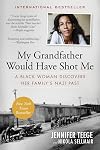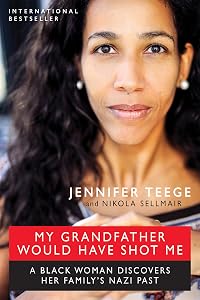
My Grandfather Would Have Shot Me: A Black Woman Discovers Her Family's Nazi Past
by Jennifer Teege, Nikola Sellmair
On This Page
Description
"The memoir of a German-Nigerian woman who learns that her grandfather was the brutal Nazi commandant depicted in Schindler's List, Amon Goeth"--Provided by publisher.Tags
Recommendations




Member Recommendations
Member Reviews
Was bedeutet es, mit einem Mörder verwandt zu sein, von einem Mörder abzustammen? Es ist ein seltener, aber nicht ungewöhnlicher Zustand, denn es gibt eine ganze Reihe von Mördern, Serienmördern, auf der Welt, und alle hatten Brüder, Schwestern, Familie, Nachkommen. Im Falle des psychopathischen Einzeltäters kann man jedoch sagen, dass diejenigen, die sein Blut teilen, seine Psyche nicht teilen. Der Fall der Nachkommen von Nazi-Verbrechern ist anders, weil diese Verbrecher in einem System gediehen, das für sie geschaffen und entwickelt wurde, so dass sie ihre natürliche Grausamkeit, ihren Hunger nach Blut, in den Dienst einer Ideologie stellen konnten.
So kann man sich das Entsetzen von Jennifer Teege, eine schwarze Deutsche, show more vorstellen, als sie in einer Bibliothek ein Buch über ihre Mutter findet, eine Frau, die sie zur Adoption freigab, als sie erst sieben Jahre alt war, und erfährt, dass diese Frau die Tochter von Amon Göth ist, dem Leiter des Konzentrationslagers in Płaszów bei Krakau, einem berüchtigten psychopathischen Mörder.
Von diesem Moment an ist Jennifer, die seit ihrem 20. Lebensjahr an Depressionen leidet, gezwungen, ihr ganzes Leben in Frage zu stellen, von den ersten Beziehungen zu ihrer Mutter und Großmutter bis hin zu denen zu ihrer Adoptivfamilie und ihren israelischen Freunden, denn paradoxerweise ist sie nicht nur schwarz, sondern hat in Israel studiert und spricht Hebräisch. Wirklich, ihr Großvater hätte sie erschossen.
Das Buch ist in verschiedene Abschnitte unterteilt - Jennifers Erzählung, die mit dem historischen Kontext und den Beobachtungen ihres Co-Autors vermischt ist - und hat neben dem Plus, dass es eine ausgezeichnete Lektüre ist, das enorme Verdienst, zu uns zu sprechen, die wir, unberührt von dem Grauen, leicht alles in Schwarz und Weiß sehen - zu einer Art von Opfern des Nationalsozialismus, die leicht vergessen werden: die unschuldigen Nachkommen, die auch das Schuldgefühl auf ihren Schultern tragen, das ihre Vorfahren nie empfunden haben. show less
So kann man sich das Entsetzen von Jennifer Teege, eine schwarze Deutsche, show more vorstellen, als sie in einer Bibliothek ein Buch über ihre Mutter findet, eine Frau, die sie zur Adoption freigab, als sie erst sieben Jahre alt war, und erfährt, dass diese Frau die Tochter von Amon Göth ist, dem Leiter des Konzentrationslagers in Płaszów bei Krakau, einem berüchtigten psychopathischen Mörder.
Von diesem Moment an ist Jennifer, die seit ihrem 20. Lebensjahr an Depressionen leidet, gezwungen, ihr ganzes Leben in Frage zu stellen, von den ersten Beziehungen zu ihrer Mutter und Großmutter bis hin zu denen zu ihrer Adoptivfamilie und ihren israelischen Freunden, denn paradoxerweise ist sie nicht nur schwarz, sondern hat in Israel studiert und spricht Hebräisch. Wirklich, ihr Großvater hätte sie erschossen.
Das Buch ist in verschiedene Abschnitte unterteilt - Jennifers Erzählung, die mit dem historischen Kontext und den Beobachtungen ihres Co-Autors vermischt ist - und hat neben dem Plus, dass es eine ausgezeichnete Lektüre ist, das enorme Verdienst, zu uns zu sprechen, die wir, unberührt von dem Grauen, leicht alles in Schwarz und Weiß sehen - zu einer Art von Opfern des Nationalsozialismus, die leicht vergessen werden: die unschuldigen Nachkommen, die auch das Schuldgefühl auf ihren Schultern tragen, das ihre Vorfahren nie empfunden haben. show less
Jennifer Teege spent her earliest years in a Catholic orphanage. Teege’s German mother had a brief relationship with Teege’s Nigerian father, but they were no longer together by the time Teege was born. At that time in Germany, it was common for single mothers who had to work to place their children in an orphanage. They still had visitation rights and often the children would spend weekends with their mothers or other family. When she was a toddler, Teege was taken in by a foster family. She still saw her mother and grandmother regularly until she was adopted by her foster family.
Teege’s sense of identity was upended at age 38 when she picked up a random book off of a library shelf. She found she was holding a book about her show more mother and her mother’s father, the Nazi war criminal Amon Goeth, the concentration camp commandant known to many from the film Schindler’s List. Teege sought out a therapist to help her deal with this new knowledge as well as the abandonment issues stemming from her relationships with her birth mother and grandmother. Also, Teege had lived and studied in Israel for several years in her twenties, and she didn’t know how to tell her Israeli friends that her grandfather had been a mass murderer of Jews.
This book is an odd mix of memoir and biography, with parts written by Teege interspersed with more objective commentary by her co-author, Nikola Sellmair. Teege contextualizes her individual psychological trauma with that of other descendants of Nazi war criminals, descendants of average Germans who sympathized with the Nazi party, and descendants of Holocaust survivors. She also reflects on generational differences between the children and the grandchildren of war criminals and Holocaust survivors. Teege’s personal journey is an example of how one reckons with one’s past and the weight of family secrets in order to contribute to a better future. show less
Teege’s sense of identity was upended at age 38 when she picked up a random book off of a library shelf. She found she was holding a book about her show more mother and her mother’s father, the Nazi war criminal Amon Goeth, the concentration camp commandant known to many from the film Schindler’s List. Teege sought out a therapist to help her deal with this new knowledge as well as the abandonment issues stemming from her relationships with her birth mother and grandmother. Also, Teege had lived and studied in Israel for several years in her twenties, and she didn’t know how to tell her Israeli friends that her grandfather had been a mass murderer of Jews.
This book is an odd mix of memoir and biography, with parts written by Teege interspersed with more objective commentary by her co-author, Nikola Sellmair. Teege contextualizes her individual psychological trauma with that of other descendants of Nazi war criminals, descendants of average Germans who sympathized with the Nazi party, and descendants of Holocaust survivors. She also reflects on generational differences between the children and the grandchildren of war criminals and Holocaust survivors. Teege’s personal journey is an example of how one reckons with one’s past and the weight of family secrets in order to contribute to a better future. show less
Each of us has a story to tell, a story so rich with detail and coincidence that, at moments, feels like fiction. Teege, a Nigerian-German adopted by a German family, married with two children, feels her world turn upside-down when she serendipitously discovers a book about her birth mother in her local bookstore. The next day, again by coincidence, there is a television documentary featuring her birth mother. These events, in and of themselves, would be odd and perhaps eerie. But what Teege discovers permanently shakes her to her very foundation: Teege's birth grandfather was the Amon Goeth, the sadistic Kommandant played by Ralph Fiennes in Schindler's List who supervised the camp that hired out workers to Schindler's factory. How show more does she reconcile her maternal grandmother's love with that same woman's ability to live with "the butcher"? How does history change when it becomes so personal? How Teege reconciles the evils of the past with her present and ultimately uses her newfound knowledge to impact new generations is an inspiration. Highly recommended. (225) show less
I don't even know where to begin on this one. It's is not as simple as finding out that her grandfather was a part of the Nazi party, which would still not be ideal. He was among the most well known and those whose deeds were well publicized.
The book follows Teege's journey as she seeks what this discovery means for her and her life. It may not on the outside seem like finding out something about your grandfather can cause you to question who you are at your core, but I imagine it does. There is a certain amount of 'nature vs nurture' that we all question and finding out that your biological grandfather, regardless of whether or not you've met him, is capable of the things he did could make anyone question what was inside of them.
Along show more Teege's journey, the book also uses the third person occasionally to show the typical progression through this knowledge as it concerns Germans in general. The children of Nazi's had to love their parents and they had a strange relationship to that era that many of them were born in. The grandchildren of Nazi's are far more likely to distance themselves from those grandparents with the knowledge of what they did or were complacent in allowing. But not all of these grandchildren are raised with the knowledge of who their specific grandparent was within the party, even when they knew there was involvement.
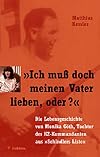
Teege had no idea that her family had ever been associated with the Nazi party. Her mother didn't appear to have problems mixing races, as her father was Nigerian. Her grandmother, who was a witness to many of her grandfather's deeds before he was executed at the end of the war, loved her unconditionally. Then she came across a book with her biological mother's face on it that was titled I Have to Love My Father, Don't I? This was when she began to realize there was a bit more to her history than she or her adopted family had been told when they adopted her.
The thing about this story that stands out in a way that is different from her peers is that Teege's travels had put her in contact with plenty of people who had once been persecuted by her grandfather and his associates. She had been immersed in the other side of the conflict he was in the middle of and had to find a way to reconcile her personal history with her family history. She had to find a way to bring those two worlds together and the result is an interesting kind of healing. It seems like a first step, if nothing else. I'm sure she's not the only person of her generation to want to find a healing, or even to find one, but her story is exceptional because of the way it happens. show less
The book follows Teege's journey as she seeks what this discovery means for her and her life. It may not on the outside seem like finding out something about your grandfather can cause you to question who you are at your core, but I imagine it does. There is a certain amount of 'nature vs nurture' that we all question and finding out that your biological grandfather, regardless of whether or not you've met him, is capable of the things he did could make anyone question what was inside of them.
Along show more Teege's journey, the book also uses the third person occasionally to show the typical progression through this knowledge as it concerns Germans in general. The children of Nazi's had to love their parents and they had a strange relationship to that era that many of them were born in. The grandchildren of Nazi's are far more likely to distance themselves from those grandparents with the knowledge of what they did or were complacent in allowing. But not all of these grandchildren are raised with the knowledge of who their specific grandparent was within the party, even when they knew there was involvement.
Teege had no idea that her family had ever been associated with the Nazi party. Her mother didn't appear to have problems mixing races, as her father was Nigerian. Her grandmother, who was a witness to many of her grandfather's deeds before he was executed at the end of the war, loved her unconditionally. Then she came across a book with her biological mother's face on it that was titled I Have to Love My Father, Don't I? This was when she began to realize there was a bit more to her history than she or her adopted family had been told when they adopted her.
The thing about this story that stands out in a way that is different from her peers is that Teege's travels had put her in contact with plenty of people who had once been persecuted by her grandfather and his associates. She had been immersed in the other side of the conflict he was in the middle of and had to find a way to reconcile her personal history with her family history. She had to find a way to bring those two worlds together and the result is an interesting kind of healing. It seems like a first step, if nothing else. I'm sure she's not the only person of her generation to want to find a healing, or even to find one, but her story is exceptional because of the way it happens. show less
Kudos to poor Jennifer Teege for taking on this unimaginably difficult task: confronting her unintended past by the discovery as if by synchronicity of a book written about her grandmother, whom she had had no clue had been married to a brutal Nazi thug. Herself adopted out, Teege undergoes a traumatic transformation in confronting the past by reconnecting with her biological mother, with her memories of her grandmother, and by visiting the death camps themselves, as well as the camp where her grandfather had his cruel sway. Well written, the text intersperses Teege's thoughts and experiences with those of the other author, which are in a different font, and offer a more 3rd-person take on events and situations. Sparsely illustrated show more with photographs. I didn't finish the book because I got the gist and felt it was enough to go halfway. show less
This is a book I never normally would have read and only did so because it was selected by my local book club. I found the style of writing overly simplistic, though that may be attributed to the translation from German, and I found the back and forth from Teege to Sommer very disjointed and awkward. I appreciated the historical notes and perspective, just thought it could have been added in a less intrusive way. I loved how on one of the first pages she described the library as having "concentrated silence" which almost seemed to set the tone for the novel about concentration camps and how Amon Goeth seemed to exhibit concentrated evil. Teege's reaction and subsequent journey at learning her Nazi heritage was no doubt difficult, but I show more found her pre-existing mental health conditions made it seem all the more worse--and a better story--than an average person's reaction to the news. It brought to mind the guilt that descendants of slave owners in the United States go through. One other observation I made was her hurt and anger at her mother not including her in her book or telling her about their past, yet she made no mention of telling her children about it either. Perhaps she did and chose not to write about it, or perhaps she felt they were too young, etc. I just couldn't help but notice how she did the exact same thing her mother did that had previously made her so angry. Is this going to be a generational cycle? show less
rony. It’s a thing
My Grandfather Would Have Shot Me: A Black Woman Discovers Her Family’s Nazi Past by Jennifer Teege and Nikola Sellmair; translated by Caroline Sommer (The Experiment/Workman, $24.99).
There are some stories that are simply so weird they can’t possibly be fiction, and the story of how Jennifer Teege, a 38-year-old black German woman, came to discover who her grandfather was fits that bill.
While browsing books about German history in the library, she came across one that referenced Amon Goeth, the notorious Nazi officer and camp commandant, made famous as a brutal psychopath in the book and film Schindler’s List.
The last name was quite familiar to her–it was her birth mother’s maiden name. The daughter of a show more white German woman and a Nigerian exchanged student, she had scant memories of her birth mother, spent time in an orphanage, and was eventually adopted by a white German family.
But in the book’s photos, she found proof: Her birth mother was the daughter of Amon Goeth.
My Grandfather Would Have Shot Me, a best-seller in Europe, is the story of how her life changed once she knew her family history, and how it altered her perceptions of her own place as a native-born German of color. This fascinating memoir serves to tell the story of a remarkable woman–one who would have never been born, had her own grandfather succeeded.
It’s also a fairly quick read, but the issues raised–how history hovers over all of us and we are not necessarily protected by ignorance of it; life as a bi-racial person in a majority white monoculture; the discomfort we have with looking closely at the past (and the German discomfort with their Nazi history is no more uncomfortable than what happens when the U.S.’s 500-year history of slavery and white supremacy is brought up)–will stay with you long after the book is finished.
Put My Grandfather Would Have Shot Me in the category of “I finished this in one sitting.”
Reviewed on Lit/Rant: www.litrant.tumblr.com show less
My Grandfather Would Have Shot Me: A Black Woman Discovers Her Family’s Nazi Past by Jennifer Teege and Nikola Sellmair; translated by Caroline Sommer (The Experiment/Workman, $24.99).
There are some stories that are simply so weird they can’t possibly be fiction, and the story of how Jennifer Teege, a 38-year-old black German woman, came to discover who her grandfather was fits that bill.
While browsing books about German history in the library, she came across one that referenced Amon Goeth, the notorious Nazi officer and camp commandant, made famous as a brutal psychopath in the book and film Schindler’s List.
The last name was quite familiar to her–it was her birth mother’s maiden name. The daughter of a show more white German woman and a Nigerian exchanged student, she had scant memories of her birth mother, spent time in an orphanage, and was eventually adopted by a white German family.
But in the book’s photos, she found proof: Her birth mother was the daughter of Amon Goeth.
My Grandfather Would Have Shot Me, a best-seller in Europe, is the story of how her life changed once she knew her family history, and how it altered her perceptions of her own place as a native-born German of color. This fascinating memoir serves to tell the story of a remarkable woman–one who would have never been born, had her own grandfather succeeded.
It’s also a fairly quick read, but the issues raised–how history hovers over all of us and we are not necessarily protected by ignorance of it; life as a bi-racial person in a majority white monoculture; the discomfort we have with looking closely at the past (and the German discomfort with their Nazi history is no more uncomfortable than what happens when the U.S.’s 500-year history of slavery and white supremacy is brought up)–will stay with you long after the book is finished.
Put My Grandfather Would Have Shot Me in the category of “I finished this in one sitting.”
Reviewed on Lit/Rant: www.litrant.tumblr.com show less
Members
- Recently Added By
Lists

Best Biographies, Autobiographies and Memoirs
465 works; 160 members

Holocaust
100 works; 13 members

Books about World War II
241 works; 22 members

Books Read in 2020
4,379 works; 124 members

Books featuring grandfathers
23 works; 4 members

Books Read in 2024
4,727 works; 128 members
Author Information

1+ Work 412 Members

1 Work 410 Members
Some Editions
Common Knowledge
- Canonical title*
- Amon: Mein Großvater hätte mich erschossen
- Original title
- Amon: Mein Großvater hätte mich erschossen
- Original publication date
- 2015-04-15
- People/Characters
- Jennifer Teege; Amon Göth; Monika Hertwig; Ruth Irene Kalder; Helen Rosenzweig; Oskar Schindler (show all 11); Gerhard Siebers; Inge Siebers; Matthias Siebers; Anat; Noa
- Important places
- Kraków-Płaszów concentration camp, Płaszów, Kraków, Lesser Poland, Poland; Tel Aviv, Israel; Germany
- Related movies
- Schindler's List
- Epigraph
- It is the look on the woman’s face that seems familiar. I’m standing in the central library in Hamburg, and in my hands I’m holding a red book that I’ve just picked up from the shelf. The spine reads: I Have to Love M... (show all)y Father, Don’t I? On the front cover is a small black-and-white photograph of a middle-aged woman. She looks deep in thought, and there is something strained and joyless about her. The corners of her mouth are turned down; she looks unhappy. I glance quickly at the subtitle: The Life Story of Monika Goeth, Daughter of the Concentration Camp Commandant from “Schindler’s List.” Monika Goeth! I know that name; it’s my mother’s name. My mother, who put me in an orphanage when I was little and whom I haven’t seen in many years.
- Dedication
- For Y.
- First words
- It is the look on the woman's face that seems familiar.
- Original language
- German
*Some information comes from Common Knowledge in other languages. Click "Edit" for more information.
Classifications
- Genres
- Biography & Memoir, General Nonfiction, Nonfiction, History
- DDC/MDS
- 929.20943 — History & geography Biographies, Genealogy, Healdry Genealogy, Flags, Heraldry, Civil Records Families Families Geographic Treatment (Families) Europe (Families)
- LCC
- CT1098 .T33 .A3 — Auxiliary Sciences of History Biography Biography National biography
- BISAC
Statistics
- Members
- 412
- Popularity
- 74,706
- Reviews
- 26
- Rating
- (3.97)
- Languages
- 8 — Danish, Dutch, English, German, Italian, Polish, Portuguese, Spanish
- Media
- Paper, Audiobook, Ebook
- ISBNs
- 27
- UPCs
- 1
- ASINs
- 10