
Return From The Stars
by Stanisław Lem
On This Page
Description
An astronaut returns to Earth after a ten-year mission and finds a society that he barely recognizes.Stanislaw Lem's Return from the Stars recounts the experiences of Hal Bregg, an astronaut who returns from an exploratory mission that lasted ten years--although because of time dilation, 127 years have passed on Earth. Bregg finds a society that he hardly recognizes, in which danger has been eradicated. Children are betrizated to remove all aggression and violence--a process that also show more removes all impulse to take risks and explore. The people of Earth view Bregg and his crew as resuscitated Neanderthals, and pressure them to undergo betrization. Bregg has serious difficulty in navigating the new social mores.While Lem's depiction of a risk-free society is bleak, he does not portray Bregg and his fellow astronauts as heroes. Indeed, faced with no opposition to his aggression, Bregg behaves abominably. He is faced with a choice: leave Earth again and hope to return to a different society in several hundred years, or stay on Earth and learn to be content. With Return from the Stars, Lem shows the shifting boundaries between utopia and dystopia. show lessTags
Recommendations



























Member Reviews
Holy cyberspace, robotics and zero-gravity! Stanislaw Lem took me completely by surprise with his 1961 novel of American astronaut Hal Bregg’s returning to Earth 127 years into the future. I was expecting the acclaimed Polish author's time traveler to be another introverted nerd like Ijon Tichy. He’s anything but - exceptionally tall, rugged, muscular, athletic, Hal is an American adventurer along the lines of Indiana Jones. Likewise, I was anticipating the focus of the novel to revolve exclusively around futuristic science, technology and culture. Return From the Stars is all that but something more - a tale of passion, intrigue and, most unexpectedly, a love story.
We follow Hal as he recounts dozens of his intriguing encounters show more and discoveries – to list several: airplane seats expanding into egg-shaped cocoons as a way of providing the ultimate in privacy (to my mind, a splendid invention), a woman wearing a dress with large peacock eyes that blink, an airport terminal smelling like a thousand scented soaps, a white cake that instantly foams, turns brown and hardens and has the taste of a freshly baked roll, conversations with a physician and a mathematician recounting the advances made in their respective fields in the last one hundred years. So much to report I'm forced to pick and chose. Below are highlights from Explorer Bregg's astonishing odyssey I judge among the most provocative:
BETRIZATION
No doubt about it, the procedure known as betrization is the most important change in this future world, a procedure all children are obliged to undergo. Betrization permanently alters human nature, neutralizing all traces of aggression, nastiness, mean-spiritedness and the need to dominate along with engendering an aversion to risk taking. Predictably, with such a profound transformation, the men and women, society and culture Hal encounters bear little resemblance to life back in the 20th century. Thus when all those denizens Hal meets realize he has not been betrizied, they recoil, viewing him as wild, barbaric, barely a notch above Neanderthal. Betrization is the major philosophic issue for Hal and, indirectly, for Stanislaw Lem.
BLACK BOXES
Stunning scientific breakthrough: gravity is neutralized to eliminate risk and danger. Hal sees black boxes all over the place, in elevators and in sleek, black automobiles (gleeders) that look like pencils sharpened at both ends. So when there is high speed collision, the black boxes completely absorb the impact and passengers walk away without a scratch. Bye bye to all those highway fatalities. Now that’s an improvement!
WORK
Men and women no longer perform drudge work; all is done by robots that are beautifully styled, semitransparent and have long, delicate arms. Hal tells us: “I had noticed that I had no difficulty conversing with robots, because absolutely nothing surprised them. They were incapable of surprise. A very sensible quality.” Furthermore, a physician informs our time traveling adventurer that material factors have ceased to exist - people are freed up to live harmonious, tranquil lives of leisure. The doctor admits society has softened in the last one hundred years. Reading this passage I was reminded of 19th century German philosopher G. F. W. Hegel projecting how at some future point in history the continual thesis-antithesis tug-of-war will evaporate and level out into a final synthesis.
ARCHITECTURE
Many city buildings are a single immensity, a mountain of glassy rock. The more Hal see, the more he comprehends future architects frequently use nature – mountains, rivers, valleys – as the model for their own creations. “They must have understood that in going beyond certain limits they had to abandon symmetry and regularity of form, and learn from what was largest – intelligent students of the planet.”
ART
“In the center rose a column, high, transparent as glass; something danced in it, purple, brown and violet shapes, unlike anything I knew, like abstract sculptures come to life, but very amusing. First one color then another swelled, became concentrated, took shape in a highly comical way; this melee of forms, although devoid of faces, heads, arms, legs was very human in character. I’ve never seen anything like it.” Everywhere in the city, Hal is surrounded by a dazzling array of lights, colors and shapes. Very appealing to the eye – it appears these future city dwellers have a refined and highly developed aesthetic sense. Beauty is everywhere. "The entire city took on the appearance of a gigantic art exhibit.”
FILM AND THEATER
Movies are three dimensional, vivid holographs, and even more impressive, entirely interactive. “The viewer himself, by his own choice, determined whether he would see a close-up or the whole picture.” Also, Stanislaw Lem anticipates wide screen television. Hal is astonished at all the giant images and faces on flat TV screens the size of walls. Also, theme parks, a close cousin to theater, are holographic extravaganzas – for example, there’s white water rafting where the raft and the water are all swirls of light, created in a way where rafters can experience the thrill without the danger.
BOOKS
Hal is stunned there are no paper books in the bookstore. Stanislaw Lem anticipates the Kindle and audio books. Over the next days as he becomes familiar with the future world’s literature, Hal is upset with the lack of social criticism and the complete absence of anything resembling satire, which prompts the tall astronaut to muse: “There is never good without evil.” Hal can also see the entire cultural heritage has undergone a radical re-evaluation - sexuality, social mores, attitudes toward war – have little in common with the way people viewed such things in the 20th century.
FASHION
“Suits, socks, sweaters, underwear, everything were sprayed on.” In one respect, this future US world is a vast enhancement - men and women are trim, well-built and attractive. And youthful, thanks to a number of health cures for aging, things like a cream instantly removing wrinkles. Contact sports (hockey and football), bloody sports (boxing and rodeo) have disappeared; swimming, diving and hiking are the prevailing sports and modes of exercise.
LOVE
Hal meets lovely Eri and falls deeply in love. Meanwhile, the space mission offers Hal the opportunity for more time travel and adventure. Hal has a critical decision to make: stay with Eri in this betrization world or move on. What will Hal choose? Keep in mind Hal is now a strapping man of forty and has been on a space mission for ten years without women. Also, have a good long look at Eri and take a guess which way Hal with go.
BETRIZATION REDUX
Again, the major philosophic conundrum in this future world is betrization. Conjoined with this radical biological procedure, the prime subjects of education for all toddlers, school-age children and adolescence are the principles of tolerance, peaceful coexistence and respect for others of all races. Ancient history, epochs prior to betrization, including the 20th century, are portrayed as “times of animality and barbaric, uncontrolled procreation, of catastrophe both economic and military.”
Judging from the number of Goodreads reviews (less than 200), I think it is fair to say Return From the Stars is an overlooked classic. In my humble judgement this future world is one of great beauty and magnificence. However, I can detect many readers would take exactly the opposite view. I encourage you to read for yourself and formulate your own opinions.
One of the greatest writers of science fiction, Polish author Stanislaw Lem, 1921-2006
"We traveled a long time in silence. The buildings of the city center gave way to bizarre forms of suburban architecture - under small artificial suns, immersed in vegetation, lay structures with flowing lines, or inflated into odd pillows, or winged, so that the division between the interior of a home and its surroundings was lost; these where products of a phantasmagoria of tireless attempts to create without repeating old forms." -- Stanislaw Lem, Return From the Stars show less
This was an interesting, thought-provoking, dare I say even intellectually stimulating book. It tells the tale of Hal Bregg, an astronaut who returns from a dangerous 10 year trip to the stars to find that a couple of scientific discoveries have profoundly changed how man lives on Earth (where over 100 years have passed due to the time dilation effects of high speed space travel). The extended opening chapter that describes the overwhelmingly surreal experience of Bregg's initial return to the home planet is brilliant. One of the things I really liked about this book is that paints a picture of a future which is neither all black nor all white. Technology and science have indeed led to progress which has made people's lives better (in show more some ways even utopian), but this progress has come with real costs. The book also has some very interesting things to say about the practical limitations of high speed space exploration and why it might be worth doing anyway. The book bogs down a bit in the second half, and I felt that the extended storyline about Bregg's infatuation with a young married woman named Eri could have been better realized. Still I would rate this as one of Lem's more successful novels. show less
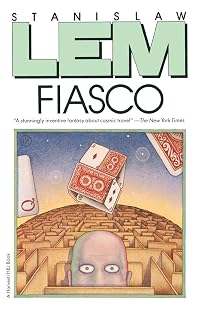
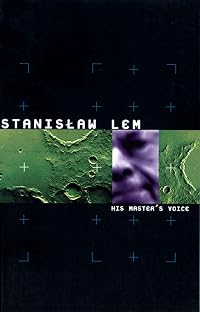
I agree with most of the positive comments by other reviewers here. In the hands of the right director, “Return from the Stars” would make an excellent film – more in the tradition of thoughtful, art-house sci-fi like “Gattaca” than as a blockbuster Hollywood movie (although someone like George Clooney would be ideal for the part of Hal – he should have filmed this novel instead of remaking “Solaris”). If you are keen on the Lem of “Futurological Congress” then maybe this book won’t be so much to your taste, as at least one other reviewer has found – but personally, I prefer Lem novels like “Solaris”,“His Master’s Voice” and “Fiasco” and for me, this one bears comparison with all of those show more books.
Hal’s alienation faced with a population which has been “betrizated” (a process which removes aggressive, risk-taking tendencies) reminded me of Aldous Huxley’s “Brave New World”, but with betrization taking the place of eugenics. For a novel written in 1961, a time when space exploration still had a hold over the public imagination, it is eerily prescient – because even without betrization, we seem – like the civilisation depicted in the novel - to have largely lost interest in manned space missions. Instead we have become far more interested in networking amongst ourselves – and in that sense, we are (again, just like the world depicted in the book) a civilisation which is increasingly turned in on itself, rather than outward looking. That may sound like quite a negative characterisation, but one of the things I particularly liked about the novel was its readiness to acknowledge that things aren’t necessarily quite so black and white – that there are aspects of this future world which, although they seem alien and even somewhat repellent to us now, may well be superior to our current civilisation.
For a longer review including some thoughts on how this relates to communism and whether it works well at a basic story-telling level (I think it does – it’s much more than just a novel of ideas), see:
http://paulsamael.com/blog/holiday-reading-1- show less
Hal’s alienation faced with a population which has been “betrizated” (a process which removes aggressive, risk-taking tendencies) reminded me of Aldous Huxley’s “Brave New World”, but with betrization taking the place of eugenics. For a novel written in 1961, a time when space exploration still had a hold over the public imagination, it is eerily prescient – because even without betrization, we seem – like the civilisation depicted in the novel - to have largely lost interest in manned space missions. Instead we have become far more interested in networking amongst ourselves – and in that sense, we are (again, just like the world depicted in the book) a civilisation which is increasingly turned in on itself, rather than outward looking. That may sound like quite a negative characterisation, but one of the things I particularly liked about the novel was its readiness to acknowledge that things aren’t necessarily quite so black and white – that there are aspects of this future world which, although they seem alien and even somewhat repellent to us now, may well be superior to our current civilisation.
For a longer review including some thoughts on how this relates to communism and whether it works well at a basic story-telling level (I think it does – it’s much more than just a novel of ideas), see:
http://paulsamael.com/blog/holiday-reading-1- show less
Less successful than many of Lem's works, but perhaps I'm setting too high a bar. Hal's return to earth and struggle to adapt is exceptional, but the culture he returns to is at the same measure too similar and too different from our own for me to understand how one came from the other.
2d reading May 2026
Overall very tedious and I almost quit reading. Most of the book is basically a very awkward love story. Chap 6 and especially 7 are fantastic, and all that is of real SF vaule of this book, IMO
1st reading:
I briefly judged this book by it's cover, which is a man in a gorilla mask holding a hottie woman. I found the first chapter dreadfully boring, with endless descriptions of colorful arrival terminals in a spaceport. I thought about giving up on the book, but hoped Lem would come through. The premise of the book is that space travelers return to earth ofter an absence of 130? years, and have to re-integrate to society. Much has changed, like the introduction of betrization which removes all violent impulses and show more unpredictability from society.
Along the line, our hero goes on vacation and coincidentally make a stop at an old robot factory. This definitely gave me memories of previous Lem masterpieces like Cyberiad. It also made me very suspicious that that Bregg's love interest was a robot. This did not prove to be true, but the romance has some strange twists. The backstory of the space journey was the best part of the book. The stages of astronaut training were interesting as well, and they include Ghost Palace, Wringer, and Coronation. These are different phases of isolation that must be survived to be certified as space worthy.
Overall I thought it was one of his better novels, though some part the flow of the story remains fuzzy. show less
Overall very tedious and I almost quit reading. Most of the book is basically a very awkward love story. Chap 6 and especially 7 are fantastic, and all that is of real SF vaule of this book, IMO
1st reading:
I briefly judged this book by it's cover, which is a man in a gorilla mask holding a hottie woman. I found the first chapter dreadfully boring, with endless descriptions of colorful arrival terminals in a spaceport. I thought about giving up on the book, but hoped Lem would come through. The premise of the book is that space travelers return to earth ofter an absence of 130? years, and have to re-integrate to society. Much has changed, like the introduction of betrization which removes all violent impulses and show more unpredictability from society.
Along the line, our hero goes on vacation and coincidentally make a stop at an old robot factory. This definitely gave me memories of previous Lem masterpieces like Cyberiad. It also made me very suspicious that that Bregg's love interest was a robot. This did not prove to be true, but the romance has some strange twists. The backstory of the space journey was the best part of the book. The stages of astronaut training were interesting as well, and they include Ghost Palace, Wringer, and Coronation. These are different phases of isolation that must be survived to be certified as space worthy.
Overall I thought it was one of his better novels, though some part the flow of the story remains fuzzy. show less
Lem' mastery lies in his uncanny diegeses, their elaborate descriptions, and strong conceptual themes. This book was a supreme analysis of space travel, especially its motivation and the reintegration of astronauts / cosmonauts into life on their return. Add that to the invention of Betrization and you have an impressive book.
Wurde das schon verfilmt?
Ganz große Beschreibung einer völlig fremden menschlichen Zukunft.
Auch das bisher emotionalste Buch, das ich von Lem gelesen habe: Erstmals Erotik und Sex, dazu die Verbindung von Gewalt, Macht und Sex, dazu haßerfüllter Sex.
Sehr feinsinniges Psychogramm: die Betrisierten sind völlig aggressionslos. Das triggert bei den Rückehrern Besitz, Macht, blinde Leidenschaft, Gewalt.
Beinah Zwangsläufigkeit.
Ganz große Beschreibung einer völlig fremden menschlichen Zukunft.
Auch das bisher emotionalste Buch, das ich von Lem gelesen habe: Erstmals Erotik und Sex, dazu die Verbindung von Gewalt, Macht und Sex, dazu haßerfüllter Sex.
Sehr feinsinniges Psychogramm: die Betrisierten sind völlig aggressionslos. Das triggert bei den Rückehrern Besitz, Macht, blinde Leidenschaft, Gewalt.
Beinah Zwangsläufigkeit.
Members
- Recently Added By
Author Information

Polish science fiction writer Stanislaw Lem was born on September 12, 1921. A medical graduate of Cracow University, he is at home both in the sciences and in philosophy, and this broad erudition gives his writings genuine depth. He has published extensively, not only fiction, but also theoretical studies. His books have been translated into 41 show more languages and sold over 27 million copies. He gained international acclaim for The Cyberiad, a series of short stories, which was first published in 1974. A trend toward increasingly serious philosophical speculation is found in his later works, such as Solaris (1961), which was made into a Soviet film by Russian director Andrei Tarkovsky in 1972 and remade by Steven Soderbergh in 2002. He died on March 27, 2006 in Krakow at the age of 84. (Bowker Author Biography) show less
Some Editions
Series
Belongs to Publisher Series
st (324)
List Taschenbuch (60146)
Dzieła Stanisława Lema (Wydawnictwo Gazety Wyborczej)
ハヤカワ文庫 SF (244)
Mirabilia (22)
suhrkamp taschenbuch (0324)
Libro amigo [Bruguera] (695)
Présence du futur (288)
Work Relationships
Common Knowledge
- Canonical title
- Return From The Stars
- Original title
- Powrót z gwiazd
- Alternate titles*
- Rückkehr von den Sternen
- Original publication date
- 1968
- People/Characters
- Hal Bregg; Olaf Staave
- Important places
- Poland
- First words
- I took nothing with me, not even a coat.
- Last words
- (Click to show. Warning: May contain spoilers.)The snow of the summit caught fire in gold and white, it stood above the purple shadows of the valley, stood powerful and eternal, and I, not closing my tear-filled eyes, got up slowly and began to walk across the stones, to the south, to my home.
- Original language*
- Polnisch
*Some information comes from Common Knowledge in other languages. Click "Edit" for more information.
Classifications
- Genres
- Science Fiction, Fiction and Literature
- DDC/MDS
- 891.537 — Literature & rhetoric Literatures of other languages East Indo-European and Celtic literatures Iranian literatures Pehlevi (Huzwaresh) Satire and humor
- LCC
- PG7158 .L39 .P613 — Language and Literature Slavic languages and literatures. Baltic languages. Albanian language Slavic. Baltic. Albanian Slavic Polish
- BISAC
Statistics
- Members
- 1,053
- Popularity
- 24,547
- Reviews
- 13
- Rating
- (3.73)
- Languages
- 14 — Czech, English, Estonian, Finnish, French, German, Hungarian, Italian, Japanese, Polish, Portuguese, Russian, Spanish, Turkish
- Media
- Paper, Audiobook, Ebook
- ISBNs
- 53
- UPCs
- 1
- ASINs
- 22