Caught in the Web of Words: James Murray and the Oxford English Dictionary
by K. M. Elisabeth Murray
On This Page
Description
This unique and celebrated biography describes how a largely self-educated boy from a small village in Scotland entered the world of scholarship and became the first editor of the Oxford English Dictionary and a great lexicographer. It also provides an absorbing account of how the dictionary was written, the personalities of the people working on it, and the endless difficulties that nearly led to the whole enterprise being abandoned. "It is a magnificent story of a magnificent man, one of show more the finest biographies of the twentieth century, as its subject was one of the finest human beings of the nineteenth."--Anthony Burgess "A moving and dramatic story . . . sometimes tragic, often comic, ultimately triumphant."--Times (London) "A biography that possesses many of the virtues of James Murray himself--grace, humor, intelligence, curiosity, and scholarship."--Time"In her vivid biography, Murray's granddaughter brings his remarkable personality to life, and provides an unexpectedly fascinating account of the OED's long and difficult birth."--Times Literary Supplement"A gripping, engaging story; endearing, too. The daily round of a big Victorian family, with its jokes, games, and treasured seaside holidays, is entrancingly evoked."--Sunday Times (London) show lessTags
Recommendations
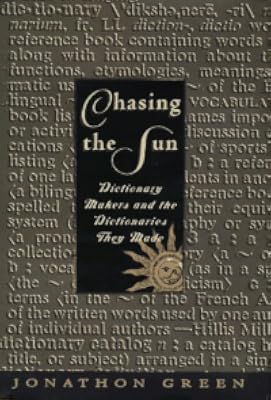
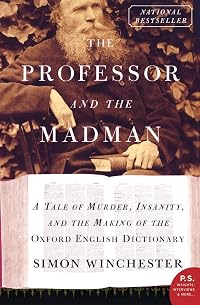
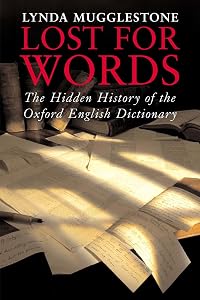
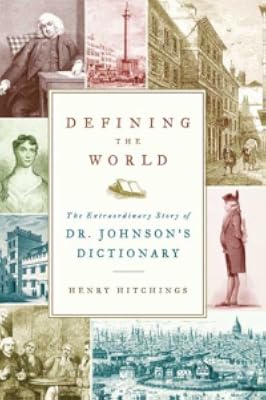


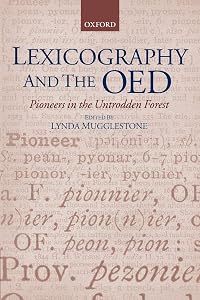
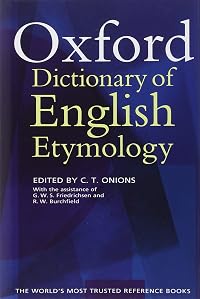
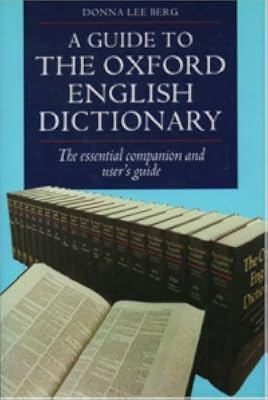
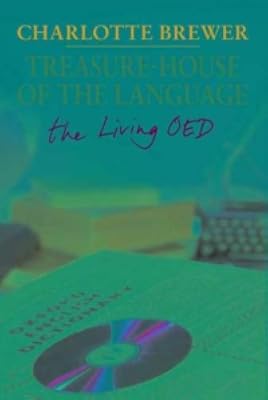














Member Recommendations
Member Reviews
One of the best parts of an open-ended reading assignment is getting to read books that have been sitting on the shelves for ages, patiently awaiting their turn. One of those is K.M. Elisabeth Murray's exquisite Caught in the Web of Words: James A.H. Murray and the Oxford English Dictionary." A biography of the author's grandfather, the great don of English lexicography and main editor for decades of the nascent OED, Caught in the Web is a balanced and revealing portrait of not just the man, but the incredibly complicated inner workings of the OED's creation.
I read Simon Winchester's works on Murray and the OED several years ago (The Meaning of Everything, and The Professor and the Madman) and enjoyed them well enough, but Murray puts show more them to shame. Drawing on the voluminous correspondence of Murray and his comrades-in-words, Ms. Murray is able to delve deep into the controversies - lexicographical, financial, spacial, and otherwise - that played into the long process of dictionary-making, and also reveals the personal side of the editor. A man who in effect gave up his life for "the cause," Murray nevertheless remained a committed family man, whose humor, dedication and intensity shine brightly in this book. Bicycle crashes (yes, plural) sand-monsters, ghost stories ... and always words.
This one flew by; I had a terrible time putting it down. Even the novel I've got going didn't tempt me from Caught in the Web. Excellent endnotes complete the package, and make this a definite recommendation. If it's been waiting on your "to be read" shelf as long as it was sitting on mine, why not give it a go?
http://philobiblos.blogspot.com/2007/03/book-review-caught-in-web-of-words.html show less
I read Simon Winchester's works on Murray and the OED several years ago (The Meaning of Everything, and The Professor and the Madman) and enjoyed them well enough, but Murray puts show more them to shame. Drawing on the voluminous correspondence of Murray and his comrades-in-words, Ms. Murray is able to delve deep into the controversies - lexicographical, financial, spacial, and otherwise - that played into the long process of dictionary-making, and also reveals the personal side of the editor. A man who in effect gave up his life for "the cause," Murray nevertheless remained a committed family man, whose humor, dedication and intensity shine brightly in this book. Bicycle crashes (yes, plural) sand-monsters, ghost stories ... and always words.
This one flew by; I had a terrible time putting it down. Even the novel I've got going didn't tempt me from Caught in the Web. Excellent endnotes complete the package, and make this a definite recommendation. If it's been waiting on your "to be read" shelf as long as it was sitting on mine, why not give it a go?
http://philobiblos.blogspot.com/2007/03/book-review-caught-in-web-of-words.html show less
Elisabeth Murray wrote a biography of her grandfather. While it is a straightforward birth to death biography, I was hoping for a more personal memoir filled with stories of James Murray, the family man instead of just focusing on the fact he was one of the greatest lexicographers of all time. Katherine Murray reveals that her grandfather had wanted to write down "a narrative of his life and memories" (prologue). Maybe that is why I expected more. Anecdotes of Murray's personal life were no more than a few sentences here and there and a smattering of black and white photographs of James (mostly at work in the Scriptorium). However, James was a religious family man and proud father of eleven children with a sly sense of humor.
Having show more said that, the most annoying pebble in my shoe: I couldn't help but notice the number of times Murray put her grandfather on an extremely high pedestal: James had a higher standard of accuracy than with anyone else he worked alongside; James was too meticulous; James worked harder than anyone else and worked longer hours than anyone else. To be fair, James Murray did dedicate over thirty-five years of his life to editing the Oxford English Dictionary. He worked under trying conditions - never had enough time, space, or money for the endeavor. Every day was a constant struggle. He employed his own children when the project started to fall behind. Even though he died before the project was finished, Murray was without a doubt, the godfather of etymology. show less
Having show more said that, the most annoying pebble in my shoe: I couldn't help but notice the number of times Murray put her grandfather on an extremely high pedestal: James had a higher standard of accuracy than with anyone else he worked alongside; James was too meticulous; James worked harder than anyone else and worked longer hours than anyone else. To be fair, James Murray did dedicate over thirty-five years of his life to editing the Oxford English Dictionary. He worked under trying conditions - never had enough time, space, or money for the endeavor. Every day was a constant struggle. He employed his own children when the project started to fall behind. Even though he died before the project was finished, Murray was without a doubt, the godfather of etymology. show less
An amazing biography!
Written by James Murray's granddaughter, Caught in the Web of Words reads smoothly,
at once like a compelling novel, and at the beginning, like a travelogue. It opens fully the life
of a man who became one of the world's great Lexicographers,
thanks to his encompassing talents, extraordinary perseverance,
and astonishing high energy.
We journey with James Murray from his rustic Scotland village homes through development into an
expert in South Scotch dialect then, finally to fame and recognition, though little fortune.
Recording the growth of The New English Dictionary, it moves at a lively pace, bogging down only when
long and boring negotiations with Oxford and other obstructionists threatened to shut it down. Many show more times
progress came to a halt because of personality conflicts and refusals to allow the changes that
Editor Murray required to create his magical dictionary which not only would include EVERY English word, but the history of every word with quotations from original sources!
Teams of assistants, Murray's kids, and volunteers devoted their time, energy, money, and sometimes their entire lives to the collection of the millions of word definition quote "slips" which entered the alphabetical pigeonholes in Murray's Scriptoriums.
By the conclusion of Caught in the Web of Words, James Murray will be so familiar to readers that they may want to read the early chapters again while enjoying the range of photographs.
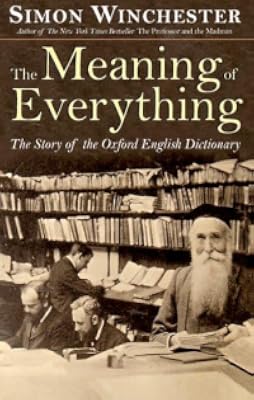
Simon Winchester's The Meaning of Everything, while owing an incredible debt to Elisabeth Murray, does have one new and important photograph: the famous mail collecting "pillar-box."
Along with current OUTLANDER ,
it would be a good time to add a tour of the Life of James Murray.
(Still a mystery why the OED has no pictures.) show less
Written by James Murray's granddaughter, Caught in the Web of Words reads smoothly,
at once like a compelling novel, and at the beginning, like a travelogue. It opens fully the life
of a man who became one of the world's great Lexicographers,
thanks to his encompassing talents, extraordinary perseverance,
and astonishing high energy.
We journey with James Murray from his rustic Scotland village homes through development into an
expert in South Scotch dialect then, finally to fame and recognition, though little fortune.
Recording the growth of The New English Dictionary, it moves at a lively pace, bogging down only when
long and boring negotiations with Oxford and other obstructionists threatened to shut it down. Many show more times
progress came to a halt because of personality conflicts and refusals to allow the changes that
Editor Murray required to create his magical dictionary which not only would include EVERY English word, but the history of every word with quotations from original sources!
Teams of assistants, Murray's kids, and volunteers devoted their time, energy, money, and sometimes their entire lives to the collection of the millions of word definition quote "slips" which entered the alphabetical pigeonholes in Murray's Scriptoriums.
By the conclusion of Caught in the Web of Words, James Murray will be so familiar to readers that they may want to read the early chapters again while enjoying the range of photographs.
Simon Winchester's The Meaning of Everything, while owing an incredible debt to Elisabeth Murray, does have one new and important photograph: the famous mail collecting "pillar-box."
Along with current OUTLANDER ,
it would be a good time to add a tour of the Life of James Murray.
(Still a mystery why the OED has no pictures.) show less
A biography of the first Editor of the OED that covers Murray's wildly diverse interests as well as the immense difficulties he overcame to create the Dictionary. Written by his granddaughter with a Victorian discretion that has no use for Freudian speculation, the biography concentrates on Murray's public life and work, leavened with a sprinkling of private household anecdote.
In essence, it is a paean to amateur scholarship (all of Murray's university degrees were honorary), that warms the heart of an autodidact like me.
In essence, it is a paean to amateur scholarship (all of Murray's university degrees were honorary), that warms the heart of an autodidact like me.
This is an old fashioned biography, beginning with lineage and childhood and continuing, mostly in a straight line, until death. The formulation is a satisfying one for the story of the Scottish autodidact who became the editor of the Oxford English Dictionary (OED), undoubtedly the greatest publishing undertaking in the English language. The OED, known to all of us who read, remains the unparalleled resource (now available online at $295/year) for the history and usage of English words.
The book describes the immense scholarly achievements of J.A.H. Murray (lexicographer par excellence), but it does not neglect the personal life of this upper middle class Victorian (b.1837 d.1915), who was the God-fearing father of eleven children. The show more author, Murray's granddaughter, herself an academic and educator, had access to family papers not before available.
The astounding achievement of the OED is its, mostly realized, attempt to trace the history of every English word in common use from its earliest appearance in print to the beginning of the 20th century (the Dictionary was completed in 1928). The enormity of this task required hundreds of volunteer "readers" throughout the Enlish-speaking world to collect words and quotations from printed material, to record them following a protocol devised by Murray, and to physically get the "slips" with this information to Murray and his sub-editors in England, where they eventually resided in a building alongside Murray's residence called the "Scriptorium." In the pre-digital (and for the most part pre-typewriter) age, the logistics of this process were mind boggling and prone to disasters, all well described in the book. The OED, when first published, contained descriptions of over 400,000 words in twelve volumes.
The tension and drama of the story come mainly from the unanticipated growth of the project, with attendant delays and cost increases, all noted with growing anxiety by the publisher. Oxford's Clarendon Press was first drawn to the undertaking as a potential moneymaker (it was not that until long after Murray's death) and as a competition with America's Webster's Dictionary. The changing views of the Oxford Press about the Dictionary, and about Murray, are well chronicled here.
We all love words - if not, most of us would not be on this site - and this is a gratifying tale for word lovers. show less
The book describes the immense scholarly achievements of J.A.H. Murray (lexicographer par excellence), but it does not neglect the personal life of this upper middle class Victorian (b.1837 d.1915), who was the God-fearing father of eleven children. The show more author, Murray's granddaughter, herself an academic and educator, had access to family papers not before available.
The astounding achievement of the OED is its, mostly realized, attempt to trace the history of every English word in common use from its earliest appearance in print to the beginning of the 20th century (the Dictionary was completed in 1928). The enormity of this task required hundreds of volunteer "readers" throughout the Enlish-speaking world to collect words and quotations from printed material, to record them following a protocol devised by Murray, and to physically get the "slips" with this information to Murray and his sub-editors in England, where they eventually resided in a building alongside Murray's residence called the "Scriptorium." In the pre-digital (and for the most part pre-typewriter) age, the logistics of this process were mind boggling and prone to disasters, all well described in the book. The OED, when first published, contained descriptions of over 400,000 words in twelve volumes.
The tension and drama of the story come mainly from the unanticipated growth of the project, with attendant delays and cost increases, all noted with growing anxiety by the publisher. Oxford's Clarendon Press was first drawn to the undertaking as a potential moneymaker (it was not that until long after Murray's death) and as a competition with America's Webster's Dictionary. The changing views of the Oxford Press about the Dictionary, and about Murray, are well chronicled here.
We all love words - if not, most of us would not be on this site - and this is a gratifying tale for word lovers. show less
K.M.E. Murray has written here the most detailed biography of her grandfather and the OED. Extensive letters and photos of his life and work pervade the somewhat stilted prose. If you only own one lexicographical biography, this should be it.
Members
- Recently Added By
Published Reviews
Caught in the web of words: James Murray and the Oxford English dictionary is K M Elisabeth Murray's biography of her grandfather. It was reviewed by The Times as describing 'how a largely self-educated boy from a small village
in Scotland entered the world of scholarship and became the first editor of the Oxford English dictionary, and a lexicographer greater by far than Dr Johnson'. It makes show more fascinating reading, especially for indexers, who likewise deal with lists of words alphabetically ordered and glossed — but individually on so much smaller a scale, and with so much latter-day technological assistance. 'A magnificent story of a magnificent man', Anthony Burgess called it. show less
in Scotland entered the world of scholarship and became the first editor of the Oxford English dictionary, and a lexicographer greater by far than Dr Johnson'. It makes show more fascinating reading, especially for indexers, who likewise deal with lists of words alphabetically ordered and glossed — but individually on so much smaller a scale, and with so much latter-day technological assistance. 'A magnificent story of a magnificent man', Anthony Burgess called it. show less
added by KayCliff
Lists

Best books about books
209 works; 106 members
Author Information
2 Works 527 Members
Common Knowledge
- Original publication date
- 1977
- People/Characters
- James Murray (Sir, lexicographer)
Classifications
- Genres
- Reference, Nonfiction, Biography & Memoir, History, General Nonfiction
- DDC/MDS
- 423.092 — Language English & Old English languages Dictionaries of standard English standard subdivisions History, geographic treatment, biography Biography
- LCC
- PE64 .M8 .M78 — Language and Literature English language English
- BISAC
Statistics
- Members
- 523
- Popularity
- 57,205
- Reviews
- 7
- Rating
- (4.04)
- Languages
- English
- Media
- Paper
- ISBNs
- 5
- ASINs
- 10