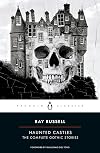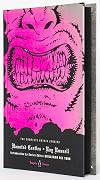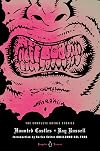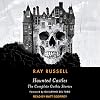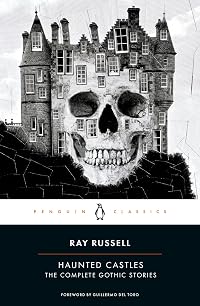
Haunted Castles: The Complete Gothic Stories
by Ray Russell
On This Page
Description
" Part of a new six-volume series of the best in classic horror, selected by award-winning director Guillermo del Toro. Filmmaker and longtime horror literature fan Guillermo del Toro serves as the curator for the Penguin Horror series, a new collection of classic tales and poems by masters of the genre. Included here are some of del Toro's favorites, from Mary Shelley's Frankenstein and Ray Russell's short story "Sardonicus," considered by Stephen King to be "perhaps the finest example of show more the modern Gothic ever written," to Shirley Jackson's The Haunting of Hill House and stories by Ray Bradbury, Joyce Carol Oates, Ted Klein, and Robert E. Howard. Featuring original cover art by Penguin Art Director Paul Buckley, these stunningly creepy deluxe hardcovers will be perfect additions to the shelves of horror, sci-fi, fantasy, and paranormal aficionados everywhere. Haunted Castles Haunted Castles is the definitve, complete collection of Ray Russell's masterful Gothic horror stories, including the famously terrifying novella trio of "Sardonicus," "Sanguinarius," and "Sagittarius." The characters that sprawl through Haunted Castles are frightful to the core: the heartless monster holding two lovers in limbo; the beautiful dame journeying down a damned road toward depravity (with the help of an evil gypsy); the man who must wear his fatal crimes on his face in the form of an awful smile. Engrossing, grotesque, perverted, and completely entrancing, Russell's Gothic tales are the best kind of dreadful. "-- show lessTags
Recommendations










Member Reviews
Everything I have ever read by Ray Russell has a certain character that is hard to describe. The prose is old-fashioned and could have been written in the late 19th or early 20th centuries--but the horror is more than up-to-date. The germ of the idea behind each story is brilliant, the plotting is air tight, and the execution is usually faultless. Russell is simply one of the great horror writers in history, and if this collection doesn't please you (or disturb you), well, I just don't know what to say. There is a nice introduction by the film director Guillermo del Toro to set the stage. Unlike a lot of intros, it doesn't spoil the stories to come. del Toro's favorite differs from mine - but no matter. You must read this show more book.
Sardonicus *****
Perfect, a masterpiece. Doctor travels to Bohemia at the behest of a woman he had a strong affection for some years earlier. But it is her husband, the title character, whose face is frozen into a horrible grin, who dominates the tale. His story and his fate are not to be forgotten.
Sagittarius ****1/2
As well-written as Sardonicus, but a bit more far-fetched. This tale, which speculates on the existence of a real Mr. Hyde, is a joy to read.
Sanguinarius *****
More horrifying than the first two stories combined! A princess tells the story of her terrible fate. This is strong stuff, indeed, and not for younger readers. As in the first two stories, Russell's writing is simply stupendously good. He has as good an author's voice as any I have ever read.
Comet Wine *****
A wonderful story, especially for those with a bit of knowledge about Russian musical history, about an encounter with a great--but somehow unknown--composer and his opera based on the Brothers Karamazov. The story is told in letters from the poet Lord Henry Stanton to Sir Robert Hargraves (yes, the same person in Sardonicus).
The Runaway Lovers ****1/2
An older Duke marries a beautiful young woman, but after a time she strays. His punishment for her and her lover is about what you would expect after reading the other stories in this volume. Cynical to say the least!
The Vendetta ****1/2
Another story in the form of a letter from Lord Henry Stanton to Sir Robert Hargraves, it tells of a painstaking plot for revenge. Very gothic, very atmospheric (which is redundant), and very effective.
The Cage *****
Fittingly, this collection ends in a hidden dungeon of a towering castle and it involves a Count's punishment of his wife for an affair, but it is the twist ending that makes the story. show less
Sardonicus *****
Perfect, a masterpiece. Doctor travels to Bohemia at the behest of a woman he had a strong affection for some years earlier. But it is her husband, the title character, whose face is frozen into a horrible grin, who dominates the tale. His story and his fate are not to be forgotten.
Sagittarius ****1/2
As well-written as Sardonicus, but a bit more far-fetched. This tale, which speculates on the existence of a real Mr. Hyde, is a joy to read.
Sanguinarius *****
More horrifying than the first two stories combined! A princess tells the story of her terrible fate. This is strong stuff, indeed, and not for younger readers. As in the first two stories, Russell's writing is simply stupendously good. He has as good an author's voice as any I have ever read.
Comet Wine *****
A wonderful story, especially for those with a bit of knowledge about Russian musical history, about an encounter with a great--but somehow unknown--composer and his opera based on the Brothers Karamazov. The story is told in letters from the poet Lord Henry Stanton to Sir Robert Hargraves (yes, the same person in Sardonicus).
The Runaway Lovers ****1/2
An older Duke marries a beautiful young woman, but after a time she strays. His punishment for her and her lover is about what you would expect after reading the other stories in this volume. Cynical to say the least!
The Vendetta ****1/2
Another story in the form of a letter from Lord Henry Stanton to Sir Robert Hargraves, it tells of a painstaking plot for revenge. Very gothic, very atmospheric (which is redundant), and very effective.
The Cage *****
Fittingly, this collection ends in a hidden dungeon of a towering castle and it involves a Count's punishment of his wife for an affair, but it is the twist ending that makes the story. show less
Poe meets the sensibility of De Sade in this collection of all Ray Russell's Gothic tales, mostly written in the 1960s when Russell was still closely associated with Playboy (he had been its Editor in the previous decade) and was writing screenplays for William Castle and Roger Corman.
The most famous are those making up the trilogy Sardonicus, Sagittarius (my personal favourite of the three) and Sanguinarius but there are four others which fit into a corpus with recurring narrators and similar styles that keep strictly to the Gothic.
The stories are much like the horror films where we would expect to see Vincent Price as the star but there is more of an edge here. One suspects that Russell saw some signs of 'evil' in the world that was show more created under Hefner and that he extended it into his faithful replays of the Gothic.
The stories always look backward into the past (like most of Corman's films). Russell is skilled at weaving his tales into the 'real world' of the past - for example, 'Comet Wine' is set in the St. Petersburg of the 'Five' and he is at pains to be accurate in presenting the Hungary of Bathory.
The stories do not make Russell the equal of Poe, Lovecraft or Ligotti by any means but they are well crafted and 'authentic' as late expressons of the Gothic sensibility albeit with a very twentieth century sympathy for monsters who are sometimes only monsters by circumstance. show less
The most famous are those making up the trilogy Sardonicus, Sagittarius (my personal favourite of the three) and Sanguinarius but there are four others which fit into a corpus with recurring narrators and similar styles that keep strictly to the Gothic.
The stories are much like the horror films where we would expect to see Vincent Price as the star but there is more of an edge here. One suspects that Russell saw some signs of 'evil' in the world that was show more created under Hefner and that he extended it into his faithful replays of the Gothic.
The stories always look backward into the past (like most of Corman's films). Russell is skilled at weaving his tales into the 'real world' of the past - for example, 'Comet Wine' is set in the St. Petersburg of the 'Five' and he is at pains to be accurate in presenting the Hungary of Bathory.
The stories do not make Russell the equal of Poe, Lovecraft or Ligotti by any means but they are well crafted and 'authentic' as late expressons of the Gothic sensibility albeit with a very twentieth century sympathy for monsters who are sometimes only monsters by circumstance. show less
I didn't mind the first book I'd read from Ray Russell, The Case Against Satan, and it's how the author landed on my radar. Well, that and the striking Penguin covers.
When I saw this one, to be honest, the title kind of put me off. Haunted castles? Meh.
Still, great cover, and an author I'd enjoyed. Sure, I'd give it a shot. Glad I did.
The three novellas that open this collection, Sardonicus, Sagittarious, and Sanguinarious, are just a blast, with the second and third exploring the Jekyll and Hyde and Elizabeth Bathory myths.
The shorter stories that round out the collection bring back characters from the first of the novellas, and present some finely-wrought, gruesome little gothic horrors.
Honestly, I'm not a huge fan of the gothic show more horror story, but Russell has the writing chops and the ability to turn a wonderful phrase, and toss in a neat little twist right at the end, to make each one of the stories in this collection an absolute keeper. There isn't a stinker in the lot. show less
When I saw this one, to be honest, the title kind of put me off. Haunted castles? Meh.
Still, great cover, and an author I'd enjoyed. Sure, I'd give it a shot. Glad I did.
The three novellas that open this collection, Sardonicus, Sagittarious, and Sanguinarious, are just a blast, with the second and third exploring the Jekyll and Hyde and Elizabeth Bathory myths.
The shorter stories that round out the collection bring back characters from the first of the novellas, and present some finely-wrought, gruesome little gothic horrors.
Honestly, I'm not a huge fan of the gothic show more horror story, but Russell has the writing chops and the ability to turn a wonderful phrase, and toss in a neat little twist right at the end, to make each one of the stories in this collection an absolute keeper. There isn't a stinker in the lot. show less
The Basics
A collection of gothic-horror short stories as reissued by Penguin Books as part of their horror series. The most famous of which is “Sardonicus”, the tale of a man who cannot stop smiling. That sounds pleasant, but it’s a rictus smile, large and grotesque and frozen on his face. In the tradition of Dracula, our innocent narrator is brought in to deal with this man’s complaint and finds something much darker than he wagered.
My Thoughts
Ray Russell. Anyone else never heard of this guy? I hadn’t, and I want to personally thank Penguin right here and now for putting this collection in with their horror series. Every other book was one I was entirely too familiar with, and it seemed more an exercise in recollecting show more favorite books for horror aficionados. Except for this one, which stood out for that reason. I had to see why Penguin deigned this good enough to dwell among the ranks of Lovecraft and Jackson and Shelley. And good thing I did.
I’ve never seen anyone in contemporary writing sound so downright old-school gothic. It was seamless. I could’ve been reading Poe or Lovecraft, as mentioned above. Only with even more envelope pushing, more of a modern sensibility, but not enough to interrupt that perfectly period voice.
As for the stories, this volume contains a very loose trilogy (“Sardonicus”, “Sagittarius”, and “Sanguinarius”), all of which were well worth the time. I say loosely because other than their titles sharing a theme, they’re all dark gothic stories with little else to connect them. Well, an argument could be made that they all had a similar tone and they all sought to create monsters similar to Mr. Hyde or Count Dracula to haunt us. And the other stories are equally worthy, though shorter, quicker jabs.
One thing I will say: you should be able to appreciate classic horror in some way if you’re going to approach this. Good and evil are black and white here. Many of the old tropes apply, like someone’s looks being proof of their character. The bad guys here are punished sinners. There are damsels to be rescued. Things like that. Things that might rub some readers the wrong way, but I found it charming, Pulpy. I have a real weakness for pulp.
It saddens me that Russell has been lost in the shuffle when it comes to horror. So much of his other work is out of print, and I’m hoping that Penguin will turn their eye that way again the next time they decide to expand their horror series.
Final Rating
5/5 show less
A collection of gothic-horror short stories as reissued by Penguin Books as part of their horror series. The most famous of which is “Sardonicus”, the tale of a man who cannot stop smiling. That sounds pleasant, but it’s a rictus smile, large and grotesque and frozen on his face. In the tradition of Dracula, our innocent narrator is brought in to deal with this man’s complaint and finds something much darker than he wagered.
My Thoughts
Ray Russell. Anyone else never heard of this guy? I hadn’t, and I want to personally thank Penguin right here and now for putting this collection in with their horror series. Every other book was one I was entirely too familiar with, and it seemed more an exercise in recollecting show more favorite books for horror aficionados. Except for this one, which stood out for that reason. I had to see why Penguin deigned this good enough to dwell among the ranks of Lovecraft and Jackson and Shelley. And good thing I did.
I’ve never seen anyone in contemporary writing sound so downright old-school gothic. It was seamless. I could’ve been reading Poe or Lovecraft, as mentioned above. Only with even more envelope pushing, more of a modern sensibility, but not enough to interrupt that perfectly period voice.
As for the stories, this volume contains a very loose trilogy (“Sardonicus”, “Sagittarius”, and “Sanguinarius”), all of which were well worth the time. I say loosely because other than their titles sharing a theme, they’re all dark gothic stories with little else to connect them. Well, an argument could be made that they all had a similar tone and they all sought to create monsters similar to Mr. Hyde or Count Dracula to haunt us. And the other stories are equally worthy, though shorter, quicker jabs.
One thing I will say: you should be able to appreciate classic horror in some way if you’re going to approach this. Good and evil are black and white here. Many of the old tropes apply, like someone’s looks being proof of their character. The bad guys here are punished sinners. There are damsels to be rescued. Things like that. Things that might rub some readers the wrong way, but I found it charming, Pulpy. I have a real weakness for pulp.
It saddens me that Russell has been lost in the shuffle when it comes to horror. So much of his other work is out of print, and I’m hoping that Penguin will turn their eye that way again the next time they decide to expand their horror series.
Final Rating
5/5 show less
Ray Russell wrote these modern Gothic tales in an entertaining literate style that gilded his sadism and perversity. I enjoyed them but I felt guilty about enjoying them.
Ray Russell’s Gothic work is absolutely the finest the latter half of the 20th Century has to offer in that genre: his tales are theatrical and atmospheric—remarkably macabre for all their sophistication, humor, and gloss. ‘Sardonicus,’ his most widely-known, is a grotesque and evocative masterpiece well-deserving its fame; it is featured here with two further novellas and four shorter pieces, ranging from the lurid to the cerebral and beyond.
The stories collected in Haunted Castles are united principally by their stylistic thread and achieve a rare success: they are capable of standing as both cunningly original works in their own right and dramatic, effervescent pastiches of the likes of Poe, Stevenson, or Wilde. They are show more bizarre at times, often disturbing, but never entirely revolting: they operate within a realm of shadow Le Fanu would recognize, despite their excesses, utilizing the classically-Gothic terror/horror distinction to underline moments of the most cleverly abstracted sort of dread; they are not ‘frightening,’ exactly (and much of the Gothic only seldom is), but they meander through musty corridors of unease with a charming sense of doom hanging about them like shrouds of stale smoke. Lovers of the twist ending are in for a real treat, too: each of these yarns ends with a decided jolt.
‘Sardonicus’ is the jewel in the crown. It is so utterly bizarre, though, that attempting to sketch any details of the plot would only rob it of its peculiar power. It is certainly the most typically ‘Gothic’ of all of Russell’s work, but only because it exploits the familiar motifs with the greatest loyalty to its inspirations: and yet, notwithstanding its use of the oft-encountered trappings, it is a clever and nuanced story and cannot be classified as derivative despite its almost effortless appropriation of the old clichés. It manages to exist in a world that is both real and unreal, fleshed-out and believable and yet absurd beyond reason; it carries off the kind of crepuscular atmosphere present in the finest of Poe’s work, but remains something entirely fresh, and endlessly enchanting in its own dank and gloomy way.
The second stand-out is ‘Sagittarius,’ a witty, decadent little puzzle full of Grand Guignol irreverence and mystery. And while its twist ending can be seen coming from very nearly the first page, ‘the devil is in the details,’ as they say—and this small masterpiece has them in spades. Moreover, while ‘Sardonicus’ utilizes nearly every mouldering, immediately ‘Gothic’ trick at its disposal, ‘Sagittarius’ indulges in a milieu more allied with the fin de siècle glitter of Wilde: and this with great success. Between the pair, Russell displays both the variety and durability of his talents.
Similar to each other stylistically, ‘The Vendetta,’ ‘The Cage,’ and ‘The Runaway Lovers’ are feverishly macabre little gems that deserve a much wider audience than they have thus far received: they employ some of the same devices as ‘Sardonicus,’ but are quite different in their technique and trajectory. ‘Comet Wine’ is a wonderfully nimble Faustian piece that builds slowly and pays off, despite a somewhat lackluster conclusion. ‘Sanguinarius’ is an exquisite and engrossing retelling of the Bathory horrors, at once erotic and entirely discomfiting, with a final twist so subtle and diabolical that I can almost promise it will catch any reader quite off his guard.
Several of the stories in Haunted Castles utilize shared characters and situations, particularly as framing devices through fictional correspondence; this adds further cohesiveness to the collection, which helps to present it not so much as a ‘collected’ work but as a whole that achieves an even greater effect in concert than its pieces do individually: and therein lies the author’s genius. Ray Russell is a master of his craft and a man of rare, if eccentric, talent. Like Jackson, Bowles, and Lovecraft, he has helped to define the darker regions of 20th Century American short fiction and has set a standard for the modern Gothic that remains exceedingly difficult to eclipse. show less
The stories collected in Haunted Castles are united principally by their stylistic thread and achieve a rare success: they are capable of standing as both cunningly original works in their own right and dramatic, effervescent pastiches of the likes of Poe, Stevenson, or Wilde. They are show more bizarre at times, often disturbing, but never entirely revolting: they operate within a realm of shadow Le Fanu would recognize, despite their excesses, utilizing the classically-Gothic terror/horror distinction to underline moments of the most cleverly abstracted sort of dread; they are not ‘frightening,’ exactly (and much of the Gothic only seldom is), but they meander through musty corridors of unease with a charming sense of doom hanging about them like shrouds of stale smoke. Lovers of the twist ending are in for a real treat, too: each of these yarns ends with a decided jolt.
‘Sardonicus’ is the jewel in the crown. It is so utterly bizarre, though, that attempting to sketch any details of the plot would only rob it of its peculiar power. It is certainly the most typically ‘Gothic’ of all of Russell’s work, but only because it exploits the familiar motifs with the greatest loyalty to its inspirations: and yet, notwithstanding its use of the oft-encountered trappings, it is a clever and nuanced story and cannot be classified as derivative despite its almost effortless appropriation of the old clichés. It manages to exist in a world that is both real and unreal, fleshed-out and believable and yet absurd beyond reason; it carries off the kind of crepuscular atmosphere present in the finest of Poe’s work, but remains something entirely fresh, and endlessly enchanting in its own dank and gloomy way.
The second stand-out is ‘Sagittarius,’ a witty, decadent little puzzle full of Grand Guignol irreverence and mystery. And while its twist ending can be seen coming from very nearly the first page, ‘the devil is in the details,’ as they say—and this small masterpiece has them in spades. Moreover, while ‘Sardonicus’ utilizes nearly every mouldering, immediately ‘Gothic’ trick at its disposal, ‘Sagittarius’ indulges in a milieu more allied with the fin de siècle glitter of Wilde: and this with great success. Between the pair, Russell displays both the variety and durability of his talents.
Similar to each other stylistically, ‘The Vendetta,’ ‘The Cage,’ and ‘The Runaway Lovers’ are feverishly macabre little gems that deserve a much wider audience than they have thus far received: they employ some of the same devices as ‘Sardonicus,’ but are quite different in their technique and trajectory. ‘Comet Wine’ is a wonderfully nimble Faustian piece that builds slowly and pays off, despite a somewhat lackluster conclusion. ‘Sanguinarius’ is an exquisite and engrossing retelling of the Bathory horrors, at once erotic and entirely discomfiting, with a final twist so subtle and diabolical that I can almost promise it will catch any reader quite off his guard.
Several of the stories in Haunted Castles utilize shared characters and situations, particularly as framing devices through fictional correspondence; this adds further cohesiveness to the collection, which helps to present it not so much as a ‘collected’ work but as a whole that achieves an even greater effect in concert than its pieces do individually: and therein lies the author’s genius. Ray Russell is a master of his craft and a man of rare, if eccentric, talent. Like Jackson, Bowles, and Lovecraft, he has helped to define the darker regions of 20th Century American short fiction and has set a standard for the modern Gothic that remains exceedingly difficult to eclipse. show less
Man, it’s amazing how something like this can escape me until I randomly pick it up because it catches my eye and I absolutely love it. I have never heard of Mr. Russell before and I can’t fathom how. His stuff is right in my wheelhouse, and I will definitely be actively seeking out more of it. The intro by del Toro is long winded and not really necessary, but since it was included I wish it had focused a lot more on Russell and not all the other stuff as it did, but besides that I was fully enrapt.
Members
- Recently Added By
Author Information

43+ Works 1,037 Members
Some Editions
Series
Belongs to Publisher Series
Common Knowledge
- Canonical title
- Haunted Castles: The Complete Gothic Stories
- Original publication date
- 2013-10-01
- People/Characters
- Sir Robert Cargrave; Maude Randall; Mr. "Marek" Sardonicus; Earl Terrence "Terry" Glencannon; Rolfe Hunt; Mr. Edward Hyde (show all 36); Bluebeard; Jack the Ripper; Sebastien Sellig; Clothilde; Madame Pelletier; Elisabeth Bathory; Count Ference Nadasdy; Ilona; Dorottya; Ujvary; Thorko; Otvos; Barsovny; Darvula; Vassily Ivanovich Cholodenko; Mily Alekseyevich Balakirev; Nikolai Andreyvich; Alexander Pushkin; Lord Henry Stanton; The Duke; The Duke's Wife; The Troubadour; The Warder; The Monsignor; Count Carlo; Fiammetta; Don Ramon Jose Villardos y Manaderena; The Countess; The Count; The Devil
- Important places
- Čachtice Castle, Čachtice, Slovakia; Venice, Veneto, Italy; St. Petersburg, Russia
- Epigraph
- Behind the haunted castle lies the dungeon keep, the womb from whose darkness the ego first emerged, the tomb to which it knows it must return at last. Beneath the crumbling shell of paternal authority, lies the maternal blac... (show all)kess, imagined by the Gothic writer as a prison, a torture chamber - from which the cries of the kidnapped anima cannot even be heard. The upper and the lower levels of the ruined castle or abbey represent the contradictory fears at the heart of Gothic terror: the dread of the super-ego, whose splendid battlements have been battered but not quite cast down - and of the id, whose buried darkness abounds in dark visions no stormer of the castle had ever touched. - Leslie A. Fielder: "Love and Death in the American Novel"
- Dedication
- This one, finally, is just for MARC my firstborn.
- First words
- To learn what we fear is to learn who we are.
- Quotations
- ...he had suffered a dire punishment which came upon him...not from God above or the Fiend below, but from within his own breast, his own brain, his own soul. - from "Sardonicus"
This - this is the Grandest Guignol of all. - Sebastien Sellig
Blood is red and blood is hot; blood may seem what blood is not. Blood most innocent, if shed, hatred on that blood is fed... - Count Carlo - Last words
- (Click to show. Warning: May contain spoilers.)The devil only knows. May the wench scream in torment for eternity.
- Original language
- English
Classifications
Statistics
- Members
- 422
- Popularity
- 73,228
- Reviews
- 13
- Rating
- (4.08)
- Languages
- English
- Media
- Paper, Audiobook, Ebook
- ISBNs
- 5
- ASINs
- 4