
Guillermo del Toro
Author of The Strain
About the Author
Guillermo del Toro was born October 9, 1964 in Guadalajara Jalisco, Mexico. He is a Mexican director, producer, screen- writer and designer. He studied at the Instituto de Ciencias , University of Guadalajara. He was first exposed to film making when he was 8 years old and studied special effects show more and make-up with SFX artist Dick Smith. He spent 8 years as a special effects make-up designer and formed his own company, Necropia. He also founded the Guadalajara Film festival. Later he formed his own production company, The Tequila Gang. Guillermo del Toro has directed a variety of films from action hero comic book adaptations like Hellboy and Blade II to historical fantasy films. He has stated in interviews that he has a sort of fetish for insects, monsters, and dark places and is in love with monsters. On June 2, 2009 he released his first novel, The Strain, which he co-authored with Chuck Hogan. It is intended to be the first book in a vampire trilogy. in September 2010 he released his book, Fall, which made The New York Times Bestseller list. He made Publisher's Weekly Bestseller List in 2011 with his title The Night Eternal, Book III of the Strain Trilogy. He and Daniel Kraus are the authors of , The Shape of Water (2018). It was made into a feature film and won four Academy Awards, a Golden Globe, and was awarded the Golden Lion for Best Film at the74th Annual Venice International Film Festival. (Bowker Author Biography) show less
Image credit: Photo: Gabriel Brooks at the 2026 Sundance Film Festival
Series
Works by Guillermo del Toro
Guillermo del Toro: Cabinet of Curiosities (My Notebooks, Collections, and Other Obsessions) (2013) — Author — 330 copies, 2 reviews
Guillermo del Toro: At Home with Monsters (Inside His Films, Notebooks, and Collections) (2014) — Author — 144 copies
Don't Be Afraid of the Dark: Blackwood's Guide to Dangerous Fairies (2011) — Author — 94 copies, 3 reviews
Trilogía de Guillermo del Toro (Cronos / The Devil's Backbone / Pan's Labyrinth) (2016) — Director — 30 copies
Double Feature: Godzilla [and] Pacific Rim — Director — 8 copies
Blade/Blade II [2 Discs] — Director — 4 copies
78/52: Hitchcock's Shower Scene 3 copies
Night gallery season 2 2 copies
Modern Languages Study Guides: El laberinto del fauno: Film Study Guide for AS/A-level Spanish (Film and literature guides) (2017) 2 copies
The Night Eternal, Book 3 1 copy
Universal 10-Film Sci-Fi Collection — Director — 1 copy
Oblik vode 1 copy
Tasty Teeth 1 copy
The Strain (The Strain #1) 1 copy
The Fall (The Strain #2) 1 copy
The Orphanage [DVD] 1 copy
2 Films: Pacific Rim [2013 film] [and] Pacific Rim: Uprising [2018 film] — Director — 1 copy
Guillermo del Toro's Cabinet of Curiosities [2022 TV series] (2022) — Creator; Screenwriter; Original story — 1 copy
Lot 36 [2022 Guillermo del Toro's Cabinet of Curiosities TV episode] — Screenwriter; Original story; Presenter — 1 copy
Associated Works
The Thing on the Doorstep and Other Weird Stories (2001) — Introduction, some editions — 1,075 copies, 13 reviews
Ancient Sorceries and Other Weird Stories [9 stories, ed. Joshi] (2002) — Editor, some editions — 660 copies, 3 reviews
Haunted Castles: The Complete Gothic Stories (2013) — Introduction, some editions — 422 copies, 13 reviews
Guillermo del Toro's Pan's Labyrinth: Inside the Creation of a Modern Fairy Tale (2016) — Foreword — 46 copies
Dreams in the Witch House [2022 Guillermo del Toro's Cabinet of Curiosities TV episode] — Presenter — 1 copy
The Dark Side 246 — Featured Artist — 1 copy
The Viewing [2022 Guillermo del Toro's Cabinet of Curiosities TV episode] — Presenter — 1 copy
Pickman's Model [2022 Guillermo del Toro's Cabinet of Curiosities TV episode] — Presenter — 1 copy
The Outside [2022 Guillermo del Toro's Cabinet of Curiosities TV episode] — Presenter — 1 copy
The Autopsy [2022 Guillermo del Toro's Cabinet of Curiosities TV episode] — Presenter — 1 copy
Graveyard Rats [2022 Guillermo del Toro's Cabinet of Curiosities TV episode] — Presenter — 1 copy
The Murmuring [2022 Guillermo del Toro's Cabinet of Curiosities TV episode] — Original story; Presenter — 1 copy
The Dark Side 248 — Featured Artist — 1 copy
Tagged
Common Knowledge
- Canonical name
- del Toro, Guillermo
- Legal name
- del Toro Gómez, Guillermo
- Birthdate
- 1964-10-09
- Gender
- male
- Education
- University of Guadalajara
- Occupations
- director
producer
screenwriter
artist
special-effects make-up designer
novelist - Organizations
- Mirada Studios
Guadalajara International Film Festival
Tequila Gang
Necropia - Awards and honors
- Golden Lion (2017)
Academy Award (Best Director, 2017)
Hollywood Walk of Fame (2019) - Relationships
- Morgan, Kim (spouse)
- Nationality
- Mexico
- Birthplace
- Guadalajara, Jalisco, Mexico
- Places of residence
- Guadalajara, Jalisco, Mexico
Los Angeles, California, USA
Toronto, Ontario, Canada - Associated Place (for map)
- Guadalajara, Jalisco, Mexico
Members
Reviews
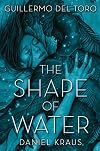
An expedition from the Occam Aerospace Research Center treks into the Amazon to find the legendary Gill God, an aquatic creature rumored to live there. They capture it and bring it back to Baltimore. Elisa is mute and works as a janitor at the facility. While her muteness cuts her off from some facets of society or makes people treat her differently, she finds ways to express herself like wearing colorful shoes she loves to work. Nobody else does janitorial work in high heels, but it makes show more Elisa happy. When she befriends the man-fish creature they have trapped in a holding tank at Occam, she feels she understands his feelings of being trapped, the emotions he must feel about being "other'' and misunderstood. She knows that the creature will die if kept in captivity, so she hatches a plan to rescue him.
The Creature From the Black Lagoon is my favorite monster movie. When the film version of this story won academy awards, I knew I had to read the book....and then watch the film. I have a firm rule....always read the book first. So I did -- even though with this particular story the film and book were released at the same time. The film concept came first.....the book after. A special situation....but I still followed my rule. I read the book. And I now have the sealed Blu Ray Disc on my desk to watch later today. :) I'm glad I read this story. While it is about the capture of a creature from the wild, it's also a complex commentary on how society treats those who are different. Other characters in the book also feel that "otherness''....Elisa is mute. Giles is gay. Strickland has PTSD. His wife yearns for more in an era where women are supposed to be content being wives and mothers. Zelda is black and trapped in a bad marriage. Dr. Hoffstetler has a deep desire for knowledge and scientific discovery but is victimized by the politics and greed of others. It isn't just the "monster'' that's trapped.
Elisa ends up having emotional ties to the fish creature. While that is a bit disconcerting if looking at things in a realistic manner....this story isn't realistic. It's fantasy. So the story line and ending work perfectly.
This story left me feeling very thoughtful about life, my place in it and my own sense of "otherness.'' Sometimes you just have to find inner freedom within individuality. But I do sympathize with the creature in the tank.....I'm sure we all feel a bit chained at times.
Beautiful story! I can't wait to watch the movie! show less
The Creature From the Black Lagoon is my favorite monster movie. When the film version of this story won academy awards, I knew I had to read the book....and then watch the film. I have a firm rule....always read the book first. So I did -- even though with this particular story the film and book were released at the same time. The film concept came first.....the book after. A special situation....but I still followed my rule. I read the book. And I now have the sealed Blu Ray Disc on my desk to watch later today. :) I'm glad I read this story. While it is about the capture of a creature from the wild, it's also a complex commentary on how society treats those who are different. Other characters in the book also feel that "otherness''....Elisa is mute. Giles is gay. Strickland has PTSD. His wife yearns for more in an era where women are supposed to be content being wives and mothers. Zelda is black and trapped in a bad marriage. Dr. Hoffstetler has a deep desire for knowledge and scientific discovery but is victimized by the politics and greed of others. It isn't just the "monster'' that's trapped.
Elisa ends up having emotional ties to the fish creature. While that is a bit disconcerting if looking at things in a realistic manner....this story isn't realistic. It's fantasy. So the story line and ending work perfectly.
This story left me feeling very thoughtful about life, my place in it and my own sense of "otherness.'' Sometimes you just have to find inner freedom within individuality. But I do sympathize with the creature in the tank.....I'm sure we all feel a bit chained at times.
Beautiful story! I can't wait to watch the movie! show less
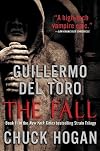
I absolutely loved this second part of the trilogy. Often, the second book of three tends to be slow and a bit tedious, at least partway through, but no part of this was either of those things. A thrill ride from start to finish, with so many answers leading to so many more questions and so many things left to think about. I definitely wasn't expecting that ending and I'm certainly interested to see where The Night Eternal and the conclusion of the trilogy take this story. I can't wait to show more get my hands on it!
I have to say, though, that there are some things I just didn't think that I'd like which happened in this book and yet...I'm satisfied about them. For instance, I didn't think that I'd be able to be okay with Setrakian dying before the end of the trilogy, I didn't think I'd be okay with him dying before the Master bit it for good, and I didn't think I'd be okay with the Master choosing a new vessel and casting away Sardu's. But the way that the authors wrote it was completely satisfying and completely fitting. I'm glad that Setrakian got the ending that he did, and I'm glad that he was able to release Sardu at the same time. I'm glad that Sardu's soul was truly released and left the collective of souls that the Master keeps with him, because I've always felt bad for him. So many years. Finally, release. And I'm glad that it was Setrakian who was able to do that, with his last act of defiance, because for Setrakian it began with the Master in that body and I'm glad that for Setrakian and for the Master that body ended with the conclusion of Setrakian's life. I'm glad that Setrakian was able to die peacefully, as well. It just...seemed so perfectly fitting. Something that I had dreaded and had thought I would hate, actually became my favorite part of this second book and, perhaps, it will continue on to be my favorite part of the trilogy itself.
I also have to say that I'm glad that Setrakian was able to destroy Eichhorst, as well.
I was also unsure about Palmer dying before the end of the trilogy, as well. He was such a good adversary, such a good obstacle, but his time really had been played out and I like his ending. I think it was perhaps the best ending I could have wished for for that awful character.
I'm going to be on pins and needles until I can get hold of the last book and see what happens with the remaining characters and what becomes of the world. I definitely recommend this trilogy and this book for anyone who likes sci-fi and vampires, and misses when vampires were the evil thing that went bump in the night and it was okay to hunt them indiscriminately in fiction. show less
I have to say, though, that there are some things I just didn't think that I'd like which happened in this book and yet...I'm satisfied about them. For instance, I didn't think that I'd be able to be okay with Setrakian dying before the end of the trilogy, I didn't think I'd be okay with him dying before the Master bit it for good, and I didn't think I'd be okay with the Master choosing a new vessel and casting away Sardu's. But the way that the authors wrote it was completely satisfying and completely fitting. I'm glad that Setrakian got the ending that he did, and I'm glad that he was able to release Sardu at the same time. I'm glad that Sardu's soul was truly released and left the collective of souls that the Master keeps with him, because I've always felt bad for him. So many years. Finally, release. And I'm glad that it was Setrakian who was able to do that, with his last act of defiance, because for Setrakian it began with the Master in that body and I'm glad that for Setrakian and for the Master that body ended with the conclusion of Setrakian's life. I'm glad that Setrakian was able to die peacefully, as well. It just...seemed so perfectly fitting. Something that I had dreaded and had thought I would hate, actually became my favorite part of this second book and, perhaps, it will continue on to be my favorite part of the trilogy itself.
I also have to say that I'm glad that Setrakian was able to destroy Eichhorst, as well.
I was also unsure about Palmer dying before the end of the trilogy, as well. He was such a good adversary, such a good obstacle, but his time really had been played out and I like his ending. I think it was perhaps the best ending I could have wished for for that awful character.
I'm going to be on pins and needles until I can get hold of the last book and see what happens with the remaining characters and what becomes of the world. I definitely recommend this trilogy and this book for anyone who likes sci-fi and vampires, and misses when vampires were the evil thing that went bump in the night and it was okay to hunt them indiscriminately in fiction. show less
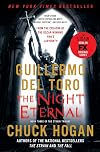
Okay, I shouldn’t have to say this, but: Beyond this point are MAJOR spoilers for the first two books in The Strain Trilogy. If you haven’t read the first two books, you should click on the link in the last sentence.
_________________________________________________________________
On with the show.
The Strain series started off great. In the first book, the authors recreate the classic Dracula scene with the death ship Demeter, but in this century, its a Boeing 777 dead on the tarmac, and show more naturally we nowadays are less concerned about a plague than about terrorists. The build up in the first two books as Ephraim Goodweather and Nora Jones of the CDC, the Holocaust survivor Abraham Setrakian, the exterminator Vasily Fet, and others slowly learn the scope of what they are facing, and just how insurmountable their odds are, is great. You grow to love these characters. And, in a change from most vampire books, you have no sympathetic feelings towards the monsters themselves (making the vampires overlarge human ticks who shit while they eat certainly helps forestall any tender feelings).
So bring on the final installment! We come in two years after the events of The Fall. The Master has brought nuclear winter down upon the earth, humans have been herded into blood camps or forced to work to support the continuation of the series. The vampires have won.
And Ephraim is lost. We find Eph, now basically a drug addict hobo, spending a night in his ex-wife’s old house, feeling depressed about not knowing where his son, Zack, is (let’s remember that Kelly, the ex-wife in question and vampire, kidnapped Zack in the last book). Little does he know that Zack is being groomed by the Master to be his new vessel. Meanwhile, Nora, Fet, and a few others are trying to continue to fight. That is, when they’re not being screwed over by Eph’s unreliability.
So basically, the human race has lost. Setrakian is dead, Ephraim Goodweather is falling apart, Nora, Fet, and the others are left to try to pick up the pieces of the revolution as best they can, but things look grim. Only a really, really, REALLY desperate final plan has a chance to destroy The Master and save the human race.
So far I’m enjoying this. I always like a post apocalyptic spin, and Ephraim Goodweather’s fall from grace is a logical progression of his flawed character. I also like how the other characters continue to grow in the third installment. After all, this series is really about family (Seriously, forget about the vampires, everything everyone does in this book ties back to their family in some way). Even the vampires with their “dear ones” fall into the family theme.
At some point, however, the book goes off the rails. The action is gripping, the suspense nail-biting at times, the ick factor is still present, but as the group seeks out the origins of The Master in order to destroy it, the plot up and takes itself way off the reservation. I like to keep my reviews as spoiler free as possible, so I’m trying to decide on the best way to describe this without giving anything away. Suffice it to say this: that apparently having vampirism as a disease or literal wormy parasite is no longer cool or creepy enough. When we learn where The Master comes from, the authors threw in a huge curveball, and I, for one, was unimpressed. I found it way better when the explanation was “nature is a fucked up bitch sometimes.” The thought that there didn’t need to be an origin story, that this horrible thing arose from some primordial soup and was hurled against us by the forces of nature we’d prefer to ignore, THAT was scary. Because something like that could happen. By taking things where they did, the authors lessened the visceral fear that some monster plague (figurative) could come sweeping out of the sky in the form of a Boeing 777 and presage the end of the human race.
Ah well. In all, if you read the first two books of the series, you should still read this one, if only to complete the trilogy. But I’d lay odds that you’re going to come away a bit disappointed. There were a lot of good things in this book, but the origin story they ultimately came up with for The Master is disappointing enough that it more or less overshadows everything else in the book. If you haven’t read the series, and are reading this review anyway (shame on you), don’t let this review stop you from picking up the first two books in the series. They’re some of the best vampire fiction to come out in the past few years (no one sparkles, bonus!). show less
_________________________________________________________________
On with the show.
The Strain series started off great. In the first book, the authors recreate the classic Dracula scene with the death ship Demeter, but in this century, its a Boeing 777 dead on the tarmac, and show more naturally we nowadays are less concerned about a plague than about terrorists. The build up in the first two books as Ephraim Goodweather and Nora Jones of the CDC, the Holocaust survivor Abraham Setrakian, the exterminator Vasily Fet, and others slowly learn the scope of what they are facing, and just how insurmountable their odds are, is great. You grow to love these characters. And, in a change from most vampire books, you have no sympathetic feelings towards the monsters themselves (making the vampires overlarge human ticks who shit while they eat certainly helps forestall any tender feelings).
So bring on the final installment! We come in two years after the events of The Fall. The Master has brought nuclear winter down upon the earth, humans have been herded into blood camps or forced to work to support the continuation of the series. The vampires have won.
And Ephraim is lost. We find Eph, now basically a drug addict hobo, spending a night in his ex-wife’s old house, feeling depressed about not knowing where his son, Zack, is (let’s remember that Kelly, the ex-wife in question and vampire, kidnapped Zack in the last book). Little does he know that Zack is being groomed by the Master to be his new vessel. Meanwhile, Nora, Fet, and a few others are trying to continue to fight. That is, when they’re not being screwed over by Eph’s unreliability.
So basically, the human race has lost. Setrakian is dead, Ephraim Goodweather is falling apart, Nora, Fet, and the others are left to try to pick up the pieces of the revolution as best they can, but things look grim. Only a really, really, REALLY desperate final plan has a chance to destroy The Master and save the human race.
So far I’m enjoying this. I always like a post apocalyptic spin, and Ephraim Goodweather’s fall from grace is a logical progression of his flawed character. I also like how the other characters continue to grow in the third installment. After all, this series is really about family (Seriously, forget about the vampires, everything everyone does in this book ties back to their family in some way). Even the vampires with their “dear ones” fall into the family theme.
At some point, however, the book goes off the rails. The action is gripping, the suspense nail-biting at times, the ick factor is still present, but as the group seeks out the origins of The Master in order to destroy it, the plot up and takes itself way off the reservation. I like to keep my reviews as spoiler free as possible, so I’m trying to decide on the best way to describe this without giving anything away. Suffice it to say this: that apparently having vampirism as a disease or literal wormy parasite is no longer cool or creepy enough. When we learn where The Master comes from, the authors threw in a huge curveball, and I, for one, was unimpressed. I found it way better when the explanation was “nature is a fucked up bitch sometimes.” The thought that there didn’t need to be an origin story, that this horrible thing arose from some primordial soup and was hurled against us by the forces of nature we’d prefer to ignore, THAT was scary. Because something like that could happen. By taking things where they did, the authors lessened the visceral fear that some monster plague (figurative) could come sweeping out of the sky in the form of a Boeing 777 and presage the end of the human race.
Ah well. In all, if you read the first two books of the series, you should still read this one, if only to complete the trilogy. But I’d lay odds that you’re going to come away a bit disappointed. There were a lot of good things in this book, but the origin story they ultimately came up with for The Master is disappointing enough that it more or less overshadows everything else in the book. If you haven’t read the series, and are reading this review anyway (shame on you), don’t let this review stop you from picking up the first two books in the series. They’re some of the best vampire fiction to come out in the past few years (no one sparkles, bonus!). show less
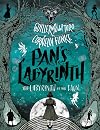
A novelization... normally, I would shy away from a book like this, but somehow I didn't realize that's what it was until I had started reading it, and by then I was enjoying it so much, I didn't care! I love the film, and this book was very true to the plot of the movie, while also adding backstory that wasn't in the movie, but that adds to the richness of the story itself. This is the perfect kind of story for me: whimsical, fairy tale-like, but with just enough horror to remind you that show more it's not a children's story. show less
Lists
Awards


The Hobbit: The Battle of the Five Armies [2014 film] (Nominee – Best Achievement in Sound Editing – 2015)
The Hobbit: An Unexpected Journey (Extended Edition) (Nominee – Best Achievement in Makeup and Hairstyling – 2013)
The Hobbit: An Unexpected Journey (Extended Edition) (Nominee – Best Achievement in Visual Effects – 2013)


You May Also Like


Associated Authors
Statistics
- Works
- 86
- Also by
- 45
- Members
- 20,098
- Popularity
- #1,079
- Rating
- 3.8
- Reviews
- 631
- ISBNs
- 460
- Languages
- 24
- Favorited
- 25


