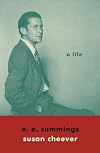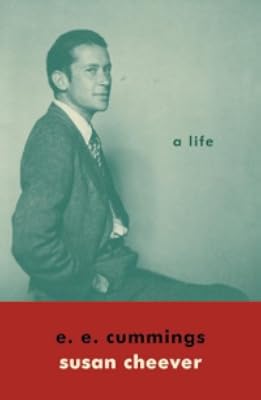
E. E. Cummings: A Life
by Susan Cheever
On This Page
Description
A major reassessment of the life and work of the novelist, painter, and playwright considered to be one of America's preeminent twentieth-century poets. Cummings was and remains controversial--called "a master" or "hideous." In Susan Cheever's rich biography we see his idyllic childhood years in Cambridge, Massachusetts, with his sternly religious father and his loving, attentive mother. We see Cummings--slight, agile, playful, a product of a nineteenth-century New England childhood; his show more love of nature; his sense of fun, laughter, mimicry; his desire from the get-go to stand conventional wisdom on its head. At Harvard, he earned two degrees, discovered alcohol, fast cars, and burlesque, and raged against the school's exclusionary upper-class rule. He grew into a dark young man and set out on a lifelong course of rebellion against conventional authority. Headstrong and cavalier, he volunteered as an ambulance driver in World War I, working alongside Hemingway and Joyce. He permanently fled to Greenwich Village to be among other modernist poets of the day, and we see the development of both the poet and his work against the backdrop of modernism. Cheever's book gives us the evolution of an artist whose writing was at the forefront of what was new and daring and bold in an America in transition.--From publisher description. show lessTags
Recommendations













Member Reviews
E.E. Cummings made more money reading his poems than writing them. That's just one of the fascinating tidbits Susan Cheever gives us in her excellent 2014 biography “E. E. Cummings: A Life.”
Another is this: Cummings may have been a radical in his poetic style, yet he was a firm anti-communist, unlike so many of his fellow intellectuals. Friends returned from Russia with praise for what they had found there, but Cummings turned against Stalin and communism almost from the moment he entered Russia. Everyone there seemed afraid. Nobody seemed happy.
Cheever gives us plentiful examples of his poetry, often playful, sometimes angry, usually obscure, always thoughtful. These poems provide commentary on his life, from loving memories of his show more clergyman father to his late-in-life fondness for birds.
The poet had difficulties with women: two marriages, two divorces. He never married the love of his life, who stayed by him until the end, although she was jealous even of his own daughter.
His relationship with Nancy, his daughter, makes a wonderful story in itself, perhaps even worthy of a movie. Cummings knew her when she was a little girl, but then his ex-wife took her away to Ireland, changed her name and refused to tell her anything about her real father. Years later, after Nancy herself had become a poet, Cummings reentered her life, yet for a long time refused to tell her he was her father. Only after Nancy declared her love for him did he reveal the truth.
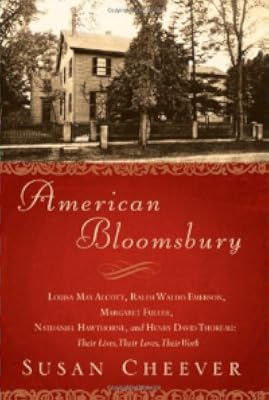
Like her father, John Cheever, Susan Cheever is an outstanding writer, as her other books such as American Bloomsbury, have shown. This is a fine, revealing biography, perhaps too brief to be definitive, but beautifully written. show less
Another is this: Cummings may have been a radical in his poetic style, yet he was a firm anti-communist, unlike so many of his fellow intellectuals. Friends returned from Russia with praise for what they had found there, but Cummings turned against Stalin and communism almost from the moment he entered Russia. Everyone there seemed afraid. Nobody seemed happy.
Cheever gives us plentiful examples of his poetry, often playful, sometimes angry, usually obscure, always thoughtful. These poems provide commentary on his life, from loving memories of his show more clergyman father to his late-in-life fondness for birds.
The poet had difficulties with women: two marriages, two divorces. He never married the love of his life, who stayed by him until the end, although she was jealous even of his own daughter.
His relationship with Nancy, his daughter, makes a wonderful story in itself, perhaps even worthy of a movie. Cummings knew her when she was a little girl, but then his ex-wife took her away to Ireland, changed her name and refused to tell her anything about her real father. Years later, after Nancy herself had become a poet, Cummings reentered her life, yet for a long time refused to tell her he was her father. Only after Nancy declared her love for him did he reveal the truth.
Like her father, John Cheever, Susan Cheever is an outstanding writer, as her other books such as American Bloomsbury, have shown. This is a fine, revealing biography, perhaps too brief to be definitive, but beautifully written. show less
Cheever considers Cummings as one of a coterie — which included such icons as Gertrude Stein, James Joyce, Pablo Picasso, Henri Matisse, and Marcel Duchamp — that reshaped culture:
This book explores Cumming's lower case and other typographical approaches, his fraught relationships with women and family (he had to explain to one crush that he was her unknown father), unfortunate anti-Semitism, friendship with Ezra Pound, success on the lecture circuit, up and down career, and anti-establishment attitudes. show less
show more
Modernism as Cummings and his mid-twentieth-century colleagues embraced it had three parts. The first was the exploration of using sounds instead of meanings to connect words to the reader’s feelings. The second was the idea of stripping away all unnecessary things to bring attention to form and structure: the formerly hidden skeleton of a work would now be exuberantly visible. The third facet of modernism was an embrace of adversity. In a world seduced by easy understanding, the modernists believed that difficulty enhanced the pleasures of reading. In a
Cummings poem the reader must often pick his way toward comprehension, which comes, when it does, in a burst of delight and recognition.
This book explores Cumming's lower case and other typographical approaches, his fraught relationships with women and family (he had to explain to one crush that he was her unknown father), unfortunate anti-Semitism, friendship with Ezra Pound, success on the lecture circuit, up and down career, and anti-establishment attitudes. show less
Susan Cheever offers a sensitive, well-written account of e.e.cummings's life. At under two hundred pages, the book is rather short as biographies go, which makes it a great introduction to the poet. Cheever does an excellent job of contextualizing cummings's work, and it is clear that she approaches her subject with empathy and honesty: not quick to judge, she refuses to occupy a position of knowledge, and reveals some of the biographer's moral dilemmas in addressing touchy issues such as the poet's infamous anti-Semitism or some of his poor personal ethical choices.
"On the one hand, a biographer's responsibility is to bring the past to life on the page in all its details--including the relative knowledge and ignorance of the show more community described. On the other hand, shouldn't the biographer give the reader and the subject the benefit of everything known at the time of writing? Should poems and books be understood in a vacuum--in the historical silence in which a writer connects viscerally and spiritually with a reader? Or should they be understood as pieces of the web of their time and ours?" (p. 176)
Cheever's book leaves room for the reader to make her or his own interpretive choices, and, in someone who hasn't read cummings in some time, inspires the desire to return to the poems. show less
"On the one hand, a biographer's responsibility is to bring the past to life on the page in all its details--including the relative knowledge and ignorance of the show more community described. On the other hand, shouldn't the biographer give the reader and the subject the benefit of everything known at the time of writing? Should poems and books be understood in a vacuum--in the historical silence in which a writer connects viscerally and spiritually with a reader? Or should they be understood as pieces of the web of their time and ours?" (p. 176)
Cheever's book leaves room for the reader to make her or his own interpretive choices, and, in someone who hasn't read cummings in some time, inspires the desire to return to the poems. show less
I consider e.e. cummings to be one of my favorite poets, but until this point, I didn't know a whole lot about his life. There are other cummings biographies, but this is the most recent, written by the daughter of John Cheever, a long-time friend of cummings.
Cheever tries to paint a picture of cummings life, but in doing so, she sometimes jumps so quickly between subjects that I often felt like I had reader whiplash. That being said, she did a pretty good job of giving a sense of the man -- sometimes her analysis was a little heavy handed, but she is careful to point out both his strengths and weaknesses. For example, she doesn't excuse his anti-semitism (of which I wasn't previously aware), but does attempt to place it in a show more historical and cultural context. show less
Cheever tries to paint a picture of cummings life, but in doing so, she sometimes jumps so quickly between subjects that I often felt like I had reader whiplash. That being said, she did a pretty good job of giving a sense of the man -- sometimes her analysis was a little heavy handed, but she is careful to point out both his strengths and weaknesses. For example, she doesn't excuse his anti-semitism (of which I wasn't previously aware), but does attempt to place it in a show more historical and cultural context. show less
I don't know much about Cummings' life, only a little about his poetry - I don't really get poetry - but I like biographies. I liked this one a lot. It's brief and to the point, and as cakecop points out, she concentrates on his relationships with people. That was a good way to go, considering how intense and dramatic so many of them were. I thought she handled his anti Communism and anti Semitism pretty well. He was a man of his time and he spent enough time in the Soviet Union to see how things really worked.
...I value freedom; and have never expected freedom to be anything less than indecent.
e.e. cummings
E.E. Cummings: A Life by Susan Cheever is a biography of the American poet, Cheever is a graduate of Brown University, a Guggenheim Fellow, and director of the board of the Yaddo Corporation. She currently teaches in the MFA program at Bennington College and the New School. Cheever is the author of over a dozen books, including American Bloomsbury.
The book is short for a biography of a man with a long history, but it concentrates on the high and low points and avoids the lulls that are found in longer biographies. The life story, however, seems to be complete. Cheever met Cummings when she was still in school. Cummings was performing a show more lecture and reading at the Masters School. Her father was friends with the poet. The young Cheever was impressed by Cummings anti- established opinions. At that time, his work was compared to Marcel Duchamp’s “Nude Descending a Staircase.” The comparison is more than subject matter, but style. Duchamp attempts to capture the entire descent down the staircase, start to finish, in a single image and Cummings attempts to capture the same effect with words. It was at Cumming’s suggestion to her father that Cheever was moved from her uptight school to a very progressive one.
Rather than summarize Cumming’s life in this review, I will look at something Cheever does in the book. Late in the book Cheever compares Cummings to Wordsworth. Wordsworth’s love for the outdoors, “Tintern Abbey” for example, and Cumming’s Joy Farm. Both men idolized youth and saw that youth had a purity that was missing later in life. I also found a few parallels myself. Both men had daughters out of wedlock and were separated from them. Both men traveled a great deal for their time and class. Also, both men had a negative view of the establishment. Wordsworth support for the Republican movement in France, but was abhorred the Reign of Terror and the subsequent crowning of an emperor. Cummings also had his problems with authority and the establishment that went much further than youthful rebellion. Much like Wordsworth, revolution excited Cummings. He wanted to see the paradise that the Soviet Union had become, but left disillusioned. Cummings became disenchanted with many things in his life he hated Jews and he hated Hitler. He hated Roosevelt and he hated Stalin. He was an equal opportunity hater.
E.E. Cummings: A Life is a well researched and well written biography of one of America most read poets. Cheevers captures the life and the mind of the poet. Like most writers of his time he lived an exciting life, filled with controversy, alcohol, and prescription drugs. His life can be compared to that of a modern rock star. The highs and lows of fame. He had the groupies and the crowds. And like very few rock stars he was able to rise above the moment of fame and produce a lasting work and a lasting name. show less
e.e. cummings
E.E. Cummings: A Life by Susan Cheever is a biography of the American poet, Cheever is a graduate of Brown University, a Guggenheim Fellow, and director of the board of the Yaddo Corporation. She currently teaches in the MFA program at Bennington College and the New School. Cheever is the author of over a dozen books, including American Bloomsbury.
The book is short for a biography of a man with a long history, but it concentrates on the high and low points and avoids the lulls that are found in longer biographies. The life story, however, seems to be complete. Cheever met Cummings when she was still in school. Cummings was performing a show more lecture and reading at the Masters School. Her father was friends with the poet. The young Cheever was impressed by Cummings anti- established opinions. At that time, his work was compared to Marcel Duchamp’s “Nude Descending a Staircase.” The comparison is more than subject matter, but style. Duchamp attempts to capture the entire descent down the staircase, start to finish, in a single image and Cummings attempts to capture the same effect with words. It was at Cumming’s suggestion to her father that Cheever was moved from her uptight school to a very progressive one.
Rather than summarize Cumming’s life in this review, I will look at something Cheever does in the book. Late in the book Cheever compares Cummings to Wordsworth. Wordsworth’s love for the outdoors, “Tintern Abbey” for example, and Cumming’s Joy Farm. Both men idolized youth and saw that youth had a purity that was missing later in life. I also found a few parallels myself. Both men had daughters out of wedlock and were separated from them. Both men traveled a great deal for their time and class. Also, both men had a negative view of the establishment. Wordsworth support for the Republican movement in France, but was abhorred the Reign of Terror and the subsequent crowning of an emperor. Cummings also had his problems with authority and the establishment that went much further than youthful rebellion. Much like Wordsworth, revolution excited Cummings. He wanted to see the paradise that the Soviet Union had become, but left disillusioned. Cummings became disenchanted with many things in his life he hated Jews and he hated Hitler. He hated Roosevelt and he hated Stalin. He was an equal opportunity hater.
E.E. Cummings: A Life is a well researched and well written biography of one of America most read poets. Cheevers captures the life and the mind of the poet. Like most writers of his time he lived an exciting life, filled with controversy, alcohol, and prescription drugs. His life can be compared to that of a modern rock star. The highs and lows of fame. He had the groupies and the crowds. And like very few rock stars he was able to rise above the moment of fame and produce a lasting work and a lasting name. show less
Didn't know I wanted to read about the life of e.e. cummings until I saw this book by Susan Cheever and, because I've enjoyed other books by her, and because I've been a fan from afar of cummings' poetry (and loved his novel, The Enormous Room), I dove in. I enjoyed it. Not Cheever's best (I didn't feel quite the fire as when she was writing about Bill W. or the Transcendentalists), but engrossing, nonetheless. Cummings' story is sadder than I would have guessed (guesses based on nothing in particular) and the family drama was pretty twisted. Also led me to reflect on public persona and personal life and the intersection of the two, let alone the actual work of writing. Not a definitive biography, but I don't think that was the intent.
Members
- Recently Added By
Lists

Books Read in 2014
2,343 works; 86 members
Author Information

20+ Works 2,043 Members
Susan Cheever, the daughter of the great American writer John Cheever, is the author of nine previous books, including Home Before Dark, a best-selling memoir about her father, & the novel Looking for Work. She has written award-winning articles on parenting for New York Newsday & is a contributing writer to Architectural Digest. She teaches show more writing at Bennington College & Yale University & lives in New York. (Bowker Author Biography) show less
Awards and Honors
Distinctions
Classifications
- Genres
- Literature Studies and Criticism, Biography & Memoir, Fiction and Literature
- DDC/MDS
- 811.52 — Literature & rhetoric American literature in English American poetry 20th Century 1900-1945
- LCC
- PS3505 .U334 .Z565 — Language and Literature American literature American literature Individual authors 1900-1960
- BISAC
Statistics
- Members
- 138
- Popularity
- 236,919
- Reviews
- 9
- Rating
- (3.62)
- Languages
- English
- Media
- Paper, Audiobook, Ebook
- ISBNs
- 8
- ASINs
- 2