
Thomas Brothers
Author of Louis Armstrong's New Orleans
About the Author
Thomas Brothers was a finalist for the 2015 Pulitzer Prize in Biography with his title Louis Armstrong: Master of Modernism. (Bowker Author Biography)
Works by Thomas Brothers
Chromatic Beauty in the Late Medieval Chanson: An Interpretation of Manuscript Accidentals (1997) 4 copies
Thomas Guide 2002 Los Angeles and Orange Counties: Street Guide and Directory Now Including Zip Codes and Boundaries (2001) 3 copies
Associated Works
Tagged
Common Knowledge
- Gender
- male
Members
Reviews
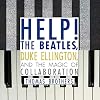
Help!: The Beatles, Duke Ellington, and the Magic of Collaboration by Thomas Brothers illustrates the value, in two different styles of music, of collaboration. Brothers is contributing to the growing scholarship, resisted by some who bought the early "composer genius" story hook, line, and sinker, that Ellington's genius was far more in his ability to recognize, bring together, and market music than in his ability to compose it. He also brings out the importance of collaboration in The show more Beatles all the way to the end of their time together.
In the case of Ellington doing research, which many have done before Brothers, only goes so far. A great deal of what is uncovered are press releases and interviews supporting the original script. What makes Brothers' analysis more complete and far more compelling is the inclusion of interviews with more of the musicians who openly acknowledge that Duke did not "compose" nearly as much as he organized and helped arrange. Those musicians as well as Brothers readily acknowledge Ellington's brilliance in this area. Brothers also brings a musicologist's ear to the study, recognizing the "fingerprints" of the various musicians and composers involved. This supports the stories from the musicians that were largely ignored previously. Simply doing massive amounts of research can only do so much, and if most of that research was simply finding more and more reports putting out the same story, well, quantity does not always equal quality.
Brothers also makes it clear for both societal and cultural reasons that Ellington's model, which today would likely be frowned upon if enough credit wasn't given to others, was both accepted and functional for the period. Having the single front man, especially one with the talent of Ellington, worked in everyone's benefit There is no denying in this book that Ellington was a genius, it is just that the emphasis is placed where it belongs, on his organizational, big picture, and talent finding abilities rather than on his good, but far from genius level, composing skills.
As for The Beatles, one of the beliefs among some fans is that when they were working on their last albums there was a lot less collaboration. That certainly would make sense if one looks at what was going on in their private lives. Brothers again uses both interviews and written accounts along with his trained ear to show the extent of collaboration that continued to the end.
Anyone who thought either John or Paul was the main creative force was coming from a position of what they liked about the music rather than from the music itself. Brothers here does not so much place any Beatle above the other as he simply demonstrates that each had his own strength and his own weakness. Particularly in the case of Lennon-McCartney songs it becomes clear they needed each other to temper each others extremes and fill out any holes. Brothers seems to consistently show that songs popularly considered to be from Paul's genius was made complete by what John (and the others, including Martin) brought to the work; and that any considered to be from John's genius was made complete by what Paul and the others brought. In other words, in spite of their growing differences, when they were in the studio creating they were collaborating until the end.
Also, I found Brothers' breakdown of the play between Rubber Soul/Pet Sounds/Sgt Pepper to be among the best I've seen. In addition to the usual comments about influence and inspiration there is a great deal of song by song, and even instrument by instrument, comparing and contrasting. This is perhaps the most grounded and concrete discussion of that fertile period for both bands.
I highly recommend this to any fan of Ellington, The Beatles, jazz, rock, music history and musicology. Brothers goes deeply into specific compositions while also providing contextualization from personal lives and society as a whole. These artists did not create this music in a vacuum and Brothers helps us to place this music in both music history as well as world history.
Reviewed from a copy made available by the publisher via LibraryThing Early Reviewers. show less
In the case of Ellington doing research, which many have done before Brothers, only goes so far. A great deal of what is uncovered are press releases and interviews supporting the original script. What makes Brothers' analysis more complete and far more compelling is the inclusion of interviews with more of the musicians who openly acknowledge that Duke did not "compose" nearly as much as he organized and helped arrange. Those musicians as well as Brothers readily acknowledge Ellington's brilliance in this area. Brothers also brings a musicologist's ear to the study, recognizing the "fingerprints" of the various musicians and composers involved. This supports the stories from the musicians that were largely ignored previously. Simply doing massive amounts of research can only do so much, and if most of that research was simply finding more and more reports putting out the same story, well, quantity does not always equal quality.
Brothers also makes it clear for both societal and cultural reasons that Ellington's model, which today would likely be frowned upon if enough credit wasn't given to others, was both accepted and functional for the period. Having the single front man, especially one with the talent of Ellington, worked in everyone's benefit There is no denying in this book that Ellington was a genius, it is just that the emphasis is placed where it belongs, on his organizational, big picture, and talent finding abilities rather than on his good, but far from genius level, composing skills.
As for The Beatles, one of the beliefs among some fans is that when they were working on their last albums there was a lot less collaboration. That certainly would make sense if one looks at what was going on in their private lives. Brothers again uses both interviews and written accounts along with his trained ear to show the extent of collaboration that continued to the end.
Anyone who thought either John or Paul was the main creative force was coming from a position of what they liked about the music rather than from the music itself. Brothers here does not so much place any Beatle above the other as he simply demonstrates that each had his own strength and his own weakness. Particularly in the case of Lennon-McCartney songs it becomes clear they needed each other to temper each others extremes and fill out any holes. Brothers seems to consistently show that songs popularly considered to be from Paul's genius was made complete by what John (and the others, including Martin) brought to the work; and that any considered to be from John's genius was made complete by what Paul and the others brought. In other words, in spite of their growing differences, when they were in the studio creating they were collaborating until the end.
Also, I found Brothers' breakdown of the play between Rubber Soul/Pet Sounds/Sgt Pepper to be among the best I've seen. In addition to the usual comments about influence and inspiration there is a great deal of song by song, and even instrument by instrument, comparing and contrasting. This is perhaps the most grounded and concrete discussion of that fertile period for both bands.
I highly recommend this to any fan of Ellington, The Beatles, jazz, rock, music history and musicology. Brothers goes deeply into specific compositions while also providing contextualization from personal lives and society as a whole. These artists did not create this music in a vacuum and Brothers helps us to place this music in both music history as well as world history.
Reviewed from a copy made available by the publisher via LibraryThing Early Reviewers. show less
 This review was written for LibraryThing Early Reviewers.
I received a free advance review copy of this audiobook through the Library Thing Early Reviewers program.The author of this book is a Duke University musicologist, and I don't think I will represent the musicology well in this summary, although I did find it interesting to listen to. Brothers uses two popular music acts of the 20th century to illustrate the creative genius of musicians collaborating together to create new tunes: Duke Ellington and The Beatles. This is basically two books in show more one with half the book about each group of artists.Ellington is generally depicted as a lone genius composer, but Brothers states that he was more of an arranger than a composer. He relied on others - particularly Bubber Miley and later Billy Stayhorn - to write the songs, and his entire band contributed parts as they worked on a tune. That Ellington frequently gave himself sole writing credit was a recurring source of disgruntlement for Ellington's band members.The Beatles are more widely recognized as a collaboration - Lennon-McCartney - although it's commonly believed that John Lennon and Paul McCartney only composed songs together in The Beatles' early years. Brothers breaks down the recordings and shows that not only were Lennon and McCartney were collaborating right up until the Beatles broke up, but a wider group of collaborators contributed to creating the Beatles music including George Harrison, Ringo Starr, producer George Martin, sound engineer Geoff Emerick, guest artists like Eric Clapton and Billy Preston, and yes, even Yoko Ono.Brothers makes the controversial, but accurate, statement that Strayhorn was musically more talented than Ellington, and that McCartney's musical talent outclassed Lennon's. But Ellington had the ability to listen to various solos by the artists in his band and arrange them tunefully, while Lennon brought a rock & roll edge and lyrical bite to McCartney's music. As I noted, there's an academic level to this book that is perhaps beyond a novice to me, but I still enjoyed reading about these great artists and how they made their most memorable tunes. But mostly, I want to listen to some Duke Ellington and The Beatles now. show less
This review was written for LibraryThing Early Reviewers.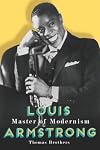
Not so much a review as a recommendation.
This book's a biographical study of Louis Armstrong's development as a musician in the 1920s and early 1930s, discussing his influences and musical vocabulary more than the details of his everyday life--though those everyday events are necessarily a part of Brothers' story. The best parts, though, are the author's analysis of how Armstrong constructed his recorded work, how the recordings related to live performance, and how those things changed over show more time. He presents a vision of Armstrong as musically literate, consciously developing as a musician to meet the needs of his career, and perhaps a different sort of genius than he's often been presented. Brothers explicitly rejects the notion that Armstrong "sold out" when he began singing popular songs, and argues that musicians, analysts, and critics who've presented that thesis have pretty much missed the point.
This is not a general biography--it's a musicologist's biography, and best read as such. Those looking for a general biography of the artist would probably be better served by reading Terry Teachout's fine Armstrong biography, Pops.
All that said, this is a great book, and highly recommended.
This review has also been published on a dabbler's journal. show less
This book's a biographical study of Louis Armstrong's development as a musician in the 1920s and early 1930s, discussing his influences and musical vocabulary more than the details of his everyday life--though those everyday events are necessarily a part of Brothers' story. The best parts, though, are the author's analysis of how Armstrong constructed his recorded work, how the recordings related to live performance, and how those things changed over show more time. He presents a vision of Armstrong as musically literate, consciously developing as a musician to meet the needs of his career, and perhaps a different sort of genius than he's often been presented. Brothers explicitly rejects the notion that Armstrong "sold out" when he began singing popular songs, and argues that musicians, analysts, and critics who've presented that thesis have pretty much missed the point.
This is not a general biography--it's a musicologist's biography, and best read as such. Those looking for a general biography of the artist would probably be better served by reading Terry Teachout's fine Armstrong biography, Pops.
All that said, this is a great book, and highly recommended.
This review has also been published on a dabbler's journal. show less
This was a very good and enlightening musician biography. I like the music cues for select CDs to go and hear what is being written about. This has a nice balance: career biography and the necessary social biography as this innovator moved through a changing and even dangerous racial landscape. There is a nice seasoning of musicological analysis.
Lists
Awards


You May Also Like


Associated Authors
Statistics
- Works
- 7
- Also by
- 1
- Members
- 224
- Popularity
- #100,171
- Rating
- 4.0
- Reviews
- 13
- ISBNs
- 18
