
Terry Teachout (1956–2022)
Author of The Skeptic: A Life of H. L. Mencken
About the Author
Terry Teachout is drama critic for the Wall Street Journal, music critic for Commentary, and a contributor to the Washington Post, for which he writes "Second City," a column about the arts in New York City
Image credit: By Larry D. Moore, CC BY-SA 3.0, https://commons.wikimedia.org/w/index.php?curid=29716129
Works by Terry Teachout
Flashfire (Parker, #19) 1 copy
Firebreak (Parker, #20) 1 copy
Associated Works
Ghosts on the Roof: Selected Journalism of Whittaker Chambers, 1931-1959 (1989) — Editor — 37 copies
Against the Grain: The New Criterion on Art and Intellect at the End of the Twentieth Century (1995) — Contributor — 35 copies
Notes from the Underground: The Whittaker Chambers/Ralph de Toledano Letters, 1949-1960 (1997) — Introduction, some editions — 22 copies, 1 review
Tagged
Common Knowledge
- Legal name
- Teachout, Terence Alan
- Birthdate
- 1956-02-06
- Date of death
- 2022-01-13
- Gender
- male
- Education
- St. John's College (Annapolis)
William Jewell College (BS ∙ Music Journalism)
University of Illinois, Urbana-Champaign - Occupations
- critic
jazz bassist
biographer
editor - Organizations
- The Kansas City Star
Harper's Magazine
Daly News (New York)
The Wall Street Journal
Commentary - Nationality
- USA
- Birthplace
- Cape Girardeau, Missouri, USA
- Places of residence
- Cape Girardeau, Missouri, USA
Sikeston, Missouri, USA
Annapolis, Maryland, USA
Liberty, Missouri, USA
New York, New York, USA
Kansas City, Missouri, USA - Place of death
- Smithtown, New York, USA
- Associated Place (for map)
- Missouri, USA
Members
Reviews
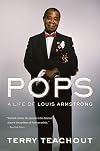
As a newly-minted, 20 year old jazz fan, I didn't give much thought to Louis Armstrong. Knew him then as the smiling singer of popular tunes, not much like the Coltrane/Davis/Sanders groups I was discovering. But then there was that famous four-word summary of the history of jazz from Miles Davis: "Louis Armstrong, Charlie Parker." I understood about Parker, but why Armstrong? He had disparaged Parker and the other beboppers, younger musicians who played edgier music and didn't care about show more pleasing their white listeners. I later discovered Armstrong's Hot Fives and Hot Sevens from the 1920s; OK, he'd been one of the inventors of jazz. Over the years, I heard more Armstrong recordings, and gained new appreciation for ones I already knew.
Armstrong (1901-1971) was born in deep poverty, deprived of even knowing his birth date, which was about a year later than the July 4, 1900 he claimed. He supported himself with his music from age 17, spending most of his life on the road. Beyond helping to invent jazz, he gave us some of the most sublime versions of Great American Songbook tunes - "Blueberry Hill", "Mack the Knife", "What a Wonderful World" - singing in his gravelly voice, proving that art needn't be pretty to be beautiful.
Teachout looks to reclaim the long middle part of Armstrong's career, normally associated with mediocre backup bands, especially in the 1930s. He notes some fine work in the period, but I'm not sure he makes the case. Armstrong had to live with the presence of gangsters in the music business, and seems to have accepted the protection of one in particular, his longtime manager Joe Glaser, at the cost of half of his earnings. Maybe Armstrong thought such a disadvantageous deal was his best prospect, as a Black man in America, for getting on with his music and a secure living.
As usual in a biography, I discovered endless facts I hadn't known. Armstrong was self-taught on the cornet and trumpet, and his technique caused steady harm to his embouchure. He had the first star billing for a Black performer in a Hollywood movie, and at one point in 1941 was associated with an Orson Welles project to make a movie about jazz. He and Bing Crosby were friends. The book includes 54 pages of notes with lots of bits like these. Teachout drew on much previously unavailable material for this book, including many hours of candid recordings Armstrong made of himself.
Besides wanting to know more about Armstrong, I read this book for insight into the late Terry Teachout (1956-2022). I followed Teachout's twitter account for several years, and found him an interesting and humane writer on the arts. But he was a political conservative, working for National Review and organizing "The Vile Body, a social club of right-wing intellectuals from the fields of publishing and journalism in New York City." Considering the general barbarity of right wing discourse in the US today, I wondered how Teachout could exist as an exception. I still don't understand it, except that we all compartmentalize.
There's a conservative aspect of his subject that must have appealed. Armstrong was abandoned by his father at birth, and later wrote of his contempt for those of his race who shirked their responsibilities. Still, Teachout does not downplay Armstrong's own recognition of racism: "Why, do you know I played ninety-nine million hotels I couldn't stay at? And if I had friends blowing at some all-white nightclub or hotel I couldn't get in to see 'em - or them to see me."
This is from one of the finest musicians America has produced. Armstrong's life is as inspiring a testament to overcoming odds as we could ask for. show less
Armstrong (1901-1971) was born in deep poverty, deprived of even knowing his birth date, which was about a year later than the July 4, 1900 he claimed. He supported himself with his music from age 17, spending most of his life on the road. Beyond helping to invent jazz, he gave us some of the most sublime versions of Great American Songbook tunes - "Blueberry Hill", "Mack the Knife", "What a Wonderful World" - singing in his gravelly voice, proving that art needn't be pretty to be beautiful.
Teachout looks to reclaim the long middle part of Armstrong's career, normally associated with mediocre backup bands, especially in the 1930s. He notes some fine work in the period, but I'm not sure he makes the case. Armstrong had to live with the presence of gangsters in the music business, and seems to have accepted the protection of one in particular, his longtime manager Joe Glaser, at the cost of half of his earnings. Maybe Armstrong thought such a disadvantageous deal was his best prospect, as a Black man in America, for getting on with his music and a secure living.
As usual in a biography, I discovered endless facts I hadn't known. Armstrong was self-taught on the cornet and trumpet, and his technique caused steady harm to his embouchure. He had the first star billing for a Black performer in a Hollywood movie, and at one point in 1941 was associated with an Orson Welles project to make a movie about jazz. He and Bing Crosby were friends. The book includes 54 pages of notes with lots of bits like these. Teachout drew on much previously unavailable material for this book, including many hours of candid recordings Armstrong made of himself.
Besides wanting to know more about Armstrong, I read this book for insight into the late Terry Teachout (1956-2022). I followed Teachout's twitter account for several years, and found him an interesting and humane writer on the arts. But he was a political conservative, working for National Review and organizing "The Vile Body, a social club of right-wing intellectuals from the fields of publishing and journalism in New York City." Considering the general barbarity of right wing discourse in the US today, I wondered how Teachout could exist as an exception. I still don't understand it, except that we all compartmentalize.
There's a conservative aspect of his subject that must have appealed. Armstrong was abandoned by his father at birth, and later wrote of his contempt for those of his race who shirked their responsibilities. Still, Teachout does not downplay Armstrong's own recognition of racism: "Why, do you know I played ninety-nine million hotels I couldn't stay at? And if I had friends blowing at some all-white nightclub or hotel I couldn't get in to see 'em - or them to see me."
This is from one of the finest musicians America has produced. Armstrong's life is as inspiring a testament to overcoming odds as we could ask for. show less
Pops is an eminently readable, compelling, and entertaining biography of one of the most important and monumental figures in jazz and 20th century pop culture.
Louis Armstrong personally witnessed the birth of jazz and apprenticed at the feet of the men who invented it. As much as anyone, Armstrong brought jazz out of its New Orleans-Chicago milieu and into the world at large, and he continued to work in the jazz industry past the point that rock ‘n’ roll superseded it as the pop music of show more America. For good and for ill, and for over half a century, Armstrong remained one of the most important personalities and towering talents of jazz.
Mr. Teachout does a fine job of exploring both the good and the ill of Armstrong’s life. Indeed, this biography is important in large part because it offers an honest look into the private man who wasn’t always as jovial and accepting as his public persona would have us believe. It’s the first non-scholarly, mass market popular biography of Armstrong to take full advantage of new and previously unexplored biographical material. As such, it offers a critical reassessment of the man.
The controversy that surrounded Louis Armstrong in his later years – his role in the world of jazz and the perceived worthiness of his music – is one of the most important aspects of his story, and Mr. Teachout devotes far more page-space to these later years than most biographers before him. But such is necessary in order to truly come to terms with Armstrong’s significant musical and cultural legacy. It’s good that Mr. Teachout doesn't dismiss this period outright as so many others seek to do.
If there’s one thing to criticize in Pops, it’s that Mr. Teachout’s conclusion is hagiographic almost to the point of embarrassment. However, he makes his feelings about Armstrong clear from the beginning and throughout the work, so this conclusion certainly doesn’t come as a surprise. And honestly – it’s a conclusion that seems well supported by the evidence. Finally, I can’t bring myself to hold it against the author that he brings such passionate conviction to his work. As he states in the "Afterward" – this isn’t a scholarly biography, it’s a narrative one. As such, the author’s personal conviction should be the driving force of the narrative.
Of course, that presents a double-edged sword – this book would be quite frustrating for those who don’t agree with Mr. Teachout’s conclusion.
I feel, though, that Pops is well worth the time of anyone who’s interested in learning more about Louis Armstrong, or more about the history of jazz. show less
Louis Armstrong personally witnessed the birth of jazz and apprenticed at the feet of the men who invented it. As much as anyone, Armstrong brought jazz out of its New Orleans-Chicago milieu and into the world at large, and he continued to work in the jazz industry past the point that rock ‘n’ roll superseded it as the pop music of show more America. For good and for ill, and for over half a century, Armstrong remained one of the most important personalities and towering talents of jazz.
Mr. Teachout does a fine job of exploring both the good and the ill of Armstrong’s life. Indeed, this biography is important in large part because it offers an honest look into the private man who wasn’t always as jovial and accepting as his public persona would have us believe. It’s the first non-scholarly, mass market popular biography of Armstrong to take full advantage of new and previously unexplored biographical material. As such, it offers a critical reassessment of the man.
The controversy that surrounded Louis Armstrong in his later years – his role in the world of jazz and the perceived worthiness of his music – is one of the most important aspects of his story, and Mr. Teachout devotes far more page-space to these later years than most biographers before him. But such is necessary in order to truly come to terms with Armstrong’s significant musical and cultural legacy. It’s good that Mr. Teachout doesn't dismiss this period outright as so many others seek to do.
If there’s one thing to criticize in Pops, it’s that Mr. Teachout’s conclusion is hagiographic almost to the point of embarrassment. However, he makes his feelings about Armstrong clear from the beginning and throughout the work, so this conclusion certainly doesn’t come as a surprise. And honestly – it’s a conclusion that seems well supported by the evidence. Finally, I can’t bring myself to hold it against the author that he brings such passionate conviction to his work. As he states in the "Afterward" – this isn’t a scholarly biography, it’s a narrative one. As such, the author’s personal conviction should be the driving force of the narrative.
Of course, that presents a double-edged sword – this book would be quite frustrating for those who don’t agree with Mr. Teachout’s conclusion.
I feel, though, that Pops is well worth the time of anyone who’s interested in learning more about Louis Armstrong, or more about the history of jazz. show less
The late Terry Teachout's Pops is widely regarded as the best biography of Louis Armstrong, surpassing its nearest competitor, Louis Armstrong: American Genius by James Lincoln Collier. The book uses original interviews and recently archived material to follow Armstrong's life and career, dispelling myths and providing entertaining sidelights along the way. His musical output (both on record and in live performance) is rigorously examined, and the nostrums about his dwindling importance show more after the 1920s are duly questioned. Teachout is a fine writer; his opinions are well-considered and difficult to refute. Sometimes his approach can be overly attacking, even when justified (John Hammond and Gunther Schuller, for example, are savaged for their dismissal of Armstrong's later work). The book's perspective is understandably quite American, and Teachout is one of the many US critics who don't hold with the idea that jazz musicians met with a more favourable audience in Europe. While Teachout is not afraid to find fault with Armstrong where there is fault to find, this is clearly the work of someone who relishes Armstrong's genius – a factor that makes Pops all the more rewarding. Highly recommended. show less
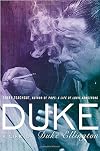
Terry Teachout’s biography of Duke Ellington is a readable, compelling, and entertaining work – all that I’ve come to expect from a Teachout biography. He’s very good at presenting both sides of the story: he presents his subject with warts and all, acknowledging the Duke’s significant and unparalleled achievements in music without shying away from the fact that Ellington had significant formal limitations as a composer. His exploration of the man in his public and private lives is show more comprehensive and balanced – and not all that flattering.
Duke is a really good book.
The problem is that I can’t help but compare this book to Pops, Mr. Teachout’s previously published biography of Louis Armstrong. And I find that Duke doesn’t engage me the way Pops did.
There are two things in particular that make Pops an important work:
1) It’s the first non-scholarly, mass market popular biography of Armstrong to take full advantage of new and previously unexplored biographical material. As such, it offers a critical reassessment of the man.
2) Mr. Teachout uses Pops to take a strong position regarding the value of Armstrong’s middle age and late work that remains controversial amongst jazz aficionados and Armstrong scholars.
These aspects lend Pops an urgency that I find compelling. It’s a work that’s actively engaged in an ongoing discussion.
Duke doesn’t do anything similar. Despite Mr. Teachout’s statement in his “Afterward” that the book is a synthesis of work done by researchers and scholars who “have unearthed a wealth of new information” about Ellington, and aside from his appraisal of the full extent of the role that Billy Strayhorn played in Ellington’s works (which understanding is relatively new to Ellington scholarship), I don’t see that Duke adds much to our already extant understanding of the man.
Indeed, I find this book most valuable because of the information about Strayhorn, not Ellington.
Mr. Teachout’s assessment of Ellington’s music – while comprehensive, insightful, and balanced (this book is more explicitly musicological than Pops) – offers no interpretation that isn’t already well established in the larger body of Ellington scholarship. I don’t see that the book says much of anything that hasn’t already been said about Duke Ellington.
That being said – Duke is a fine biography. As a survey of what we know about Ellington, it’s comprehensive and accessible. For those who are new to Ellington, and who wish to begin their exploration of the man and his work, Duke is the first title I’d recommend. show less
Duke is a really good book.
The problem is that I can’t help but compare this book to Pops, Mr. Teachout’s previously published biography of Louis Armstrong. And I find that Duke doesn’t engage me the way Pops did.
There are two things in particular that make Pops an important work:
1) It’s the first non-scholarly, mass market popular biography of Armstrong to take full advantage of new and previously unexplored biographical material. As such, it offers a critical reassessment of the man.
2) Mr. Teachout uses Pops to take a strong position regarding the value of Armstrong’s middle age and late work that remains controversial amongst jazz aficionados and Armstrong scholars.
These aspects lend Pops an urgency that I find compelling. It’s a work that’s actively engaged in an ongoing discussion.
Duke doesn’t do anything similar. Despite Mr. Teachout’s statement in his “Afterward” that the book is a synthesis of work done by researchers and scholars who “have unearthed a wealth of new information” about Ellington, and aside from his appraisal of the full extent of the role that Billy Strayhorn played in Ellington’s works (which understanding is relatively new to Ellington scholarship), I don’t see that Duke adds much to our already extant understanding of the man.
Indeed, I find this book most valuable because of the information about Strayhorn, not Ellington.
Mr. Teachout’s assessment of Ellington’s music – while comprehensive, insightful, and balanced (this book is more explicitly musicological than Pops) – offers no interpretation that isn’t already well established in the larger body of Ellington scholarship. I don’t see that the book says much of anything that hasn’t already been said about Duke Ellington.
That being said – Duke is a fine biography. As a survey of what we know about Ellington, it’s comprehensive and accessible. For those who are new to Ellington, and who wish to begin their exploration of the man and his work, Duke is the first title I’d recommend. show less
Lists
Music (1)
Awards


You May Also Like


Associated Authors
Statistics
- Works
- 11
- Also by
- 7
- Members
- 1,182
- Popularity
- #21,745
- Rating
- 3.7
- Reviews
- 28
- ISBNs
- 29
- Languages
- 1
- Favorited
- 2
