

David Hajdu
Author of The Ten-Cent Plague: The Great Comic-Book Scare and How It Changed America
About the Author
David Hajdu is the author of the award-winning "Lush Life: A Biography of Billy Strayhorn" (FSG, 1996, North Point Press, 1997). Lately he has written for "The New York Times Magazine", "The New York Review of Books"; & "Vanity Fair". He lives in New York City. (Bowker Author Biography)
Image credit: By Alex Lozupone - Own work, CC BY-SA 4.0, https://commons.wikimedia.org/w/index.php?curid=39579474
Works by David Hajdu
The Ten-Cent Plague: The Great Comic-Book Scare and How It Changed America (2008) 912 copies, 28 reviews
Positively 4th Street: The Lives and Times of Joan Baez, Bob Dylan, Mimi Baez Farina and Richard Farina (2001) 715 copies, 11 reviews
The Entertainment Weekly Guide to the Greatest Movies Ever Made (1994) — Editor — 148 copies, 3 reviews
Discovering great singers of classic pop : a new listener's guide to the sounds and lives of the top performers and their recordings, movies, and videos (1991) 23 copies
A Revolution in Three Acts: The Radical Vaudeville of Bert Williams, Eva Tanguay, and Julian Eltinge (2021) 9 copies, 2 reviews
Associated Works
Tagged
Common Knowledge
- Birthdate
- 1955-03
- Gender
- male
- Occupations
- journalist
university professor - Organizations
- Columbia University Graduate School of Journalism
The New Republic
The Nation - Nationality
- USA
- Places of residence
- New York, New York, USA
- Associated Place (for map)
- New York, USA
Members
Reviews
Rating: 4* of five
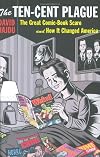
The Book Description: In the years between World War II and the emergence of television as a mass medium, American popular culture as we know it was first created--in the pulpy, boldly illustrated pages of comic books. No sooner had this new culture emerged than it was beaten down by church groups, community bluestockings, and a McCarthyish Congress--only to resurface with a crooked smile on its face in Mad magazine.
The story of the rise and fall of those comic books has show more never been fully told--until The Ten-Cent Plague. David Hajdu's remarkable new book vividly opens up the lost world of comic books, its creativity, irreverence, and suspicion of authority.
When we picture the 1950s, we hear the sound of early rock and roll. The Ten-Cent Plague "shows how--years before music--comics brought on a clash between children and their parents, between prewar and postwar standards. Created by outsiders from the tenements, garish, shameless, and often shocking, comics spoke to young people and provided the guardians of mainstream culture with a big target. Parents, teachers, and complicit kids burned comics in public bonfires. Cities passed laws to outlaw comics. Congress took action with televised hearings that nearly destroyed the careers of hundreds of artists and writers.
The Ten-Cent Plague "radically revises common notions of popular culture, the generation gap, and the divide between "high" and "low" art. As he did with the lives of Billy Strayhorn and Duke Ellington (in "Lush Life") and Bob Dylan and his circle (in "Positively 4th Street"), Hajdu brings a place, a time, and a milieu unforgettably back to life.
My Review: Just read it. It's sixteen kinds of fascinating and a few more kinds of awesome.
Seriously. Just go get one and read it! Quit looking at reviews! Too much good stuff in here that anyone alive in this horrifying over-religioned right wing fucking nightmare country we've allowed to develop in our beloved USA should know about! Censorship and fear-mongering and lying sack-of-shit conservatives are not new developments...just more common than ever. show less
The Book Description: In the years between World War II and the emergence of television as a mass medium, American popular culture as we know it was first created--in the pulpy, boldly illustrated pages of comic books. No sooner had this new culture emerged than it was beaten down by church groups, community bluestockings, and a McCarthyish Congress--only to resurface with a crooked smile on its face in Mad magazine.
The story of the rise and fall of those comic books has show more never been fully told--until The Ten-Cent Plague. David Hajdu's remarkable new book vividly opens up the lost world of comic books, its creativity, irreverence, and suspicion of authority.
When we picture the 1950s, we hear the sound of early rock and roll. The Ten-Cent Plague "shows how--years before music--comics brought on a clash between children and their parents, between prewar and postwar standards. Created by outsiders from the tenements, garish, shameless, and often shocking, comics spoke to young people and provided the guardians of mainstream culture with a big target. Parents, teachers, and complicit kids burned comics in public bonfires. Cities passed laws to outlaw comics. Congress took action with televised hearings that nearly destroyed the careers of hundreds of artists and writers.
The Ten-Cent Plague "radically revises common notions of popular culture, the generation gap, and the divide between "high" and "low" art. As he did with the lives of Billy Strayhorn and Duke Ellington (in "Lush Life") and Bob Dylan and his circle (in "Positively 4th Street"), Hajdu brings a place, a time, and a milieu unforgettably back to life.
My Review: Just read it. It's sixteen kinds of fascinating and a few more kinds of awesome.
Seriously. Just go get one and read it! Quit looking at reviews! Too much good stuff in here that anyone alive in this horrifying over-religioned right wing fucking nightmare country we've allowed to develop in our beloved USA should know about! Censorship and fear-mongering and lying sack-of-shit conservatives are not new developments...just more common than ever. show less
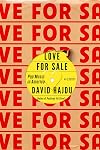
David Hajdu’s “Love For Sale: Pop Music in America” is an insightful and enjoyable survey of the key genres and aspects of American popular music and its surrounding culture. It is neither a chronological treatise nor a fully comprehensive study, but rather a series of essays, generally light in tone, infused with good humor, and filled with anecdotes and insights from the author’s perspective over the years as a music journalist as well as his childhood recollections. Hajdu’s show more title premise that all popular music has been basically selling love and sex is only loosely and sporadically woven through the essays; overall, he paints a much broader picture of the evolving role of popular music and its continuing significance. Rather than a dry scholarly approach, this instead is a fun and refreshing take on the history of pop music aimed clearly at the casual music lover. show less
Take a Walk on the Geffel Side
Review of the W.W. Norton Company hardcover edition (September 2020)
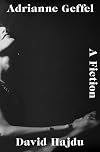
All the stars for this one. David Hajdu’s fictional non-fiction account of the life of musician Adrianne Geffel is set in the experimental avant-garde loft music world of New York City in the 1970’s and 1980’s and includes cameo appearances by real-life composers and musicians such as Steve Reich, Philip Glass, Laurie Anderson and Lou Reed. The fictional pianist Geffel explodes onto this show more scene playing her emotionally charged music which she hears in her head constantly and which compels her to enact it on the keyboard. When she had been investigated in her early years for this condition the neurologists had described it a psychosynesthesia, a version of synesthesia that transfers thought into sound.
That all may sound flighty and esoteric, but the main point of this book is that it is hugely funny and revealing about people and with its playful satire about the postmodern art world whether it is plastic or sound art. The anonymous biographer is reconstructing Geffel’s life by interviewing her family, friends and associates. Many of these interviewees reveal more about themselves than anything about Geffel in their self-serving answers to the writer’s questions.
And in the end it is really a love story against all the odds. What can be better than that?
While writing this review I discovered that an audiobook version has also been produced, which is narrated by veteran reader Hillary Huber (Elena Ferrante’s The Neapolitan Novels etc.). I’m already eager to “re-read” for that alone.
To the best of my knowledge, this is Hajdu’s first novel, but I thoroughly enjoyed his non-fiction music biographies Lush Life: A Biography of Billy Strayhorn (1996) and Positively 4th Street: The Lives and Times of Joan Baez, Bob Dylan, Mimi Baez Fariña, and Richard Fariña (2001) in my pre-Goodreads reading days.
Trivia and Links
While reading Adrianne Geffel, I imagined her more experimental atonal music would sound like something by avant-garde jazz pianist Cecil Taylor. A time-era appropriate (1970s) recording of Cecil Taylor is Indent (1973).
After I finished reading, I searched for more information on Adrianne Geffel and discovered that author Hajdu had curated an Adrianne Geffel playlist for the Large Hearted Boy blog, which actually included a piece by Cecil Taylor.
Adrianne Geffel’s minimalist cover design got it into LitHub’s Top 10 Best Book Covers of September 2020 list. show less
Review of the W.W. Norton Company hardcover edition (September 2020)
All the stars for this one. David Hajdu’s fictional non-fiction account of the life of musician Adrianne Geffel is set in the experimental avant-garde loft music world of New York City in the 1970’s and 1980’s and includes cameo appearances by real-life composers and musicians such as Steve Reich, Philip Glass, Laurie Anderson and Lou Reed. The fictional pianist Geffel explodes onto this show more scene playing her emotionally charged music which she hears in her head constantly and which compels her to enact it on the keyboard. When she had been investigated in her early years for this condition the neurologists had described it a psychosynesthesia, a version of synesthesia that transfers thought into sound.
That all may sound flighty and esoteric, but the main point of this book is that it is hugely funny and revealing about people and with its playful satire about the postmodern art world whether it is plastic or sound art. The anonymous biographer is reconstructing Geffel’s life by interviewing her family, friends and associates. Many of these interviewees reveal more about themselves than anything about Geffel in their self-serving answers to the writer’s questions.
And in the end it is really a love story against all the odds. What can be better than that?
While writing this review I discovered that an audiobook version has also been produced, which is narrated by veteran reader Hillary Huber (Elena Ferrante’s The Neapolitan Novels etc.). I’m already eager to “re-read” for that alone.
To the best of my knowledge, this is Hajdu’s first novel, but I thoroughly enjoyed his non-fiction music biographies Lush Life: A Biography of Billy Strayhorn (1996) and Positively 4th Street: The Lives and Times of Joan Baez, Bob Dylan, Mimi Baez Fariña, and Richard Fariña (2001) in my pre-Goodreads reading days.
Trivia and Links
While reading Adrianne Geffel, I imagined her more experimental atonal music would sound like something by avant-garde jazz pianist Cecil Taylor. A time-era appropriate (1970s) recording of Cecil Taylor is Indent (1973).
After I finished reading, I searched for more information on Adrianne Geffel and discovered that author Hajdu had curated an Adrianne Geffel playlist for the Large Hearted Boy blog, which actually included a piece by Cecil Taylor.
Adrianne Geffel’s minimalist cover design got it into LitHub’s Top 10 Best Book Covers of September 2020 list. show less
In The Ten-Cent Plague: The Great Comic-Book Scare and How It Changed America, David Hajdu argues, "Though they were not traitors, the makers of crime, romance, and horror comics were propagandists of a sort, cultural insurgents. They expressed in their lurid panels, thereby helping to instill in their readers, a disregard for the niceties of proper society, a passion for wild ideas and fast action, a cynicism toward authority of all sorts, and a tolerance, if not an appetite, for images of show more prurience and violence. In short, the generation of comic-book creators whose work died with the Comics Code helped give birth to the popular culture of the postwar era" (pg. 330). Hajdu traces the moral panic from the medium's origin prior to World War II, through early objections during the war, and into the widespread condemnation that culminated in Fredric Wertham's Seduction of the Innocent and the Senate Subcommittee on Juvenile Delinquency. His sources include the comics themselves; interviews with comics writers, artists, and publishers; articles objecting to them in newspapers, magazines, and church bulletins; and the transcripts of the Senate committees that condemned them. While others have written similar histories, notably Amy Kiste Nyberg in Seal of Approval: The History of the Comics Code, Hajdu writes an all-encompassing cultural history that examines the Great Comic-Book Scare from nearly all angles while still remaining readable to a lay audience. show less
Lists
Awards


You May Also Like


Associated Authors
Statistics
- Works
- 12
- Also by
- 2
- Members
- 2,236
- Popularity
- #11,470
- Rating
- 3.8
- Reviews
- 51
- ISBNs
- 59
- Languages
- 2
- Favorited
- 1
