

Ellen Willis (1941–2006)
Author of Out of the Vinyl Deeps: Ellen Willis on Rock Music
About the Author
Ellen Willis (1941-2006) was the first pop music critic for The New Yorker and an editor and columnist at the Village Voice. A groundbreaking radical leftist author and thinker, she contributed to numerous publications, including Rolling Stone, the New York Times, and The Nation, and was the show more founder of the Cultural Reporting and Criticism program at New York University. Among her other books are the collections Out of the Vinyl Deeps and No More Nice Girls, both published by the University of Minnesota Press. show less
Works by Ellen Willis
Consumerism and Women 1 copy
Associated Works
Tagged
Common Knowledge
- Birthdate
- 1941-12-14
- Date of death
- 2006-11-09
- Gender
- female
- Education
- Barnard College
- Occupations
- political essayist
journalist
human rights activist
pop music critic
university professor - Organizations
- The New Yorker
The Village Voice
New York University
New York Radical Women
Redstockings
No More Nice Girls - Relationships
- Aronowitz, Stanley (spouse)
Willis-Aronowitz, Nona (daughter) - Nationality
- USA
- Associated Place (for map)
- USA
Members
Reviews

the review was first published in maximum rock-n-roll may 2012
Ellen Willis was a feminist and a rock critic back when rock-n-roll and feminism were generally thought to be opposed to one another. Growing up in the 70's and 80's, I remember this dichotomy well. As a teenage punk rocker I went through a heavy rock-n-roll stage in the mid-80's -- Black Flag had long hair, Red Kross and The Melvins covered Kiss, Saint Vitus were ripping off Black Sabbath and I was learning to play drums -- show more pretty soon I was skating to Led Zeppelin and Cream instead of JFA and The Big Boys. Maybe not coincidentally this is also when I started to question sexism within punk. I stumbled upon a used paperback published by second wave feminist Shelia Rowbotham called Women's Consciousness, Man's World (1973) that provided a feminist analysis of the 60's counterculture. Playing in an all girl band at the time, it didn't seem like the 80s punk scene was all that different in terms of male domination. I loved rock-n-roll and punk but there were not enough girls in bands and way too many in behind-the-scenes support roles (not to mention the groupie economy). I was totally boy crazy yet wanted a girl revolution and I didn't want to have to take sides! I started my fanzine Jigsaw as a possible solution to this impossible conundrum. Discovering Ellen Willis reminds me that criticism is a means of resistance, a way to change society by asking questions and writing yourself into existence. Her voice is essential to those of us who negotiate our love of music with our feminism.
This is not to say that Out of the Vinyl Deeps is full of political diatribes about gender/power. That just happens to be part of what Ellen Willis writes about here. Mostly, this is a book of stellar rock criticism by a super smart, aesthetically engaged music fan that happens to be a feminist and loves to dance and hang out and listen to records. Her ideas are complex but she is clear and not fancy or academic. Her writing voice is analytical and inward. Some of the hippy vernacular is there but she generally doesn't write in a conversational way; she's an essayist, so there's a traditional literary form to most of her pieces. Contrary to the narcissistic, kinetic, explosive style of some of the male rock writers at this time, she's self-aware, reflective and careful with her choice of words but her writing loses none of its urgency. Instead of telling her readers what to think, she offers her perspective, grounded in her experience, all the time questioning what things mean and why. I imagine her spending a lot of time being social and then purposively isolating herself in order to distill her experiences into thoughtful critique. The time spent alone necessary to write seems to have given her the space to be both a feminist and a rock-n-roll fan. The result is compelling and necessary. You get the feeling that her work truly mattered and made a difference in people's lives. It definitely enhanced the cultural narrative of her time, leaving us with a document that reflects both cultural struggle and aesthetic lineage, making it excellent for anyone interested in the history of feminist thought and rock-n-roll/youth culture.
Reading this book, I'm certain that it was necessary for Ellen Willis to write in order to exist. I'm not talking about survival in terms of food and water and paying rent, but cultural survival, carving out a space to breath in a world that hates women and spreads misogyny into every aspect of our lives, including our personal relationships, fashion, politics and even our favorite songs. By publishing her thoughts instead of keeping them to herself, she helped move things forward. In that sense, this is a radical book. I hope it inspires more feminist music criticism. We need it. show less
Ellen Willis was a feminist and a rock critic back when rock-n-roll and feminism were generally thought to be opposed to one another. Growing up in the 70's and 80's, I remember this dichotomy well. As a teenage punk rocker I went through a heavy rock-n-roll stage in the mid-80's -- Black Flag had long hair, Red Kross and The Melvins covered Kiss, Saint Vitus were ripping off Black Sabbath and I was learning to play drums -- show more pretty soon I was skating to Led Zeppelin and Cream instead of JFA and The Big Boys. Maybe not coincidentally this is also when I started to question sexism within punk. I stumbled upon a used paperback published by second wave feminist Shelia Rowbotham called Women's Consciousness, Man's World (1973) that provided a feminist analysis of the 60's counterculture. Playing in an all girl band at the time, it didn't seem like the 80s punk scene was all that different in terms of male domination. I loved rock-n-roll and punk but there were not enough girls in bands and way too many in behind-the-scenes support roles (not to mention the groupie economy). I was totally boy crazy yet wanted a girl revolution and I didn't want to have to take sides! I started my fanzine Jigsaw as a possible solution to this impossible conundrum. Discovering Ellen Willis reminds me that criticism is a means of resistance, a way to change society by asking questions and writing yourself into existence. Her voice is essential to those of us who negotiate our love of music with our feminism.
This is not to say that Out of the Vinyl Deeps is full of political diatribes about gender/power. That just happens to be part of what Ellen Willis writes about here. Mostly, this is a book of stellar rock criticism by a super smart, aesthetically engaged music fan that happens to be a feminist and loves to dance and hang out and listen to records. Her ideas are complex but she is clear and not fancy or academic. Her writing voice is analytical and inward. Some of the hippy vernacular is there but she generally doesn't write in a conversational way; she's an essayist, so there's a traditional literary form to most of her pieces. Contrary to the narcissistic, kinetic, explosive style of some of the male rock writers at this time, she's self-aware, reflective and careful with her choice of words but her writing loses none of its urgency. Instead of telling her readers what to think, she offers her perspective, grounded in her experience, all the time questioning what things mean and why. I imagine her spending a lot of time being social and then purposively isolating herself in order to distill her experiences into thoughtful critique. The time spent alone necessary to write seems to have given her the space to be both a feminist and a rock-n-roll fan. The result is compelling and necessary. You get the feeling that her work truly mattered and made a difference in people's lives. It definitely enhanced the cultural narrative of her time, leaving us with a document that reflects both cultural struggle and aesthetic lineage, making it excellent for anyone interested in the history of feminist thought and rock-n-roll/youth culture.
Reading this book, I'm certain that it was necessary for Ellen Willis to write in order to exist. I'm not talking about survival in terms of food and water and paying rent, but cultural survival, carving out a space to breath in a world that hates women and spreads misogyny into every aspect of our lives, including our personal relationships, fashion, politics and even our favorite songs. By publishing her thoughts instead of keeping them to herself, she helped move things forward. In that sense, this is a radical book. I hope it inspires more feminist music criticism. We need it. show less
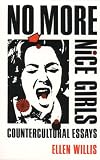
This collection of essays will come as a shining relief and call to action for those of us who have been confused and angered by some of the turns taken by feminism in the 70s and 80s. Willis rejects cultural feminism and that which would place women on a pedestal, instead championing true equality rather than victimhood.
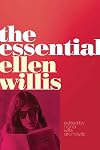
4.5 stars. Made me think a lot about Marxist and psychoanalytic theory. I feel like putting this book with a bell hooks volume would be a great dialogue...
Also, I think the upshot of this book is, "until the left starts thinking about the libidinal aspect of privilege, it's gonna keep spinning its wheels."
Also, I think the upshot of this book is, "until the left starts thinking about the libidinal aspect of privilege, it's gonna keep spinning its wheels."

I have much ambivalence about this book. I enjoyed the second half more than the first excepting the wonderful Dylan piece that opens the book. I particularly enjoyed the author's pieces on Dylan, the Woodstock festival and two Elvis concert reviews. I would love to see more of her writing on The Stones and Grateful Dead, two acts she had clear affinities for. Sorry to be crass, but probably a great bathroom read given the length of the pieces. I read straight through and found it a slog at show more times. I would love to see these pieces published online. This author is sadly under recognized in a field dominated by a few oft-read and cited men. Read it as an act of political action if nothing else. show less
Lists
Awards


You May Also Like


Associated Authors
Statistics
- Works
- 9
- Also by
- 6
- Members
- 445
- Popularity
- #55,081
- Rating
- 4.0
- Reviews
- 5
- ISBNs
- 27
- Favorited
- 2