
Louis Armstrong (1901–1971)
Author of Satchmo: My Life in New Orleans
About the Author
Louis "Satchmo" Armstrong is considered one of the most innovative American jazz trumpeters of his era and one of the great ambassadors of American jazz. Armstrong began his career in New Orleans, where, as a young boy, he was a street singer and learned to play the trumpet. In 1922 he moved to show more Chicago and joined the jazz orchestra of Joe "King" Oliver. He quickly became noted for his improvisational style and raised the importance of solo performances in jazz. By the late 1920s, Armstrong led his own jazz ensemble, called the Louis Armstrong Hot Five, which later became the Hot Seven. As he gained in popularity, Armstrong made numerous recordings and performed around the world. He had a number of hit records, including "Hello, Dolly" and "Mack the Knife." He also appeared in Broadway shows and in films. His raspy baritone voice and brilliant trumpet playing combined to make an unforgettable musical sound. (Bowker Author Biography) show less
Image credit: World Telegram & Sun photo, 1953 (Library of Congress Prints and Photographs Division, LC-USZ62-127236)
Series
Works by Louis Armstrong
Christmas Through the Years 17 copies
The Hot Fives and Hot Sevens: Volume II 11 copies
We Have All The Time In The World 6 copies
C'est si bon 5 copies
The Complete RCA Victor Recordings 5 copies
Jazz on a Summer's Day 5 copies
Very Best of Louis Armstrong 4 copies
Vol. 6: St. Louis Blues 4 copies
Louis Armstrong: Blow Satchmo Blow 4 copies
Ma Vie: Ma Nouvelle Orleans 4 copies
Gold Collection 3 copies
Louis Armstrong: Mame [LP Record] 3 copies
Eyes Wide Open 3 copies
Jeepers creepers 3 copies
Super Hits 3 copies
Vol. 5: Louis In New York 3 copies
Guvnor 3 copies
The Great Chicago Concert 3 copies
Hello, Dolly! 3 copies
Best of Decca Years 1 3 copies
C'est Si Bon (Audio CD) 3 copies
Jazz on a Summer's Day [Blu-ray] 2 copies
Hot Fives & Sevens, Vol. 1 2 copies
Ain't Misbehavin 2 copies
The Great Chicago Concert 1956 2 copies
Louis In London 2 copies
Sings the Blues 2 copies
Collection 2 copies
Best of Decca Years 2 - Composer 2 copies
Louis Armstrong 1928-1931 2 copies
Hot Fives & Sevens, Vol. 4 2 copies
Let's Fall In Love 2 copies
I love jazz 2 copies
Big Band Bash 2 copies
Louis Armstrong Meets Oscar Peterson 2 copies
Armstrong Meets Peterson 2 copies
Louis Wishes You A Cool Yule 2 copies
Legendary Louis Armstrong 2 copies
Centennial Anthology 2 copies
Rhythm Saved The World 2 copies
The Best of Ella Fitzgerald & Louis Armstrong: The Millennium Collection (20th Century Masters) (2007) 2 copies
High Society [Brisa] 2 copies
Jazz Collector Edition 2 copies
Louis and the Good Book 2 copies
Louis Armstrong more greatest hits 2 copies
Just Jazz — Artist — 2 copies
You Rascal You 2 copies
The Great Summit/Complete Sessions 2 copies
Best of the Best 2 copies
Louis Armstrong gold 2 copies
High Profile 1 copy
Classic Armstrong 1 copy
Louis and the Good Book 1 copy
The early '60s 1 copy
Hotter Than That [10 CD] 1 copy
THE HOT FIVES & HOT SEVENS 2 1 copy
Decca Years [Highlights] 1 copy
Pops 1 copy
Pasadena Concert 1 copy
Laughin' Louie 1 copy
Alexander's Ragtime Band 1 copy
Satchmo's hits 1 copy
Memories of New Orleans 1 copy
St. Louis Blues 1 copy
Snake Rag 1 copy
Plays Fats 1 copy
Sings-His Favorite Jaz 1 copy
MUSIC JAZZ CD - Louis Armstrong and Ella Fitzgerald - The Complete Louis Armstrong & Ella Fitzgerald 1 copy
The very best 1 copy
Hot Five & Hot Seven 1925-28 1 copy
Ramona 1 copy
California Concerts 1 copy
I will wait for you 1 copy
Jazz Hot 1 copy
Γεννήθηκα στην Νέα Ορλεανη 1 copy
St Louis Blues 1 copy
Pocketful of Dreams, Vol. 3 1 copy
Milestones Of A Jazz Legend 1 copy
Les Années 20 1 copy
His Early Hits 1 copy
New Orleans [Import anglais] 1 copy
Jazz Gold Vol 1 1 copy
Butter & Eggman 1 copy
The Millenium Anthology 1 copy
Salute to Charly Christian 1 copy
Live in Australia [DVD] 1 copy
New Orleans Nights 1 copy
Jazziz on disc. March 1995 1 copy
High Society [Tradition] 1 copy
Priceless Jazz 1 copy
Ma Nouvelle Orléans - Ma vie 1 copy
The New Orleans function 1 copy
Town Hall Concert Plus 1 copy
The Jazz Biography Series 1 copy
R&B Christmas 1 copy
Louis Armstrong Jazz 1 copy
Greatest Hits (RCA Victor) 1 copy
Classic Jazz Milestone 1 copy
the magic duets 1 copy
The white Christmas album 1 copy
Young Louis Armstrong [RCA] 1 copy
Golden greats 1 copy
Body & Soul [Monaco] 1 copy
Bing & Satchmo 1 copy
Louis Armstrong 1 copy
Sentimental Journey 1922-1972 (6) Boxed Set — Contributor — 1 copy
King Louis 1 copy
Moje życie w Nowym Orleanie 1 copy
Hot Fives & Sevens 4 1 copy
The Platinum Collection 1 copy
S.O.L. Blues 1 copy
'Jazzin With Armstrong 1 copy
Satchmo Serenades 1 copy
Satchmo Sings 1 copy
I Double Dare You 1 copy
Weather Bird 1 copy
Sweethearts on Parade 1 copy
Struttin' With Some Barbeque 1 copy
Back in N.Y. 1 copy
Creole Jazz 1 copy
Satchmo's Golden Favorites 1 copy
Town hall concert plus 1 copy
Louis Armstrong Live in '59 1 copy
Swing Low Sweet Satchmo 1 copy
Sound sensation 1 copy
Satchmo Serenades (Audio CD) 1 copy
The ABC Collection 1 copy
Satchmo at Symphony Hall 1 copy
The Ultimate Collection 1 copy
Forever Gold 1 copy
The great Louis Armstrong 1 copy
The Greatest Hits (Audio LP) 1 copy
Ambassador Satch 1 copy
Fabulous Louis Armstrong 1 copy
Greatest Hits 1932/1940 1 copy
Greatest 1 copy
Louis Armstrong 1940-1947 1 copy
Louis Armstrong Memorial 1 copy
Mahogany Hall Stomp [CD] 1 copy
Louis and The Angels 1 copy
Under The Stars 1 copy
Hot five & hot seven Vol. 2 1 copy
Hot Five's Hot Seven's Vol.1 1 copy
Louis Armstrong 1 copy
Curcio I Giganti Del Jazz 1 copy
20 Best of Louis Armstrong 1 copy
What A Wonderfull World 1 copy
Together 1 copy
Retrospective 1923-1956 1 copy
1949 - 1950. CD 1 copy
A Rare Batch of Satch 1 copy
Satchmo Plays King Oliver 1 copy
125 Jazz Breaks for Trumpet 1 copy
Laughin' Louie (1932-33) 1 copy
The Kings of Swing, Vol. 5; All-American Jazz Band; Louis Armstrong; The First Esquire Concert, New York (1969) 1 copy
Hot Five & Hot Seven, Vol. 2 1 copy
St.Louis Blues 1 copy
Louis Armstrong Best Of 1 copy
Qué mundo tan maravilloso 1 copy
Louis Armstrong & Earl Hines 1 copy
The silver collection 1 copy
Hello, Louis (disco LP) 1 copy
Associated Works
Porgy & Bess / Ella Fitzgerald & Louis Armstrong (1957) — Artist, some editions — 46 copies, 1 review
On Her Majesty's Secret Service: Original Motion Picture Soundtrack (1969) — Performer — 17 copies, 1 review
New World Writing: Sixth Mentor Selection - A New Adventure in Modern Reading (1954) — Contributor — 12 copies
The Best of Ella Fitzgerald: The Millennium Collection (20th Century Masters) (2003) — Contributor — 3 copies
The Best of the 60's: The Millennium Collection (20th Century Masters) (2000) — Contributor — 3 copies
The Curious Case of Benjamin Button: Original Motion Picture Soundtrack (2008) — Contributor — 1 copy
In the Mood for Jazz 1 copy
Early Years 1 copy
Straight Up: Classics with a Twist (Pottery Barn) by Various Artists, Dean Martin, Tony Bennett, Joe Williams, Mel Torme, Louis Armst [Music CD] — Contributor — 1 copy
Louis Armstrong (2 CD Audio) — Associated Name — 1 copy
Betty Boop: 23 Classic Cartoons — Actor — 1 copy
Tagged
Common Knowledge
- Canonical name
- Armstrong, Louis
- Legal name
- Armstrong, Louis Daniel
- Other names
- Satchmo
- Birthdate
- 1901-08-04
- Date of death
- 1971-07-06
- Gender
- male
- Education
- self-educated
- Occupations
- trumpeter
singer - Awards and honors
- Hollywood Walk of Fame
- Short biography
- Né à la Nouvelle Orléans, le 4 juillet 1900, Louis Daniel Armstrong, Pops ou Satchmo pour les jazzfans, est le premier grand personnage du jazz. Du style de ses débuts, celui des musiciens de sa ville, il s’échappa rapidement pour créer, tout en conservant les éléments fondamentaux, une manière d'un génial équilibre qui influença tous les solistes du jazz, quel que soit leur instrument. Les boppers et leurs continuateurs lui doivent encore quelque chose. Sans lui le jazz ne serait pas aujourd’hui une musique universelle. Louis Armstrong devint, dès les premières années trente, une vedette populaire. Il sut le rester jusqu’à sa mort, survenue le 6 juillet 1971. Trompettiste à la sonorité ample, brillante et pure, Armstrong chantait aussi admirablement, avec une voix rocailleuse et voilée qui heurtait les auditeurs non initiés mais communiquait une profonde émotion. (Guide Akaï du disque 1983 : Disques jazz blues pop rock, pp. 16-17)
- Nationality
- USA
- Birthplace
- New Orleans, Louisiana, USA
- Place of death
- Corona, Queens, New York, USA
- Burial location
- Flushing Cemetery, Queens, New York, USA
- Associated Place (for map)
- New York, USA
Members
Discussions
Flash-mob: Louis Armstrong in Legacy Libraries (June 2016)
Reviews
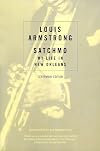
This was fascinating, both as an autobiography and as uniquely filtered socio-economic essay of New Orleans circa 1900-1921, encompassing the 21 years that Louis Armstrong spent growing up in the city.
The first thing you notice is that this doesn't appear to have been edited in any way - not for grammar, not for consistency, and certainly not for "political correctness." Louis tells his story in his own words, stream of conscious-style, through the lens of the morals and ethics he learned show more growing up in the seediest neighborhoods of New Orleans. His casual acceptance of such things as institutionalized racism (cops who would knock blacks in the head with their "licorice sticks" if they were foolish enough to talk back), domestic violence (which went both ways - in Louis's world, the women were as dangerous as the men), prostitution (his mother and his first wife were working girls; he himself "ran" a girl for a while), and abject poverty (scavenging through trash for food and things to sell) are as important a part of the story as the events he is retelling.
The story also provides some fascinating insights into New Orleans culture at the time, from the institutionalized vice of Storyville (deliberately maintained by the city as a profit center) to the seedy honky-tonks that serviced levee workers, pimps, and whores; from the railroad tracks where his mom harvested herbs to combat TB and lockjaw (tetanus being a constant presence in a neighborhood where no one could afford shoes), to the turpentine factories that ripped away the linings of workers' lungs; from the "Colored Waifs Home" where Louis was incarcerated (no trial, no conviction - just an indefinite sentence until such time as his family could manage to round up a white person to vouch for him), to the endless stream of funerals, picnics, balls, and street parades that gave birth to a generation of brilliant jazz musicians.
Seriously, if you're interested in learning more about the life of Louis Armstrong, this should be included in your "must read" pile. While this self-serving autobiography almost surely sugar-coats or omits all manner of traumas, you won't want to miss out on this opportunity to hear Louis tell his story in his own words, though his own chosen filters. show less
The first thing you notice is that this doesn't appear to have been edited in any way - not for grammar, not for consistency, and certainly not for "political correctness." Louis tells his story in his own words, stream of conscious-style, through the lens of the morals and ethics he learned show more growing up in the seediest neighborhoods of New Orleans. His casual acceptance of such things as institutionalized racism (cops who would knock blacks in the head with their "licorice sticks" if they were foolish enough to talk back), domestic violence (which went both ways - in Louis's world, the women were as dangerous as the men), prostitution (his mother and his first wife were working girls; he himself "ran" a girl for a while), and abject poverty (scavenging through trash for food and things to sell) are as important a part of the story as the events he is retelling.
The story also provides some fascinating insights into New Orleans culture at the time, from the institutionalized vice of Storyville (deliberately maintained by the city as a profit center) to the seedy honky-tonks that serviced levee workers, pimps, and whores; from the railroad tracks where his mom harvested herbs to combat TB and lockjaw (tetanus being a constant presence in a neighborhood where no one could afford shoes), to the turpentine factories that ripped away the linings of workers' lungs; from the "Colored Waifs Home" where Louis was incarcerated (no trial, no conviction - just an indefinite sentence until such time as his family could manage to round up a white person to vouch for him), to the endless stream of funerals, picnics, balls, and street parades that gave birth to a generation of brilliant jazz musicians.
Seriously, if you're interested in learning more about the life of Louis Armstrong, this should be included in your "must read" pile. While this self-serving autobiography almost surely sugar-coats or omits all manner of traumas, you won't want to miss out on this opportunity to hear Louis tell his story in his own words, though his own chosen filters. show less
Reconhecimento, admiração e fama sempre efervescente acompanharam Louis Armstrong desde os vinte anos. Seu status de superstar era totalmente merecido, embora dificilmente suportável no dia-a-dia. O Orfeu moderno não precisava ser dilacerado pelas harpias.
Estas que eram batizadas com novos nomes na era moderna: fãs amontoadas na entrada e saída de cada clube; jornalistas, fotógrafos, caçadores de autógrafos, curiosos profissionais ou amadores, anfitriões de “amigos e parentes” show more que exigiam ajuda financeira e favores, chantagistas, psicopatas e até conspiradores.
Assim, o charmoso e afável Satchmo não teve escolha a não ser erguer um muro de secretárias e recorrer ao poderoso bíceps de um guarda-costas para se defender da própria popularidade e conseguir trabalhar em paz… aos olhos da maioria, isso tornava o indivíduo mais azedo; o mundo descobre e usa isso contra ele. Seus velhos amigos, aqueles que ainda se lembram do ídolo de outrora, acham totalmente imperdoável.
Eles balançam a cabeça tristemente e dizem: “o cara está cheio de si, subiu à cabeça dele”, em suma, a mesma velha história. Não posso deixar de pensar que Armstrong escreveu (ou melhor, ditou) suas memórias com os olhos voltados para todas essas pessoas e com a firme intenção de abrandá-las e bajulá-las. “Ei pessoal, escutem”, parece dizer desde a primeira página, “todos os que vivem em Nova Orleans, negros ou brancos, vivos ou mortos, eu nunca perdi a cabeça, nunca me esqueci de vocês: leiam e divirtam-se com estas boas palavras que guardei para cada um, embora no fundo saibam que não são verdadeiras. E para a maioria de vocês, meus amigos músicos para quem as coisas nem sempre correram bem, não só lembrarei seus nomes e apelidos, mas também prestarei uma solene homenagem aos seus dons musicais, às vezes até superiores aos meus, e digo que se eu sei alguma coisa, certamente aprendi com vocês. Tive apenas mais sorte, embora às vezes isso também seja um incômodo para mim; por isso peço humildemente o vosso perdão...”
Este é o tom de suas memórias.
Nobre e comovente.
Sincero? Não sejamos mesquinhos. Procurar sinceridade em um livro de memórias é sem sentido. Seria melhor perguntar qual visão de si e do mundo o autor escolheu representar — já que sempre há espaço para escolha.
Por exemplo, você poderia pegar sua caneta e não ter uma única palavra boa para falar sobre ninguém. É mais comum do que pensamos; mas dificilmente transforma-se em livros. — Projeto Tradução Wislawa show less

Louis Armstrong's story of growing up in New Orleans during the early 1900s. The man is interesting and the time and place likewise so. I was much surprised when I realized what a wild place the current Central Business District was with gangsters, gamblers, and prostitutes making up most of the population - Armstrong himself was actually a pimp for all of 15 minutes (until his "chick" stabbed him and he ran home to his mom so that she could get rid of the girl for him). Also interesting, show more from a contemporary standpoint is, of course, how casually the racism of the time was accepted (sort of an "oh, well" is all it gets from Armstrong) - luckily times have changed, but not enough, obviously. show less
Louis Armstrong's autobiography "Satchmo: My Life in New Orleans" (1954) was the first grown-up non-fiction I ever read, probably around 1964 or 1965, when I was 10. My father had it lying around and though he probably knew it had plenty of salty words in it, he didn’t put it on any index of forbidden writings. Anyway, this autobiography covers Armstrong's life from his birth around 1901 until his debut with King Oliver in Chicago in 1922. The autobiography is a fun read; though probably show more ghost-written, the tone is certainly that of Pops: energetic, enthusiastic, brimming with life. show less
Awards


You May Also Like


Associated Authors
Statistics
- Works
- 516
- Also by
- 42
- Members
- 1,581
- Popularity
- #16,322
- Rating
- 3.9
- Reviews
- 58
- ISBNs
- 45
- Languages
- 9
- Favorited
- 4


