Deep in the Sahara
by Kelly Cunnane
On This Page
Description
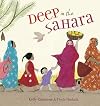
An Arab girl of the Sahara who wants to wear a malafa, the veiled dress worn by her mother and older sister, learns that the garment represents beauty, mystery, tradition, belonging, and faith.Tags
Recommendations





Member Reviews
Books about kids in other countries, especially picture books, are hard sells at my library. My picture book audience is all young children and many of these books are aimed at a grade school level. Since I'm looking for picture books that make good storytime read-alouds for younger children, it's hard to find something that genuinely portrays the children in a foreign culture but doesn't make it so foreign that the kids in my small town can't relate to it. I think this book manages to hit all my exacting requirements.
Lalla wants, more than anything else, a beautiful malafa. She wants one for beauty like her mother, for mystery like her sister, to be a lady like her cousin, to be like a long-ago queen like her grandmother. Finally, in show more the quiet of the evening, Lalla wants a malafa so she can pray like her mother. In her beautiful new malafa, Lalla knows that a malafa is all the things she thought it was and more; it's for faith.
A note from the author explains how she came to change her views on women's veils after spending a year in Mauritania. There is also a glossary for pronunciation.
Although American culture has very few rites of passage for children anymore (think about how many small girls don't need to borrow their mother's high heels anymore - they have their own) I think small children will definitely get the idea of wanting to play dress-up or borrow the pretty things their mother or older sisters wear. The unfamiliar words are clearly defined in the context of the text. There are brief references to the Koran and Muslim faith, which may bother parents who are uncomfortable with introducing their young children to a different religion (The closest Mosque to our town is at least 30 minutes away and we have maybe 3 Muslim families, so this is something kids are unlikely to be familiar with) but the religious references are very general and I think parents can easy cover it all under faith and prayer if they're not ready for a discussion of comparative religious beliefs.
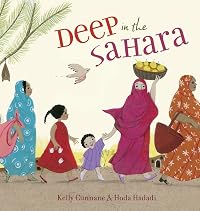
The art is what really sells this for me. The malafas glow with color and pattern and swirl enchantingly around the warm and comforting extended family. In some ways this isn't just about wanting to grow up, religious beliefs or cultures; it's about the strength and relationships of the women in Lalla's family. The settings include lots of tiny details to intrigue children from bats in the trees to the houses like "tall cake".
Verdict: This is a lovely way to gently introduce young children to a different culture as well as a celebration of growing up. The art and story is accessible and this is a good selection even for a small, homogeneous community like my own.
ISBN: 9780375870347; Published 2013 by Schwartz & Wade/Random House; Review copy provided by the publisher; Added to the library show less
Lalla wants, more than anything else, a beautiful malafa. She wants one for beauty like her mother, for mystery like her sister, to be a lady like her cousin, to be like a long-ago queen like her grandmother. Finally, in show more the quiet of the evening, Lalla wants a malafa so she can pray like her mother. In her beautiful new malafa, Lalla knows that a malafa is all the things she thought it was and more; it's for faith.
A note from the author explains how she came to change her views on women's veils after spending a year in Mauritania. There is also a glossary for pronunciation.
Although American culture has very few rites of passage for children anymore (think about how many small girls don't need to borrow their mother's high heels anymore - they have their own) I think small children will definitely get the idea of wanting to play dress-up or borrow the pretty things their mother or older sisters wear. The unfamiliar words are clearly defined in the context of the text. There are brief references to the Koran and Muslim faith, which may bother parents who are uncomfortable with introducing their young children to a different religion (The closest Mosque to our town is at least 30 minutes away and we have maybe 3 Muslim families, so this is something kids are unlikely to be familiar with) but the religious references are very general and I think parents can easy cover it all under faith and prayer if they're not ready for a discussion of comparative religious beliefs.
The art is what really sells this for me. The malafas glow with color and pattern and swirl enchantingly around the warm and comforting extended family. In some ways this isn't just about wanting to grow up, religious beliefs or cultures; it's about the strength and relationships of the women in Lalla's family. The settings include lots of tiny details to intrigue children from bats in the trees to the houses like "tall cake".
Verdict: This is a lovely way to gently introduce young children to a different culture as well as a celebration of growing up. The art and story is accessible and this is a good selection even for a small, homogeneous community like my own.
ISBN: 9780375870347; Published 2013 by Schwartz & Wade/Random House; Review copy provided by the publisher; Added to the library show less
There are many reasons why I enjoyed this story. First, the author used very poetic and descriptive language throughout each page and she elaborated on the beauty and detail of the mysterious religion most do not talk about-Islam. The malafa is a huge symbol throughout this story. The main character, Lalla, yearns to be able to wear a malafa like her older female figures in her life. She loves the beauty and mystery it holds. Some language used includes “veiled head to toe in a malafa, color of lime and mango.” She also describes “trees of red flowers bloom with heat.” The way she says her thoughts vocalizes her poetic mind and shows the descriptive images she is trying to convey to the authors. Without having the book in front show more of me, I can see the malafa colored in those specific hues. The language is a huge key to making this book a success. The illustrations are very bright and contribute to the mood of the story and culture. The image of the mother looking into Lalla’s eyes shows how well developed and believable the characters are. It seemed very realistic like a child just wanting to grow up and wear what her mother wears and she tries to tell her child she will be able to wear it soon enough. The writing flows and is paced well throughout the entire timeline. Her poetic voice states “and gathers a malafa, slips it over your head, under your arm, round and round---a malafa, as blue as the sahara sky, as blue as the ink in the Koran, as blue as a stranger’s eye.” I can easily visualize the page through her descriptive voice and language. The big theme is having faith that you will get what you want and deserve as well as faith in your religion. The other big ideas include culture, tradition, value, and depicting the religion of Islam in a positive light. show less
I surprisingly enjoyed this book for several reasons. First, the illustrations were very colorful and in beautiful shades of oranges and reds, as well as other soft colors. Second and most importantly, this book changed my outlook on a concept that I had looked negatively upon in the past. The story is about a young girl, Lalla, who lives in Islamic West Africa and is yearning to wear a malafa (a colorful veil that covers her head and body in public). She sees her mother wearing it and wants to be beautiful like her. She then sees her sister, cousins and grandmother wearing one and longs to be mysterious, a lady and traditional like they are when they wear a malafa. In the end, Lalla’s mother gives her one to wear as they head to the show more mosque to pray. Lalla then realizes that the malafa is for all of those things and most of all, it is for faith. I was always under the assumption that Muslim women were made to wear these cloths and it was a demeaning aspect of the Muslim faith. This story made me realize they embrace this tradition and that I should understand something before assuming a negative opinion. A few minor aspects of this book that I liked were the fact that it contained a glossary with several Hassaniya terms that were mentioned in the story, and it contained a detailed Author’s Note which provided a lot of background knowledge which was helpful in understanding the Islamic tradition. show less
“Deep in the Sahara” is about a young girl, Lalla who lives in West Africa. Lalla wants to wear a malafa, a beautiful cloth that Muslim women wear to cover their body and hair. Lalla says she wants to wear a malafa so she can be beautiful, mysterious, and to be a lady. But throughout the story she begins to realize the true meaning and importance behind wearing a malafa. It is not about being beautiful, mysterious, or being a lady. A malafa is for faith.
I absolutely loved this book. The colorful illustrations are beautiful and brings this story to life. The women wearing colorful malafas in the illustrations are eye capturing. Just as Lalla, the readers are able to adore the malafa as well. Also, I love how the book is bilingual. show more The dialogue contains some Arabic words and at the end of the book there is a glossary. I feel this book has done a wonderful job explaining the malafa to those who are not aware why people wear it. This is a wonderful story for children read to expand their knowledge on different religions and cultures. show less
I absolutely loved this book. The colorful illustrations are beautiful and brings this story to life. The women wearing colorful malafas in the illustrations are eye capturing. Just as Lalla, the readers are able to adore the malafa as well. Also, I love how the book is bilingual. show more The dialogue contains some Arabic words and at the end of the book there is a glossary. I feel this book has done a wonderful job explaining the malafa to those who are not aware why people wear it. This is a wonderful story for children read to expand their knowledge on different religions and cultures. show less
Deep in the Sahara by Kelly Cunnane is a contemporary realistic fiction book about a young girl Lalla desperately wanting to wear a malafa, just like her mother and sister. I really enjoyed this book for a variety of reasons. This book is extremely descriptive especially when it says “sky yellow with heat, rippled dunes slide and scorpions scuttle.” The imagery helps the reader to develop his or her own image of the setting, and understand how Lalla lives in Mauritania. This book is also bilingual; there are words in Arabic Hassaniya. For example, the book stated “wahai, come” and “shwai, shawi, little by little.” Not only does the audience get an authentic viewpoint of life in Mauritania, but they can learn words in their show more dialect as well. There is also a glossary at the end to see actual definitions of the words in Arabic Hassaniya. Lastly, the pictures really depict the epiphany Lalla has when she realizes that she wants to wear the malafa to pray, and not just because it is a beautiful piece of clothing. The art enforces the importance the malafa is to the Muslim religion, and how one can only wear it when they realize this importance. Deep in the Sahara exposes children to a different religion, and how other children live in other countries. show less
This beautifully illustrated picture book describes a young Mauritanian girl’s desire to wear a malafa, a colorful cloth worn over the head and body, just as her mother and other women in her life do. A refreshingly positive view of this oftenmaligned Muslim apparel.
I enjoyed this book throughly. One reason I liked this book is was that the illustrations were amazing and beautiful. Each of the malafa's were beautiful and unique in their own way, I especially liked the grandmother's one. I think this is important for a picture book because the pictures make the book more entertaining and meaningful. Another reason I enjoyed this book so much was that it had a great message. The little girl kept saying she wanted to wear a malafa like her sisters, cousins, grandmother, and so on for reasons like beauty and mystery. However, the girl was allowed to wear one when she wanted it for the right reason, in this case religion. I like that this book was bold enough to depict a child finding their religion. show more The big picture here was not only religion, but to want things for the right reasons. show less
Members
- Recently Added By
Lists

A Child's Book Tour of North Africa ::: Algeria, Morocco, Sahara
27 works; 3 members

One Picture Book Per Country
206 works; 1 member

Precious People
119 works; 1 member

Children's Picture Books
188 works; 1 member
Author Information
All Editions
Awards and Honors
Awards
Distinctions
Notable Lists
Common Knowledge
- Important places
- Mauritania; Sahara
Classifications
Statistics
- Members
- 282
- Popularity
- 114,564
- Reviews
- 38
- Rating
- (4.16)
- Languages
- English
- Media
- Paper, Ebook
- ISBNs
- 7
- ASINs
- 2