
Cromwell, Our Chief of Men
by Antonia Fraser
On This Page
Description
Recounts the life, personality, and career of Oliver Cromwell as the Lord Protector of Great Britain from 1649-1660.Tags
Recommendations

















Member Reviews
Summary: A biography of Oliver Cromwell, a military and parliamentary leader during the English Civil Wars, rising after the death of Charles I to Lord Protector.
Oliver Cromwell, not unlike his ancestor Thomas Cromwell is a tragic figure. Both men had great strengths, and great flaws. Antonia Fraser's classic biography of Oliver Cromwell draws a highly detailed portrait of the man in all his actions that reveals both his greatness and his flaws, and the tragedies, both in and beyond his lifetime to which these led.
Fraser traces this life from its beginning as a child of landed gentry from Huntingdon, elected to Parliament in 1628. During this time period he underwent a religious conversion to Puritanism that shaped his thought and life show more profoundly. After Parliament's recess for eleven years, he became the member for Cambridge in 1640, sitting in the Short and Long Parliaments, and during this period became the outstanding military leader that led the Parliamentarians to victory over the king in the first English Civil War.
Fraser characterizes the greatness of his military ability as a combination of battlefield discipline instilled through training, and the ability to "seize the moment" when enemy weakness gave the opportunity for victory. The victories at Marston Moor and Naseby hinged on his decisive actions leading to the end of the first Civil War. This was followed by inconclusive efforts to establish a constitutional monarchy.
It was only when the Second Civil War was concluded with the fall of Pembroke castle and the Royalist Scottish Army's defeat at Preston at the hands of Cromwell, that things turned decisively against Charles I. His stubbornness was met by Cromwell's beliefs in providence, justified by his military victories and justifying the death of Charles, by whom so much blood had been shed. Charles I went to his death January 30, 1649.
Fraser follows all the deliberations of how to compose a government, beginning with the Commonwealth in 1649, of which Cromwell was one of the Parliamentary leaders. This was interrupted for Cromwell by a military expedition to Ireland, where he presided angrily over the slaughters at the Catholic strongholds of Drogheda and Wexford, a taint on his career. His victories there opened the door to a Protestant land grab. In the following year, Charles II, crowned king in Scotland, threatened the Commonwealth. Again, suffering in precarious health, Cromwell meets the threat at Dunbar and Worcester (further acts of God's providence) resulting in Charles II's flight to France.
His return to what was known as the "Rump" Parliament ended with another angry speech, resulting in dissolution of the Parliament and Cromwell becoming Lord Protector--royalty in plain clothes. We see his struggle over five years to form a government shaped by religious principle, and respected among the powers. His own failing health and the government's financial struggles doomed his efforts. Dying, he loses a beloved daughter and bequeaths the Protectorate to his son Richard, who had none of his strengths. This last less than a year until Richard fled England as the King was recalled. He lived abroad and under an assumed name most of his life.
There was good reason for his flight. Although not widespread, the King did avenge his father's death, executing the lead figures, and exhuming Cromwell's corpse, first hanging it, and then beheading it, the head remaining on a stake for decades. Fraser devotes significant attention the the exhumation and eventual disposition of the body and the head.
This is a long book and I found that Fraser's accounts of the military leadership seemed to have far more energy than the political accounts, that seemed rather tedious at times, albeit exhaustively complete. What she gives us is a complex and complete account of Cromwell, from the warmth of his family relations and those with many friends, the brilliance of his military leadership, punctuated with episodes of anger and precarious health, and the religious certitude, that was both a comfort to his soul, and a contributing factor in the execution of a king, and an attempt at a radical government. One wonders if he would have been better to leave political leadership to others, nearly always a good idea for military figures. To me, Cromwell came off as one you might admire but never like, and maybe not trust, for fear of coming up on the wrong side of providence. show less
Oliver Cromwell, not unlike his ancestor Thomas Cromwell is a tragic figure. Both men had great strengths, and great flaws. Antonia Fraser's classic biography of Oliver Cromwell draws a highly detailed portrait of the man in all his actions that reveals both his greatness and his flaws, and the tragedies, both in and beyond his lifetime to which these led.
Fraser traces this life from its beginning as a child of landed gentry from Huntingdon, elected to Parliament in 1628. During this time period he underwent a religious conversion to Puritanism that shaped his thought and life show more profoundly. After Parliament's recess for eleven years, he became the member for Cambridge in 1640, sitting in the Short and Long Parliaments, and during this period became the outstanding military leader that led the Parliamentarians to victory over the king in the first English Civil War.
Fraser characterizes the greatness of his military ability as a combination of battlefield discipline instilled through training, and the ability to "seize the moment" when enemy weakness gave the opportunity for victory. The victories at Marston Moor and Naseby hinged on his decisive actions leading to the end of the first Civil War. This was followed by inconclusive efforts to establish a constitutional monarchy.
It was only when the Second Civil War was concluded with the fall of Pembroke castle and the Royalist Scottish Army's defeat at Preston at the hands of Cromwell, that things turned decisively against Charles I. His stubbornness was met by Cromwell's beliefs in providence, justified by his military victories and justifying the death of Charles, by whom so much blood had been shed. Charles I went to his death January 30, 1649.
Fraser follows all the deliberations of how to compose a government, beginning with the Commonwealth in 1649, of which Cromwell was one of the Parliamentary leaders. This was interrupted for Cromwell by a military expedition to Ireland, where he presided angrily over the slaughters at the Catholic strongholds of Drogheda and Wexford, a taint on his career. His victories there opened the door to a Protestant land grab. In the following year, Charles II, crowned king in Scotland, threatened the Commonwealth. Again, suffering in precarious health, Cromwell meets the threat at Dunbar and Worcester (further acts of God's providence) resulting in Charles II's flight to France.
His return to what was known as the "Rump" Parliament ended with another angry speech, resulting in dissolution of the Parliament and Cromwell becoming Lord Protector--royalty in plain clothes. We see his struggle over five years to form a government shaped by religious principle, and respected among the powers. His own failing health and the government's financial struggles doomed his efforts. Dying, he loses a beloved daughter and bequeaths the Protectorate to his son Richard, who had none of his strengths. This last less than a year until Richard fled England as the King was recalled. He lived abroad and under an assumed name most of his life.
There was good reason for his flight. Although not widespread, the King did avenge his father's death, executing the lead figures, and exhuming Cromwell's corpse, first hanging it, and then beheading it, the head remaining on a stake for decades. Fraser devotes significant attention the the exhumation and eventual disposition of the body and the head.
This is a long book and I found that Fraser's accounts of the military leadership seemed to have far more energy than the political accounts, that seemed rather tedious at times, albeit exhaustively complete. What she gives us is a complex and complete account of Cromwell, from the warmth of his family relations and those with many friends, the brilliance of his military leadership, punctuated with episodes of anger and precarious health, and the religious certitude, that was both a comfort to his soul, and a contributing factor in the execution of a king, and an attempt at a radical government. One wonders if he would have been better to leave political leadership to others, nearly always a good idea for military figures. To me, Cromwell came off as one you might admire but never like, and maybe not trust, for fear of coming up on the wrong side of providence. show less
Antonia Fraser can always be counted on for a good readable history book. This one is perhaps a little on the heavy side for ordinary readers but for those who are interested in British and Irish history, this is a must read. I read this book when I was in Ireland in 2004. Cromwell is of course akin to the anti Christ for the Irish and with good reason. It is clear though from this book and a couple of others I have read that his misdeeds are exaggerated even in the basic Irish history taught in schools. Cromwell is one of those historical characters who tends to be either whitewashed or blackened depending upon who is writing his history. That has changed and there are a number of good history books that carefully examine the evidence.
Thorough bio of Oliver Cromwell. She acknowledges his good points and his bad in what seemed to me a reasonable attempt at being even-handed.
Well researched and enlightening book on a enigmatic and now a days obscure character. I knew little about Oliver Cromwell before I read this book, and from what I've read here he's not the dark almost evil character I thought he was. In many ways his reign paved the way for the English culture of today and eventually Canada's, in the diminution of royal powers and the movement to a more representitive legis- lature.
I did learn from this book. However, the run-on sentences of the author, as well as her style of writing really made this very difficult to read. The fact that the author would constantly defend the actions of Cromwell by making several lengthy arguments to justify it, did not really help as much. I would not take it against the author as I think the author really wanted this book to be exhaustive but personally, i did not like how the author would unnecessarily add to the length of this book by explaining lengthy theories and speculation from time to time about events in Cromwell's life (such as what really happened to his body after his death). In summary, i think this book is well-researched and informative, but very dry and show more difficult to read. show less
Usually I can't wait to get to the next page in an Antonia Fraser book. This one, however did not engage me as much as I had expected or wished. A couple of things that were very well portrayed were Cromwell's military genius, and his true belief that his way of governing was what was best for the well being of all, often characteristic of the benevolent dictator
Category? Not "read" but "given up on."
Since I just finished "The White King" about Charles I, by Leanda de Lisle, I was eager to read a good, solid biography of Cromwell (in addition to the very short biography I'd already read). The book arrived via the Link system, which means that it's sent from outside our library system and can only be renewed once.
The book is a tome of 700 pages, which I didn't know till it arrived. Still, I forged on, knowing I had to read maybe 25 pages a day to finish it. That's a lot of pressure in a busy life. (Sigh.) But, fine... I was ready. On day 2 -- today -- I made it to Page 40. (Another sigh.) The writing is so darn dry that I can't keep my mind on it. That does not pose well for 700 pages.
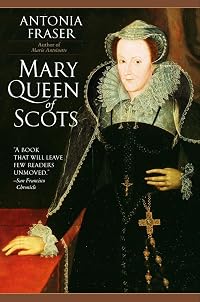
I show more enjoyed Fraser's "Mary, Queen of Scots" (gave it 4 stars) so I'm not sure what the problem is. Except that -- I quit! My time is short, so I'm now ready to move on to the many other books of that era. show less
Since I just finished "The White King" about Charles I, by Leanda de Lisle, I was eager to read a good, solid biography of Cromwell (in addition to the very short biography I'd already read). The book arrived via the Link system, which means that it's sent from outside our library system and can only be renewed once.
The book is a tome of 700 pages, which I didn't know till it arrived. Still, I forged on, knowing I had to read maybe 25 pages a day to finish it. That's a lot of pressure in a busy life. (Sigh.) But, fine... I was ready. On day 2 -- today -- I made it to Page 40. (Another sigh.) The writing is so darn dry that I can't keep my mind on it. That does not pose well for 700 pages.
I show more enjoyed Fraser's "Mary, Queen of Scots" (gave it 4 stars) so I'm not sure what the problem is. Except that -- I quit! My time is short, so I'm now ready to move on to the many other books of that era. show less
Members
- Recently Added By
Lists

In Our Time books
4,934 works; 2 members
Author Information

83+ Works 22,627 Members
Antonia Fraser is the author of numerous internationally bestselling biographies, including "The Six Wives of Henry VIII" and "Cromwell: Our Chief of Men". (Publisher Provided)
Awards and Honors
Distinctions
Series
Belongs to Publisher Series
Work Relationships
Is contained in
Contains
Common Knowledge
- Canonical title
- Cromwell, Our Chief of Men
- Original title
- Cromwell, Our Chief of Men
- Alternate titles
- Cromwell, the Lord Protector
- Original publication date
- 1973
- People/Characters
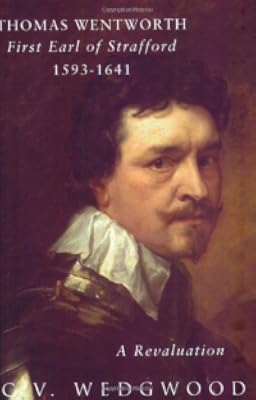
- Oliver Cromwell; Charles I, King of England, Scotland, and Ireland; Charles II, King of England, Scotland, and Ireland; George Bate; Richard Baxter; Thomas Beard (show all 44); Thomas Belayse, 2nd Viscount Fauconberg of Henknowle; Antoine de Bordeaux; John Bradshaw; Sir William Brereton; James Butler, 12th Earl of Ormonde; Archibald Campbell, 1st Marquess and 8th Earl of Argyll; Bridget Cromwell; Elizabeth Cromwell (wife of Oliver Cromwell); Richard Cromwell; John Desborough; Thomas Fairfax, 3rd Lord Fairfax of Cameron; Charles Fleetwood; George Fox; James Hamilton, 1st Duke and 4th Marquess of Hamilton; John Hampden; Henrietta Maria, Queen Consort of England, Scotland, and Ireland; Denzil Holles; Thomas Howard, 14th Earl of Arundel; Edward Hyde, 1st Earl of Clarendon; Henry Ireton; James VI and I, King of Scots and King of England; James II and VII, King of England, Ireland, and Scotland; William Laud, Archbishop of Canterbury; John Lilburne; Edmund Ludlow; Andrew Marvell; John Milton; George Monck, 1st Duke of Albemarle; Edward Montagu, 2nd Earl of Manchester; William Prynne; John Pym; Prince Rupert of the Rhine; Philip Skippon; James Stanley, 7th Earl of Derby; John Thurloe; George Villiers, 1st Duke of Buckingham; George Villiers, 2nd Duke of Buckingham; Thomas Wentworth, 1st Earl of Strafford
- Important places
- London, England, UK
- Important events
- English Civil War; Battle of Marston Moor (1644)
- Epigraph
- Cromwell, our chief of men, who through a cloud
Not of war only, but detractions rude,
Guided by faith and matchless fortitude,
To peace and truth by glorious way hast ploughed...
John Milton - Dedication
- To Hugh
who encouraged and accompanied me with love - First words
- Author's Note -- To write the biography of Oliver Cromwell is admittedly an ambitious undertaking.
In the spring and on the eve of the seventeenth century, a son was born to Robert and Elizabeth Cromwell of Huntingdon. - Last words
- (Click to show. Warning: May contain spoilers.)With all Cromwell's faults, his passions and his plans, it was John Maidston, his own servant, from a traditionally unheroic vantage-point, who spoke the final epitaph on the Protector: "A larger soul hath seldom dwelt in a house of clay."
- Canonical DDC/MDS
- 942.0640924
- Canonical LCC
- DA426
Classifications
- Genres
- History, Nonfiction, Biography & Memoir, General Nonfiction
- DDC/MDS
- 942.0640924 — History & geography History of Europe England and Wales England 1603–1714, House of Stuart and Commonwealth periods Oliver Cromwell 1653-58
- LCC
- DA426 — History of Europe, Asia, Africa and Oceania Great Britain History of Great Britain England History By period Modern, 1485- Civil War and Commonwealth, 1642-1660
- BISAC
Statistics
- Members
- 1,300
- Popularity
- 18,782
- Reviews
- 10
- Rating
- (3.65)
- Languages
- English, Portuguese
- Media
- Paper, Ebook
- ISBNs
- 19
- ASINs
- 23