On This Page
Description
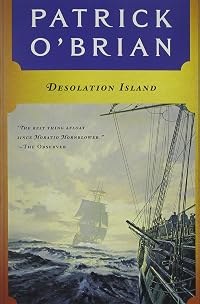
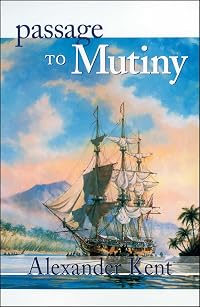
Jack's prize money has set the household accounts aright, but if he continues frittering it on naive extravagances, it will be gone in a fortnight. Fortunately he gets a commission aboard the Leopard, bound for Australia to rescue the hated and captive Captain Bligh.Tags
Recommendations















Member Reviews
Desolation Island is my favorite of the series so far, deploying all the elements of the series with care and precision. At the start of the book, both Maturin and Aubrey are suffering from success on shore. Stephen has become despondent over love, addicted to laudanum, and is in the bad lights of British intelligence. Jack's family is going well, but he's losing money to card-sharks, con-artists, and horse speculators. The solution is simple, a voyage in the HMS Leopard to Australia to either reinstate or remove Governor Bligh, who's suffered another mutiny, and to transport suspect spy Louisa Wogan to Botany Bay.
The main action of the book takes place in the roaring 40s. The Leopard encounters the implacable and competently handled show more Dutch ship of the line Waakzaamheid. Jack flees from a battle that would destroy him, a tense chase that tests every ounce of seamanship both captains have, and ends when a lucky shot demasts the Waakzaamheid and causes it to founder with all hands.
The Leopard is little better off, as Jack is wounded, and the ship itself strikes an iceberg and begins to sink. Half the crew take to the boats, and Jack manages to bring the survivors to the extremely isolated Kerguelen Islands. There Maturin embarks in both naturalism and espionage, and the chance arrival of an American whaler provides a chance to effect needed repairs, and Maturin's schemes, at the cost of Louisa Wogan and a potential diplomatic incident. show less
The main action of the book takes place in the roaring 40s. The Leopard encounters the implacable and competently handled show more Dutch ship of the line Waakzaamheid. Jack flees from a battle that would destroy him, a tense chase that tests every ounce of seamanship both captains have, and ends when a lucky shot demasts the Waakzaamheid and causes it to founder with all hands.
The Leopard is little better off, as Jack is wounded, and the ship itself strikes an iceberg and begins to sink. Half the crew take to the boats, and Jack manages to bring the survivors to the extremely isolated Kerguelen Islands. There Maturin embarks in both naturalism and espionage, and the chance arrival of an American whaler provides a chance to effect needed repairs, and Maturin's schemes, at the cost of Louisa Wogan and a potential diplomatic incident. show less
So I have final and ultimate proof that Patrick O'Brian is good for what ails you, especially when you're reading the Aubrey/Maturin novels in sequence and just happen to come up on one of your favorites just when you need it the most.
I'd been in another sneaky hate spiral, rage-quitting everything I picked up at the slightest provocation, even books to which I'd been looking forward. I was pretty sure this had nothing to do with their quality, or at least not very much, and everything to do with me. After all, I had just had to put my faithful companion of over 11 years, the Collie of Follie, to sleep and there is still a giant border collie-shaped hole in my home and my life and when I'm home and reading I've always had one hand on show more her fur.
But so queue Desolation Island, which is, as I've said already, one of my favorites in the Aubrey Maturin mega-series. This novel brings us one of Jack's most memorable ships (the horrible old Leopard), one of the crew's most interesting chases (fleeing the Dutch ship Waakzaamheid), one of the more interesting missions (to Australia, to help deal with the infamous Rum Rebellion against Governor William "Bounty" Bligh and introducing thereby the theme of mutiny, which delicately looms through the novel's various crises without ever really becoming overt), and one of Stephen's most interesting opponent/victims, Louisa Wogan, she of the slight resemblance to Stephen's faithless love interest, Diana, and of the "absurd gurgling laugh" and of the career as a sort of low-rent Aphra Behn.
It is around Wogan that most of the plot revolves; an American spy who got caught, she is sentenced to be transported to Australia, but the powers that be suspect she still has more valuable information to yield up, so instead of chucking her into an ordinary transportation hulk, she is to go on a Royal Navy ship -- the Leopard, under Jack Aubrey's command -- with enough additional prisoners to give her cover. En route, our man Dr. Stephen Maturin, naval surgeon and intelligence agent, is to be set to trick or otherwise extract this information from her. Sounds simple enough, and should be a piece of cake for our man Maturin, except for one giant fly in the ointment: gaol fever, aka typhus, brought on board by some of Wogan's camouflage-prisoners, quickly fatal to all of the people charged with the prisoners' care, including their doctor, and taking its toll on the Leopard's crew as well!
Nor is this their biggest problem as they make their ill-starred way to Australia. Undermanned and underprepared, they run afoul of the aforementioned Waakzaamheid, which I mention again just because it's fun to type "Waakzaamheid" and other hazards, leading them to the titular island and more peril! But it's all just a vehicle for Jack and Stephen to prove their ingenuity, their fitness to survive and command in their separate spheres, their ability to make do with whatever meager resources are at hand, their sheer awesomeness as characters and Men of the Early Nineteenth Century. Hooray! show less
I'd been in another sneaky hate spiral, rage-quitting everything I picked up at the slightest provocation, even books to which I'd been looking forward. I was pretty sure this had nothing to do with their quality, or at least not very much, and everything to do with me. After all, I had just had to put my faithful companion of over 11 years, the Collie of Follie, to sleep and there is still a giant border collie-shaped hole in my home and my life and when I'm home and reading I've always had one hand on show more her fur.
But so queue Desolation Island, which is, as I've said already, one of my favorites in the Aubrey Maturin mega-series. This novel brings us one of Jack's most memorable ships (the horrible old Leopard), one of the crew's most interesting chases (fleeing the Dutch ship Waakzaamheid), one of the more interesting missions (to Australia, to help deal with the infamous Rum Rebellion against Governor William "Bounty" Bligh and introducing thereby the theme of mutiny, which delicately looms through the novel's various crises without ever really becoming overt), and one of Stephen's most interesting opponent/victims, Louisa Wogan, she of the slight resemblance to Stephen's faithless love interest, Diana, and of the "absurd gurgling laugh" and of the career as a sort of low-rent Aphra Behn.
It is around Wogan that most of the plot revolves; an American spy who got caught, she is sentenced to be transported to Australia, but the powers that be suspect she still has more valuable information to yield up, so instead of chucking her into an ordinary transportation hulk, she is to go on a Royal Navy ship -- the Leopard, under Jack Aubrey's command -- with enough additional prisoners to give her cover. En route, our man Dr. Stephen Maturin, naval surgeon and intelligence agent, is to be set to trick or otherwise extract this information from her. Sounds simple enough, and should be a piece of cake for our man Maturin, except for one giant fly in the ointment: gaol fever, aka typhus, brought on board by some of Wogan's camouflage-prisoners, quickly fatal to all of the people charged with the prisoners' care, including their doctor, and taking its toll on the Leopard's crew as well!
Nor is this their biggest problem as they make their ill-starred way to Australia. Undermanned and underprepared, they run afoul of the aforementioned Waakzaamheid, which I mention again just because it's fun to type "Waakzaamheid" and other hazards, leading them to the titular island and more peril! But it's all just a vehicle for Jack and Stephen to prove their ingenuity, their fitness to survive and command in their separate spheres, their ability to make do with whatever meager resources are at hand, their sheer awesomeness as characters and Men of the Early Nineteenth Century. Hooray! show less
So far one of my favorite of the Aubrey–Maturin series. The tension builds in waves until they tower above our mizzen-peak and we free-fall into the valley, only to be brought up again even higher on the next. Character development may be minimal in the series's titular characters, but each is explored more deeply than before, with a healthy dose of Le Carré-esque thrill throughout. A thumping good read to help one through a bitter winter.
If you could read but one Aubrey/Maturin novel, this is the one to read if you want to learn what happens to allegiances under pressure.
If you could read but one Aubrey/Maturin novel, this is the one to read if you want to learn what happens to allegiances under pressure.
After quite a long break from them (entirely unintentional), I turned this week to Patrick O'Brian's fifth Aubrey-Maturin novel, Desolation Island. Possibly my favorite of the series so far, this one has the daring duo transporting felons to Australia, including a mysteriously alluring female spy and her erstwhile stowaway companion. Naturally, the trip's not a smooth one: an epidemic decimates the crew, a powerful Dutch ship is out for blood, and tremendous natural hazards await in the waters of the Antarctic.
A good mix of action and counter-espionage, with O'Brian's usual good characterization (after a while you can really feel the shifting moods of the crew), and another fun treatment of early natural history, with Maturin taking show more every possible opportunity to observe breeding albatrosses, mosses, and other zoological and botanical sights (a blue whale even makes a cameo appearance).
http://philobiblos.blogspot.com/2010/04/book-review-desolation-island.html show less
A good mix of action and counter-espionage, with O'Brian's usual good characterization (after a while you can really feel the shifting moods of the crew), and another fun treatment of early natural history, with Maturin taking show more every possible opportunity to observe breeding albatrosses, mosses, and other zoological and botanical sights (a blue whale even makes a cameo appearance).
http://philobiblos.blogspot.com/2010/04/book-review-desolation-island.html show less
Desolation Island (the fifth in the series) seems in many ways like the archetypical Aubrey-Maturin novel, and maybe that is why apparently the bulk of the movie Master and Commander (which I have never watched, so I’m going by hearsay here) was based on it. It has everything admirers of the series (and honestly – who, once they have navigated past the rocky cliffs of the first volume, would not admire this series?) love about it, and all of it even more perfectly balanced out against each other than it was in HMS Surprise.
True, there is not as much in the way of naval battles as there was in some other volumes, but there is an edge-of-your-seat naval chase sequence that is likely to leave the reader breathless, there is a lot of show more quality time spend with familiar characters, there are some interesting new ones introduced and there are what I consider O’Brian’s most beautiful descriptions of the sea yet.
The sea is a very rewarding subject for the visual arts, presumably (speaking as someone, mind you, who has not the first clue about the visual arts) because it is on the very borderline between represenation and abstract – the sea is a concrete object which can be rendered naturalistically, but on the other hand it consist of nothing but waves, weather and light, thus forming an almost abstract space. One can (I think) see how that would appeal to a painter, but it is precisely because of those things that make it fascinating to a painter that describing the ocean is something very hard to do for a writer. O’Brian has been very impressive with this from Master & Commander onwards, but I think in Desolation Island he really outdoes himself – whether he describes a quiet day with a calm ocean or a storm in full blast, his tableaux are not just intense and vivid, but there is a certain transparent luminosity, strata of description stacked upon each other like Turner layers colours. The comparison is probably as trite as it is wrong, but on reading O’Brian’s rendering of the sea I could not but help but be reminded of some of J.M.W. Turner’s paintings, it is the same combination of bold, expressive strokes that yet somehow give the impression of fine, closely observed detail.
Many readers seem to have noticed a certain change in the series starting with this volume – mainly, it is ascribed to O’Brian becoming comfortable with the series format, rather than just a sequence of individual novels who just happen to share the same main characters. While I would not go so far as to say that this is wrong, I think that the shift is happening here is slightly different, and actually away from a serial structure. Patrick O’Brian never seemed much concerned about giving a sense of closure to his Aubrey-Maturin novels; with the exception of HMS Surprise all previous novels just stop at some more or less random point, only for the next installment to take up the thread after several months have passed. None of the earlier novels, however, gets quite as cut off in medias res as Desolation Island – while it’s not quite a cliffhanger, nothing at all appears to get resolved, there are countless threads left hanging, and the novel just… stops. Like we were not at the end of a novel, but rather at the end of a chapter, and I think that is exactly where we are – from Desolation Island onwards, this stops being a simple series and turns into one long novel, a (not counting the unfinished 21st volume) 20-volume spanning roman fleuve (or should that be roman mer?). I might be wrong, and this might only turn out to be something of a story arc inside the larger series, but I’ll find out – in any case, this is my favourite Aubrey-Maturin novel so far, and I’m quite excited to find out where else O’Brian will take his heroes. show less
True, there is not as much in the way of naval battles as there was in some other volumes, but there is an edge-of-your-seat naval chase sequence that is likely to leave the reader breathless, there is a lot of show more quality time spend with familiar characters, there are some interesting new ones introduced and there are what I consider O’Brian’s most beautiful descriptions of the sea yet.
The sea is a very rewarding subject for the visual arts, presumably (speaking as someone, mind you, who has not the first clue about the visual arts) because it is on the very borderline between represenation and abstract – the sea is a concrete object which can be rendered naturalistically, but on the other hand it consist of nothing but waves, weather and light, thus forming an almost abstract space. One can (I think) see how that would appeal to a painter, but it is precisely because of those things that make it fascinating to a painter that describing the ocean is something very hard to do for a writer. O’Brian has been very impressive with this from Master & Commander onwards, but I think in Desolation Island he really outdoes himself – whether he describes a quiet day with a calm ocean or a storm in full blast, his tableaux are not just intense and vivid, but there is a certain transparent luminosity, strata of description stacked upon each other like Turner layers colours. The comparison is probably as trite as it is wrong, but on reading O’Brian’s rendering of the sea I could not but help but be reminded of some of J.M.W. Turner’s paintings, it is the same combination of bold, expressive strokes that yet somehow give the impression of fine, closely observed detail.
Many readers seem to have noticed a certain change in the series starting with this volume – mainly, it is ascribed to O’Brian becoming comfortable with the series format, rather than just a sequence of individual novels who just happen to share the same main characters. While I would not go so far as to say that this is wrong, I think that the shift is happening here is slightly different, and actually away from a serial structure. Patrick O’Brian never seemed much concerned about giving a sense of closure to his Aubrey-Maturin novels; with the exception of HMS Surprise all previous novels just stop at some more or less random point, only for the next installment to take up the thread after several months have passed. None of the earlier novels, however, gets quite as cut off in medias res as Desolation Island – while it’s not quite a cliffhanger, nothing at all appears to get resolved, there are countless threads left hanging, and the novel just… stops. Like we were not at the end of a novel, but rather at the end of a chapter, and I think that is exactly where we are – from Desolation Island onwards, this stops being a simple series and turns into one long novel, a (not counting the unfinished 21st volume) 20-volume spanning roman fleuve (or should that be roman mer?). I might be wrong, and this might only turn out to be something of a story arc inside the larger series, but I’ll find out – in any case, this is my favourite Aubrey-Maturin novel so far, and I’m quite excited to find out where else O’Brian will take his heroes. show less
Desolation Island eventually proves itself a solid fifth instalment in the Aubrey-Maturin series, but it does ask a lot of patience from the reader than, in truth, it deserves. The first half of the book is middling build-up, indulging the weakest aspects of the series: Jane Austen-esque societal trifles and Maturin's vague and unintriguing espionage efforts. All of which, crucially and near-fatally, is on land.
It's when Desolation Island breaks out into its natural environment, the open ocean, that it finally breathes. A hunter-and-prey chase between our protagonists' HMS Leopard and a superior Dutch warship is engaging and ends somewhat shockingly, while the maritime episodes that follow, such as the desperate attempt to save a show more sinking ship, are worthy chasers themselves. I felt like the endearing relationship between Captain Aubrey and Dr Maturin wasn't given much opportunity to showcase itself here, and the book's end mid-journey on the titular Desolation Island – just as the yarn was getting interesting – shows the constraints on the book from a storytelling perspective. But there's always enough in an Aubrey-Maturin book to send you windward towards the next in the series. show less
It's when Desolation Island breaks out into its natural environment, the open ocean, that it finally breathes. A hunter-and-prey chase between our protagonists' HMS Leopard and a superior Dutch warship is engaging and ends somewhat shockingly, while the maritime episodes that follow, such as the desperate attempt to save a show more sinking ship, are worthy chasers themselves. I felt like the endearing relationship between Captain Aubrey and Dr Maturin wasn't given much opportunity to showcase itself here, and the book's end mid-journey on the titular Desolation Island – just as the yarn was getting interesting – shows the constraints on the book from a storytelling perspective. But there's always enough in an Aubrey-Maturin book to send you windward towards the next in the series. show less
After some time on land, Captain Aubrey finally gets a ship again--an old ship with a terrible reputation, it's true, but at least it's a ship. With him sail his old friend, Dr. Maturin, and a berth full of convicts. But they rapidly run into problems--gaol fever, then a storm that nearly destroys them, and finally being trapped on an island until they can somehow repair their ship.
The scenes relating to the epidemic aboard ship were enthralling, as was fleeing a Dutchman across a storm that created waves a mile high. Less interesting to me was the subplot between Maturin, the captive spy Mrs. Wogan, and her paramour Haropath. There was something distasteful about the way Maturin regarded and manipulated Mrs. Wogan and Haropath, show more particularly in that I felt I was supposed to compare his manipulations to hers and exalt in his triumph. I didn't find him any more moral than Mrs. Wogan (I believe I was supposed to, but I'm never sure about authorial intent) and so the disdainful tone the narrator (Tull) took in regards to Mrs. Wogan really caught in my craw. As much as I hate it when Maturin is hurt, it would do him (and my affection for him) good if he were less beloved by the characters and less successful in every endeavor (except lurve, of course--can't forget that those awful hussies won't have sex with him, which just shows how awful they are, I guess). Everyone else seems to really enjoy this novel, so maybe I was just in a bad mood or something. But truthfully, I disliked Haropath, hated that I was supposed to feel sorry for him, and am very glad to see the back of him, his Nice Guy role, and the way Maturin acted around his captives. show less
The scenes relating to the epidemic aboard ship were enthralling, as was fleeing a Dutchman across a storm that created waves a mile high. Less interesting to me was the subplot between Maturin, the captive spy Mrs. Wogan, and her paramour Haropath. There was something distasteful about the way Maturin regarded and manipulated Mrs. Wogan and Haropath, show more particularly in that I felt I was supposed to compare his manipulations to hers and exalt in his triumph. I didn't find him any more moral than Mrs. Wogan (I believe I was supposed to, but I'm never sure about authorial intent) and so the disdainful tone the narrator (Tull) took in regards to Mrs. Wogan really caught in my craw. As much as I hate it when Maturin is hurt, it would do him (and my affection for him) good if he were less beloved by the characters and less successful in every endeavor (except lurve, of course--can't forget that those awful hussies won't have sex with him, which just shows how awful they are, I guess). Everyone else seems to really enjoy this novel, so maybe I was just in a bad mood or something. But truthfully, I disliked Haropath, hated that I was supposed to feel sorry for him, and am very glad to see the back of him, his Nice Guy role, and the way Maturin acted around his captives. show less
Members
- Recently Added By
Lists

Best Historical Fiction
620 works; 261 members

Folio Society
831 works; 53 members

Form line of battle - Best historical naval fiction
15 works; 2 members

Books Read in 2016
4,666 works; 199 members

Huxley's reading log 2017
45 works; 1 member

Books Read in 2018
4,360 works; 110 members
Author Information

154+ Works 76,960 Members
Patrick O'Brian is the author of twenty volumes in the highly respected Aubrey/Maturin series of novels. (Publisher Provided) Patrick O'Brien was born in Ireland in 1914. His education included the Sorbonne. O'Brian has produced a variety of works, including biographies of Picasso and Sir Joseph Banks and translations of the novels and memoirs of show more Simone de Beauvoir, but he is best known for the creation of an unlikely pair of Napoleonic War-era heroes in the Aubrey-Maturin Series. British naval officer Jack Aubrey and Irish scholar and physician Stephen Maturin have been featured in more than a novels published in Great Britain (five of which have also appeared in America). He died on January 2, 2000. (Bowker Author Biography) show less
Some Editions
Series

Belongs to Publisher Series
TEAdue [TEA] (852)
Work Relationships
Common Knowledge
- Canonical title*
- Het verlaten eiland
- Original title
- Desolation Island
- Original publication date
- 1978
- People/Characters
- Jack Aubrey; Stephen Maturin; HMS Leopard (50-gun British man-of-war); Louise Wogan; Michael Herapath; Sophie Aubrey (show all 21); Sir Joseph Blaine; Charlotte Aubrey; Fanny Aubrey; George Aubrey; Tom Pullings; William Babbington; Barrett Bonden; Preserved Killick; Andrew Wray; James Grant; John Condom Howard; Winthrop Putnam (captain, La Fayette); La Fayette (US brig / whaler); Waakzaamheid (74-gun Dutch man-of-war); Reuben Hyde
- Important places
- Recife, Pernambuco, Brazil; Desolation Island (Kerguelen Islands); Praia, Santiago, Cabo Verde; Doldrums (South Atlantic Ocean); South Atlantic Ocean (Doldrums); Ashgrove Cottage, Hampshire, England, UK
- Dedication
- For Mary, with love
- First words
- The breakfast-parlour was the most cheerful room in Ashgrove Cottage, and although the builders had ruined the garden with heaps of sand and unslaked lime and bricks, and although the damp walls of the new wing in which this ... (show all)parlour stood still smelt of plaster, the sun poured in, blazing on the covered silver dishes and lighting the face of Sophie Aubrey as she sat there waiting for her husband.
- Quotations
- 'Before you judge a commander,' he said, on his seven-hundredth turn, 'you must know just what he had to command.' [191: Aubrey]
- Last words
- (Click to show. Warning: May contain spoilers.)Some low cries from the La Fayette--'Get a good hold on the lines, ma'am, and mind your petticoats--easy, all, as she rises'--and then, as the brig swung to the breeze and gathered way, Mrs Wogan's laugh, floating clear across the water, very cheerful and amused, more amused than ever, so amused that both Stephen and Bonden chuckled aloud; and now, for the first time, it had a fine triumphant ring.
- Publisher's editor
- Lawrence, Starling
*Some information comes from Common Knowledge in other languages. Click "Edit" for more information.
Classifications
- Genres
- Fiction and Literature, General Fiction, Historical Fiction
- DDC/MDS
- 823.914 — Literature & rhetoric English & Old English literatures English fiction 1900- 1901-1999 1945-1999
- LCC
- PZ3 .O1285 .D — Language and Literature Fiction and juvenile belles lettres Fiction and juvenile belles lettres Fiction in English
- BISAC
Statistics
- Members
- 3,693
- Popularity
- 4,371
- Reviews
- 48
- Rating
- (4.18)
- Languages
- 11 — Czech, Dutch, English, Finnish, French, German, Italian, Norwegian (Bokmål), Spanish, Swedish, Portuguese (Portugal)
- Media
- Paper, Audiobook, Ebook
- ISBNs
- 76
- ASINs
- 23