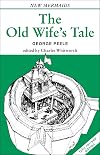
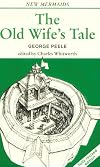
The Old Wives' Tale
by George Peele
On This Page
Tags
Recommendations















Member Reviews
A play, a comedy written in the early 1590's, probably for the court of Queen Elizabeth, but would also have worked on the popular London outdoor theatres. Peele was a playwright who from the evidence available was able to dip into the melting pot of previous drama and come up with something that would provide entertainment across the social spectrum. In the Old Wive's tale he probably felt secure enough in his abilities to distance himself from the classics of antiquity and produce a play that works well enough on it's own terms. Previously in his earlier 'The Arraignment of Paris' he had used a mixture of gods from antiquity and the well worn trope of shepherds from pastoral settings. In the Old Wives Tale he is content to find his show more inspiration from the English folk-lore tradition and with his use of a play within a play able to combine people attached to Queen Elizabeth's court with village people, there is not a god or a shepherd in site.
The play was printed in 1595 describing itself as a "pleasant conceited comedy" but the version we have today is unusually short when compared to other plays from this era and that together with some obvious misalignments in the text points to this as being a cut down version of Peel's original play. However what we have is still something quite original for the time it was written. A fast moving comedy romance that seems to be an amalgam of at least four different stories that come together more or less in a light hearted fantasy.
The play features a play within a play with the old woman Madge passing the night away by telling a "Winter's Tale" to a couple of servants to a courtier who have become lost in the woods. There are in fact three servants Antic, Frolic and Fantastic who become lost and are found by a village blacksmith (Clunch) who takes them home out of pity for their situation. Madge his wife is left to entertain two of them while Clunch shares the only bed with Antic. Madge starts to spin her tale which comes to life and they all witness the tale acted out in front of them. Two brothers of a Princess are searching for their sister who has been kidnapped by the magician Sacrapant. Meanwhile the Spaniard Huanebango is looking for adventure as a knight errant and he teams up with Corebus, a clown. Eumanides another knight errant is also looking to do good and they all meet up with Erestus who is labouring under a spell cast by Sacrapant and speaks in riddles that foretell the future. Eumanides comes across Wiggen who is arguing with some church officials who are charging too much money to bury his friend Jack, Eumanides gives nearly all of his money for the burial and is rewarded by the ghost of Jack who helps him in his quest. Two daughters of the poor man Lampriscus are looking for husbands and they are assisted by the "heads in the stream". A Friar puts in appearance, Harvest Men appear at intervals to sing and play and the Spaniard Huanebango is mocked, for being a braggart, but really because he is Spanish and a Catholic.
It is an Old Wives Tale told and played for its comedy value, it does not need to have a logical plot and in fact what we are left with is a series of sketches that all come together with the defeat of the evil magician Sacrapant. There is no characterisation, but plenty of satire and fantasy, with Peels bubbling text driving it all on in a thoroughly modern way. No moralising, although most of the characters get what they are looking for and the evil magician dies. The play may have been appreciated for it's protestant standpoint that mocks the catholics and there are allusions to other literary figures active at the time, but these would not be easily picked up by the modern reader without the aid of notes. So what we have is a comedy romance that is started by Madge by the immortal words "Once upon a time......" (first recorded use?) and Huanebango boasts to the daughter of Lampriscus (Zantippa) that he will:
True sweetheart, and will royalize thy progeny with my Pedigree:
while earlier Zantippa is not phased by the bodiless heads that appear in the stream:
what am I, then? a woman without a tongue is as a soldier without his weapon: but I'll have my water, and be gone.
Evil Magician, a kidnapped Princesses, a Spanish braggart, a clown, a couple of desperate daughters, the grateful dead (Jack), a mad woman that appears but says nothing, floating heads, a minstrel troupe, knight errants and some officious churchmen all combine to entertain. I enjoyed the version that is free on line from the ElizabethanDrama.org; modern spelling and annotated. 4 stars. show less
The play was printed in 1595 describing itself as a "pleasant conceited comedy" but the version we have today is unusually short when compared to other plays from this era and that together with some obvious misalignments in the text points to this as being a cut down version of Peel's original play. However what we have is still something quite original for the time it was written. A fast moving comedy romance that seems to be an amalgam of at least four different stories that come together more or less in a light hearted fantasy.
The play features a play within a play with the old woman Madge passing the night away by telling a "Winter's Tale" to a couple of servants to a courtier who have become lost in the woods. There are in fact three servants Antic, Frolic and Fantastic who become lost and are found by a village blacksmith (Clunch) who takes them home out of pity for their situation. Madge his wife is left to entertain two of them while Clunch shares the only bed with Antic. Madge starts to spin her tale which comes to life and they all witness the tale acted out in front of them. Two brothers of a Princess are searching for their sister who has been kidnapped by the magician Sacrapant. Meanwhile the Spaniard Huanebango is looking for adventure as a knight errant and he teams up with Corebus, a clown. Eumanides another knight errant is also looking to do good and they all meet up with Erestus who is labouring under a spell cast by Sacrapant and speaks in riddles that foretell the future. Eumanides comes across Wiggen who is arguing with some church officials who are charging too much money to bury his friend Jack, Eumanides gives nearly all of his money for the burial and is rewarded by the ghost of Jack who helps him in his quest. Two daughters of the poor man Lampriscus are looking for husbands and they are assisted by the "heads in the stream". A Friar puts in appearance, Harvest Men appear at intervals to sing and play and the Spaniard Huanebango is mocked, for being a braggart, but really because he is Spanish and a Catholic.
It is an Old Wives Tale told and played for its comedy value, it does not need to have a logical plot and in fact what we are left with is a series of sketches that all come together with the defeat of the evil magician Sacrapant. There is no characterisation, but plenty of satire and fantasy, with Peels bubbling text driving it all on in a thoroughly modern way. No moralising, although most of the characters get what they are looking for and the evil magician dies. The play may have been appreciated for it's protestant standpoint that mocks the catholics and there are allusions to other literary figures active at the time, but these would not be easily picked up by the modern reader without the aid of notes. So what we have is a comedy romance that is started by Madge by the immortal words "Once upon a time......" (first recorded use?) and Huanebango boasts to the daughter of Lampriscus (Zantippa) that he will:
True sweetheart, and will royalize thy progeny with my Pedigree:
while earlier Zantippa is not phased by the bodiless heads that appear in the stream:
what am I, then? a woman without a tongue is as a soldier without his weapon: but I'll have my water, and be gone.
Evil Magician, a kidnapped Princesses, a Spanish braggart, a clown, a couple of desperate daughters, the grateful dead (Jack), a mad woman that appears but says nothing, floating heads, a minstrel troupe, knight errants and some officious churchmen all combine to entertain. I enjoyed the version that is free on line from the ElizabethanDrama.org; modern spelling and annotated. 4 stars. show less
Members
- Recently Added By
Lists

Best Early Modern Plays Not By Shakespeare
78 works; 8 members
Author Information
30+ Works 3,295 Members
Peele wrote a variety of plays: Edward I, an English Chronicle history; The Battle of Alcazar, a foreign history; The Old Wives' Tale (1595), a folkloric narration; The Arraignment of Paris (1584), a mythological pastoral; and David and Bethsabe (1599), a biblical tragedy. Peele is predominantly a courtly dramatist best known for his fluent show more lyrical gifts. (Bowker Author Biography) show less
Some Editions
Series
Belongs to Publisher Series
Work Relationships
Is contained in
Common Knowledge
- Canonical title
- The Old Wives' Tale
- Alternate titles
- The Old Wife's Tale
Classifications
Statistics
- Members
- 28
- Popularity
- 980,481
- Reviews
- 1
- Rating
- (4.00)
- Languages
- English
- Media
- Paper
- ISBNs
- 8