
George Chapman (1) (–1634)
Author of The Roaring Girl and Other City Comedies [The Shoemaker's Holiday, Every Man In His Humour, Eastward Ho!] (Oxford Englis
For other authors named George Chapman, see the disambiguation page.
About the Author
George Chapman had a reputation in his own time for being a learned writer. On the payroll of the Elizabethan impresario, Philip Henslowe, he wrote for the Admiral's Men and was imprisoned with Ben Jonson for supposedly seditious theater. He translated the Iliad and Odyssey of Homer and completed show more Hero and Leander by Christopher Marlowe. Chapman's works are full of humanist scholarship from classical sources, while his tragedies are mostly based on contemporary French history. In Bussy d'Ambois (1607), the best known of this series, the hero is the aspiring, stoic man who is doomed to extinction in a crass world. Chapman's comedies, which are much more lighthearted, experiment in the comedy of "humours" that Jonson was to perfect. The plays are mostly written for the boy companies. (Bowker Author Biography) show less
Image credit: wikipedia
Works by George Chapman
The Roaring Girl and Other City Comedies [The Shoemaker's Holiday, Every Man In His Humour, Eastward Ho!] (Oxford Englis (2001) 100 copies, 1 review
Delphi Complete Poetry of George Chapman (Illustrated) (Delphi Poets Series Book 71) (2017) 9 copies
The Plays of George Chapman: The Tragedies with Sir Gyles Goosecappe: A Critical Edition (1987) 3 copies
Poems and minor translations 3 copies
May-day, a comedie 3 copies
The memorable masque 3 copies
Homer, 2 vols. 2 copies
Homer's Odyssey, 2 vols. 2 copies
Homer's Hymns and Epigrams 2 copies
The warres of Pompey and Caesar 2 copies
All fooles, and The gentleman usher 2 copies
Regents Renaissance Drama 1 copy
The Iliad by Homer 1 copy
Monsieur d'Olive, a comedie 1 copy
Charlemagne; or, The distracted emperor — Attributed author — 1 copy
Old city manners : a comedy 1 copy
Dramatic Works vol 3 1 copy
Comedies, Tragedies, Poems 1 copy
Associated Works
Christopher Marlowe: The Complete Poems and Translations (1971) — Contributor, some editions — 311 copies, 4 reviews
Four Revenge Tragedies: The Spanish Tragedy; The Revenger's Tragedy; The Revenge of Bussy D'Ambois; and The Atheist's Tr (1995) — Contributor — 217 copies, 1 review
Court Masques: Jacobean and Caroline Entertainments, 1605-1640 (World's Classics) (1995) — Author, some editions — 71 copies
Chapman's Homeric Hymns and Other Homerica (Bollingen) (2008) — Translator, some editions — 25 copies
The ball, a comedy, by G. Chapman and J. Shirly — Attributed author, some editions — 4 copies
Alphonsus, emperor of Germany, reprinted in facsimile from the edition of 1654 (1913) — attributed author, some editions — 3 copies
Robert Chester's "Loves martyr, or, Rosalins complaint" : (1601) with its supplement, "Diverse poeticall essaies" on the Turtle and phoenix — Contributor — 3 copies
Tvvo VVise Men and all the rest fooles : Or A comicall morall, censuring the follies of this age, as it hath beene diverse times acted. Anno. 1619 — attributed author, some editions — 2 copies
The Ancient British drama, in three volumes — Contributor — 2 copies
The Iliad (Chapman v. 1) — Translator — 1 copy
The Iliad (Chapman - V. 2) — Translator — 1 copy
The Odyssey (Chapman - v. 2) — Translator — 1 copy
The Odysseys of Homer Translated According to the Greek, By George Chapman Volumes II (1897) — Translator, some editions — 1 copy
Works Of George Chapman; Homer's Iliad And Odyssey Volume 3 (1875) — Translator, some editions — 1 copy
Tagged
Common Knowledge
- Birthdate
- 1559 (circa)
- Date of death
- 1634-05-12
- Gender
- male
- Education
- University of Oxford
- Occupations
- poet
dramatist
translator - Nationality
- England
- Birthplace
- Hitchin, Hertfordshire, England
- Places of residence
- Hitchin, Hertfordshire, England
London, England - Place of death
- London, England
- Associated Place (for map)
- London, England
Members
Discussions
Iliad by George Chapman in Ancient History (December 2016)
Reviews

Last year I read Chapman's Shadow of Night consisting of two poems that celebrate the intellect and asserting the superiority of darkness over light. I enjoyed his robust style, which sets him apart from the more typical Elizabethan love sonneteers. In Ovid's Banquet of Sense (published 1595) he imagines the famous Roman classical poet Ovid, spying on a noble lady taking a bath, in a secluded pool, but here is Chapmans own introduction to the poem:
Ovid, newly enamoured of Julia, daughter to show more Octavius Augustus Caesar, after by him called Corinna, secretly conveyed himself into a garden of the Emperor's court, in an arbour whereof Corinna was bathing, playing upon her lute and singing ; which Ovid
overhearing was exceedingly pleased with the sweetness of her voice, and
' to himself uttered the comfort he conceived in his sense of Hearing.
Then the odours she used in her bath breathing a rich savour, he expressed the joy he felt in his sense of Smelling.
Thus growing more deeply enamoured in great contentment with himself, he ventures to see her in the pride of her nakedness ; which doing by stealth, he discovered the comfort he conceived in Seeing, and the glory of her beauty. Not yet satisfied, he useth all his art to make known his being there without her offence ; or, being necessarily offended, to appease her, which done, he entreats a kiss, to serve for satisfaction of his Taste, which he obtains. Then proceeds he to entreaty for the fifth sense, and there is interrupted.
Chapman takes the reader through the five senses; Hearing, smelling, seeing, touching, tasting. There is no no doubt that this is an erotic poem, what is more questionable is Chapman's own moral message. He states in a letter to his patron that he "hates the profane multitude and only consecrates his strange poems to those searching spirits whom learning have made noble, and nobility sacred. In my opinion (he says) that with a little endeavour searched, adds a kind of majesty to poetry and is better than any cobbler might sing to his patch. Obscurity in affection for words and indigested conceits, is pedantical and childish: but where it is shroudeth itself in the heart of the subject uttered with fitness of figure and expressive epithets, with that darkness will I still labour to be shadowed". His poetry then is not going to be simple, and his introduction serves as a guide through the 117, nine line stanzas.
Ovid hears Corinna's song first of all and it is a song about love, she says that it is better to despise than to love, better to be beautiful than to be wise; it is the sight of beauty that will win over the souls of admirers rather than any intellectual sympathy. He then picks up the scent of the many unguents that Corinna is using for bathing, which delight his senses. He must see her and peers through the bushes.
Now as she lay attired in nakedness,
His eye did carve him on that feast of
feasts ; ~-
" Sweet* fields of life which Death's foot
dare not press,
Flower'd with th' unbroken waves of my
love's breasts,
Unbroke by depth of those her beauty's
floods :
See where, with bent of gold curl'd into
nests
In her head's grove, the spring-bird
lameat broods ;
Her body doth present those fields of
peace,
Where souls are feasted with the soul of
ease.
She sees his face in the bushes and he rushes over towards her, she is frightened at first, but he speaks to calm her down and then a conversation develops, where Ovid uses all his skills in seduction to beg for a kiss. Here, the poem takes on added life, a quickening, when Ovid rushes over and the two lovers engage in conversation. Corinna hesitates pointing out that she is of noble birth and far above him in the order. Ovid must use all his intellect to get what he wants and it is eventually granted. He then wants to go further and Corinna undoes the upper part of the garment so that he can feel her breasts. It is at this point in the proceedings that they are interrupted by other bathers. It has indeed been a banquet of the senses and Chapman says towards the end of the poem:
Loue is a wanton famine, rich in foode,
But with a richer appetite controld,
An argument in figure and in Moode
Yet hates all arguments: disputing still
For sence, gainst Reason, with a senceless will.
George Chapman 1559-11634 was an English dramatist, translator and poet. He was a classical scholar. Chapman is best remembered for his translations of Homer's Iliad and Odyssey. He is the subject of one the most famous early sonnets of John Keats [On First Looking Into Chapman's Homer] (you know the one that starts with 'Much have I travelled in the realms of gold'). In that sonnet Keats says he heard "Chapman speak out loud and bold". It would seem that Chapman does not do subtle, and although his poetry bears much witness to his classical background there is no toning down of the language: not so much of the polite poetic conventions that can be found in most Elizabethan poets. We are back in the world of Christopher Marlow. I enjoyed my read of The Banquet of Sense, the poet does take us on some deviations, his meaning is not always clear and the syntax can be clumsy, but it is poetry full of life and I loved it - 5 stars. show less
Ovid, newly enamoured of Julia, daughter to show more Octavius Augustus Caesar, after by him called Corinna, secretly conveyed himself into a garden of the Emperor's court, in an arbour whereof Corinna was bathing, playing upon her lute and singing ; which Ovid
overhearing was exceedingly pleased with the sweetness of her voice, and
' to himself uttered the comfort he conceived in his sense of Hearing.
Then the odours she used in her bath breathing a rich savour, he expressed the joy he felt in his sense of Smelling.
Thus growing more deeply enamoured in great contentment with himself, he ventures to see her in the pride of her nakedness ; which doing by stealth, he discovered the comfort he conceived in Seeing, and the glory of her beauty. Not yet satisfied, he useth all his art to make known his being there without her offence ; or, being necessarily offended, to appease her, which done, he entreats a kiss, to serve for satisfaction of his Taste, which he obtains. Then proceeds he to entreaty for the fifth sense, and there is interrupted.
Chapman takes the reader through the five senses; Hearing, smelling, seeing, touching, tasting. There is no no doubt that this is an erotic poem, what is more questionable is Chapman's own moral message. He states in a letter to his patron that he "hates the profane multitude and only consecrates his strange poems to those searching spirits whom learning have made noble, and nobility sacred. In my opinion (he says) that with a little endeavour searched, adds a kind of majesty to poetry and is better than any cobbler might sing to his patch. Obscurity in affection for words and indigested conceits, is pedantical and childish: but where it is shroudeth itself in the heart of the subject uttered with fitness of figure and expressive epithets, with that darkness will I still labour to be shadowed". His poetry then is not going to be simple, and his introduction serves as a guide through the 117, nine line stanzas.
Ovid hears Corinna's song first of all and it is a song about love, she says that it is better to despise than to love, better to be beautiful than to be wise; it is the sight of beauty that will win over the souls of admirers rather than any intellectual sympathy. He then picks up the scent of the many unguents that Corinna is using for bathing, which delight his senses. He must see her and peers through the bushes.
Now as she lay attired in nakedness,
His eye did carve him on that feast of
feasts ; ~-
" Sweet* fields of life which Death's foot
dare not press,
Flower'd with th' unbroken waves of my
love's breasts,
Unbroke by depth of those her beauty's
floods :
See where, with bent of gold curl'd into
nests
In her head's grove, the spring-bird
lameat broods ;
Her body doth present those fields of
peace,
Where souls are feasted with the soul of
ease.
She sees his face in the bushes and he rushes over towards her, she is frightened at first, but he speaks to calm her down and then a conversation develops, where Ovid uses all his skills in seduction to beg for a kiss. Here, the poem takes on added life, a quickening, when Ovid rushes over and the two lovers engage in conversation. Corinna hesitates pointing out that she is of noble birth and far above him in the order. Ovid must use all his intellect to get what he wants and it is eventually granted. He then wants to go further and Corinna undoes the upper part of the garment so that he can feel her breasts. It is at this point in the proceedings that they are interrupted by other bathers. It has indeed been a banquet of the senses and Chapman says towards the end of the poem:
Loue is a wanton famine, rich in foode,
But with a richer appetite controld,
An argument in figure and in Moode
Yet hates all arguments: disputing still
For sence, gainst Reason, with a senceless will.
George Chapman 1559-11634 was an English dramatist, translator and poet. He was a classical scholar. Chapman is best remembered for his translations of Homer's Iliad and Odyssey. He is the subject of one the most famous early sonnets of John Keats [On First Looking Into Chapman's Homer] (you know the one that starts with 'Much have I travelled in the realms of gold'). In that sonnet Keats says he heard "Chapman speak out loud and bold". It would seem that Chapman does not do subtle, and although his poetry bears much witness to his classical background there is no toning down of the language: not so much of the polite poetic conventions that can be found in most Elizabethan poets. We are back in the world of Christopher Marlow. I enjoyed my read of The Banquet of Sense, the poet does take us on some deviations, his meaning is not always clear and the syntax can be clumsy, but it is poetry full of life and I loved it - 5 stars. show less
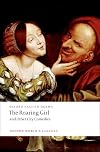
In 1611 two experienced London playwrights collaborated on a new play dramatizing a real-life contemporary wonder, Mary Frith, known as Moll Cutpurse, "a sometime thief and notorious cross-dresser" (ix). In Feb 2023 at the Blackfriars theater in Staunton VA a group of enthusiastic amateur players offered a staged reading of the rarely performed play, prompting me to revisit it. It's at once clear why it has become popular in recent years, after almost 4 centuries of neglect.
The real-life show more Frith was charged with theft and a host of notoriously male behaviors - drunkenness, swearing, dueling, swaggering, and cross-dressing. Middleton and Dekker's Moll affects some of those behaviors but is presented sympathetically as an outspoken free-thinker transcending the rigid constraints of her class and gender. Such froward behavior attracts some undesired admirers to this "maddest, fantastical'st girl" (2.1.192) for her "heroic spirit and masculine womanhood" (2.1.336-7), but much of the play rehearses the knee-jerk attacks on one who "strays so from her kind [that] Nature repents she made her" (1.2.214-5). Her non-binary gender presentation is at the heart of her offense: "It is a thing One knows not how to name; . . . 'Tis woman more than man, Man more than woman, and . . . The sun gives her two shadows to one shape" (1.2.129-33). The fact that such attacks come from the play's senex, Sir Alexander Wengrave, who blocks a heterosexual pair of true lovers from wedded bliss, makes clear where the plot's sympathies rest.
The play offers Moll several memorable bits of stage business. Twice in act 3 when in male garb she draws her weapon to engage with and defeat male opponents. Then act 4 finds her placing a viol da gamba between her trousered legs to perform two songs about transgressive wives, and in act 5 she engages in a bout of "canting," a slang duel that ends with yet another song.
Her verbal climax comes earlier, in an articulate attack on a would-be seducer, the poorly endowed Laxton (lacks stone): "Thou'rt one of those That thinks each woman thy fond flexible whore. . . . What durst move you, sir, To think me whorish? . . . "Cause, you'll say, I'm given to sport, I'm often merry, jest? Had mirth no kindred in the world but lust? . . . I scorn to prostitute myself to a man, I that can prostitute a man to me. . . she that has wit and spirit May scorn to live beholding to her body for meat Or for apparel . . . Base is the mind that kneels unto her body . . . My spirit shall be mistress of this house As long as I have time in't" (3.1.72-140).
Though Moll is the play's featured character, her part in the love-plot is relatively small. It is mostly limited to unmasking plotters and dodging entrapment while allying with the young lover Sebastian Wengrave to cozen his father and marry his true love Mary (about whom the roaring girl says "I pitied her for name's sake, that a Moll Should be so crossed in love" (4.1.68-9). Much of the play is taken up with the misadventures of two city gallants, whose attempts to "wap, niggle and fadoodle" (5.1.189-95) with two housewives and bamboozle their husbands are thwarted by the wives themselves (as in Shakespeare's Merry Wives).
In the end, though this city comedy flirts with transgression at every turn, it ends up affirming heterosexual marriage and wifely wiles. Sir Alexander the senex apologizes for his errors and praises Moll as "a good wench" and the foxy housewives as "kind gentlewomen, whose sparkling presence Are glories set in marriage" (5.2.268-9). Perhaps the chief roarer speaks for her sisters as well as herself when she proclaims, "I please myself, and care not else who loves me" (5.1.332). show less
The real-life show more Frith was charged with theft and a host of notoriously male behaviors - drunkenness, swearing, dueling, swaggering, and cross-dressing. Middleton and Dekker's Moll affects some of those behaviors but is presented sympathetically as an outspoken free-thinker transcending the rigid constraints of her class and gender. Such froward behavior attracts some undesired admirers to this "maddest, fantastical'st girl" (2.1.192) for her "heroic spirit and masculine womanhood" (2.1.336-7), but much of the play rehearses the knee-jerk attacks on one who "strays so from her kind [that] Nature repents she made her" (1.2.214-5). Her non-binary gender presentation is at the heart of her offense: "It is a thing One knows not how to name; . . . 'Tis woman more than man, Man more than woman, and . . . The sun gives her two shadows to one shape" (1.2.129-33). The fact that such attacks come from the play's senex, Sir Alexander Wengrave, who blocks a heterosexual pair of true lovers from wedded bliss, makes clear where the plot's sympathies rest.
The play offers Moll several memorable bits of stage business. Twice in act 3 when in male garb she draws her weapon to engage with and defeat male opponents. Then act 4 finds her placing a viol da gamba between her trousered legs to perform two songs about transgressive wives, and in act 5 she engages in a bout of "canting," a slang duel that ends with yet another song.
Her verbal climax comes earlier, in an articulate attack on a would-be seducer, the poorly endowed Laxton (lacks stone): "Thou'rt one of those That thinks each woman thy fond flexible whore. . . . What durst move you, sir, To think me whorish? . . . "Cause, you'll say, I'm given to sport, I'm often merry, jest? Had mirth no kindred in the world but lust? . . . I scorn to prostitute myself to a man, I that can prostitute a man to me. . . she that has wit and spirit May scorn to live beholding to her body for meat Or for apparel . . . Base is the mind that kneels unto her body . . . My spirit shall be mistress of this house As long as I have time in't" (3.1.72-140).
Though Moll is the play's featured character, her part in the love-plot is relatively small. It is mostly limited to unmasking plotters and dodging entrapment while allying with the young lover Sebastian Wengrave to cozen his father and marry his true love Mary (about whom the roaring girl says "I pitied her for name's sake, that a Moll Should be so crossed in love" (4.1.68-9). Much of the play is taken up with the misadventures of two city gallants, whose attempts to "wap, niggle and fadoodle" (5.1.189-95) with two housewives and bamboozle their husbands are thwarted by the wives themselves (as in Shakespeare's Merry Wives).
In the end, though this city comedy flirts with transgression at every turn, it ends up affirming heterosexual marriage and wifely wiles. Sir Alexander the senex apologizes for his errors and praises Moll as "a good wench" and the foxy housewives as "kind gentlewomen, whose sparkling presence Are glories set in marriage" (5.2.268-9). Perhaps the chief roarer speaks for her sisters as well as herself when she proclaims, "I please myself, and care not else who loves me" (5.1.332). show less

Best known for the mockery of Scotsd which got the authors in trouble with the government, but it is a reasonably funny play.

All fools -- Bussy D'Ambois -- The revenge of Bussy D'Ambois -- The conspiracy of Charles Duke of Byron -- The tragedy of Charles Duke of Byron
Lists
You May Also Like


Associated Authors
Statistics
- Works
- 49
- Also by
- 23
- Members
- 503
- Popularity
- #49,234
- Rating
- 4.0
- Reviews
- 4
- ISBNs
- 88
- Languages
- 3
