
Thomas Dekker (1) (–1632)
Author of The Shoemaker's Holiday
For other authors named Thomas Dekker, see the disambiguation page.
About the Author
Dekker was a popular, prolific writer who had a hand in at least 40 plays, which he wrote for Philip Henslowe, the theatrical entrepreneur. In the plays that seem to be completely by Dekker, he shows himself as a realist of London life, but even his most realistic plays have a strong undertone of show more romantic themes and aspirations. The Shoemaker's Holiday (1600), for example, glorifies the gentle craft of the shoemaker, and the character Simon Eyre speaks in an extravagant, hyperbolic style that is far from realistic. Dekker also wrote such prose pamphlets as the Bellman of London (1608) and The Gull's Hornbook (1609), the latter an entertaining account of the behavior of a country yokel and dupe in London. He died in debt. (Bowker Author Biography) show less
Works by Thomas Dekker
The Roaring Girl and Other City Comedies [The Shoemaker's Holiday, Every Man In His Humour, Eastward Ho!] (Oxford Englis (2001) 100 copies, 1 review
A Woman Killed with Kindness and Other Domestic Plays (Oxford World's Classics) (2008) 44 copies, 1 review
Delphi Complete Dramatic Works of Thomas Dekker (Illustrated) (Delphi Series Ten Book 10) (2019) 7 copies
The Welsh embassador 5 copies
The Honest Whore, Part II 5 copies
The Honest Whore, Part I 5 copies
A Critical Old-spelling Edition of Thomas Dekker's "Blurt, Master Constable" (1602) (Salzburg Studies: Jacobean Drama St (1979) 3 copies
The familie of loue Acted by the children of his Maiesties Reuells (1979) — probable original author — 3 copies, 1 review
North-VVard Hoe 2 copies
The Non-dramatic works of Thomas Dekker, volume I : Canaan's Calamitie; The Wonderful Yeare; The Batchelars Banquet (2008) 1 copy
Lanthorne and candle-light, or the bell-mans second nights walke, in which hee brings to light ... 1 copy
Old Fortunatus, 1600 1 copy
The Dramatic Works Of Thomas Dekker V2: The Honest Whore; The Whore Of Babylon; Westward Hoe (2007) 1 copy
The cold yeare, 1614. A deepe snow: in which men and cattell have perished ... Written dialogue-wise, etc (1615) 1 copy
Thomas Dekker: The Wonderful Year; The Gull's Horn-Book; Penny-Wise, Pound-Foolish; English Villainies... (1968) 1 copy
A concordance to the dramatic works of Thomas Dekker, 5 volumes — Contributor — 1 copy
London's Tempe 1 copy
Britannia's Honour 1 copy
The Sun's Darling 1 copy
Troia-Nova Triumphans 1 copy
Satiromastix 1 copy
The owles almanacke 1 copy
Wonderful Year 1603 1 copy
Associated Works
Elizabethan Drama, Volume II: Dekker; Jonson; Beaumont and Fletcher; Webster; Massinger (2004) — Contributor — 218 copies
Three Jacobean Witchcraft Plays: Sophonsiba, The Witch, The Witch of Edmonton (1986) — Contributor — 41 copies
"Nest of Ninnies" and Other English Jestbooks of the Seventeenth Century (1970) — Contributor — 7 copies
The Ancient British drama, in three volumes — Contributor — 2 copies
The English scholar's library of old and modern works, 3 of 4 volumes — Contributor — 1 copy
Characters : together with poems, news, edicts, and paradoxes based on the eleventh edition of A wife now the widow of Sir Thomas Overbury (2002) — Contributor, some editions — 1 copy
Illustrations of Old English Literature. 3 Volumes — Contributor — 1 copy
Tagged
Common Knowledge
- Canonical name
- Dekker, Thomas
- Birthdate
- ca. 1572
- Date of death
- 1632-08-25
- Gender
- male
- Occupations
- playwright
Pamphleteer - Nationality
- UK
- Birthplace
- London, England
- Places of residence
- London, England
- Place of death
- London, England
- Burial location
- St. James's Church, Clerkenwell, London, England, UK
- Map Location
- England, UK
Members
Discussions
The Witch of Edmonton in The Globe: Shakespeare, his Contemporaries, and Context (February 2022)
Reviews
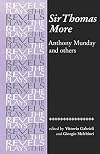
[Sir Thomas More: A play by Anthony Munday and Others]: revised by Henry Chettle, Thomas Dekker, Thomas Heywood and William Shakespeare.
As the title suggests this Elizabethan play underwent a complicated history of production and although a fair copy was eventually made by Anthony Munday, apparently it never made it onto a London Stage. Although many hands were involved the actual finished item (if it was ever finished) reads very well indeed. Claims have been made that it is one of the show more best of the Elizabethan history plays and the form in which it can be read today demonstrates that it is stage worthy: ie that it would work well enough without major adjustments. In addition to this there are three pages of the manuscripts that have been confidently identified by some, as being by William Shakespeare's own hand and these seem to be the only pages of a manuscript written by Shakespeare that have come down to us. All this points to it being a bit of a mystery as to why it is not better known.
The play based on incidents in the life of Sir Thomas More falls fairly neatly into two parts; depicting his rise to power and then his dramatic fall and execution. The intense anti-foreigner feeling expressed in the first part of the play more than echoes the anti immigrant convictions of the majority of people in The UK, in America and in Europe today, perhaps it's topicality is one aspect of it's failure for being considered for a serious modern revival. Governments today are still shy of appearing as out and out racists, while at the same time encouraging their people to be so. In Henry VII's England the people of London rioted against the foreigners living in the city, they lived in enclaves that were seen to have economic and social advantages over the native population. In the play this comes down to an incident where foreigners are forcibly taking food from a London artisan, who is not deemed worthy enough to appreciate the delicacies and then also taking his wife into the bargain. Preachers at Spitalfields encourage the anger against the foreigners and it is Thomas More's intervention when he was an under Sheriff that persuaded the rioters to return to their homes. Thomas More is knighted and he becomes chancellor to king Henry VIII. This part of the story is skilfully conflated by the authors and there follows a scene midway through the play where Sir Thomas is entertaining dignitaries at his London home and provides a troupe of players to provide the entertainment. This play within a play entitled "the marriage of wit and wisdom" provides a sort of hiatus in the proceedings. It is included to demonstrate the wit of Sir Thomas, because the troupe are a player short and Sir Thomas himself offers to play a part. The final two acts of the five act play, show More's fall from power when he refuses to sign the articles that make the King the supreme head of the church. This part of the play shows Sir Thomas as a martyr to his faith. Going to his execution with equanimity joking to the last and confident in himself and his family. It is poignant but without actually saying so points to the king as merciless and a villain.
Sir Thomas More was one of the few Elizabethan plays to be based on recent history; Elizabeth I was Henry VIII 's daughter and so it was no surprise that the play would run into censorship problems and it is well documented that the Master of the Revels Edmund Tilney; became involved and sent the original copy back for rewriting. Anthony Munday was a fierce anti-catholic involved in priest hunting and so it would seem that he would make the necessary adjustments, but although some were made, Sir Thomas More is still very much the hero. Perhaps then it was never politically suitable to be played during Elizabeths reign. It might be more ( the play is full of puns) appropriate today with its anti foreigner messages.
Act scene iii is the portion written in Shakespeare's hand and contains the speech of Thomas More that quells the riot. It certainly gives no quarter to the rioters, reminding them that they are the kings subjects, under his protection and reminding them that they owe allegiance to the king. More is able to convince them to desist, because he is seen as an honest man and one who does not necessarily wish to take revenge on the common man. The writing does not particularly stand out from all that has gone before or all that follows, because the writing is of a good standard throughout. This modern spelling edition makes for an enjoyable and entertaining read for anyone interested in Elizabethan drama.
I read the Revels Plays edition edited by Vittorio Gabrieli and Giorgio Melchiori, which proves to be an excellent guide for the interested reader. The introduction, painstakingly yet fairly precisely takes the reader through all the amendments and interventions to Anthony Munday's fair copy. It surmises on the date order of the amendments and the probable reasons as to why they were made. It is an excellent example of its kind, holding the reader interest and giving food for thought on possible additional reading or enquiry. The notes that appear on the same page as the text are detailed and support the information given in the introduction. There are appendices that show amendments that were never included and also details of the source material that was used. It really is an excellent package and enhanced my reading of the play, which is one where the history of the production is as fascinating as the play itself. All in all a five star read. show less
As the title suggests this Elizabethan play underwent a complicated history of production and although a fair copy was eventually made by Anthony Munday, apparently it never made it onto a London Stage. Although many hands were involved the actual finished item (if it was ever finished) reads very well indeed. Claims have been made that it is one of the show more best of the Elizabethan history plays and the form in which it can be read today demonstrates that it is stage worthy: ie that it would work well enough without major adjustments. In addition to this there are three pages of the manuscripts that have been confidently identified by some, as being by William Shakespeare's own hand and these seem to be the only pages of a manuscript written by Shakespeare that have come down to us. All this points to it being a bit of a mystery as to why it is not better known.
The play based on incidents in the life of Sir Thomas More falls fairly neatly into two parts; depicting his rise to power and then his dramatic fall and execution. The intense anti-foreigner feeling expressed in the first part of the play more than echoes the anti immigrant convictions of the majority of people in The UK, in America and in Europe today, perhaps it's topicality is one aspect of it's failure for being considered for a serious modern revival. Governments today are still shy of appearing as out and out racists, while at the same time encouraging their people to be so. In Henry VII's England the people of London rioted against the foreigners living in the city, they lived in enclaves that were seen to have economic and social advantages over the native population. In the play this comes down to an incident where foreigners are forcibly taking food from a London artisan, who is not deemed worthy enough to appreciate the delicacies and then also taking his wife into the bargain. Preachers at Spitalfields encourage the anger against the foreigners and it is Thomas More's intervention when he was an under Sheriff that persuaded the rioters to return to their homes. Thomas More is knighted and he becomes chancellor to king Henry VIII. This part of the story is skilfully conflated by the authors and there follows a scene midway through the play where Sir Thomas is entertaining dignitaries at his London home and provides a troupe of players to provide the entertainment. This play within a play entitled "the marriage of wit and wisdom" provides a sort of hiatus in the proceedings. It is included to demonstrate the wit of Sir Thomas, because the troupe are a player short and Sir Thomas himself offers to play a part. The final two acts of the five act play, show More's fall from power when he refuses to sign the articles that make the King the supreme head of the church. This part of the play shows Sir Thomas as a martyr to his faith. Going to his execution with equanimity joking to the last and confident in himself and his family. It is poignant but without actually saying so points to the king as merciless and a villain.
Sir Thomas More was one of the few Elizabethan plays to be based on recent history; Elizabeth I was Henry VIII 's daughter and so it was no surprise that the play would run into censorship problems and it is well documented that the Master of the Revels Edmund Tilney; became involved and sent the original copy back for rewriting. Anthony Munday was a fierce anti-catholic involved in priest hunting and so it would seem that he would make the necessary adjustments, but although some were made, Sir Thomas More is still very much the hero. Perhaps then it was never politically suitable to be played during Elizabeths reign. It might be more ( the play is full of puns) appropriate today with its anti foreigner messages.
Act scene iii is the portion written in Shakespeare's hand and contains the speech of Thomas More that quells the riot. It certainly gives no quarter to the rioters, reminding them that they are the kings subjects, under his protection and reminding them that they owe allegiance to the king. More is able to convince them to desist, because he is seen as an honest man and one who does not necessarily wish to take revenge on the common man. The writing does not particularly stand out from all that has gone before or all that follows, because the writing is of a good standard throughout. This modern spelling edition makes for an enjoyable and entertaining read for anyone interested in Elizabethan drama.
I read the Revels Plays edition edited by Vittorio Gabrieli and Giorgio Melchiori, which proves to be an excellent guide for the interested reader. The introduction, painstakingly yet fairly precisely takes the reader through all the amendments and interventions to Anthony Munday's fair copy. It surmises on the date order of the amendments and the probable reasons as to why they were made. It is an excellent example of its kind, holding the reader interest and giving food for thought on possible additional reading or enquiry. The notes that appear on the same page as the text are detailed and support the information given in the introduction. There are appendices that show amendments that were never included and also details of the source material that was used. It really is an excellent package and enhanced my reading of the play, which is one where the history of the production is as fascinating as the play itself. All in all a five star read. show less

In 1611 two experienced London playwrights collaborated on a new play dramatizing a real-life contemporary wonder, Mary Frith, known as Moll Cutpurse, "a sometime thief and notorious cross-dresser" (ix). In Feb 2023 at the Blackfriars theater in Staunton VA a group of enthusiastic amateur players offered a staged reading of the rarely performed play, prompting me to revisit it. It's at once clear why it has become popular in recent years, after almost 4 centuries of neglect.
The real-life show more Frith was charged with theft and a host of notoriously male behaviors - drunkenness, swearing, dueling, swaggering, and cross-dressing. Middleton and Dekker's Moll affects some of those behaviors but is presented sympathetically as an outspoken free-thinker transcending the rigid constraints of her class and gender. Such froward behavior attracts some undesired admirers to this "maddest, fantastical'st girl" (2.1.192) for her "heroic spirit and masculine womanhood" (2.1.336-7), but much of the play rehearses the knee-jerk attacks on one who "strays so from her kind [that] Nature repents she made her" (1.2.214-5). Her non-binary gender presentation is at the heart of her offense: "It is a thing One knows not how to name; . . . 'Tis woman more than man, Man more than woman, and . . . The sun gives her two shadows to one shape" (1.2.129-33). The fact that such attacks come from the play's senex, Sir Alexander Wengrave, who blocks a heterosexual pair of true lovers from wedded bliss, makes clear where the plot's sympathies rest.
The play offers Moll several memorable bits of stage business. Twice in act 3 when in male garb she draws her weapon to engage with and defeat male opponents. Then act 4 finds her placing a viol da gamba between her trousered legs to perform two songs about transgressive wives, and in act 5 she engages in a bout of "canting," a slang duel that ends with yet another song.
Her verbal climax comes earlier, in an articulate attack on a would-be seducer, the poorly endowed Laxton (lacks stone): "Thou'rt one of those That thinks each woman thy fond flexible whore. . . . What durst move you, sir, To think me whorish? . . . "Cause, you'll say, I'm given to sport, I'm often merry, jest? Had mirth no kindred in the world but lust? . . . I scorn to prostitute myself to a man, I that can prostitute a man to me. . . she that has wit and spirit May scorn to live beholding to her body for meat Or for apparel . . . Base is the mind that kneels unto her body . . . My spirit shall be mistress of this house As long as I have time in't" (3.1.72-140).
Though Moll is the play's featured character, her part in the love-plot is relatively small. It is mostly limited to unmasking plotters and dodging entrapment while allying with the young lover Sebastian Wengrave to cozen his father and marry his true love Mary (about whom the roaring girl says "I pitied her for name's sake, that a Moll Should be so crossed in love" (4.1.68-9). Much of the play is taken up with the misadventures of two city gallants, whose attempts to "wap, niggle and fadoodle" (5.1.189-95) with two housewives and bamboozle their husbands are thwarted by the wives themselves.
In the end, though this city comedy flirts with transgression at every turn, it ends up affirming heterosexual marriage and wifely wiles. Sir Alexander the senex apologizes for his errors and praises Moll as "a good wench" and the foxy housewives as "kind gentlewomen, whose sparkling presence Are glories set in marriage" (5.2.268-9). Perhaps the chief roarer speaks for her sisters as well as herself when she proclaims, "I please myself, and care not else who loves me" (5.1.332). show less
The real-life show more Frith was charged with theft and a host of notoriously male behaviors - drunkenness, swearing, dueling, swaggering, and cross-dressing. Middleton and Dekker's Moll affects some of those behaviors but is presented sympathetically as an outspoken free-thinker transcending the rigid constraints of her class and gender. Such froward behavior attracts some undesired admirers to this "maddest, fantastical'st girl" (2.1.192) for her "heroic spirit and masculine womanhood" (2.1.336-7), but much of the play rehearses the knee-jerk attacks on one who "strays so from her kind [that] Nature repents she made her" (1.2.214-5). Her non-binary gender presentation is at the heart of her offense: "It is a thing One knows not how to name; . . . 'Tis woman more than man, Man more than woman, and . . . The sun gives her two shadows to one shape" (1.2.129-33). The fact that such attacks come from the play's senex, Sir Alexander Wengrave, who blocks a heterosexual pair of true lovers from wedded bliss, makes clear where the plot's sympathies rest.
The play offers Moll several memorable bits of stage business. Twice in act 3 when in male garb she draws her weapon to engage with and defeat male opponents. Then act 4 finds her placing a viol da gamba between her trousered legs to perform two songs about transgressive wives, and in act 5 she engages in a bout of "canting," a slang duel that ends with yet another song.
Her verbal climax comes earlier, in an articulate attack on a would-be seducer, the poorly endowed Laxton (lacks stone): "Thou'rt one of those That thinks each woman thy fond flexible whore. . . . What durst move you, sir, To think me whorish? . . . "Cause, you'll say, I'm given to sport, I'm often merry, jest? Had mirth no kindred in the world but lust? . . . I scorn to prostitute myself to a man, I that can prostitute a man to me. . . she that has wit and spirit May scorn to live beholding to her body for meat Or for apparel . . . Base is the mind that kneels unto her body . . . My spirit shall be mistress of this house As long as I have time in't" (3.1.72-140).
Though Moll is the play's featured character, her part in the love-plot is relatively small. It is mostly limited to unmasking plotters and dodging entrapment while allying with the young lover Sebastian Wengrave to cozen his father and marry his true love Mary (about whom the roaring girl says "I pitied her for name's sake, that a Moll Should be so crossed in love" (4.1.68-9). Much of the play is taken up with the misadventures of two city gallants, whose attempts to "wap, niggle and fadoodle" (5.1.189-95) with two housewives and bamboozle their husbands are thwarted by the wives themselves.
In the end, though this city comedy flirts with transgression at every turn, it ends up affirming heterosexual marriage and wifely wiles. Sir Alexander the senex apologizes for his errors and praises Moll as "a good wench" and the foxy housewives as "kind gentlewomen, whose sparkling presence Are glories set in marriage" (5.2.268-9). Perhaps the chief roarer speaks for her sisters as well as herself when she proclaims, "I please myself, and care not else who loves me" (5.1.332). show less
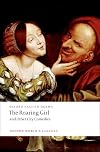
In 1611 two experienced London playwrights collaborated on a new play dramatizing a real-life contemporary wonder, Mary Frith, known as Moll Cutpurse, "a sometime thief and notorious cross-dresser" (ix). In Feb 2023 at the Blackfriars theater in Staunton VA a group of enthusiastic amateur players offered a staged reading of the rarely performed play, prompting me to revisit it. It's at once clear why it has become popular in recent years, after almost 4 centuries of neglect.
The real-life show more Frith was charged with theft and a host of notoriously male behaviors - drunkenness, swearing, dueling, swaggering, and cross-dressing. Middleton and Dekker's Moll affects some of those behaviors but is presented sympathetically as an outspoken free-thinker transcending the rigid constraints of her class and gender. Such froward behavior attracts some undesired admirers to this "maddest, fantastical'st girl" (2.1.192) for her "heroic spirit and masculine womanhood" (2.1.336-7), but much of the play rehearses the knee-jerk attacks on one who "strays so from her kind [that] Nature repents she made her" (1.2.214-5). Her non-binary gender presentation is at the heart of her offense: "It is a thing One knows not how to name; . . . 'Tis woman more than man, Man more than woman, and . . . The sun gives her two shadows to one shape" (1.2.129-33). The fact that such attacks come from the play's senex, Sir Alexander Wengrave, who blocks a heterosexual pair of true lovers from wedded bliss, makes clear where the plot's sympathies rest.
The play offers Moll several memorable bits of stage business. Twice in act 3 when in male garb she draws her weapon to engage with and defeat male opponents. Then act 4 finds her placing a viol da gamba between her trousered legs to perform two songs about transgressive wives, and in act 5 she engages in a bout of "canting," a slang duel that ends with yet another song.
Her verbal climax comes earlier, in an articulate attack on a would-be seducer, the poorly endowed Laxton (lacks stone): "Thou'rt one of those That thinks each woman thy fond flexible whore. . . . What durst move you, sir, To think me whorish? . . . "Cause, you'll say, I'm given to sport, I'm often merry, jest? Had mirth no kindred in the world but lust? . . . I scorn to prostitute myself to a man, I that can prostitute a man to me. . . she that has wit and spirit May scorn to live beholding to her body for meat Or for apparel . . . Base is the mind that kneels unto her body . . . My spirit shall be mistress of this house As long as I have time in't" (3.1.72-140).
Though Moll is the play's featured character, her part in the love-plot is relatively small. It is mostly limited to unmasking plotters and dodging entrapment while allying with the young lover Sebastian Wengrave to cozen his father and marry his true love Mary (about whom the roaring girl says "I pitied her for name's sake, that a Moll Should be so crossed in love" (4.1.68-9). Much of the play is taken up with the misadventures of two city gallants, whose attempts to "wap, niggle and fadoodle" (5.1.189-95) with two housewives and bamboozle their husbands are thwarted by the wives themselves (as in Shakespeare's Merry Wives).
In the end, though this city comedy flirts with transgression at every turn, it ends up affirming heterosexual marriage and wifely wiles. Sir Alexander the senex apologizes for his errors and praises Moll as "a good wench" and the foxy housewives as "kind gentlewomen, whose sparkling presence Are glories set in marriage" (5.2.268-9). Perhaps the chief roarer speaks for her sisters as well as herself when she proclaims, "I please myself, and care not else who loves me" (5.1.332). show less
The real-life show more Frith was charged with theft and a host of notoriously male behaviors - drunkenness, swearing, dueling, swaggering, and cross-dressing. Middleton and Dekker's Moll affects some of those behaviors but is presented sympathetically as an outspoken free-thinker transcending the rigid constraints of her class and gender. Such froward behavior attracts some undesired admirers to this "maddest, fantastical'st girl" (2.1.192) for her "heroic spirit and masculine womanhood" (2.1.336-7), but much of the play rehearses the knee-jerk attacks on one who "strays so from her kind [that] Nature repents she made her" (1.2.214-5). Her non-binary gender presentation is at the heart of her offense: "It is a thing One knows not how to name; . . . 'Tis woman more than man, Man more than woman, and . . . The sun gives her two shadows to one shape" (1.2.129-33). The fact that such attacks come from the play's senex, Sir Alexander Wengrave, who blocks a heterosexual pair of true lovers from wedded bliss, makes clear where the plot's sympathies rest.
The play offers Moll several memorable bits of stage business. Twice in act 3 when in male garb she draws her weapon to engage with and defeat male opponents. Then act 4 finds her placing a viol da gamba between her trousered legs to perform two songs about transgressive wives, and in act 5 she engages in a bout of "canting," a slang duel that ends with yet another song.
Her verbal climax comes earlier, in an articulate attack on a would-be seducer, the poorly endowed Laxton (lacks stone): "Thou'rt one of those That thinks each woman thy fond flexible whore. . . . What durst move you, sir, To think me whorish? . . . "Cause, you'll say, I'm given to sport, I'm often merry, jest? Had mirth no kindred in the world but lust? . . . I scorn to prostitute myself to a man, I that can prostitute a man to me. . . she that has wit and spirit May scorn to live beholding to her body for meat Or for apparel . . . Base is the mind that kneels unto her body . . . My spirit shall be mistress of this house As long as I have time in't" (3.1.72-140).
Though Moll is the play's featured character, her part in the love-plot is relatively small. It is mostly limited to unmasking plotters and dodging entrapment while allying with the young lover Sebastian Wengrave to cozen his father and marry his true love Mary (about whom the roaring girl says "I pitied her for name's sake, that a Moll Should be so crossed in love" (4.1.68-9). Much of the play is taken up with the misadventures of two city gallants, whose attempts to "wap, niggle and fadoodle" (5.1.189-95) with two housewives and bamboozle their husbands are thwarted by the wives themselves (as in Shakespeare's Merry Wives).
In the end, though this city comedy flirts with transgression at every turn, it ends up affirming heterosexual marriage and wifely wiles. Sir Alexander the senex apologizes for his errors and praises Moll as "a good wench" and the foxy housewives as "kind gentlewomen, whose sparkling presence Are glories set in marriage" (5.2.268-9). Perhaps the chief roarer speaks for her sisters as well as herself when she proclaims, "I please myself, and care not else who loves me" (5.1.332). show less
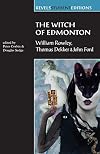
One of my favorite English Renaissance plays, The Witch of Edmonton is a collaboration by three master playwrights of the period. Each took charge of a different plotline: Dekker, the true-life story of Elizabeth Sawyer, a poor, elderly woman executed for witchcraft; Rowley, the comic plot of the dull-brained but innocent Cuddy Banks, whose greatest ambition is to play the hobby horse in the upcoming Morris dancing; and Ford, the tragic plot of Frank Thorney, who becomes first a bigamist and show more then a murderer, all in pursuit of money. Interweaving all three plots is Dog, a devil in disguise who provides Mother Sawyer with power and companionship, who the affable Cuddy attempts to reform from his devil-dog ways, and who pushes Frank Thorney into murdering Susan, his clingy second wife. Witchcraft, sex, murder, bloody tokens, ghosts, a devil dog, Morris dancing, women in male disguise, confessions and executions--what more could you ask for in a good piece of Renaissance drama? Social commentary, maybe? Well, there's plenty of that as well: the shift from land-based to money-based economy, the pressure to marry for money while companionate marriage is on the rise, the politics of witchcraft accusations, the diminshment of traditional rural life, the strictures of a patriarchy, and more.
Not to be missed if you enjoy early seventeenth-century drama. show less
Not to be missed if you enjoy early seventeenth-century drama. show less
Lists
You May Also Like


Associated Authors
Statistics
- Works
- 81
- Also by
- 33
- Members
- 1,229
- Popularity
- #20,883
- Rating
- 3.7
- Reviews
- 19
- ISBNs
- 170
- Languages
- 8
- Favorited
- 1
