
Thomas Heywood (1) (1570–1641)
Author of Sir Thomas More
For other authors named Thomas Heywood, see the disambiguation page.
About the Author
Heywood is a good example of the professional dramatist who worked for Philip Henslowe, the theatrical manager, both as a playwright and an actor. By his own admission, Heywood claimed to have "either an entire hand or at least the main finger" in 220 plays, of which less than 30 survive. His show more best-known play, A Woman Killed with Kindness (1603), exemplifies domestic tragedy, in which sentiment and homely details are equally mingled. Heywood wrote an eloquent defense of the theater against Puritan attack called An Apology for Actors (1607--08). (Bowker Author Biography) show less
Image credit: The author of the book to which this is the title page, Thomas Heywood, is pictured as sleeping in the lower left corner. This is the only known 'portrait' of Heywood, who died in 1641.
Series
Works by Thomas Heywood
A Woman Killed with Kindness and Other Domestic Plays (Oxford World's Classics) (2008) 44 copies, 1 review
Three Marriage Plays: The Wise-Woman of Hogsdon, the English Traveller, the Captives (Revels Plays Companion Library) (1996) 6 copies
The escapes of Jupiter 3 copies
The Dramatic Works of Thomas Heywood: The Golden Age. the Silver Age. the Brazen Age. the First and Second Parts of the Iron Age (2010) 2 copies
Appius and Virginia a tragedy 2 copies
The fair maid of the West, or, A girle worth gold, the first part [a play] by T.H 2 copies, 1 review
The dramatic works of Thomas Heywood : now first collected with illustrative notes and a memoir of the author, Volume 4 (2015) 1 copy
Reader, here you'l plainly see iudgement perverted by these three, a priest, a judge, a patentee 1 copy
The Most Pleasant Song of Lady Bessy: The Eldest Daughter of King Edward the Fourth (1829) (2010) 1 copy
Oenone and Paris 1 copy
Associated Works
The Ancient British drama, in three volumes — Contributor — 2 copies
Tagged
Common Knowledge
- Birthdate
- 1570
- Date of death
- 1641-08-16
- Gender
- male
- Education
- University of Cambridge (Peterhouse)
- Occupations
- actor
playwright - Nationality
- England
- Birthplace
- Lincolnshire, England
- Place of death
- London, England
- Burial location
- St. James's Church, Clerkenwell, London, England, UK
- Map Location
- England, UK
Members
Reviews
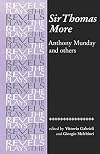
[Sir Thomas More: A play by Anthony Munday and Others]: revised by Henry Chettle, Thomas Dekker, Thomas Heywood and William Shakespeare.
As the title suggests this Elizabethan play underwent a complicated history of production and although a fair copy was eventually made by Anthony Munday, apparently it never made it onto a London Stage. Although many hands were involved the actual finished item (if it was ever finished) reads very well indeed. Claims have been made that it is one of the show more best of the Elizabethan history plays and the form in which it can be read today demonstrates that it is stage worthy: ie that it would work well enough without major adjustments. In addition to this there are three pages of the manuscripts that have been confidently identified by some, as being by William Shakespeare's own hand and these seem to be the only pages of a manuscript written by Shakespeare that have come down to us. All this points to it being a bit of a mystery as to why it is not better known.
The play based on incidents in the life of Sir Thomas More falls fairly neatly into two parts; depicting his rise to power and then his dramatic fall and execution. The intense anti-foreigner feeling expressed in the first part of the play more than echoes the anti immigrant convictions of the majority of people in The UK, in America and in Europe today, perhaps it's topicality is one aspect of it's failure for being considered for a serious modern revival. Governments today are still shy of appearing as out and out racists, while at the same time encouraging their people to be so. In Henry VII's England the people of London rioted against the foreigners living in the city, they lived in enclaves that were seen to have economic and social advantages over the native population. In the play this comes down to an incident where foreigners are forcibly taking food from a London artisan, who is not deemed worthy enough to appreciate the delicacies and then also taking his wife into the bargain. Preachers at Spitalfields encourage the anger against the foreigners and it is Thomas More's intervention when he was an under Sheriff that persuaded the rioters to return to their homes. Thomas More is knighted and he becomes chancellor to king Henry VIII. This part of the story is skilfully conflated by the authors and there follows a scene midway through the play where Sir Thomas is entertaining dignitaries at his London home and provides a troupe of players to provide the entertainment. This play within a play entitled "the marriage of wit and wisdom" provides a sort of hiatus in the proceedings. It is included to demonstrate the wit of Sir Thomas, because the troupe are a player short and Sir Thomas himself offers to play a part. The final two acts of the five act play, show More's fall from power when he refuses to sign the articles that make the King the supreme head of the church. This part of the play shows Sir Thomas as a martyr to his faith. Going to his execution with equanimity joking to the last and confident in himself and his family. It is poignant but without actually saying so points to the king as merciless and a villain.
Sir Thomas More was one of the few Elizabethan plays to be based on recent history; Elizabeth I was Henry VIII 's daughter and so it was no surprise that the play would run into censorship problems and it is well documented that the Master of the Revels Edmund Tilney; became involved and sent the original copy back for rewriting. Anthony Munday was a fierce anti-catholic involved in priest hunting and so it would seem that he would make the necessary adjustments, but although some were made, Sir Thomas More is still very much the hero. Perhaps then it was never politically suitable to be played during Elizabeths reign. It might be more ( the play is full of puns) appropriate today with its anti foreigner messages.
Act scene iii is the portion written in Shakespeare's hand and contains the speech of Thomas More that quells the riot. It certainly gives no quarter to the rioters, reminding them that they are the kings subjects, under his protection and reminding them that they owe allegiance to the king. More is able to convince them to desist, because he is seen as an honest man and one who does not necessarily wish to take revenge on the common man. The writing does not particularly stand out from all that has gone before or all that follows, because the writing is of a good standard throughout. This modern spelling edition makes for an enjoyable and entertaining read for anyone interested in Elizabethan drama.
I read the Revels Plays edition edited by Vittorio Gabrieli and Giorgio Melchiori, which proves to be an excellent guide for the interested reader. The introduction, painstakingly yet fairly precisely takes the reader through all the amendments and interventions to Anthony Munday's fair copy. It surmises on the date order of the amendments and the probable reasons as to why they were made. It is an excellent example of its kind, holding the reader interest and giving food for thought on possible additional reading or enquiry. The notes that appear on the same page as the text are detailed and support the information given in the introduction. There are appendices that show amendments that were never included and also details of the source material that was used. It really is an excellent package and enhanced my reading of the play, which is one where the history of the production is as fascinating as the play itself. All in all a five star read. show less
As the title suggests this Elizabethan play underwent a complicated history of production and although a fair copy was eventually made by Anthony Munday, apparently it never made it onto a London Stage. Although many hands were involved the actual finished item (if it was ever finished) reads very well indeed. Claims have been made that it is one of the show more best of the Elizabethan history plays and the form in which it can be read today demonstrates that it is stage worthy: ie that it would work well enough without major adjustments. In addition to this there are three pages of the manuscripts that have been confidently identified by some, as being by William Shakespeare's own hand and these seem to be the only pages of a manuscript written by Shakespeare that have come down to us. All this points to it being a bit of a mystery as to why it is not better known.
The play based on incidents in the life of Sir Thomas More falls fairly neatly into two parts; depicting his rise to power and then his dramatic fall and execution. The intense anti-foreigner feeling expressed in the first part of the play more than echoes the anti immigrant convictions of the majority of people in The UK, in America and in Europe today, perhaps it's topicality is one aspect of it's failure for being considered for a serious modern revival. Governments today are still shy of appearing as out and out racists, while at the same time encouraging their people to be so. In Henry VII's England the people of London rioted against the foreigners living in the city, they lived in enclaves that were seen to have economic and social advantages over the native population. In the play this comes down to an incident where foreigners are forcibly taking food from a London artisan, who is not deemed worthy enough to appreciate the delicacies and then also taking his wife into the bargain. Preachers at Spitalfields encourage the anger against the foreigners and it is Thomas More's intervention when he was an under Sheriff that persuaded the rioters to return to their homes. Thomas More is knighted and he becomes chancellor to king Henry VIII. This part of the story is skilfully conflated by the authors and there follows a scene midway through the play where Sir Thomas is entertaining dignitaries at his London home and provides a troupe of players to provide the entertainment. This play within a play entitled "the marriage of wit and wisdom" provides a sort of hiatus in the proceedings. It is included to demonstrate the wit of Sir Thomas, because the troupe are a player short and Sir Thomas himself offers to play a part. The final two acts of the five act play, show More's fall from power when he refuses to sign the articles that make the King the supreme head of the church. This part of the play shows Sir Thomas as a martyr to his faith. Going to his execution with equanimity joking to the last and confident in himself and his family. It is poignant but without actually saying so points to the king as merciless and a villain.
Sir Thomas More was one of the few Elizabethan plays to be based on recent history; Elizabeth I was Henry VIII 's daughter and so it was no surprise that the play would run into censorship problems and it is well documented that the Master of the Revels Edmund Tilney; became involved and sent the original copy back for rewriting. Anthony Munday was a fierce anti-catholic involved in priest hunting and so it would seem that he would make the necessary adjustments, but although some were made, Sir Thomas More is still very much the hero. Perhaps then it was never politically suitable to be played during Elizabeths reign. It might be more ( the play is full of puns) appropriate today with its anti foreigner messages.
Act scene iii is the portion written in Shakespeare's hand and contains the speech of Thomas More that quells the riot. It certainly gives no quarter to the rioters, reminding them that they are the kings subjects, under his protection and reminding them that they owe allegiance to the king. More is able to convince them to desist, because he is seen as an honest man and one who does not necessarily wish to take revenge on the common man. The writing does not particularly stand out from all that has gone before or all that follows, because the writing is of a good standard throughout. This modern spelling edition makes for an enjoyable and entertaining read for anyone interested in Elizabethan drama.
I read the Revels Plays edition edited by Vittorio Gabrieli and Giorgio Melchiori, which proves to be an excellent guide for the interested reader. The introduction, painstakingly yet fairly precisely takes the reader through all the amendments and interventions to Anthony Munday's fair copy. It surmises on the date order of the amendments and the probable reasons as to why they were made. It is an excellent example of its kind, holding the reader interest and giving food for thought on possible additional reading or enquiry. The notes that appear on the same page as the text are detailed and support the information given in the introduction. There are appendices that show amendments that were never included and also details of the source material that was used. It really is an excellent package and enhanced my reading of the play, which is one where the history of the production is as fascinating as the play itself. All in all a five star read. show less
I'm not sure how much of this Shakespeare is actually supposed to have written, but it's on my list for the “All of Shakespeare in a Year” challenge, so I read it. And, to be fair, it's not terrible. Beats Edward III or Two Gentlemen of Verona, that's for sure. The individual components of the story – the riot and its fall-out, the family scenes, the noble choice of death over moral compromise – are all fine, but they don't seem to hold together in any sort of compelling whole. It's show more more like “scenes from a life,” but there's no dramatic tension. The anti-immigrant riots seemed particularly topical, but the rioters, once in custody, are so thoroughly repentant and content to be paying the price (hanging) for disturbing the King's Peace as to be... disappointing. While it may have served a didactic purpose to have miscreants so fully recognize the error of their disobedient ways, a little outrage over their “betrayal” by More (who promised them that if they surrendered he would obtain pardons for them) would have seemed more plausible. The family scenes, while establishing More as a Nice Guy, who is neither stuffy nor moralizing, are... pretty dull. It seems to me that a big problem is the choice (however politically prudent or necessary from the perspective of the acting company) to Not describe at all the articles of the king which More refused to endorse (presumably the Oath of Supremacy, declaring Henry VIII head of the C of E, or the Oath of Succession). When a play is about a man choosing to die for his religious convictions, failing to mention those convictions at All leaves kind of a gaping HOLE. We're left with a pleasant guy choosing to die with complete placidity rather than sign some paper which isn't even worth mentioning. That's the kind of storytelling challenge that even some lines by Shakespeare aren’t' going to fix. show less
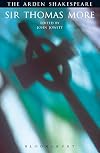
A very good, thorough edition of this collaborative play from the 1600s, to which William Shakespeare contributed. The introduction does a good job of exploring both the play as a work, and also the complex situation that led to its creation. The main text has a battle on its hands, since it's a very rare example of a play found in manuscript form, so words are missing, scenes are divided between authors or occasionally between original and censored texts, and so on. Very thoroughly done. show more And the thick appendices explore the nature of the text, which is very useful in this odd instance. Very glad the Arden Third Series has incorporated this into the body of Shakespeare scholarship, and looking forward to the rest of their high-quality run over the next few years. show less

This review is specifically about one play, Fair Maid of the West or A Girl Worth Gold. This is a fun, silly play with lots of duels, disguises, sea battles, a breeches part, the King of Fez, etc. It must be incredibly exciting to see on stage--my mom saw it with Sean Bean in it, and said it was the most fun she ever had at the theater. My only complaint is that it seems extremely short--there's just not enough of the sorts of things that make breeches-part plays so fun--seems like it could show more be over in an hour or so. If I was going to stage it, I'd pad out the adventure sections, for sure.
On the other hand, I've only read part 1; that's all that my collection of Heywood plays includes. Apparently part 2 is far less fun. Bess Bridges (the titular character) doesn't have much to do--she's more passive than she is in this earlier section. I'll definitely read Part 2 when I get a chance, but I'm in no great hurry. It's not so terrible that I'm not reading them together; contemporary audiences had to wait as much as 30 years for Heywood to get to the second part. Maybe he decided, like I did, that the first Part felt a little skimpy on its own.
This, like the last play I read, The Plain Dealer, is another "virtue tested" play, where a woman's suitor consciously puts her in a position of temptation to see if she can remain loyal to him. It's far less mean spirited here than in The Plain Dealer. I guess that's partly a function of the changing tastes--from the ebullience of the Elizabethan era (Fair Maid was performed as early as 1597-1603--Queen Elizabeth was probably still alive) versus the cynicism of the Restoration (The Plain Dealer was first performed in 1676). I vastly prefer Fair Maid, though it's hard to deny that The Plain Dealer is in many ways more sophisticated, if less successful. show less
On the other hand, I've only read part 1; that's all that my collection of Heywood plays includes. Apparently part 2 is far less fun. Bess Bridges (the titular character) doesn't have much to do--she's more passive than she is in this earlier section. I'll definitely read Part 2 when I get a chance, but I'm in no great hurry. It's not so terrible that I'm not reading them together; contemporary audiences had to wait as much as 30 years for Heywood to get to the second part. Maybe he decided, like I did, that the first Part felt a little skimpy on its own.
This, like the last play I read, The Plain Dealer, is another "virtue tested" play, where a woman's suitor consciously puts her in a position of temptation to see if she can remain loyal to him. It's far less mean spirited here than in The Plain Dealer. I guess that's partly a function of the changing tastes--from the ebullience of the Elizabethan era (Fair Maid was performed as early as 1597-1603--Queen Elizabeth was probably still alive) versus the cynicism of the Restoration (The Plain Dealer was first performed in 1676). I vastly prefer Fair Maid, though it's hard to deny that The Plain Dealer is in many ways more sophisticated, if less successful. show less
Lists
You May Also Like


Associated Authors
Statistics
- Works
- 67
- Also by
- 18
- Members
- 568
- Popularity
- #44,050
- Rating
- 3.5
- Reviews
- 12
- ISBNs
- 111
- Languages
- 6
- Favorited
- 1
