
Ben Jonson (1572–1637)
Author of Volpone, or The Fox
About the Author
Born in 1572, Ben Jonson rejected his father's bricklaying trade and ran away from his apprenticeship to join the army. He returned to England in 1592, working as an actor and playwright. In 1598, he was tried for murder after killing another actor in a duel, and was briefly imprisoned. One of his show more first plays, Every Man Out of His Humor (1599) had fellow playwright William Shakespeare as a cast member. His success grew with such works as Volpone (1605) and The Alchemist (1610) and he was popular at court, frequently writing the Christmas masque. He is considered a very fine Elizabethan poet. In some anti-Stratfordian circles he is proposed as the true author of Shakespeare's plays, though this view is not widely accepted. Jonson was appointed London historian in 1628, but that same year, his life took a downward turn. He suffered a paralyzing stroke and lost favor at court after an argument with architect Inigo Jones and the death of King James I. Ben Jonson died on August 6, 1637. (Bowker Author Biography) show less
Disambiguation Notice:
The dramatist and poet who was a contemporary of Shakespeare was named Ben Jonson. There is a also a modern author named Ben Johnson. If your book by Ben Jonson isn't showing up here, check your spelling of his name.
Image credit: wikipedia - Ben Jonson by Abraham Blyenberch, circa 1617.
Series
Works by Ben Jonson
The Roaring Girl and Other City Comedies [The Shoemaker's Holiday, Every Man In His Humour, Eastward Ho!] (Oxford Englis (2001) 100 copies, 1 review
The Sad Shepherd: the unfinished Pastoral comedy of Ben Jonson. The Living drama series; William Kozlenko, editor (2013) 10 copies
Works 10 copies
Eastward Ho! (New Mermaids) 8 copies
Ben Jonson (Mermaid Series) Vol. 3 4 copies
The Masque of Oberon 3 copies
Ben Jonson, Volume VI: Bartholomew Fair, The Devil is an Ass. The Staple of News, The New Inn, The Magnetic Lady (1986) 3 copies
Song: To Celia {poem} 3 copies
Forest, underwood, and timber 2 copies
Love Freed from Ignorance and Folly 2 copies
Elizabethan dramatists: Marlow's "Dr. Faustus", Jonson's "Every man in his humour", Beaumont and Fletcher's "Philaste" (1903) 2 copies
Complete Works, 3 vols. 2 copies
Drink To Me Only With Thine Eyes 2 copies
Pleasure Reconciled to Virtue 2 copies
Ben Jonson, Volume III: A Tale of a Tub, The Case is Altered, Everyman Out f His Humour (1986) 2 copies
The Magnetic Lady, a Tale of a Tub, the Sad Shepherd, the Case Is Altered, And Entertainments: The Works of Ben Jonson (2004) 2 copies
The Masque of Blackness 2 copies
WORLD DRAMA (26 unabridged plays) 2 copies
Ben Jonson, Volume X 2 copies
Ben Jonson, Volume XI 2 copies
Epitaph on Elizabeth, L.H. (included in The Norton Introduction to Literature - 5th Edition) 2 copies
Come, My Celia 2 copies
Ben Jonson : in three volumes. [Part II] / ed. Brinsley Nicholson ; with an introd. by C. H. Herford 1 copy, 1 review
Ben Jonson : in three volumes. [Part III] / ed. Brinsley Nicholson and C. H. Herford 1 copy, 1 review
Ben Jonson : in three volumes. [Part I] / ed. Brinsley Nicholson ; with an introd. by C. H. Herford 1 copy, 1 review
An Elegie 1 copy
The complete plays vol 1 1 copy
Ben Jonson, Vol 3 1 copy
Complete Masques 1 copy
Poetry 1 copy
The works of Ben. Johnson 1 copy
Stücke / Komödien 1 copy
Poems, Plays, and Masques 1 copy
P'esy. 1 copy
Simplex Munditiis 1 copy
An Ode to Himself 1 copy
Old city manners : a comedy 1 copy
The Golden Age Restored 1 copy
Ben Jonson, Vol 2 1 copy
On Shakespeare 1 copy
The gypsies metamorphosed 1 copy
The Alchemist & Other Plays 1 copy
Mermaid Series 1 copy
Catiline his conspiracy. A tragedy; Acted in the year 1611. By the King's Majesty's servants. With the allowance of the master of revels 1 copy, 1 review
The Complete Poems 1 copy
Ben Jonson, Vol 1 1 copy
The Hue And Cry After Cupid 1 copy
For The Honour Of Wales 1 copy
The Vision Of Delight 1 copy
The Masque Of Lethe 1 copy
The Irish Masque 1 copy
A Challenge At Tilt 1 copy
The Masque Of Beauty 1 copy
The Satyr 1 copy
The Penates 1 copy
Slow Slow, Fresh Fount 1 copy
The Masque Of Owls 1 copy
Ben Johnson, Volume IV 1 copy
The Works of Ben Jonson, 3 volumes : with notes critical and explanatory, and a biographical memoir 1 copy
Eastward Hoe. By Jonson, Chapman and Marston and Jonson's The Alchemist. Edited by F. E. Schelling 1 copy
The dramatic works and lyrics of Ben Jonson [selected] With an essay, biographical and critical 1 copy
On My First Son {poem} 1 copy
The alchymist : a comedy : as altered from Ben Jonson : adapted for theatrical representation 1 copy
The works of Ben Jonson. With critical and explanatory notes and a memoir by William Gifford. Vol II. (1897) 1 copy
Ben Jonson - odd volume 1 copy
The Complete Poems 1 copy
Associated Works
The Making of a Poem: A Norton Anthology of Poetic Forms (2000) — Contributor — 1,474 copies, 9 reviews
The Best Poems of the English Language: From Chaucer Through Robert Frost (2004) — Contributor — 1,253 copies, 3 reviews
Literature: An Introduction to Fiction, Poetry, and Drama (1995) — Contributor, some editions — 1,017 copies, 7 reviews
World Poetry: An Anthology of Verse from Antiquity to Our Time (1998) — Contributor — 499 copies, 2 reviews
Four English Comedies: Valpone; The Way of the World; She Stoops to Conquer; The School for Scandal (1606) — Contributor — 396 copies, 1 review
Shakespeare and Co.: Christopher Marlowe, Thomas Dekker, Ben Jonson, Thomas Middleton, John Fletcher and the Other Players in His Story (2007) 316 copies, 6 reviews
Ben Jonson and the Cavalier Poets [Norton Critical Edition] (1975) — Contributor — 238 copies, 2 reviews
Elizabethan Drama, Volume II: Dekker; Jonson; Beaumont and Fletcher; Webster; Massinger (2004) — Contributor — 220 copies
English Renaissance Poetry: A Collection of Shorter Poems from Skelton to Jonson (1963) — Contributor — 185 copies
The RSC Shakespeare : The complete works (2007) — Preliminary pages of the First Folio — 164 copies, 1 review
Answering Back: Living Poets Reply to the Poetry of the Past (2007) — Contributor — 119 copies, 1 review
Cavalcade of comedy; 21 brilliant comedies from Jonson and Wycherley to Thurber and Coward (1953) — Contributor — 101 copies
The Broadview Anthology of Seventeenth Century Verse & Prose (2000) — Contributor, some editions — 77 copies
Court Masques: Jacobean and Caroline Entertainments, 1605-1640 (World's Classics) (1995) — Author, some editions — 72 copies
The Roads from Bethlehem: Christmas Literature from Writers Ancient and Modern (1993) — Contributor — 34 copies, 1 review
Nine Great Plays: From Aeschylus to Eliot (Revised Edition) (1956) — Contributor; Contributor — 28 copies
Oogst Der Tijden. keur uit de werken van schrijvers en dichters aller volken en eeuwen (1940) — Contributor — 12 copies
A Book of 'Characters' from Theophrastus, Joseph Hall, Sir Thomas Overbury, Nicolas Breton, John Earle, Thomas Fuller, (1924) — Contributor — 4 copies
Seventeenth century essays, from Bacon to Clarendon (Essay index reprint series) (1972) — Author — 4 copies
The Plays of David Garrick, Volume 5: Garrick's Alterations of Others, 1742-1750 (1982) — Contributor — 4 copies
The Delphian Course : Part Seven : Story of the Drama, Nature Study — Contributor — 4 copies
The Plays of David Garrick, Volume 6: Garrick's Alterations of Others, 1751-1756 (1982) — Contributor — 3 copies
Robert Chester's "Loves martyr, or, Rosalins complaint" : (1601) with its supplement, "Diverse poeticall essaies" on the Turtle and phoenix — Contributor — 3 copies
A reader for writers — Contributor — 2 copies
The Ancient British drama, in three volumes — Contributor — 2 copies
Tagged
Common Knowledge
- Legal name
- Jonson, Benjamin
- Birthdate
- 1572-06-11
- Date of death
- 1637-08-06
- Gender
- male
- Education
- Westminster School, London
- Occupations
- poet
playwright
actor - Organizations
- The Admiral's Men
- Awards and honors
- Honorary Doctorate (Cambridge University)
Honorary Doctorate (Oxford University)
Poet Laureate of England - Relationships
- Shakespeare, William (friend)
Camden, William (student and friend) - Short biography
- "O Rare Ben Jonson."
- Nationality
- England
- Birthplace
- St Margaret's parish, Westminster, Middlesex, Kingdom of England
- Places of residence
- London, England, UK
- Place of death
- London, England, UK
- Burial location
- Westminster Abbey, London, England, UK
- Map Location
- England, UK
- Disambiguation notice
- The dramatist and poet who was a contemporary of Shakespeare was named Ben Jonson. There is a also a modern author named Ben Johnson. If your book by Ben Jonson isn't showing up here, check your spelling of his name.
Members
Reviews
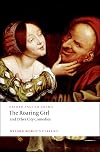
In 1611 two experienced London playwrights collaborated on a new play dramatizing a real-life contemporary wonder, Mary Frith, known as Moll Cutpurse, "a sometime thief and notorious cross-dresser" (ix). In Feb 2023 at the Blackfriars theater in Staunton VA a group of enthusiastic amateur players offered a staged reading of the rarely performed play, prompting me to revisit it. It's at once clear why it has become popular in recent years, after almost 4 centuries of neglect.
The real-life show more Frith was charged with theft and a host of notoriously male behaviors - drunkenness, swearing, dueling, swaggering, and cross-dressing. Middleton and Dekker's Moll affects some of those behaviors but is presented sympathetically as an outspoken free-thinker transcending the rigid constraints of her class and gender. Such froward behavior attracts some undesired admirers to this "maddest, fantastical'st girl" (2.1.192) for her "heroic spirit and masculine womanhood" (2.1.336-7), but much of the play rehearses the knee-jerk attacks on one who "strays so from her kind [that] Nature repents she made her" (1.2.214-5). Her non-binary gender presentation is at the heart of her offense: "It is a thing One knows not how to name; . . . 'Tis woman more than man, Man more than woman, and . . . The sun gives her two shadows to one shape" (1.2.129-33). The fact that such attacks come from the play's senex, Sir Alexander Wengrave, who blocks a heterosexual pair of true lovers from wedded bliss, makes clear where the plot's sympathies rest.
The play offers Moll several memorable bits of stage business. Twice in act 3 when in male garb she draws her weapon to engage with and defeat male opponents. Then act 4 finds her placing a viol da gamba between her trousered legs to perform two songs about transgressive wives, and in act 5 she engages in a bout of "canting," a slang duel that ends with yet another song.
Her verbal climax comes earlier, in an articulate attack on a would-be seducer, the poorly endowed Laxton (lacks stone): "Thou'rt one of those That thinks each woman thy fond flexible whore. . . . What durst move you, sir, To think me whorish? . . . "Cause, you'll say, I'm given to sport, I'm often merry, jest? Had mirth no kindred in the world but lust? . . . I scorn to prostitute myself to a man, I that can prostitute a man to me. . . she that has wit and spirit May scorn to live beholding to her body for meat Or for apparel . . . Base is the mind that kneels unto her body . . . My spirit shall be mistress of this house As long as I have time in't" (3.1.72-140).
Though Moll is the play's featured character, her part in the love-plot is relatively small. It is mostly limited to unmasking plotters and dodging entrapment while allying with the young lover Sebastian Wengrave to cozen his father and marry his true love Mary (about whom the roaring girl says "I pitied her for name's sake, that a Moll Should be so crossed in love" (4.1.68-9). Much of the play is taken up with the misadventures of two city gallants, whose attempts to "wap, niggle and fadoodle" (5.1.189-95) with two housewives and bamboozle their husbands are thwarted by the wives themselves (as in Shakespeare's Merry Wives).
In the end, though this city comedy flirts with transgression at every turn, it ends up affirming heterosexual marriage and wifely wiles. Sir Alexander the senex apologizes for his errors and praises Moll as "a good wench" and the foxy housewives as "kind gentlewomen, whose sparkling presence Are glories set in marriage" (5.2.268-9). Perhaps the chief roarer speaks for her sisters as well as herself when she proclaims, "I please myself, and care not else who loves me" (5.1.332). show less
The real-life show more Frith was charged with theft and a host of notoriously male behaviors - drunkenness, swearing, dueling, swaggering, and cross-dressing. Middleton and Dekker's Moll affects some of those behaviors but is presented sympathetically as an outspoken free-thinker transcending the rigid constraints of her class and gender. Such froward behavior attracts some undesired admirers to this "maddest, fantastical'st girl" (2.1.192) for her "heroic spirit and masculine womanhood" (2.1.336-7), but much of the play rehearses the knee-jerk attacks on one who "strays so from her kind [that] Nature repents she made her" (1.2.214-5). Her non-binary gender presentation is at the heart of her offense: "It is a thing One knows not how to name; . . . 'Tis woman more than man, Man more than woman, and . . . The sun gives her two shadows to one shape" (1.2.129-33). The fact that such attacks come from the play's senex, Sir Alexander Wengrave, who blocks a heterosexual pair of true lovers from wedded bliss, makes clear where the plot's sympathies rest.
The play offers Moll several memorable bits of stage business. Twice in act 3 when in male garb she draws her weapon to engage with and defeat male opponents. Then act 4 finds her placing a viol da gamba between her trousered legs to perform two songs about transgressive wives, and in act 5 she engages in a bout of "canting," a slang duel that ends with yet another song.
Her verbal climax comes earlier, in an articulate attack on a would-be seducer, the poorly endowed Laxton (lacks stone): "Thou'rt one of those That thinks each woman thy fond flexible whore. . . . What durst move you, sir, To think me whorish? . . . "Cause, you'll say, I'm given to sport, I'm often merry, jest? Had mirth no kindred in the world but lust? . . . I scorn to prostitute myself to a man, I that can prostitute a man to me. . . she that has wit and spirit May scorn to live beholding to her body for meat Or for apparel . . . Base is the mind that kneels unto her body . . . My spirit shall be mistress of this house As long as I have time in't" (3.1.72-140).
Though Moll is the play's featured character, her part in the love-plot is relatively small. It is mostly limited to unmasking plotters and dodging entrapment while allying with the young lover Sebastian Wengrave to cozen his father and marry his true love Mary (about whom the roaring girl says "I pitied her for name's sake, that a Moll Should be so crossed in love" (4.1.68-9). Much of the play is taken up with the misadventures of two city gallants, whose attempts to "wap, niggle and fadoodle" (5.1.189-95) with two housewives and bamboozle their husbands are thwarted by the wives themselves (as in Shakespeare's Merry Wives).
In the end, though this city comedy flirts with transgression at every turn, it ends up affirming heterosexual marriage and wifely wiles. Sir Alexander the senex apologizes for his errors and praises Moll as "a good wench" and the foxy housewives as "kind gentlewomen, whose sparkling presence Are glories set in marriage" (5.2.268-9). Perhaps the chief roarer speaks for her sisters as well as herself when she proclaims, "I please myself, and care not else who loves me" (5.1.332). show less
Turns out Ben Jonson is a riot! I need to read/watch more of his plays. So many weird names and shenanigans, and he's certainly not afraid to break the fourth wall in order to call out his critics or talk up his own accomplishments, haha.
If you like Shakespeare's Merry Wives of Windsor, Taming of the Shrew, or the country and tavern parts of Henry IV Part 2, you'll probably like this!
If you like Shakespeare's Merry Wives of Windsor, Taming of the Shrew, or the country and tavern parts of Henry IV Part 2, you'll probably like this!
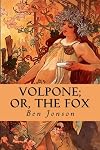
This was my first Ben Jonson play. Admittingly, I did not think I was going to enjoy it. I am typically not the comedic type-- or so I thought. Yet, Jonson charms with his blank verse and the play flows so adequately and wonderfully that it is a pleasure to read. The only thing that prevented it from getting a five-star rating was the antiquity of the play. It is hard to completely understand, due to the nuances of language, one-hundred percent of what is happening. Nevertheless, it was a show more great read and I will read more Ben Jonson in the future. show less
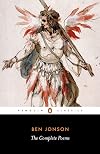
What to say about Ben Jonson? Well, for starters, his verse is flawed at best. He often rhymes in a contrived fashion, cheats the meter, and slaps references in haphazardly. He's no master of English as Shakespeare proves himself time and time again. But Jonson is something here in these poems that so many poets aren't, and that's fun. In fact, so rare is fun in poetry that most people wrongly revile it. Even when Jonson fails he is still fun, as in The Forest when he first asks what he show more should sing about in an epode and then proceeds to completely strike out. Not to worry if you're looking for good stuff, though, because the other two major sections, Epigrams and Underwoods, are far superior. And Jonson is far from a one-(failed)-trick pony.
I find Jonson to be both simple and plain spoken. Don't misinterpret me here about this either, I mean both of those things in the best way. There is not always need of guile and subversion in the poetic arts, and as a matter of fact many ply those needlessly. Instead what you have is what's on the paper without need of gloss or end notes or any of that. This book also includes his Discoveries, Or Explorata in which he shows off a much less wise version of Ben Franklin's Poor Richard. Again, though, the key word is fun and even Franklin's autobiography, for how brief it is, can get stuffy. For the less gracious reading I still like Jonson better than Donne, and of Shakespeare's contemporaries I'd probably choose him although with recognition that Geoffrey Chaucer blows him away. It must also be said here that in the realm of obsequies, Jonson is without peer. Where Shakespeare liked to cut others down, Jonson built others up in his poetry and his compliments to those around them feel heartfelt and paid-for. show less
I find Jonson to be both simple and plain spoken. Don't misinterpret me here about this either, I mean both of those things in the best way. There is not always need of guile and subversion in the poetic arts, and as a matter of fact many ply those needlessly. Instead what you have is what's on the paper without need of gloss or end notes or any of that. This book also includes his Discoveries, Or Explorata in which he shows off a much less wise version of Ben Franklin's Poor Richard. Again, though, the key word is fun and even Franklin's autobiography, for how brief it is, can get stuffy. For the less gracious reading I still like Jonson better than Donne, and of Shakespeare's contemporaries I'd probably choose him although with recognition that Geoffrey Chaucer blows him away. It must also be said here that in the realm of obsequies, Jonson is without peer. Where Shakespeare liked to cut others down, Jonson built others up in his poetry and his compliments to those around them feel heartfelt and paid-for. show less
Lists
AP Lit (1)
Awards


You May Also Like


Associated Authors
Statistics
- Works
- 267
- Also by
- 88
- Members
- 5,666
- Popularity
- #4,369
- Rating
- 3.9
- Reviews
- 43
- ISBNs
- 637
- Languages
- 8
- Favorited
- 16