
John Ford (1) (1586–)
Author of 'Tis Pity She's a Whore
For other authors named John Ford, see the disambiguation page.
About the Author
Ford, the second son of a landed gentleman, did not begin his career as a playwright until 1621, with his collaboration with Dekker on The Witch of Edmonton. As a dramatist, Ford was extremely interested in psychology, especially abnormal psychology, and his best-known plays are studies in show more frustration and quiet suffering. His plots tend to be static and deterministic, with the characters unable to act against a crushing destiny. In The Broken Heart (1629), because all the crucial events are fixed before the play begins, there is a heavy emphasis on pathos. 'Tis Pity She's a Whore (1632) rewrites Romeo and Juliet with brother-sister incest and a violent revenge action. Perkin Warbeck (1633) is the last of the history plays. In it, the pretender to the throne of Henry VII hardly makes much pretense to establish his legitimate claims. Ford writes in an unusually plain, lyric style that resembles that of passionate and melancholy speech. (Bowker Author Biography) show less
Series
Works by John Ford
'Tis Pity She's a Whore (New Mermaids) (1968) — Original author; Original author — 264 copies, 4 reviews
'Tis Pity She's a Whore and Other Plays: The Lover's Melancholy; The Broken Heart; 'Tis Pity She's a Whore; Perkin Warbeck (Oxford World's Classics) (1995) 228 copies
A Woman Killed with Kindness and Other Domestic Plays (Oxford World's Classics) (2008) 45 copies, 1 review
The Welsh embassador 5 copies
The Complete Works of John Ford 4 copies
Två engelska renässanstragedier 2 copies
The lovers melancholy : Acted at the private house in the Black Friers, and publikely at the Globe 1 copy
Complete Works of John Ford 1 copy
The Sun's Darling 1 copy
Teatro 1 copy
Plays 1 copy
Associated Works
Three Jacobean Witchcraft Plays: Sophonsiba, The Witch, The Witch of Edmonton (1986) — Contributor — 42 copies
The Anchor Anthology of Jacobean Drama : Volume 2 : The Changeling ; The Revenger's Tragedy ; The Broken Heart ;The Lady of Pleasure (1963) — Contributor — 28 copies
Characters : together with poems, news, edicts, and paradoxes based on the eleventh edition of A wife now the widow of Sir Thomas Overbury (2002) — Contributor — 1 copy
Materials for the Study of the Old English Drama, Series I, Vols. 12-14 — Contributor, some editions — 1 copy
Tagged
Common Knowledge
- Other names
- Fide Honor
- Birthdate
- 1586-04-17
- Date of death
- c. 1640
- Gender
- male
- Occupations
- playwright
poet - Short biography
- Death dates range 1637?, 1639?, 1640.
Early in his career Ford collaborated with other playwrights, including John Fletcher, Philip Massinger, Thomas Middleton, Thomas Dekker. William Rowley and John Webster -- hence the presence of of other writers' 'Works' in his list. - Nationality
- England
- Birthplace
- Devon, England
- Places of residence
- Middle Temple, London, England
- Map Location
- England, UK
Members
Discussions
The Witch of Edmonton in The Globe: Shakespeare, his Contemporaries, and Context (February 2022)
Has Anybody Heard Of John Ford (NOT The English Metaphysical Poet)?... in Pro and Con (May 2013)
Reviews
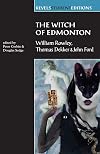
One of my favorite English Renaissance plays, The Witch of Edmonton is a collaboration by three master playwrights of the period. Each took charge of a different plotline: Dekker, the true-life story of Elizabeth Sawyer, a poor, elderly woman executed for witchcraft; Rowley, the comic plot of the dull-brained but innocent Cuddy Banks, whose greatest ambition is to play the hobby horse in the upcoming Morris dancing; and Ford, the tragic plot of Frank Thorney, who becomes first a bigamist and show more then a murderer, all in pursuit of money. Interweaving all three plots is Dog, a devil in disguise who provides Mother Sawyer with power and companionship, who the affable Cuddy attempts to reform from his devil-dog ways, and who pushes Frank Thorney into murdering Susan, his clingy second wife. Witchcraft, sex, murder, bloody tokens, ghosts, a devil dog, Morris dancing, women in male disguise, confessions and executions--what more could you ask for in a good piece of Renaissance drama? Social commentary, maybe? Well, there's plenty of that as well: the shift from land-based to money-based economy, the pressure to marry for money while companionate marriage is on the rise, the politics of witchcraft accusations, the diminshment of traditional rural life, the strictures of a patriarchy, and more.
Not to be missed if you enjoy early seventeenth-century drama. show less
Not to be missed if you enjoy early seventeenth-century drama. show less
A boy's best friend (with benefits) is his sister, in a Renaissance Italy filled with "banditti," corrupt churchmen, and Machiavellian schemers.
Disturbing, memorable dialogue that mitigates (somewhat) the generally preposterous plot. Think of Shakespeare crossed with a "Grade B" horror film, directed by David Cronenberg.
Disturbing, memorable dialogue that mitigates (somewhat) the generally preposterous plot. Think of Shakespeare crossed with a "Grade B" horror film, directed by David Cronenberg.
A healthily intelligent edition of a beautiful work. As with any "classically structured" revenge drama of the era, there are some issues with credibility that would strain our dramatic notions. And the feminist and religious issues inherent in the text demand further reading than just this Introduction. However, this is a lovely, easy-to-read edition.
In a word ...............Torture.
I did not realize both before I read it and once I started it what a struggle it was going to be for me. This play was written in the 17th century, so if you struggle with Shakespeare, you'll struggle here too.
I understood the barest of its storyline, and none of the details. I certainly don't understand why it has this title, incest and being a whore are not the same thing. Too many plots and betrayals, I may have loved it had it been written in modern show more language, but as it stands, it was a disaster, I hardly understood a thing. show less
I did not realize both before I read it and once I started it what a struggle it was going to be for me. This play was written in the 17th century, so if you struggle with Shakespeare, you'll struggle here too.
I understood the barest of its storyline, and none of the details. I certainly don't understand why it has this title, incest and being a whore are not the same thing. Too many plots and betrayals, I may have loved it had it been written in modern show more language, but as it stands, it was a disaster, I hardly understood a thing. show less
Lists
You May Also Like


Associated Authors
Statistics
- Works
- 45
- Also by
- 14
- Members
- 1,450
- Popularity
- #17,720
- Rating
- 3.7
- Reviews
- 13
- ISBNs
- 405
- Languages
- 12
- Favorited
- 2