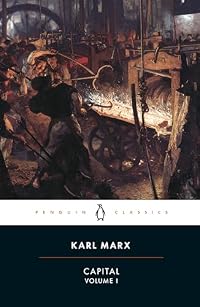
Capital, Vol. 1: A Critique of Political Economy
by Karl Marx
Capital: A Critique of Political Economy (1)
On This Page
Description
Perhaps one of the most infamous works of the modern world, Capital is the German treatise on political economy by Karl Marx that critically analyzes capitalism. First published in 1867 as the beginning of an ambitious but unfinished six-volume series, this work extensively attempts to expose and explain the capitalist mode of production and the class struggles embedded within it. Capital was written while Marx was exiled in England, and many of the examples he uses to illustrate private show more property and its social relations are derived from his time there. Ultimately, this work argues that capitalism would create a divide between wealth and well-being, and the solution was the replacement of capitalism with a system of common possession for all concerned in the means of production. Marx's work gained wide readership in a very short span of time, proving highly influential in Russia, Germany, and eventually the entire world. show lessTags
Recommendations




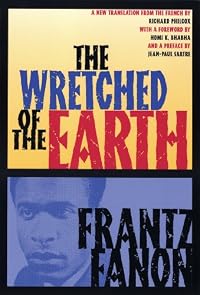
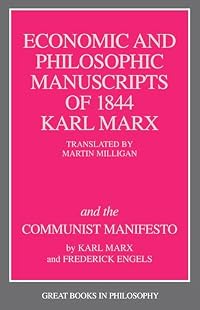
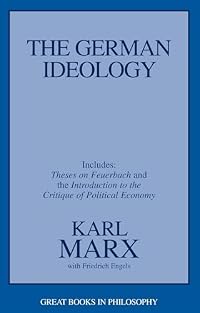
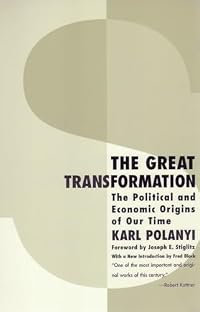





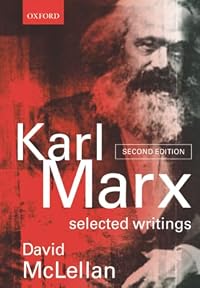
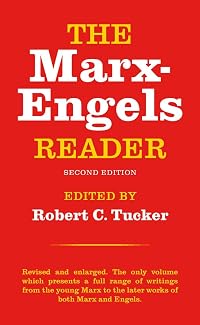
Member Recommendations


Member Reviews
This is one of those great books that takes feelings and intuitions you’ve had your whole life and explains them better than you ever could have. These kind of books also can be ones that you put off reading forever because they are so ingrained in our culture that they can seem obvious. In my experience, it’s usually worth going back to read that kind of book, as I’m often surprised at how vibrant is the spark of genius that made it a classic in the first place.
If you want to be cliché, you can criticize this book for being boring or pedantic, but I think that would be underestimating the task that Marx is undertaking. Sure there are parts that are dry, but Marx is encouraging us to look at society from a granular level. After show more all, many of the concepts he is critiquing or outright refuting are taught to most of us when we are still children. What is money? What is a job? Why are some people rich and some people poor? If a child asks you this you may be tempted to fall back on some hollow explanation, or even just pat them on the head and say “that’s just how it is”. Of course what makes Marx a visionary is he isn’t content with either of these options. You can see why Marx would feel compelled to flesh out his ideas with mathematical formulas and endless examples; he knew that his critics would come at him exactly with this kind of ammunition. And yet the most compelling parts of this book are the simple concepts that make you think, why did I never see it that way before? If you get through the first few hundreds pages of him explaining what is a commodity, you will realize it boils down to this: money is a physical representation of a relationship between people, no more no less. Therefore the price of a given thing is based upon how much time was needed to bring that thing into existence, spent by a person or group of people with which you are conjugating a relationship of exchange. As simple as this sounds, it’s a bolt from the blue in a world where we are actively encouraged to forget what money really is. A classic stoner thought is “money isn’t even real”. Of course it is, but it’s definitely not what we’ve all grown up assuming it is. This is just one example of many simple observations in this book that made it so revolutionary.
Another thing to know, is that Marx’s writing is actually full of personality, and sometimes even deigns to a kind of hyperdroll black humor. You can feel his incredulity as he lays out how the capitalist class has (and will) pushed humanity into a new kind of hell, as if he too is shocked and appalled by what he is writing. Some readers may complain that his many examples of contemporaneous abuses by the capitalist class are out of date, but I’d encourage the reader to follow these threads to the present day. We no longer have child labor in the west, but one of capitalism’s strongest points is it’s ability to absorb criticism into itself and find ways to continue making profits. Marx is once again ahead of the curve in having little hope that “regulation” with have any real effect on the real situation. We live in a world now where capitalist abuses are on going, they are just covered with a thick film of what passes for “decency”. show less
If you want to be cliché, you can criticize this book for being boring or pedantic, but I think that would be underestimating the task that Marx is undertaking. Sure there are parts that are dry, but Marx is encouraging us to look at society from a granular level. After show more all, many of the concepts he is critiquing or outright refuting are taught to most of us when we are still children. What is money? What is a job? Why are some people rich and some people poor? If a child asks you this you may be tempted to fall back on some hollow explanation, or even just pat them on the head and say “that’s just how it is”. Of course what makes Marx a visionary is he isn’t content with either of these options. You can see why Marx would feel compelled to flesh out his ideas with mathematical formulas and endless examples; he knew that his critics would come at him exactly with this kind of ammunition. And yet the most compelling parts of this book are the simple concepts that make you think, why did I never see it that way before? If you get through the first few hundreds pages of him explaining what is a commodity, you will realize it boils down to this: money is a physical representation of a relationship between people, no more no less. Therefore the price of a given thing is based upon how much time was needed to bring that thing into existence, spent by a person or group of people with which you are conjugating a relationship of exchange. As simple as this sounds, it’s a bolt from the blue in a world where we are actively encouraged to forget what money really is. A classic stoner thought is “money isn’t even real”. Of course it is, but it’s definitely not what we’ve all grown up assuming it is. This is just one example of many simple observations in this book that made it so revolutionary.
Another thing to know, is that Marx’s writing is actually full of personality, and sometimes even deigns to a kind of hyperdroll black humor. You can feel his incredulity as he lays out how the capitalist class has (and will) pushed humanity into a new kind of hell, as if he too is shocked and appalled by what he is writing. Some readers may complain that his many examples of contemporaneous abuses by the capitalist class are out of date, but I’d encourage the reader to follow these threads to the present day. We no longer have child labor in the west, but one of capitalism’s strongest points is it’s ability to absorb criticism into itself and find ways to continue making profits. Marx is once again ahead of the curve in having little hope that “regulation” with have any real effect on the real situation. We live in a world now where capitalist abuses are on going, they are just covered with a thick film of what passes for “decency”. show less
A masterpiece (although I guess it'd be weird if I said otherwise, given that I consider myself a Marxist. WHATEVER) It's sometimes tough to read - which is kind of inevitable given the subject - and sometimes I feel that it could have used a good editor to help fix a few minor issues with chapter ordering and stuff (I'm sure Marx would have appreciated an editor and more time to work on it too) but taken overall it's incredible, enlightening and, even for a relatively into it Marxist, constantly thought-provoking. Marx touches on a lot of stuff that isn't talked about so much now and it's pretty amazing how much of what he talks about is more relevant now than when he wrote it - the "Marx isn't relevant today" argument completely falls show more apart. One interesting thing is how much he talks about history - it's interesting from a history perspective as well as making it absolutely clear that capitalism is a historical thing.
The one big thing that he doesn't really talk about is gender - he mentions that women are in the workforce and stuff like that but goes no further and explicitly treats the "default" worker as male. It's disappointing but it'd be ridiculous to expect him to cover everything and given how our analysis of these issues is still awful it's understandable at least. His analysis of a few things (particularly colonialism) is really limited in this but it's essential to understand that this was meant to be the first of 6 books (maybe more or less depending on the scheme used) - of which he only published one in his lifetime, two more were mostly finished, one was mostly notes and the last two weren't started. Some of what he doesn't cover he intended to cover later on. The introduction to the Penguin edition covers this well.
If you're only mildly interested in Marx's ideas you're probably better served with a secondary source (I recommend Marx's Capital by Ben Fine, which is an excellent book and helpful as an overview before diving into this at any rate) but if you have a serious interest you'll find this fascinating. I think Marx still brings up important issues that aren't adequately addressed even today, as well as focusing on stuff that the conventional left tends to ignore. I read this with a Companion to Marx's Capital by David Harvey, which really helped me at certain points - it's not essential and I disagreed with some of his analysis but it will help things like the difficult starting chapters not seem so impossible.
(note to myself: Still not read the whole appendix because it seems to repeat a lot of the main text, if not directly. Something for later) show less
The one big thing that he doesn't really talk about is gender - he mentions that women are in the workforce and stuff like that but goes no further and explicitly treats the "default" worker as male. It's disappointing but it'd be ridiculous to expect him to cover everything and given how our analysis of these issues is still awful it's understandable at least. His analysis of a few things (particularly colonialism) is really limited in this but it's essential to understand that this was meant to be the first of 6 books (maybe more or less depending on the scheme used) - of which he only published one in his lifetime, two more were mostly finished, one was mostly notes and the last two weren't started. Some of what he doesn't cover he intended to cover later on. The introduction to the Penguin edition covers this well.
If you're only mildly interested in Marx's ideas you're probably better served with a secondary source (I recommend Marx's Capital by Ben Fine, which is an excellent book and helpful as an overview before diving into this at any rate) but if you have a serious interest you'll find this fascinating. I think Marx still brings up important issues that aren't adequately addressed even today, as well as focusing on stuff that the conventional left tends to ignore. I read this with a Companion to Marx's Capital by David Harvey, which really helped me at certain points - it's not essential and I disagreed with some of his analysis but it will help things like the difficult starting chapters not seem so impossible.
(note to myself: Still not read the whole appendix because it seems to repeat a lot of the main text, if not directly. Something for later) show less
My summer reading project, though I neglected to keep up with the David Harvey lectures I did work my way through Capital Vol. 1. What surprised me most was Marx's detailed accounts of lived experience of workers, visiting their homes, describing harrowing poverty, in his scathing and insightful critique of capitalism. I felt that I was bearing witness to past injustice in a way that I didn't anticipate, although many of his critiques and insights about the degradation of the laborer are still so unfortunately pertinent.
i will never finish even this VOLUME of capital in my whole god damn life but from what i've read and what i've learned from classes on the book it is INSANE the amount of big brain energy that went into this book. this is the original and probably only text that fundamentally breaks down every single detail of capital production and dissects it, takes it apart bit by bit, and shits on it. absolutely enlightening and a monument to the power of the human mind. little long but it wasn't really meant to be digestible, just authentic.
Marx was an astute observer in his day and his theories are well reasoned, but only if contained by a myopic Old World cultural viewpoint and bolstered by cynical half-truths regarding human nature. Economic mobility, strong private property rights, democracy, collaboration and the lack of rigid class structures in modern society pulls the rug out from under his theories. The incredible increase in quality of life, wealth, health and longevity of people in capitalist democratic cultures is a testament to that. Meanwhile the Marxist economies of the 20th century have all languished in poverty, war and ruin. Can we put Marx to rest now or will his mythic appeal sucker in another generation of lazy entitled pseudo-intellectual useful idiots?
I have to admit I didn’t come to this work unbiased. My best childhood friend was a “red diaper baby” and her family struck me as much more fanatical than any Christian (or Muslim) Fundamentalist. I also got my fill of Marxist ideology from my college professors. But exactly because I do think this ideology has done tremendous harm is exactly the reason not to ignore Marx--hate him or admire him--his ideas have had a profound impact in the culture, history and politics of the last 150 years.
But there’s another problem. Whatever I think of the ideas within it, “The Communist Manifesto” is a lively rip-roaring rabble rousing read (and short). Das Kapital on the other hand, is impenetrable, turgid, truly painful reading. And show more it’s no pamphlet. It’s long. Mind you, I don't mean that in and of itself is a refutation of Marx's claims. Human Action, the magnum opus of Ludwig Von Mises, the economist arguably most revered by free market advocates, is easily as impenetrable and painful to read. Sometimes it's just the case that some subjects (such as the Theory of Relativity) are inherently difficult and not to be understood without a lot of work. Even the book that recommended Das Kapital as an important work had this to say about it:
The most important critique of capitalist society ever written--but enormously difficult. Marx’s categories, grounded in classical political economy and German philosophy, often prove elusive for the general reader. A reading of the work by Mandel [The Formation of the Economic Thought of Karl Marx] may be a more realistic way to approach Marx
Ernest Mandel is “a leading French Marxist.” I chose instead a former Marxist and free market advocate, Thomas Sowell. His book Marxism is lucid and cogent. After giving it a read I tried Marx again. He’s in the public domain and it’s possible to find free English translations online as well as free ebooks for download of the first volume.
http://libcom.org/library/capital-karl-marx
I tried this one. And you know what? It doesn’t seem to matter from what source I get my Marxism--my professors, on the street, from Sowell or the real thing. It still strikes me as noxious crap. Really Marx? The value of a commodity is the labor put into it? Not supply and demand? So if it is more labor intensive to make a product it’s inherently more valuable? And the labor of managers, entrepreneurs, inventors and those who finance an enterprise doesn’t count? So a worker should make enough to buy back the product. So the wages are fine if you can buy back a paperclip if that’s what you make? But they’re unfair if you can’t buy the private jet or emerald necklace you’re helping to make? Really, life is too short to keep reading this to the end. show less
But there’s another problem. Whatever I think of the ideas within it, “The Communist Manifesto” is a lively rip-roaring rabble rousing read (and short). Das Kapital on the other hand, is impenetrable, turgid, truly painful reading. And show more it’s no pamphlet. It’s long. Mind you, I don't mean that in and of itself is a refutation of Marx's claims. Human Action, the magnum opus of Ludwig Von Mises, the economist arguably most revered by free market advocates, is easily as impenetrable and painful to read. Sometimes it's just the case that some subjects (such as the Theory of Relativity) are inherently difficult and not to be understood without a lot of work. Even the book that recommended Das Kapital as an important work had this to say about it:
The most important critique of capitalist society ever written--but enormously difficult. Marx’s categories, grounded in classical political economy and German philosophy, often prove elusive for the general reader. A reading of the work by Mandel [The Formation of the Economic Thought of Karl Marx] may be a more realistic way to approach Marx
Ernest Mandel is “a leading French Marxist.” I chose instead a former Marxist and free market advocate, Thomas Sowell. His book Marxism is lucid and cogent. After giving it a read I tried Marx again. He’s in the public domain and it’s possible to find free English translations online as well as free ebooks for download of the first volume.
http://libcom.org/library/capital-karl-marx
I tried this one. And you know what? It doesn’t seem to matter from what source I get my Marxism--my professors, on the street, from Sowell or the real thing. It still strikes me as noxious crap. Really Marx? The value of a commodity is the labor put into it? Not supply and demand? So if it is more labor intensive to make a product it’s inherently more valuable? And the labor of managers, entrepreneurs, inventors and those who finance an enterprise doesn’t count? So a worker should make enough to buy back the product. So the wages are fine if you can buy back a paperclip if that’s what you make? But they’re unfair if you can’t buy the private jet or emerald necklace you’re helping to make? Really, life is too short to keep reading this to the end. show less
I am not an economist, so this should be the start of my critique. I cannot comment on the economic points made in the book.
Having said that, I must say that this is a book of extreme erudition, and the arguments are well marshalled. It is quite amazing to see how many people today, who claim to be Marxists, actually know almost nothing of what has been written by him.
Now, the odd thing, is that what he writes about workers in the 1800's is something I have seen in many markets today. The effect of rampant capitalism on 'colonial markets' is documented by him, and is practised today, albeit in a more subtle form. This is amazing, as an insight.
It is indeed a book for today as well.
The essays on work conditions, the wage issues, and show more the link to capitalists is amazing. That a worker actually loans his time to a company is a perspective that had not occurred to me until I read the book. show less
Having said that, I must say that this is a book of extreme erudition, and the arguments are well marshalled. It is quite amazing to see how many people today, who claim to be Marxists, actually know almost nothing of what has been written by him.
Now, the odd thing, is that what he writes about workers in the 1800's is something I have seen in many markets today. The effect of rampant capitalism on 'colonial markets' is documented by him, and is practised today, albeit in a more subtle form. This is amazing, as an insight.
It is indeed a book for today as well.
The essays on work conditions, the wage issues, and show more the link to capitalists is amazing. That a worker actually loans his time to a company is a perspective that had not occurred to me until I read the book. show less
Members
- Recently Added By
Lists

The Telegraph's 110 Best Books: The Perfect Library
101 works; 18 members

Newsweek's Top 100 Books: The Meta-List
100 works; 18 members

Tablet Magazine's List of 101 Great Jewish Books
103 works; 9 members

Works referenced in Capital in the Twenty-First Century by Thomas Piketty
62 works; 2 members

Blindpill
20 works; 2 members

2026
16 works; 1 member
Author Information

Karl Heinrich Marx, one of the fathers of communism, was born on May 5, 1818 in Trier, Germany. He was educated at a variety of German colleges, including the University of Jena. He was an editor of socialist periodicals and a key figure in the Working Man's Association. Marx co-wrote his best-known work, "The Communist Manifesto" (1848), with his show more friend, Friedrich Engels. Marx's most important work, however, may be "Das Kapital" (1867), an analysis of the economics of capitalism. He died on March 14, 1883 in London, England. (Bowker Author Biography) show less
All Editions
Some Editions
Awards and Honors
Series

Belongs to Publisher Series
Work Relationships
Is contained in
Is parodied in
Has as a reference guide/companion
Has as a study
Common Knowledge
- Canonical title
- Capital, Vol. 1: A Critique of Political Economy
- Original title
- Das Kapital : Kritik der politischen Ökonomie : Band 1 : Der Produktionsprozess des Kapitals; Das Kapital. Kritik der politischen Oekonomie. Buch I: Der Productionsprocess des Kapitals
- Alternate titles
- Het kapitaal : Een kritische beschouwing over de economie deel 1 : Het productieproces van het kapitaal
- Original publication date
- 1867
- First words
- The wealth of those societies in which the capitalist mode of production prevails, presents itself as "an immense accumulation of commodities,"[1] its unit being a single commodity.
- Quotations
- In the United States of North America, every independent movement of the workers was paralysed so long as slavery disfigured a part of the Republic. Labour cannot emancipate itself in the white skin where in the black it is b... (show all)randed. -- Chapter 10
Capital is dead labor, which, vampire-like, lives only by sucking living labor, and lives the more, the more labor it sucks. -- Chapter 10 - Last words
- (Click to show. Warning: May contain spoilers.)The only thing that interests us is the secret discovered in the New World by the political economy of the Old World, and loudly proclaimed by it: that the capitalist mode of production and accumulation, and therefore capitalist private property as well, have for their fundamental condition the annihilation of that private property which rests on the labor of the individual himself; in other words, the expropriation of the worker.
- Original language
- German
Classifications
- Genres
- Economics, Philosophy, General Nonfiction, Politics and Government, Nonfiction, History
- DDC/MDS
- 335.41 — Social sciences Economics Socialism and related systems Marxian systems Philosophic foundations, economic concepts, aims
- LCC
- HB501 .M36 — Social sciences Economic theory. Demography Economic theory. Demography Capital. Capitalism
- BISAC
Statistics
- Members
- 3,222
- Popularity
- 5,304
- Reviews
- 30
- Rating
- (4.17)
- Languages
- 15 — Czech, Dutch, English, Estonian, Finnish, French, German, Italian, Norwegian (Bokmål), Norwegian, Polish, Portuguese, Spanish, Swedish, Turkish
- Media
- Paper, Audiobook, Ebook
- ISBNs
- 88
- UPCs
- 2
- ASINs
- 54