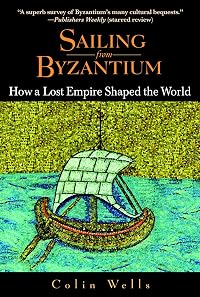
Sailing from Byzantium: How a Lost Empire Shaped the World
by Colin Wells
On This Page
Description
A gripping intellectual adventure story, Sailing from Byzantium sweeps you from the deserts of Arabia to the dark forests of northern Russia, from the colorful towns of Renaissance Italy to the final moments of a millennial city under siege....Byzantium: the successor of Greece and Rome, this magnificent empire bridged the ancient and modern worlds for more than a thousand years. Without Byzantium, the works of Homer and Herodotus, Plato and Aristotle, Sophocles and Aeschylus, would never show more have survived. Yet very few of us have any idea of the enormous debt we owe them.The story of Byzantium is a real-life adventure of electrifying ideas, high drama, colorful characters, and inspiring feats of daring. In Sailing from Byzantium, Colin Wells tells of the missionaries, mystics, philosophers, and artists who against great odds and often at peril of their own lives spread Greek ideas to the Italians, the Arabs, and the Slavs.Their heroic efforts inspired the Renaissance, the golden age of Islamic learning, and Russian Orthodox Christianity, which came complete with a new alphabet, architecture, and one of the world's greatest artistic traditions. The story's central reference point is an arcane squabble called the Hesychast controversy that pitted humanist scholars led by the brilliant, acerbic intellectual Barlaam against the powerful monks of Mount Athos led by the stern Gregory Palamas, who denounced "pagan" rationalism in favor of Christian mysticism.Within a few decades, the light of Byzantium would be extinguished forever by the invading Turks, but not before the humanists found a safe haven for Greek literature. The controversy of rationalism versus faith would continue to be argued by some of history's greatest minds. Fast-paced, compulsively readable, and filled with fascinating insights, Sailing from Byzantium is one of the great historical dramas-the gripping story of how the flame of civilization was saved and passed on. show lessTags
Recommendations
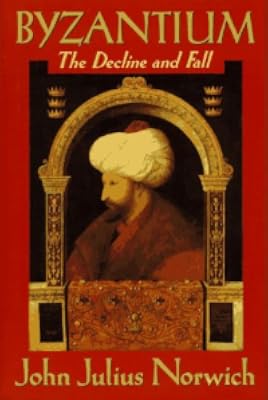


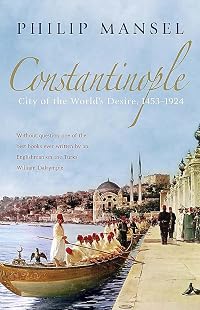
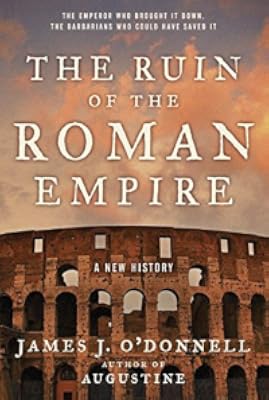
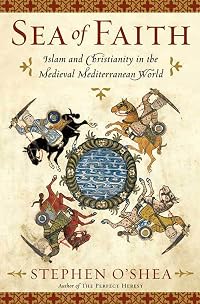

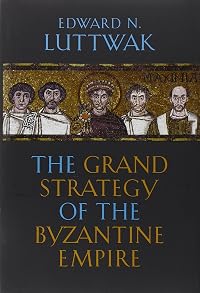

Member Recommendations
Member Reviews
A gripping intellectual adventure story, Sailing from Byzantium sweeps you from the deserts of Arabia to the dark forests of northern Russia, from the colorful towns of Renaissance Italy to the final moments of a millennial city under siege….Byzantium: the successor of Greece and Rome, this magnificent empire bridged the ancient and modern worlds for more than a thousand years. Without Byzantium, the works of Homer and Herodotus, Plato and Aristotle, Sophocles and Aeschylus, would never have survived. Yet very few of us have any idea of the enormous debt we owe them.The story of Byzantium is a real-life adventure of electrifying ideas, high drama, colorful characters, and inspiring feats of daring. In Sailing from Byzantium, Colin show more Wells tells of the missionaries, mystics, philosophers, and artists who against great odds and often at peril of their own lives spread Greek ideas to the Italians, the Arabs, and the Slavs.Their heroic efforts inspired the Renaissance, the golden age of Islamic learning, and Russian Orthodox Christianity, which came complete with a new alphabet, architecture, and one of the world’s greatest artistic traditions. The story’s central reference point is an arcane squabble called the Hesychast controversy that pitted humanist scholars led by the brilliant, acerbic intellectual Barlaam against the powerful monks of Mount Athos led by the stern Gregory Palamas, who denounced “pagan” rationalism in favor of Christian mysticism.Within a few decades, the light of Byzantium would be extinguished forever by the invading Turks, but not before the humanists found a safe haven for Greek literature. The controversy of rationalism versus faith would continue to be argued by some of history’s greatest minds. Fast-paced, compulsively readable, and filled with fascinating insights, Sailing from Byzantium is one of the great historical dramas–the gripping story of how the flame of civilization was saved and passed on.From the Hardcover edition. show less
The Byzantines saw themselves as inheritors and continuators of the Imperial Roman legacy, and, as part of this, as the guardians of the one true Christian faith. But their European contemporaries, and many Westerners see it quite differently: we see ourselves as Rome's descendants to one degree or another, but the Byzantines are not part of that for us. They're alien, mediaeval, Orthodox, effete, decadent--Other.
But we're doing the Byzantines a disservice when we see them as outside the Western progression from Rome, to the Middle Ages, to the restoration of ancient knowledge in the Renaissance. They had an inestimable impact on each of the three major civilisations that surrounded them--Europe to the West, the Arabs to the East and show more the Slavs to the North; and in each case, that impact took a radically different form. It's the nature of this cultural diffusion that is Colin Wells's subject in Sailing from Byzantium: How a Lost Empire Shaped the World.
The book is fairly short, only 293 pages in the hardcover edition. It's divided into three sections: first the West, detailing how the diaspora of Byzantine scholars who fled Constantinople following its fall to the Turks in 1453 reintroduced the Greek language, and thereby Ancient Greek scholarship, to the humanists of the early Italian Renaissance; then the East, where Byzantine society and culture gave the primitive Muslim warriors who burst out of the Arabian desert a model of how to govern a multinational empire and establish a sophisticated cultural identity even as they gobbled the empire up piece by piece; and lastly the Slavs, who received from Constantinople literacy (the Cyrillic alphabet was invented by a Byzantine missionary), and religion, and lastly Russia's claim to Rome's imperial legacy, through intermarriage with the Byzantine royal houses and Tsar Ivan the Great's adoption of the imperial title and Byzantine regalia after Constantinople's fall.
Sailing From Byzantium is fully accessible to the casual reader. It's not a scholarly study and doesn't pretend to be, but it's a great jumping in point. show less
But we're doing the Byzantines a disservice when we see them as outside the Western progression from Rome, to the Middle Ages, to the restoration of ancient knowledge in the Renaissance. They had an inestimable impact on each of the three major civilisations that surrounded them--Europe to the West, the Arabs to the East and show more the Slavs to the North; and in each case, that impact took a radically different form. It's the nature of this cultural diffusion that is Colin Wells's subject in Sailing from Byzantium: How a Lost Empire Shaped the World.
The book is fairly short, only 293 pages in the hardcover edition. It's divided into three sections: first the West, detailing how the diaspora of Byzantine scholars who fled Constantinople following its fall to the Turks in 1453 reintroduced the Greek language, and thereby Ancient Greek scholarship, to the humanists of the early Italian Renaissance; then the East, where Byzantine society and culture gave the primitive Muslim warriors who burst out of the Arabian desert a model of how to govern a multinational empire and establish a sophisticated cultural identity even as they gobbled the empire up piece by piece; and lastly the Slavs, who received from Constantinople literacy (the Cyrillic alphabet was invented by a Byzantine missionary), and religion, and lastly Russia's claim to Rome's imperial legacy, through intermarriage with the Byzantine royal houses and Tsar Ivan the Great's adoption of the imperial title and Byzantine regalia after Constantinople's fall.
Sailing From Byzantium is fully accessible to the casual reader. It's not a scholarly study and doesn't pretend to be, but it's a great jumping in point. show less
This is one of those tricky books that I want to like more than I do. It's hard to pitch a history like this exactly right. There were parts where I felt the author was going into more detail than I wanted, since I picked the book based on prior interest. In other places, I wanted him to connect the dots more. So, how does this relate to what I already know? Why do I feel like there is a big hole here? I know there's something missing but I can't quite remember what? So, in some ways it is overspecialized and in other ways underspecialized.
Texto sobre la influencia de la cultura bizantina en sus vecinos y sucesores (y, a través de ellos en el mundo actual) Contado con un estilo ágil, es una lectura agradable e incluye información muy interesante desde un punto de vista original. (Eso si, no es una historia del imperio como tal y salta de una época a otra según el tema del que le interese hablar)
This book traced the influence of the Byzantium’s influence on the cultures of western Europe, the Islamic World, and the Slavs in eastern Europe. Fortunately for my sanity, the book was divided into three different sections, but all the events happened during the same timeframe. I found it very intriguing and gained a new perspective on western European history in particular. The book did describe the Byzantine influence on art and architecture, particularly in Italy, and was crying out for pictures, but unfortunately none were included. I'd advise reading this with Google images on hand. I would also recommend reading this in conjunction with [b:Ad Infinitum: A Biography of Latin|268210|Ad Infinitum A Biography of Latin|Nicholas show more Ostler|https://images.gr-assets.com/books/1312039919s/268210.jpg|260015], which gives an overview of the linguistic divide between Byzantium and Rome and also describes the attitude the Roman Catholic church had toward classical pagan knowledge, which contrasts sharply with that of the Byzantine Eastern Orthodox monks. show less
This book traced the influence of the Byzantium’s influence on the cultures of western Europe, the Islamic World, and the Slavs in eastern Europe. Fortunately for my sanity, the book was divided into three different sections, but all the events happened during the same timeframe. I found it very intriguing and gained a new perspective on western European history in particular. The book did describe the Byzantine influence on art and architecture, particularly in Italy, and was crying out for pictures, but unfortunately none were included. I'd advise reading this with Google images on hand. I would also recommend reading this in conjunction with [b:Ad Infinitum: A Biography of Latin|268210|Ad Infinitum A Biography of Latin|Nicholas show more Ostler|https://images.gr-assets.com/books/1312039919s/268210.jpg|260015], which gives an overview of the linguistic divide between Byzantium and Rome and also describes the attitude the Roman Catholic church had toward classical pagan knowledge, which contrasts sharply with that of the Byzantine Eastern Orthodox monks. show less
This book presents a comprehensive overview of the last days of Byzantium, showing how the Byzantine legacy permeates the civilizations and cultures that followed – the western European, the Islamic world, and the eastern, Slavonic, European ones.
My one objection is the way the Islamic world is represented in the narrative. The description of how the western and eastern European cultures utilised the Byzantine heritage is vivid and often full of details while the description of the same process in the Islamic world is brief. As a layman I have no idea if this is because of lack of knowledge and scholarly work on this topic or because of prejudices on behalf of the author.
Despite this I recommend the work as it is accessible to the show more non-scholar interested in the evolution of European culture and politics. show less
My one objection is the way the Islamic world is represented in the narrative. The description of how the western and eastern European cultures utilised the Byzantine heritage is vivid and often full of details while the description of the same process in the Islamic world is brief. As a layman I have no idea if this is because of lack of knowledge and scholarly work on this topic or because of prejudices on behalf of the author.
Despite this I recommend the work as it is accessible to the show more non-scholar interested in the evolution of European culture and politics. show less
Members
- Recently Added By
Author Information

4 Works 578 Members
Colin Wells has written extensively on Saudi Arabia and the Middle East
Common Knowledge
- Original publication date
- 2006
- People/Characters
- Al-Mamun; John Argyropoulos; Aristotle (384-322 BC/BCE); Manuel Chrysoloras; Cyril the Philosopher (Saint, Apostle to the Slavs, or Constantine the Philosopher, 826 to 869); Methodius of Thessalonica (Saint, Apostle to the Slavs, b. Michael, 815 to 885) (show all 22); Boris I of Bulgaria (Saint, The Baptizer, Knyaz of Bulgaria, d.907); John Bessarion; John V Paleologos (Emperor); John VI Cantacuzenos; Muhammad (Prophet); Gregory Palamas; Sergius of Radonezh; Symeon the Great; Vladimir the Great; Roberto Rossi; George Gemistos Pletho; Hunayn ibn Isaq; Averroës; Constantine VII Porphyrogenitus, Byzantine Emperor; Demetrios Cydones; Dmitri II Donskoi
- Important places
- Byzantine Empire; Constantinople; Moscow, Russia; Bulgaria
- Dedication
- For Gran and Grandma Petey
And for my parents
With love and gratitude - Quotations
- Travel to Italy, and you'll find that Byzantium is never more than a stone's throw away.
"What has Athens to do with Jerusalem?" asked the second-century Christian writer Tertullian.
The Byzantine humanist who t... (show all)riggered the Hesychast controversy was brilliant but sharp-tongued Greek from southern Italy named Barlaam.
Tamerlane's devastating defeat of the Ottomans at Ankara in 1402 offered a last reprieve for the beleagured Byzantine empire, as the sons of the fallen sultan Bayezid fought each other for control of the shattered Ottoman state.
Classifications
Statistics
- Members
- 491
- Popularity
- 61,767
- Reviews
- 14
- Rating
- (3.73)
- Languages
- English, Portuguese
- Media
- Paper, Audiobook, Ebook
- ISBNs
- 8
- ASINs
- 3