On This Page
Description
After being given a talisman and tasked with carrying out a mission for the queen in the city of Sarantium, Crispin's talent for making mosaics leads him to discover a source of great power that may be his only hope of survival.Tags
Recommendations
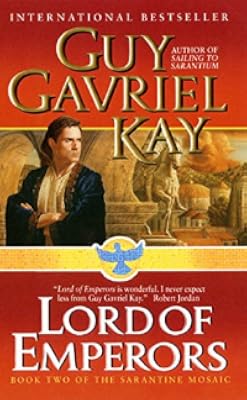
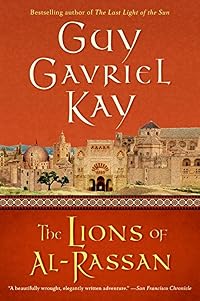
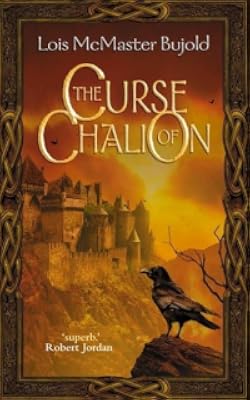
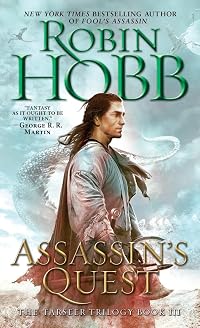
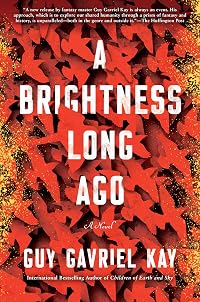
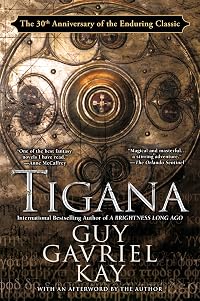
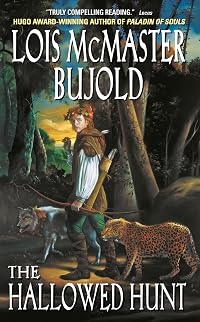


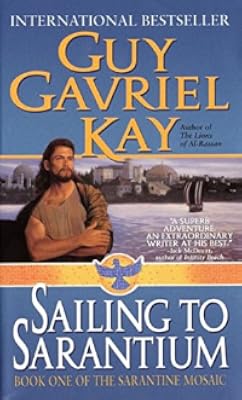
Member Recommendations

Member Reviews
Porphyry, porphyry, porphyry. The guy's got his craft fine-tuned, I'll say that. 2 parts, 10 chapters, of which the first part had me convinced this would be a 5 star read. And I can see why many gave it 5. A few decisions, or inclusions, made me lower my estimation a little. After not having read Tigana in many years, I still remember the out-of-the-blue, seemingly misplaced sex scene. This one had another that had me scratching my head. There also seemed to be many seductresses, seductri. The same scenes were told in seperate points of view many times, which was neat, but the omniscient narrator, though used to good effect, sometimes pulled me out of the story. I'll read the next after some time has passed, but won't rush full speed. show more Not even sure where to land on the rating. show less
http://nhw.livejournal.com/862776.html
I've read two very bad novels about Justinian, Belisarius, and seventh-century Constantinople, one by Robert Graves and one by Eric Flint and David Drake. This is a damn good novel about them, one I had been meaning to get around to for ages. It is fortuitous (or maybe not completely) that I have been reading it so soon after my own visit to Istanbul two weeks ago; having just been there, I really found Kay's description of the city, the Hippodrome, and the grand Sanctuary of Holy Wisdom helping me make sense of what I saw and letting me imagine what the place would have been like 1400 years ago. Kay also brings to life the decaying civilisation of the former imperial territories to the west, and show more the lonely and dangerous land route to the capital. (As for the latter, I also have eerie memories of driving its modern equivalent, the former Highway of Brotherhood and Unity, between Zagreb and Belgrade in a thick winter fog, hoping to avoid the minefields.)
And yet of course this book isn't ostensibly about Justinian, or Belisarius, or Theodora, or the Byzantine Empire, but about the emperor Valerius, his general Leontes, his wife Alixana, and the empire of Sarantium. It is reasonable to ask if it is worth the hassle of Kay renaming a few personal and place names to tell his story. I think it is. For a start, it liberates him from any obligation to stick too closely to the historical events from which he has drawn his story, and in particular to be a bit more inventive about the religious beliefs and practices of his characters; and I suppose to write about faith and belief as universal human experiences, while separating them from what the reader may know or think about specific religions in our own world. And second, it allows him to inject a fantasy element or two, specifically an alchemist who can create telepathic metal birds, and an intervention from the Old Gods of the type favoured by Lois McMaster Bujold in her most recent novels.
Having raved about the scenery, I am now going to rave about the plot and characters. The core of the book is the story of Crispin the mosaicist's journey from the western city of Varena (ie Ravenna, Kay's least opaque renaming) to the capital to decorate the new Sanctuary, overcoming personal tragedy and deadly political conspiracy. But Kay builds up the mosaic of the narrative from lots of little glimpses of perspective as well, in a memorable sequence actually telling one part of the story backwards, each new viewpoint character taking us to an earlier stage of the action. All really well done, and yet the worldbuilding is even better than that.
Well, I really enjoyed this, as I have enjoyed all Kay's books (apart from his first, coauthored with a more famous writer). I wish I had bought the sequel at the same time as this. show less
I've read two very bad novels about Justinian, Belisarius, and seventh-century Constantinople, one by Robert Graves and one by Eric Flint and David Drake. This is a damn good novel about them, one I had been meaning to get around to for ages. It is fortuitous (or maybe not completely) that I have been reading it so soon after my own visit to Istanbul two weeks ago; having just been there, I really found Kay's description of the city, the Hippodrome, and the grand Sanctuary of Holy Wisdom helping me make sense of what I saw and letting me imagine what the place would have been like 1400 years ago. Kay also brings to life the decaying civilisation of the former imperial territories to the west, and show more the lonely and dangerous land route to the capital. (As for the latter, I also have eerie memories of driving its modern equivalent, the former Highway of Brotherhood and Unity, between Zagreb and Belgrade in a thick winter fog, hoping to avoid the minefields.)
And yet of course this book isn't ostensibly about Justinian, or Belisarius, or Theodora, or the Byzantine Empire, but about the emperor Valerius, his general Leontes, his wife Alixana, and the empire of Sarantium. It is reasonable to ask if it is worth the hassle of Kay renaming a few personal and place names to tell his story. I think it is. For a start, it liberates him from any obligation to stick too closely to the historical events from which he has drawn his story, and in particular to be a bit more inventive about the religious beliefs and practices of his characters; and I suppose to write about faith and belief as universal human experiences, while separating them from what the reader may know or think about specific religions in our own world. And second, it allows him to inject a fantasy element or two, specifically an alchemist who can create telepathic metal birds, and an intervention from the Old Gods of the type favoured by Lois McMaster Bujold in her most recent novels.
Having raved about the scenery, I am now going to rave about the plot and characters. The core of the book is the story of Crispin the mosaicist's journey from the western city of Varena (ie Ravenna, Kay's least opaque renaming) to the capital to decorate the new Sanctuary, overcoming personal tragedy and deadly political conspiracy. But Kay builds up the mosaic of the narrative from lots of little glimpses of perspective as well, in a memorable sequence actually telling one part of the story backwards, each new viewpoint character taking us to an earlier stage of the action. All really well done, and yet the worldbuilding is even better than that.
Well, I really enjoyed this, as I have enjoyed all Kay's books (apart from his first, coauthored with a more famous writer). I wish I had bought the sequel at the same time as this. show less
Guy Gavriel Kay never fails to write exquisite prose, in my experience, and this book is no different.
Yet another venture into "Europe a quarter turn to the left," this is the story of a man on the road from Varena to the imperial capitol of Sarantium (an alternate version of Byzantium) to decorate the newly built sanctuary of Jad there with a grand mosaic. But this book is also about mystery, about what there is behind the veil and how we here in the world are to understand our place in it.
There is, of course, almost unbearable humanity in the story, and an aching meditation on art and the artist.
It is beautiful, and heartfelt, and exciting.
Yet another venture into "Europe a quarter turn to the left," this is the story of a man on the road from Varena to the imperial capitol of Sarantium (an alternate version of Byzantium) to decorate the newly built sanctuary of Jad there with a grand mosaic. But this book is also about mystery, about what there is behind the veil and how we here in the world are to understand our place in it.
There is, of course, almost unbearable humanity in the story, and an aching meditation on art and the artist.
It is beautiful, and heartfelt, and exciting.
68. fantasy ****
[Sailing to Sarantium] [[Guy Gavriel Kay]]
An alternate Europe similar but with subtle differences. Byzantium is Sarantium and the time is somewhere in what we would call the dark ages, the period after Rome (here it is Rhodias) fell but before what would become Western Europe began to organize itself. A Rhodian mosaicist, Crispin, arrives in Sarantium to work on the new great dome built by the current emperor of Sarantium, Valerius II. Crispin also bears a message from his own beleaguered Queen Gisel which sets in motion a veritable cascade of intrigue. Crispin is very outspoken and a contrarian of the first water, but he is also smart and courageous and likeable. On his journey (my favorite part of the book) Crispin show more acquires a young slave girl who was slated to be sacrificed to the pagan god of the wildwood and the man he hires as his guard on the road becomes his loyal servant as a result too. He also acquires a tribune, Carullus, as a loyal friend. I liked the story best when it was "in motion" better than the convoluted court intrigue (always ending in some bloodbath or other, of course). Crispin is convincing as a true artist, with that observant, detached, sensitive, questioning and original way of seeing and responding to everything around him. Solid entertainment all the way with moments rising above. There is a second book to [The Sarantine Mosaic], [Lord of Emperors] and I plan to plunge right in. I should add - this is set in the the Tigana universe, and makes me realize I need to reread [Tigana]! **** show less
[Sailing to Sarantium] [[Guy Gavriel Kay]]
An alternate Europe similar but with subtle differences. Byzantium is Sarantium and the time is somewhere in what we would call the dark ages, the period after Rome (here it is Rhodias) fell but before what would become Western Europe began to organize itself. A Rhodian mosaicist, Crispin, arrives in Sarantium to work on the new great dome built by the current emperor of Sarantium, Valerius II. Crispin also bears a message from his own beleaguered Queen Gisel which sets in motion a veritable cascade of intrigue. Crispin is very outspoken and a contrarian of the first water, but he is also smart and courageous and likeable. On his journey (my favorite part of the book) Crispin show more acquires a young slave girl who was slated to be sacrificed to the pagan god of the wildwood and the man he hires as his guard on the road becomes his loyal servant as a result too. He also acquires a tribune, Carullus, as a loyal friend. I liked the story best when it was "in motion" better than the convoluted court intrigue (always ending in some bloodbath or other, of course). Crispin is convincing as a true artist, with that observant, detached, sensitive, questioning and original way of seeing and responding to everything around him. Solid entertainment all the way with moments rising above. There is a second book to [The Sarantine Mosaic], [Lord of Emperors] and I plan to plunge right in. I should add - this is set in the the Tigana universe, and makes me realize I need to reread [Tigana]! **** show less
Sailing to Sarantium - Kay
4 stars
I had high expectations for this book because I love this author. After trying the audio sample I knew I’d have to read it. (Where was Simon Vance when this one was published?) Typically for Kay, the book began slowly with a detailed prologue. A detailed, very slow prologue. It is important to the story as it provides the political background of the elaborate Byzantine-like setting. I knew it would be important, but I had a hard time maintaining my attention.
The action picks up with the introduction of the artisan Caius Crispus. In a very long first chapter the author gives us this character’s tragic backstory; a family lost to the plague; and the key to his value to the current Emperor. He is a show more passionate and talented mosaicist. One or two more long chapters and we have much more political intrigue and the background of religious strife. Kay always goes to some lengths with his world building and this book is no exception. Compared to some of his other books, I think he may have overdone it with this one.
Most of the book becomes a road trip as Crispus sets out reluctantly for the great city of Sarantium. He is answering an Imperial summons to decorate the dome of an important sanctuary. Many adventures and new characters along the way, as might be expected. There’s some pagan mythology and unsettling paranormal intrusion. I liked the new characters and the relationships that are building between them. The book ends with a cliffhanger before Crispus has been in Sarantium for more than a few weeks.
After more than 500 pages, I’m annoyed with that to-be-continued ending. There’s no doubt that I will read the next book, but I am annoyed. This book (and the sequel) were published after Tigana and Song for Arbornne; both excellent stand alone novels. I already have a feeling that there is some padding added to this story so It could be a duology. That may just be my personal sour grapes. I would have liked more pages about the art and far fewer pages devoted to chariot racing.
This book did satisfy me in one way. Kay uses this setting in several future books. They aren’t sequels in a real sense as they take place centuries after the time of this book. But there are references to the events of this book in the later publications. I’ve been curious about the backstory. I’m reading in the wrong order, but it’s just as well. Kay’s writing has gotten better. show less
4 stars
I had high expectations for this book because I love this author. After trying the audio sample I knew I’d have to read it. (Where was Simon Vance when this one was published?) Typically for Kay, the book began slowly with a detailed prologue. A detailed, very slow prologue. It is important to the story as it provides the political background of the elaborate Byzantine-like setting. I knew it would be important, but I had a hard time maintaining my attention.
The action picks up with the introduction of the artisan Caius Crispus. In a very long first chapter the author gives us this character’s tragic backstory; a family lost to the plague; and the key to his value to the current Emperor. He is a show more passionate and talented mosaicist. One or two more long chapters and we have much more political intrigue and the background of religious strife. Kay always goes to some lengths with his world building and this book is no exception. Compared to some of his other books, I think he may have overdone it with this one.
Most of the book becomes a road trip as Crispus sets out reluctantly for the great city of Sarantium. He is answering an Imperial summons to decorate the dome of an important sanctuary. Many adventures and new characters along the way, as might be expected. There’s some pagan mythology and unsettling paranormal intrusion. I liked the new characters and the relationships that are building between them. The book ends with a cliffhanger before Crispus has been in Sarantium for more than a few weeks.
After more than 500 pages, I’m annoyed with that to-be-continued ending. There’s no doubt that I will read the next book, but I am annoyed. This book (and the sequel) were published after Tigana and Song for Arbornne; both excellent stand alone novels. I already have a feeling that there is some padding added to this story so It could be a duology. That may just be my personal sour grapes. I would have liked more pages about the art and far fewer pages devoted to chariot racing.
This book did satisfy me in one way. Kay uses this setting in several future books. They aren’t sequels in a real sense as they take place centuries after the time of this book. But there are references to the events of this book in the later publications. I’ve been curious about the backstory. I’m reading in the wrong order, but it’s just as well. Kay’s writing has gotten better. show less
My favourite thing about Guy Gavriel Kay is the smoothness of his writing. This book wasn’t quite there for me, but I think it’s one of his earlier ones, so that’s fair. (His gift for finding metaphors and playing them out in the wider world is on point, though.) My next favourite thing is the world-building, how Kay takes actual history and changes it just enough to make it unfamiliar, sprinkles on magic at the edges, and then finds the politics that make it all hum. That was definitely there in this one, though I think the really humming bits are in the next book. It felt like a lot of set-up in this one? But still a great story, with a reluctant hero who’s both angry at the world, and kind and endearing and intelligent. I show more like the supporting cast too, though I’m hoping a few of them get fleshed out in the next book. (And that nothing bad happens to anyone. Hahaha.)
7/10 show less
7/10 show less
This was a reread by audio for me. The Sarantium Mosaic is often praised as top level GGK. But sadly it's not one of mine and this reread reminded me of that. I think the reason is that I struggle to care about the main character or those around him. Generally one of GGK's strengths, even if the characters are majorly flawed. But for me it just doesn't achieve that in this duology. It's still very good - he doesn't write bad books but it's just not one of my favourites.
Members
- Recently Added By
Lists

Favorite Long Books
330 works; 42 members
Best Fantasy Novels
821 works; 361 members

Slipstream or Interstitial Fiction
160 works; 19 members

Ten Books That Have Stayed With Me
160 works; 30 members
Speculative Fiction to Read
706 works; 32 members

a picture or a thousand words
39 works; 5 members

Books Read in 2022
5,226 works; 115 members

Books Read in 2016
4,666 works; 199 members

Books About the Arts that Aren't Art Books
21 works; 5 members

Books Read in 2019
4,052 works; 110 members

Books Read in 2021
5,361 works; 114 members

infjsarah's wishlist
408 works; 2 members

Top Five Books of 2025
954 works; 303 members

Canadian Jurist-Novelists
313 works; 1 member
Author Information

35+ Works 38,793 Members
Guy Gavriel Kay was born on November 7, 1954 in Weyburn, Saskatchewan, Canada. He became interested in fantasy fiction while working as an assistant to Christopher Tolkien. He assisted him with the editing of J. R. R. Tolkien's The Silmarillion. After receiving a law degree from the University of Toronto, he became principal writer and associate show more producer for the CBC radio series, The Scales of Justice. He also wrote several episodes when the series moved to television. He has written social and political commentary for several publications including the National Post, The Globe and Mail, and The Guardian. His first fantasy novels were The Summer Tree, The Wandering Fire, and The Darkest Road, which make up the Fionavar Tapestry Trilogy. His other works include A Song for Arbonne, The Lions of Al-Rassan, Beyond This Dark House, The Last Light of the Sun, and Under Heaven. He has received numerous awards including and the Aurora Award for Tigana and The Wandering Fire, the 2008 World Fantasy Award for Best Novel for Ysabel, and the International Goliardos Award for his work in the fantasy field. (Bowker Author Biography) show less
Some Editions
Awards and Honors
Awards
Notable Lists
Series

Belongs to Publisher Series
Work Relationships
Is contained in
Common Knowledge
- Canonical title
- Sailing to Sarantium
- Original title
- Sailing to Sarantium
- Original publication date
- 1998-09
- People/Characters
- Caius Crispus (Crispin); Valerius II; Alixana; Kasia [from the Sarantium Mosaic]; Vargos; Carullos (show all 10); Martinian; Zoticus; Shirin [from the Sarantium Mosaic]; Scortius
- Important places
- Varena; Batiara; Sauradia; Sarantium
- Epigraph
- . . . and we knew not whether we were on heaven or on earth. For on earth there is no such splendour or such beauty, and we were at a loss how to describe it. We know only that God dwells there among men, and their service is... (show all) fairer than the ceremonies of other nations. For we cannot forget that beauty.
---Chronicle of the Journey of Vladimir,
Grand Prince of Kiev, to Constantinople - Dedication
- For my sons,
Samuel Alexander and Matthew Tyler,
with love, as I watch them
'. . . fashion everything
from nothing every day, and teach
The morning stars to sing.' - First words
- Thunderstorms were common in Sarantium on midsummer nights, sufficiently so to make plausible the oft-repeated-tale that the Emperor Apius passed to the god in the midst of a towering storm, with lightning flashing and rolls ... (show all)of thunder besieging the Holy City.
- Last words
- (Click to show. Warning: May contain spoilers.)He drew a breath and stepped down off the scaffolding. She smiled.
- Original language
- English
Classifications
- Genres
- Fantasy, Fiction and Literature, General Fiction, Historical Fiction
- DDC/MDS
- 813.54 — Literature & rhetoric American literature in English American fiction in English 1900-1999 1945-1999
- LCC
- PR9199.3 .K39 .S25 — Language and Literature English English Literature English literature: Provincial, local, etc.
- BISAC
Statistics
- Members
- 2,761
- Popularity
- 6,674
- Reviews
- 53
- Rating
- (4.04)
- Languages
- 5 — Czech, English, French, Italian, Polish
- Media
- Paper, Audiobook, Ebook
- ISBNs
- 26
- ASINs
- 12