On This Page
Description
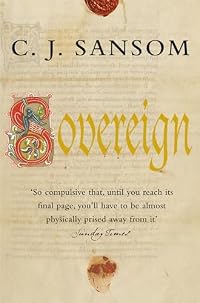
The year is 1541, and harsh autumn winds stir the English countryside. Following a violent uprising, King Henry VIII travels to York, where an important prisoner will be interrogated. Lawyer Matthew Shardlake is assigned to protect this conspirator, but he soon discovers a greater conspiracy threatening the crown.Tags
Recommendations




















Member Recommendations
bookfitz A novel from the same time period. The story follows the rise of Thomas Cromwell in the court of King Henry VIII.
40
Member Reviews
It's the autumn of 1541 and "crookback lawyer" Matthew Shardlake has been dispatched to York to help sort out paperwork pertaining to the upcoming visit of the monstrous Henry VIII. He's also charged with keeping an eye on a political prisoner being held there, to ensure he arrives in the state torture chambers in the Tower of London in rude health. Cue a mystery plot with more twists than Chubby Checker eating a bag of pretzels, as various no-good courtiers, conspirators and on-the-make officials weave webs of murder and deceit. I understand that part of the appeal of genre fiction is its formulaic nature, but for a dedicated lit-ficcer like me it's somewhat amusing watching the various attempts on Shardlake's life play out as if show more according to a schedule — mobbed by glaziers one day, swung-at by a giant roasting spit a few days later, narrowly escaping being thrown by a sabotaged horse not long after that, etc etc. Sansom, a diligent lawyer himself before turning to fiction, plans his hero's days down to the minute as he and his Watson, lusty young Jack Barak, scurry round the city like rats in some mad scientist's maze.
It is satisfying, though, and not just intellectually. Sansom puts you right there in the filth of Tudor England with its overflowing latrines, incurable diseases and putrid airs. And looming over everything is the gross, tyrannical figure of the king (or the "Mouldwarp" as a subversive prophecy, important to the plot, calls him), one leg pustulent and reeking, a hobbling embodiment of the corruption of the state. Henry's gradual progress north from London, with its thousands of attendants and camp-followers, is likened to a great beast devouring all in its path, and the tyrant himself is a truly disturbing monster, radiating cruelty and malice. It's no wonder people risked the rack to plot against him. show less
It is satisfying, though, and not just intellectually. Sansom puts you right there in the filth of Tudor England with its overflowing latrines, incurable diseases and putrid airs. And looming over everything is the gross, tyrannical figure of the king (or the "Mouldwarp" as a subversive prophecy, important to the plot, calls him), one leg pustulent and reeking, a hobbling embodiment of the corruption of the state. Henry's gradual progress north from London, with its thousands of attendants and camp-followers, is likened to a great beast devouring all in its path, and the tyrant himself is a truly disturbing monster, radiating cruelty and malice. It's no wonder people risked the rack to plot against him. show less
Matthew Shardlake, King’s lawyer, has gone to York to help with petitions from locals during the King's Progress. Charged also with ensuring the welfare of a prisoner being held as part of a conspiracy against the King, intended for questioning in the tower of London, the hunchbacked lawyer is soon embroiled in murder, royal intrigue, and various attacks on his person. Unsurprisingly, the theme ‘I want to go home’ is a recurring one between Shardlake and his assistant, the rough-edged Barak.
Of the first three books, this takes off at the fastest pace – by which anyone having read the other two will understand that Shardlake barely has time to eat or even blink between violent attacks on his person or bewildering snippets of show more rumour and information. It settles down at about the halfway point, into a familiar stew of uncertainty, looming danger, malapert young women (this series has given me a new favourite word), mockery and threats from high places.
This series is my latest favourite thing to read, so allowing that I felt Sovereign to be the weakest of the books so far means that I only loved it semi-completely. There were a few out-of-character gaffes made solely to advance the plot, which is sloppiness I don’t expect in a third-of-the-series book, and the story itself wasn’t as fascinating as the previous two. I did, however, love the atmosphere of unwelcoming York, strung with body parts and seething with resentment, as well as the unsettling closeness of the King’s court (the reader is made to feel Shardlake’s discomfort sharply) and the wealth of research that the author puts into these books once again remained in the background, shaping and enhancing everything without intruding on the story.
I’m glad I’ve still got Revelation to read, and that there’s another book due out over the summer – this is one series I don’t want to get through too quickly. show less
Of the first three books, this takes off at the fastest pace – by which anyone having read the other two will understand that Shardlake barely has time to eat or even blink between violent attacks on his person or bewildering snippets of show more rumour and information. It settles down at about the halfway point, into a familiar stew of uncertainty, looming danger, malapert young women (this series has given me a new favourite word), mockery and threats from high places.
This series is my latest favourite thing to read, so allowing that I felt Sovereign to be the weakest of the books so far means that I only loved it semi-completely. There were a few out-of-character gaffes made solely to advance the plot, which is sloppiness I don’t expect in a third-of-the-series book, and the story itself wasn’t as fascinating as the previous two. I did, however, love the atmosphere of unwelcoming York, strung with body parts and seething with resentment, as well as the unsettling closeness of the King’s court (the reader is made to feel Shardlake’s discomfort sharply) and the wealth of research that the author puts into these books once again remained in the background, shaping and enhancing everything without intruding on the story.
I’m glad I’ve still got Revelation to read, and that there’s another book due out over the summer – this is one series I don’t want to get through too quickly. show less
After jumping ahead and reading a couple of later books in this series, managed to get this earlier volume which I have enjoyed. In this Matthew Shardlake, lawyer, and his clerk/bodyguard/sidekick Jack Barak are in York as part of the King's progress to the North. The political situation is tense following a second conspiracy discovered and crushed, only five years after the Pilgrimage of Grace which Henry VIII was only able to subdue by deceit and treachery. Shardlake is part of the legal team who are meant to be hearing petitions and weeding out the unsuitable ones, the Progress being meant to show the King's justice as well as being an opportunity to cow the northern nobles.
Barak finds meaningful romance for the first time when he show more meets Tamasin who is working as a sweetmeat maker for Queen Catherine. But things take a sinister turn when a glazier, who is removing the stained glass windows from the decommissioned abbey church in the walled enclosure that is to be the King's base in York, is killed - and it soon transpires that not only has he been murdered but that he seems to be mixed up in the recently put-down conspiracy. For it seems that some members have managed to evade the authorities.
As usual this is a page-turner with various attempts on Shardlake's life, against a complex interweaving of Tudor politics, religion and social castes. I did work out some elements of the mystery, as I had seen the documentary which the author refers to in his endnote, but didn't work out all the elements of who had done what. I did though work out who one of the villains had to be, but I still found the denouement effective and saddening. The only weakness in the book, which holds it back from 5 stars, is that the author has a few "ticks" which really jumped out and kept taking me out of the story. People constantly take a deep breath - Shardlake himself does this 5 or 6 times in one scene. And there were a few continuity errors, such as having a character stand up twice about two paragraphs apart. But it still merits a well-deserved 4 stars. show less
Barak finds meaningful romance for the first time when he show more meets Tamasin who is working as a sweetmeat maker for Queen Catherine. But things take a sinister turn when a glazier, who is removing the stained glass windows from the decommissioned abbey church in the walled enclosure that is to be the King's base in York, is killed - and it soon transpires that not only has he been murdered but that he seems to be mixed up in the recently put-down conspiracy. For it seems that some members have managed to evade the authorities.
As usual this is a page-turner with various attempts on Shardlake's life, against a complex interweaving of Tudor politics, religion and social castes. I did work out some elements of the mystery, as I had seen the documentary which the author refers to in his endnote, but didn't work out all the elements of who had done what. I did though work out who one of the villains had to be, but I still found the denouement effective and saddening. The only weakness in the book, which holds it back from 5 stars, is that the author has a few "ticks" which really jumped out and kept taking me out of the story. People constantly take a deep breath - Shardlake himself does this 5 or 6 times in one scene. And there were a few continuity errors, such as having a character stand up twice about two paragraphs apart. But it still merits a well-deserved 4 stars. show less
Spoilers starting paragraph 3.
Excellent illustration of the vulnerability of anyone who isn’t the King of England. I felt the axe-grinding a bit more in this one with the question of Henry VIII’s legitimacy and treatment of his northern subjects. Those not willing to go quietly along with the new order are swept aside, imprisoned, tortured, executed and their lands and property seized. This makes for a mighty unquiet populace and a secret group of conspirators has been operating quietly, waiting for a chance to disprove Henry’s right to the throne and reestablish the legitimate line. Unfortunately, it looks as though they’ve missed their opportunity and their numbers are dwindling. This sets in motion a plot to find show more incriminating documents; to destroy or secure them is unclear, but of course many people have to die in the effort.
Basically this is what Shardlake and Barak get caught up in. Commissioned by the Archbishop of Canterbury, Thomas Cranmer, Matthew is attached to the King’s Progress to York. Ostensibly to pacify the rebellious northerners, but also to meet with the Scottish King and effect reconciliation, the Progress is really a big showcase of Henry’s right and might. Matthew’s first duty is to protect a political prisoner from an overzealous jailer who’s been known to “accidentally” kill prisoners awaiting torture in the Tower. This is easier said than done and of course shenanigans and poor-sportsmanship ensue.
There is more taunting of Matthew’s hunchbacked condition in this one and it pained me almost as much as it pained him. The biggest insult came directly from the King when he taunted Shardlake during a highly public ceremony. But to make up for it, Shardlake makes a great friend who becomes a surrogate father to him. Fellow lawyer Giles Wrenne is terminally ill and endears himself to Matthew and Barak so they will act as guide and nursemaid on a journey back to London to find his estranged nephew. All well and good, but as the relationship and story progress, hints and suspicion grow. Unfortunately only for me as a reader, not for Shardlake and Barak. Shardlake is too busy suspecting his old friend from the law college and Barak’s new girlfriend Tamesin.
But he gets there in the end and it’s his sad duty to defend himself against Giles in his own garden. This when he should be relaxing and recovering from his time in the Tower. Yes, Matthew gets framed, arrested and thrown into the most horrifying place of its day. Of course Sir Richard Rich is at the bottom of it and it takes the swift work of Barak and the intervention of Archbishop Cranmer to spring him. Having seen The Tower of London in person helped me to imagine the desolation, dread and physical torment of the place. The characterization of his jailers was well done; just doing our jobs, but we like our jobs kind of attitude. Chilling and effective.
I think I’ll hold off reading the next one for a while to give myself a break from the all-encompassing atmosphere of these books. It’s a good thing; rich and detailed, but it’s also a bit depressing. The ignorance, rampant corruption and villainy and the arbitrary nature of it all can be a bit overwhelming. It’s hard to see the good things that came out of this time. Henry and his reign of terror seem to hold sway and I wish that there were a way to transmit some information about the advances during that period, not just the retreats. show less
Excellent illustration of the vulnerability of anyone who isn’t the King of England. I felt the axe-grinding a bit more in this one with the question of Henry VIII’s legitimacy and treatment of his northern subjects. Those not willing to go quietly along with the new order are swept aside, imprisoned, tortured, executed and their lands and property seized. This makes for a mighty unquiet populace and a secret group of conspirators has been operating quietly, waiting for a chance to disprove Henry’s right to the throne and reestablish the legitimate line. Unfortunately, it looks as though they’ve missed their opportunity and their numbers are dwindling. This sets in motion a plot to find show more incriminating documents; to destroy or secure them is unclear, but of course many people have to die in the effort.
Basically this is what Shardlake and Barak get caught up in. Commissioned by the Archbishop of Canterbury, Thomas Cranmer, Matthew is attached to the King’s Progress to York. Ostensibly to pacify the rebellious northerners, but also to meet with the Scottish King and effect reconciliation, the Progress is really a big showcase of Henry’s right and might. Matthew’s first duty is to protect a political prisoner from an overzealous jailer who’s been known to “accidentally” kill prisoners awaiting torture in the Tower. This is easier said than done and of course shenanigans and poor-sportsmanship ensue.
There is more taunting of Matthew’s hunchbacked condition in this one and it pained me almost as much as it pained him. The biggest insult came directly from the King when he taunted Shardlake during a highly public ceremony. But to make up for it, Shardlake makes a great friend who becomes a surrogate father to him. Fellow lawyer Giles Wrenne is terminally ill and endears himself to Matthew and Barak so they will act as guide and nursemaid on a journey back to London to find his estranged nephew. All well and good, but as the relationship and story progress, hints and suspicion grow. Unfortunately only for me as a reader, not for Shardlake and Barak. Shardlake is too busy suspecting his old friend from the law college and Barak’s new girlfriend Tamesin.
But he gets there in the end and it’s his sad duty to defend himself against Giles in his own garden. This when he should be relaxing and recovering from his time in the Tower. Yes, Matthew gets framed, arrested and thrown into the most horrifying place of its day. Of course Sir Richard Rich is at the bottom of it and it takes the swift work of Barak and the intervention of Archbishop Cranmer to spring him. Having seen The Tower of London in person helped me to imagine the desolation, dread and physical torment of the place. The characterization of his jailers was well done; just doing our jobs, but we like our jobs kind of attitude. Chilling and effective.
I think I’ll hold off reading the next one for a while to give myself a break from the all-encompassing atmosphere of these books. It’s a good thing; rich and detailed, but it’s also a bit depressing. The ignorance, rampant corruption and villainy and the arbitrary nature of it all can be a bit overwhelming. It’s hard to see the good things that came out of this time. Henry and his reign of terror seem to hold sway and I wish that there were a way to transmit some information about the advances during that period, not just the retreats. show less
Matthew Shardlake has been asked to join the king's Progress to the North in his professional capacity as a lawyer, but feels obliged to do Archbishop Cranmer a favour: to ensure an important prisoner and conspirator reaches London in a fit state to be tortured for information. Whilst in York, he hears the last words of a glazier who has fallen off his ladder (or has he?) and stumbles head first into a conspiracy involving a jewelbox containing secret papers with the aim to discredit Henry VIII's claim to the throne of England.
The Shardlake series appears to be getting better and better, I absolutely loved this and could barely put it down, racing through the 650+ pages in a matter of days. The novel is mainly set in York, preparing for show more the arrival of the King's Progress, and conjures up quite a different atmosphere again compared to the two earlier novels (Dissolution, Dark Fire). It's the beginning of autumn and the weather is turning gloomy and cold, Shardlake and his assistant Jack Barak as southrons are facing hostility from the Yorkers, and all around preparations are in full swing to have everything ready for the king. Again Sansom manages to convey a whole world to the reader, creating a marvellous sense of place and atmosphere including various unpleasant smells; I could feel the excitement, the hustle and bustle prior to the progress entering the city, the anxiety of the officials, but also the barely concealed hostility of the Yorkers towards this great venture and their king. When Henry finally arrives it is rather an anticlimax, especially for Shardlake, who has to suffer a very public humiliation. There are several threads woven into the narrative, all coming to a satisfactory conclusion, with Shardlake having to endure a short, but nevertheless painful stay at the Tower of London. The descriptions of the Tower dungeons and the torture chamber are claustrophobic and terrifying, with a real sense of despair pervading everything. We also discover more facets to Shardlake's character, with Sansom taking the brave step to not always make him likeable, and yet we're with him every step of the way when he is publicly humiliated and faces torture, and so we forgive him that because of a recent family bereavement he may be unwilling or unable to admit to himself the true identity of the traitor until he's found concrete proof. I've already got the next volume lined up (Revelation), and with no advance first chapter at the end of the book it'll be a real surprise as to what comes next. I can't wait. show less
The Shardlake series appears to be getting better and better, I absolutely loved this and could barely put it down, racing through the 650+ pages in a matter of days. The novel is mainly set in York, preparing for show more the arrival of the King's Progress, and conjures up quite a different atmosphere again compared to the two earlier novels (Dissolution, Dark Fire). It's the beginning of autumn and the weather is turning gloomy and cold, Shardlake and his assistant Jack Barak as southrons are facing hostility from the Yorkers, and all around preparations are in full swing to have everything ready for the king. Again Sansom manages to convey a whole world to the reader, creating a marvellous sense of place and atmosphere including various unpleasant smells; I could feel the excitement, the hustle and bustle prior to the progress entering the city, the anxiety of the officials, but also the barely concealed hostility of the Yorkers towards this great venture and their king. When Henry finally arrives it is rather an anticlimax, especially for Shardlake, who has to suffer a very public humiliation. There are several threads woven into the narrative, all coming to a satisfactory conclusion, with Shardlake having to endure a short, but nevertheless painful stay at the Tower of London. The descriptions of the Tower dungeons and the torture chamber are claustrophobic and terrifying, with a real sense of despair pervading everything. We also discover more facets to Shardlake's character, with Sansom taking the brave step to not always make him likeable, and yet we're with him every step of the way when he is publicly humiliated and faces torture, and so we forgive him that because of a recent family bereavement he may be unwilling or unable to admit to himself the true identity of the traitor until he's found concrete proof. I've already got the next volume lined up (Revelation), and with no advance first chapter at the end of the book it'll be a real surprise as to what comes next. I can't wait. show less
After my last read, which was bleak and somewhat depressing, Sovereign was just what the doctor ordered: an intelligent, historical mystery. This is the third in the Matthew Shardlake series set in Tudor England. Shardlake, a London lawyer, receives orders from Archbishop Cranmer to travel to York with King Henry VIII's 1541 Progress. There, he is to watch over the health and well-being of a prisoner, who is part of a conspiracy that threatens Henry's right to the throne. Shardlake and his assistant Barak arrive in York ahead of the Progress; the city is alive with preparations for the big event. When a craftsman dies a grisly death, Shardlake suspects it was no accident. He takes it upon himself to investigate, and so the tale show more unfolds.
There is so much to enjoy in these books. First, there is the historical context. Shardlake operates on the edges of court. Well-known figures like Cranmer and the Duke of Norfolk are seldom central to the plot but never far away. Familiar stories unfold, but as a backdrop instead of the centerpiece -- such as, in this book, the events leading to Queen Catherine's execution. Second, Sansom fills Shardlake's world with several interesting characters, and convinces the reader that just about any one of them could be guilty. Then he weaves several threads into a web of major and minor mysteries. In Sovereign, not only is there a murder to be solved, but someone is out to get Shardlake too.
My only quibble with these books is that Sansom can run on a bit: why use one word when ten will do? The dead body didn't show up until page 75, and it took nearly 600 more pages to solve the crime and tie up the loose ends. However, I was hooked on the story and found myself sneaking short bursts of reading into my day, just to see what would happen next. I'm happy to have the next installment already on my shelves. show less
There is so much to enjoy in these books. First, there is the historical context. Shardlake operates on the edges of court. Well-known figures like Cranmer and the Duke of Norfolk are seldom central to the plot but never far away. Familiar stories unfold, but as a backdrop instead of the centerpiece -- such as, in this book, the events leading to Queen Catherine's execution. Second, Sansom fills Shardlake's world with several interesting characters, and convinces the reader that just about any one of them could be guilty. Then he weaves several threads into a web of major and minor mysteries. In Sovereign, not only is there a murder to be solved, but someone is out to get Shardlake too.
My only quibble with these books is that Sansom can run on a bit: why use one word when ten will do? The dead body didn't show up until page 75, and it took nearly 600 more pages to solve the crime and tie up the loose ends. However, I was hooked on the story and found myself sneaking short bursts of reading into my day, just to see what would happen next. I'm happy to have the next installment already on my shelves. show less
This may quite possibly be the best mystery I’ve read. Ever. But beyond that, C.J. Sansom is just so adroit at describing, in great historical detail, Henry VIIIs great Northern Progress to York in 1541. If you don’t know anything about Henry VIII or the Tudor period, don’t let that put you off. Sansom has a PhD in history and writes about the most mind-numbing historical drivel and somehow manages to make it all sound powerfully fascinating.
Of course, in addition to the thousand or so soldiers, Queen Catherine Howard, members of the nobility and the serving class, our intrepid investigator, crookback lawyer Matthew Shardlake is also along for the excursion, as well as his young assistant Jack Barak. They’ve been charged with show more overseeing the safe return of a prisoner charged with treason. And it seems there is a certain group of conspirators who are questioning whether Henry is the rightful king, and they have documents to back up their claim. And something is going on between the young Queen and a courtier. So the mysteries that need solving pile up and keep Matthew very busy.
This is the third book in the Matthew Shardlake series and the best by far. Sansom has really hit his stride and his ability to initiate feelings of heart pounding suspense is really unparalleled in this book. So do yourself a favor and jump aboard the Shardlake express. I don’t see how you could go wrong. show less
Of course, in addition to the thousand or so soldiers, Queen Catherine Howard, members of the nobility and the serving class, our intrepid investigator, crookback lawyer Matthew Shardlake is also along for the excursion, as well as his young assistant Jack Barak. They’ve been charged with show more overseeing the safe return of a prisoner charged with treason. And it seems there is a certain group of conspirators who are questioning whether Henry is the rightful king, and they have documents to back up their claim. And something is going on between the young Queen and a courtier. So the mysteries that need solving pile up and keep Matthew very busy.
This is the third book in the Matthew Shardlake series and the best by far. Sansom has really hit his stride and his ability to initiate feelings of heart pounding suspense is really unparalleled in this book. So do yourself a favor and jump aboard the Shardlake express. I don’t see how you could go wrong. show less
Members
- Recently Added By
Published Reviews
ThingScore 100
"Tension is kept up as the lawyer's compassion for the conspirator wars with his sense of duty in this craftsmanlike piece of historical fiction."
added by bookfitz
"As always, former lawyer Sansom (Dark Fire, 2005, etc.) fleshes out the detection with rich historic details presented at a stately pace."
added by bookfitz
Lists

Best Historical Fiction
620 works; 257 members

Top Five Books of 2013
1,564 works; 716 members

Historical Fiction
889 works; 91 members

Best Historical Crime
44 works; 17 members

Recommend the 20 best books you've read in the last five years
2,168 works; 606 members

Books about King Henry VIII
17 works; 13 members

British Mystery
469 works; 14 members

Crime and Mysteries to Read
746 works; 31 members
MysteryCAT: Historical Crime
27 works; 7 members

Books Read in 2019
4,052 works; 110 members

Books Read in 2018
4,360 works; 110 members
Best Mysteries With a Historical Setting
292 works; 160 members
Author Information

Some Editions
Awards and Honors
Series

Work Relationships
Is contained in
Has the adaptation
Common Knowledge
- Canonical title
- Sovereign
- Original title
- Sovereign
- Original publication date
- 2006
- People/Characters
- Matthew Shardlake; Jack Barak (Shardlake's assistant); Henry VIII, King of England; Katherine Howard; Thomas Cranmer, Archbishop of Canterbury; Richard Rich, 1st Baron Rich (show all 21); Peter Oldroyd (glazier); Sir Edward Broderick (political prisoner); Tamasin Reedbourne (Queen's servant); Jane Boleyn (Lady Rochford | Queen's lady-in-waiting); Thomas Culpepper (courtier); Francis Dereham (Queen's secretary); Sir William Maleverer (chair of the Council of the North); Jennet Marlin (Queen's servant); Giles Wrenne (old lawyer); Simon Craike; Fulke Radwinter (gaoler); George Leacon (sergeant); Bernard Locke (fiancé of Jennet Marlin); Edward Blaybourne (archer); Robert Aske (ex-rebellion leader)
- Important places
- York, North Yorkshire, England, UK; Fulford, Yorkshire, England, UK; Holme-on-Spalding-Moor, East Riding of Yorkshire, England, UK (as Howlme); Kingston upon Hull, East Riding of Yorkshire, England, UK; London, England, UK; Tower of London, London, England, UK (show all 7); Brabourne, Kent, England, UK (as Braybourne)
- Important events
- Henry VIII Great Progress (1541); Execution of Catherine Howard (1542)
- Dedication
- To P.D. James
- First words
- It was dark under the trees, only a little moonlight penetrating the half-bare branches.
- Last words
- (Click to show. Warning: May contain spoilers.)We turned away, leaving the true ancestors of our false King to their eternal rest.
- Original language
- English
Classifications
Statistics
- Members
- 2,709
- Popularity
- 6,787
- Reviews
- 96
- Rating
- (4.14)
- Languages
- 13 — Chinese, Czech, Dutch, English, Finnish, French, German, Hungarian, Korean, Norwegian (Bokmål), Portuguese, Russian, Spanish
- Media
- Paper, Audiobook, Ebook
- ISBNs
- 56
- ASINs
- 15