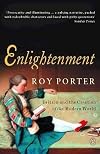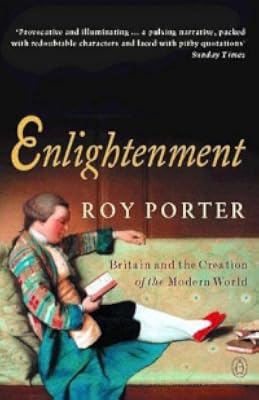
Enlightenment: Britain and the Creation of the Modern World
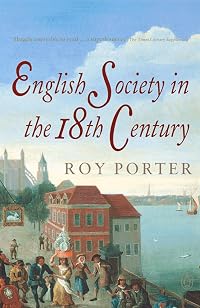
by Roy Porter
On This Page
Description
"With its representative government, religious tolerance, precocious industrialization, and pioneering individualism, eighteenth-century Britain was at the cutting edge of political, social, and intellectual innovation. Porter examines the influence of such heroic figures as Bacon, Newton, and Locke in shaping the British Enlightenment, as well as the impact of other English essayists and novelists in popularizing modern thought. He persuasively demonstrates how their writings launched the show more wild phenomenon of Anglomania that swept the Continent and cast the Enlightenment well beyond Europe's shores."--Jacket. show lessTags
Recommendations

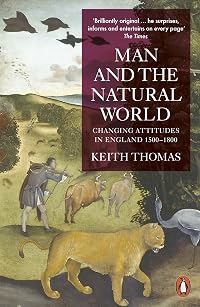

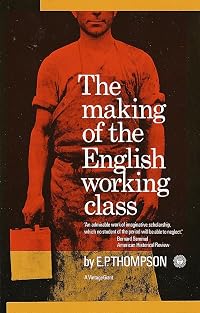
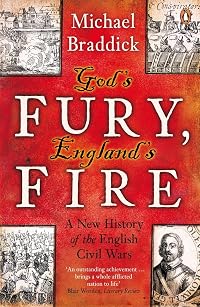
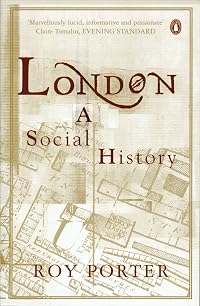


Member Reviews
I tried. I coffee'ed up and put in the time. Multiple reading sessions, high hopes and the kind of determination only an accomplished sufferer of OCD could understand. I didn't want to NOT read this. So 200 pages in and it's over.
Roy just couldn't stop trying to prove his point before he had even bothered to make it. I'm all for backing a dream and making your case strongly. Impassioned authorship typically makes for a great read. There was just too much philosophy and far too little content. Please teach me about the Enlightenment in Britain before trying to talk me into its importance. Making arguments using facts that I have yet to learn (and was hoping to learn in this book) is confusing and de-motivating.
So that's all. I'm quitting show more you book. show less
Roy just couldn't stop trying to prove his point before he had even bothered to make it. I'm all for backing a dream and making your case strongly. Impassioned authorship typically makes for a great read. There was just too much philosophy and far too little content. Please teach me about the Enlightenment in Britain before trying to talk me into its importance. Making arguments using facts that I have yet to learn (and was hoping to learn in this book) is confusing and de-motivating.
So that's all. I'm quitting show more you book. show less
Disappointing, I liked his history of medicine and keen to follow through on the Enlightenment after reading A C Grayling. This is a kind of omnium gatherum of British intellectual life in the whole period from Restoration to Waterloo. Darts about confusingly in the chronology. But worse, crams in detailed lists about minor figures which further baffled me. Example: "Benjamin Martin lectured in Gloucester Salisbury Newbury Oxford, Chichester Bath Reading York Scarborough and Ipswich" !!! And an annoying stylistic mannerism of alliteration crops up on almost every page, such as "harbingers of hope" , "dark dilapidated and dangerous", reaching its finest flourish with a queer quintet: "fictions, frauds fantasies fables or fallacies". I am show more as great a fan of the Anglo-Saxon manner as any, but this, once noticed, is like watching a speaker with a nervous tic. Perhaps more fundamentally, the book's thesis is that the British aspect of the Enlightenment has been neglected. Well, the "Scottish Enlightenment" certainly hasn't: I've been aware of it since Hume was on my reading lists at Oxford back in the 60s; and it's implied in Edinburgh's soubriquet "Athens of the North". As for the Enlightenment's use of the metaphor of light which forms the base of his opening it was hardly new, even perhaps a cliché of philosophy, going back at least to Plato. show less
Providing an overview of the intellectual discoveries of this exciting period of British history, Roy Porter’s book is dense and benefits from an existing knowledge of the history he wishes to tell. Although an understanding of the changes to religious thought during the period are impotence in understanding why cultural development was different from most of the continent, I unfortunately did not find this engaging.
Starts with consideration of whether there was a British Enlightenment, when it was less theoretical than Voltaire/Rousseau in France. Highlighting that the British Enlightenment started earlier, as a consequence of the political settlement of 1688 which reduced the power of crown and church, and was more pragmatic and show more empirical, rather than revolutionary.
Luck and logic meant that with George I’s succession in 1714, ...the personal powers of the Crown and the pretensions of High-flying bishops were curbed in what proved to be an unshakable commitment to the quadruple alliance of freedom, Protestantism, patriotism and prosperity. (Page 30)
Chapter 3, Clearing away the rubbish, discusses Hobbes and Locke as prime philosophers of the British Enlightenment, championing Empiricism as the basis upon which knowledge should be based.
Print Culture emphasising the importance of the lack of censorship, which had been reintroduced at the Reformation (1660 with return of Charles II) lapsing after the Glorious Revolution (1688 with William III) with the Licensing Act lapsing in 1695. This made British print culture, especially newspapers, very different from the continent, where censorship by Crown and Church was far more widespread. show less
Starts with consideration of whether there was a British Enlightenment, when it was less theoretical than Voltaire/Rousseau in France. Highlighting that the British Enlightenment started earlier, as a consequence of the political settlement of 1688 which reduced the power of crown and church, and was more pragmatic and show more empirical, rather than revolutionary.
Luck and logic meant that with George I’s succession in 1714, ...the personal powers of the Crown and the pretensions of High-flying bishops were curbed in what proved to be an unshakable commitment to the quadruple alliance of freedom, Protestantism, patriotism and prosperity. (Page 30)
Chapter 3, Clearing away the rubbish, discusses Hobbes and Locke as prime philosophers of the British Enlightenment, championing Empiricism as the basis upon which knowledge should be based.
Print Culture emphasising the importance of the lack of censorship, which had been reintroduced at the Reformation (1660 with return of Charles II) lapsing after the Glorious Revolution (1688 with William III) with the Licensing Act lapsing in 1695. This made British print culture, especially newspapers, very different from the continent, where censorship by Crown and Church was far more widespread. show less
Porter guides the reader through the changes that are hallmarks of the Enlightenment as they transpired in and apply to Britain. Specifically he contends that the Enlightenment was every bit as much a British phenomenon as it was French and German.
Enlightenment > Great Britain/Great Britain > Intellectual life > 18th/century
Ratings
Members
- Recently Added By
Lists

Bibliography of How the Old World Ended by Jonathan Scott
308 works; 1 member

Check
18 works; 1 member

In Our Time books
4,934 works; 2 members
Author Information

78+ Works 6,046 Members
Roy Sydney Porter was born December 31, 1946. He grew up in a south London working class home. He attended Wilson's Grammar School, Camberwell, and won an unheard of scholarship to Cambridge. His starred double first in history at Cambridge University (1968) led to a junior research fellowship at his college, Christ's, followed by a teaching post show more at Churchill College, Cambridge. His Ph.D. thesis, published as The Making Of Geology (1977), became the first of more than 100 books that he wrote or edited. Porter was a Fellow and Director of Studies in History at Churchill College, Cambridge from 1972 to 1979; Dean from 1977 to 1979; Assistant Lecturer in European History at Cambridge University from 1974 to 1977, Lecturer from 1977 to 1979. He joined the Wellcome Institute fot the History of Medicine in 1979 where he was a Senior Lecturer from 1979 to 1991, a Reader from 1991 to 1993, and finally a Professor in the Social History of Medicine from 1993 to 2001. Porter was Elected a fellow of the British Academy in 1994, and he was also made an honorary fellow by both the Royal College of Physicians and the Royal College of Psychiatrists. Roy Porter died March 4, 2002, at the age of 55. (Bowker Author Biography) show less
Awards and Honors
Awards
Common Knowledge
- People/Characters
- John Locke; Isaac Newton; David Hume; David Hartley; Bernard Mandeville; Mary Wollstonecraft (show all 11); Joseph Addison; Thomas Beddoes; Joseph Priestley; Adam Smith; Jeremy Bentham
- Important places
- United Kingdom
- Important events
- Enlightenment
Classifications
- Genres
- History, Nonfiction, General Nonfiction, Science & Nature
- DDC/MDS
- 941.07 — History & geography History of Europe British Isles Historical periods of British Isles 1714-1837 Period of House of Hanover
- LCC
- DA485 .P68 — History of Europe, Asia, Africa and Oceania Great Britain History of Great Britain England History By period Modern, 1485-
- BISAC
Statistics
- Members
- 590
- Popularity
- 49,985
- Reviews
- 5
- Rating
- (3.93)
- Languages
- English, German, Swedish
- Media
- Paper, Ebook
- ISBNs
- 7
- ASINs
- 3