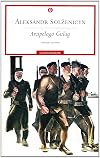
The Gulag Archipelago
by Aleksandr Solzhenitsyn
The Gulag Archipelago (Collections and Selections — Omnibus: Volumes One, Two and Three, Parts I-VII Complete)
On This Page
Description
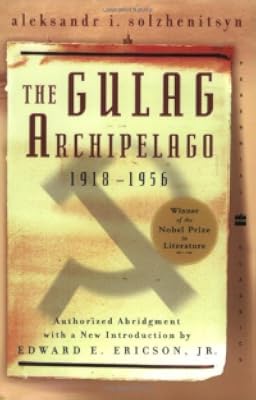
A vast canvas of camps, prisons, transit centres and secret police, of informers and spies and interrogators but also of everyday heroism, The Gulag Archipelago is Aleksandr Solzhenitsyn's grand masterwork. Based on the testimony of some 200 survivors, and on the recollection of Solzhenitsyn's own eleven years in labour camps and exile, it chronicles the story of those at the heart of the Soviet Union who opposed Stalin, and for whom the key to survival lay not in hope but in despair. A show more thoroughly researched document and a feat of literary and imaginative power, this edition of The Gulag Archipelago was abridged into one volume at the author's wish and with his full co-operation. show lessTags
Recommendations















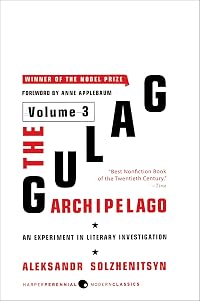










Member Recommendations
Member Reviews
"... Nell’Europa occidentale gli intellettuali della sinistra moderata impiegarono molto tempo a cogliere in pieno il valore di Solgenitsin. Quando uscì la sua opera più celebre, Arcipelago Gulag, per molto tempo la considerarono con prudenza, dimostrandosi guardinghi. Il Nobel della Letteratura contribuì a rompere la diffidenza e a consacrarlo definitivamente, ma non aggiunse nulla al suo valore, che era immenso. E segnò un’epoca. A Krusciov seguirono Brezhnev, la Guerra fredda, la corsa alle armi nucleari. L’Urss continuava a far paura, eppure proprio il seguito delle vicende di Solgenitsin dimostrano come il regime fosse già in fase di lenta decomposizione. Ai tempi di Stalin un dissidente come lui sarebbe stato show more semplicemente ucciso, Brezhnev invece pensò di metterlo a tacere privandolo della cittadinanza sovietica e dunque mandandolo in esilio in Occidente.
La storia ha dimostrato che Solgenitsin aveva ragione innanzitutto a credere in se stesso: anche quando tutto sembrava perso, non ha rinunciato alle proprie convinzioni. In secondo luogo nel ribadire che sarebbe morto in patria, perché il comunismo era destinato al fallimento. E così è stato. Solgenitsin tornò a Mosca vent’anni dopo esserne stato espulso. Lui ha resistito, l’imperialismo sovietico è morto. Merita la nostra riconoscenza anche se negli ultimi anni l’Occidente non lo ha capito. Per noi fu soprattutto un grande dissidente capace di smascherare gli orrori del comunismo. Lui invece si considerava innanzitutto un patriota, la dimostrazione che il lungo periodo di glaciazione bolscevica non è bastato a spegnere l’animo russo. Un animo che in Solgenitsin è rimasto al cento per cento slavo, senza concessioni alla cultura occidentale. Il ritorno nella Russia allo sbando dell’era Eltsin fu per lui traumatico e lo persuase ancor di più che la vera salvezza andava cercata nelle radici della cultura del suo Paese. E dunque nell’orgoglio per la propria nazione, nella riscoperta di dimensione spirituale attraverso la Chiesa Ortodossa. E questo spiega perché le sue ultime opere non siano state bene accolte in Occidente. Troppo lontane dal nostro mondo, dai nostri valori, dal nostro modo di concepire la religione. Un’incomprensione che non scalfisce il valore di Solgenitsin."
Estratto dall'articolo apparso su IL GIORNALE a firma dello storico francese Max Gallo, intitolato: "Ma in Occidente l'Intellighenzia non capì il suo valore" per commemorare la sua scomparsa.
5 agosto 2008 show less
La storia ha dimostrato che Solgenitsin aveva ragione innanzitutto a credere in se stesso: anche quando tutto sembrava perso, non ha rinunciato alle proprie convinzioni. In secondo luogo nel ribadire che sarebbe morto in patria, perché il comunismo era destinato al fallimento. E così è stato. Solgenitsin tornò a Mosca vent’anni dopo esserne stato espulso. Lui ha resistito, l’imperialismo sovietico è morto. Merita la nostra riconoscenza anche se negli ultimi anni l’Occidente non lo ha capito. Per noi fu soprattutto un grande dissidente capace di smascherare gli orrori del comunismo. Lui invece si considerava innanzitutto un patriota, la dimostrazione che il lungo periodo di glaciazione bolscevica non è bastato a spegnere l’animo russo. Un animo che in Solgenitsin è rimasto al cento per cento slavo, senza concessioni alla cultura occidentale. Il ritorno nella Russia allo sbando dell’era Eltsin fu per lui traumatico e lo persuase ancor di più che la vera salvezza andava cercata nelle radici della cultura del suo Paese. E dunque nell’orgoglio per la propria nazione, nella riscoperta di dimensione spirituale attraverso la Chiesa Ortodossa. E questo spiega perché le sue ultime opere non siano state bene accolte in Occidente. Troppo lontane dal nostro mondo, dai nostri valori, dal nostro modo di concepire la religione. Un’incomprensione che non scalfisce il valore di Solgenitsin."
Estratto dall'articolo apparso su IL GIORNALE a firma dello storico francese Max Gallo, intitolato: "Ma in Occidente l'Intellighenzia non capì il suo valore" per commemorare la sua scomparsa.
5 agosto 2008 show less
Looks like I will have to order this / no way am I going to be lucky enough to find all 3 vols just sitting in a charity store.
Ratings
Members
- Recently Added By
Lists

BEST BOOKS TO UNDERSTAND XX CENTURY'S HISTORY
63 works; 3 members

Books about Russia and the former USSR
67 works; 12 members

Our Favorite Banned Books
138 works; 122 members

r/History Recommended Reading List
603 works; 12 members

Shaykh Hamza's Book Recommendations
439 works; 3 members

Russian Literature Sequence
28 works; 1 member
Folio Society
831 works; 53 members

End of Your Life Book Club
134 works; 4 members

KIB Non-Fiction Book Cloud
41 works; 1 member

Daria Morgendorffer's Bookshelf
70 works; 5 members

Writers at Risk
106 works; 17 members

Harold Bloom - The Western Canon: D. The Chaotic Age
833 works; 24 members

Most Disturbing Books
124 works; 27 members

Nobel Price Winners
222 works; 20 members

Blue Pyramid 1,276 Best Books of All Time
1,248 works; 32 members

Most difficult novels
68 works; 27 members

50 Tough Books for Extreme Readers
71 works; 39 members

Totalitarianism and Democratic Erosion: Essential Readings
45 works; 1 member
Author Information

218+ Works 44,477 Members
Aleksandr Solzhenitsyn was born on December 11, 1918 in Kislovodsk in the northern Caucusus Mountains. He received a degree in physics and math from Rostov University in 1941. He served in the Russian army during World War II but was arrested in 1945 for writing a letter criticizing Stalin. He spent the next decade in prisons and labor camps and, show more later, exile, before being allowed to return to central Russia, where he worked as a high school science teacher. His first novel, One Day in the Life of Ivan Denisovich, was published in 1962. In 1970, he was awarded the Nobel Prize for Literature. In 1974, he was arrested for treason and exiled following the publication of The Gulag Archipelago. He moved to Switzerland and later the U. S. where he continued to write fiction and history. When the Soviet Union collapsed, he returned to his homeland. His other works include The First Circle and The Cancer Ward. He died due to a heart ailment on August 3, 2008 at the age of 89. (Bowker Author Biography) show less
Some Editions
Awards and Honors
Distinctions
Notable Lists
Series

Work Relationships
Contains
The Gulag Archipelago, Volume I, Section I: The Prison Industry; Perpetual Motion by Aleksandr Isaevic Solzenicyn (indirect)
Common Knowledge
- Canonical title*
- De Goelag Archipel
- Original title
- Архипелаг ГУЛАГ; Arkhipelag GULag, 1918-1956
- Original publication date
- 1973
- Important places
- USSR; Siberia, Russia; Siberia, Soviet Union
- Epigraph*
- Met een beklemd gemoed heb ik mij er jarenlang van weerhouden dit al gereed liggende boek in druk te geven: mijn plicht tegenover hen die nog leefden, woog zwaarder dan mijn plicht tegenover de gestorvenen. Maar nu de staatsv... (show all)eiligheidsdienst het boek toch al in handen heeft, blijft mij niets anders over dan het onverwijld te publiceren. (A. Solzjenitsyn, september 1973)
- Dedication
- I dedicate this
to all those who did not live
to tell it.
And may they please forgive me
for not having seen it all
nor remembered it all,
for not having divined all of it. - First words
- How do people get to this clandestine Archipelago?
- Last words
- (Click to show. Warning: May contain spoilers.)And our younger brothers would only look at us contemptuously: Oh you stupid dolts!
- Blurbers
- Crankshaw, Edward; Webb, W L; Lessing, Doris; Spender, Stephen; West, Rebecca
- Disambiguation notice
- Aleksandr Solzhenistyn's The Gulag Archipelago has been published in a number of formats, and is catalogued in a variety of ways. The complete work consists of seven parts, often divided into three volumes as fo... (show all)llow:
Volume One, consisting of:
Part I ("The Prison Industry") and
Part II ("Perpetual Motion");
Volume Two, consisting of
Part III ("The Destructive-Labor Camps") and
Part IV ("The Soul and Barbed Wire"); and
Volume Three, consisting of
Part V ("Katorga"),
Part VI ("Exile") and
Part VII ("Stalin Is No More").
THIS LT WORK IS INTENDED ONLY FOR THE COMPLETE WORK, REGARDLESS OF THE NUMBER OF VOLUMES.
Please do not combine it with other copies having materially different content (e.g., Parts I-II, Parts III-IV, Parts V-VII, an omnibus [such as Parts I-VI], any individual Part, or the abridged version). Thank you.
*Some information comes from Common Knowledge in other languages. Click "Edit" for more information.
Classifications
- Genre
- Biography & Memoir
- DDC/MDS
- 365.450947 — Society, government, & culture Social problems and social services Punishment Institutions for specific classes of inmates Institutions for political prisoners and related groups of people
- LCC
- HV9713 .S6413 — Social sciences Social pathology. Social and public welfare. Criminology Social pathology. Social and public welfare. Criminal justice administration Penology. Prisons. Corrections By region or country
Statistics
- Members
- 719
- Popularity
- 39,592
- Reviews
- 2
- Rating
- (4.22)
- Languages
- 17 — Czech, Danish, Dutch, English, Finnish, French, German, Hungarian, Italian, Norwegian (Bokmål), Norwegian, Polish, Portuguese, Romanian, Russian, Spanish, Swedish
- Media
- Paper, Audiobook, Ebook
- ISBNs
- 45
- ASINs
- 57