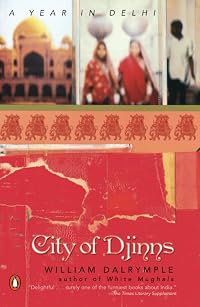
City of Djinns: A Year in Delhi
by William Dalrymple
On This Page
Description
Could you show me a djinn?' I asked. 'Certainly,' replied the Sufi. 'But you would run away.' This is William Dalrymple's captivating memoir of a year spent in Delhi, a city watched over and protected by the mischievous invisible djinns. Lodging with the beady-eyed Mrs Puri and encountering an extraordinary array of characters-from elusive eunuchs to the last remnants of the Raj-William Dalrymple comes to know the bewildering city intimately. He pursues Delhi's interlacing layers of history show more along narrow alleys and broad boulevards, brilliantly conveying its intoxicating mix of mysticism and mayhem. 'City of Djinns' is an astonishing and sensitive portrait of a city, and confirms William Dalrymple as one of the most compelling explorers of India's past and present. show lessTags
Recommendations
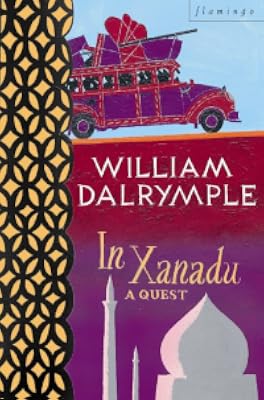
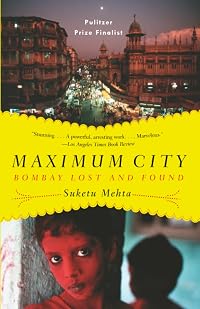
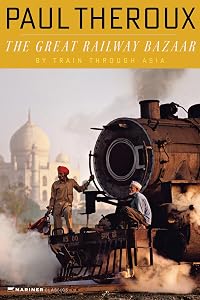
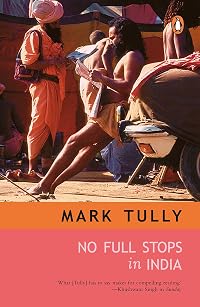
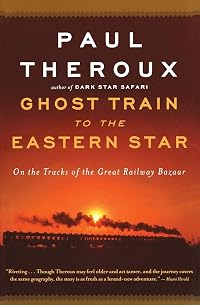
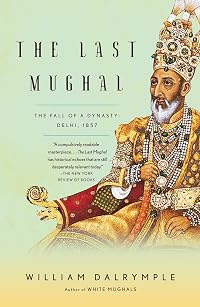
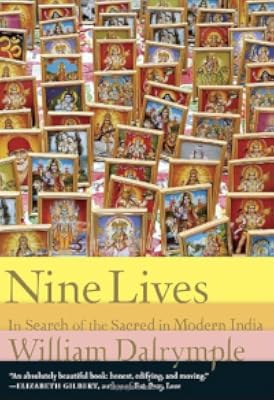
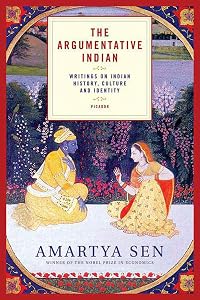

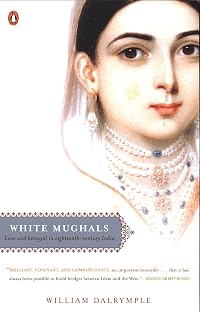
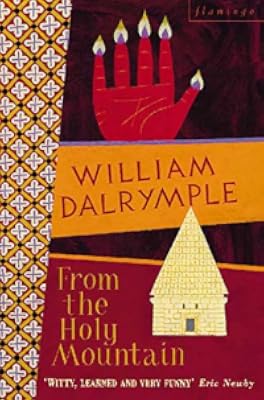








Member Recommendations
Member Reviews
Delhi is lucky to have William Dalrymple as a chronicler – not many cities get such exemplary treatment as this. I think I even preferred it to Peter Ackroyd's London: The Biography, just because Ackroyd presents himself as an expert dispensing knowledge, whereas Dalrymple is pure ingénu: curious, open-minded, he allows us to accompany him on his own journey of exploration and discovery which dovetails with the social and historical narratives he uncovers.
For Dalrymple, Delhi is a city of accumulated losses, haunted by its innumerable fallen rulers, the locus of empires that have been lost and – though not actively remembered – not quite forgotten either. Two dates recur with especial frequency. 1857, when the Mughal Empire show more finally fell, and 1947, when the British Indian Empire was dissolved and the territory partitioned into India and Pakistan.
Partition in particular emerges as the event that underlies almost everything about modern Delhi. While some authors might present this as a bald historic fact, Dalrymple instead lets us share in his growing realization over quite how much of the city's population left, arrived, or was radically changed by Partition.
Even the most innocuous of our neighbours, we discovered, had extraordinary tales of 1947: chartered accountants could tell tales of single-handedly fighting off baying mobs; men from grey government ministries would emerge as the heroes of bloody street battles.
Nor is he content with hearing only from those still in the city. He travels to Pakistan to hear from Delhi's former population of Muslims too, still speaking what they refer to as pure Delhi Urdu in the streets of Karachi. Dalrymple's interview with Ahmed Ali, the author of Twilight in Delhi, is fascinating. Ali loathes the whole idea of Pakistan; indeed the only country he seems to hate more is post-Partition India itself, to the extent that when a flight he was on had to make an emergency stop in Delhi, he refused even to get off the plane.
‘The civilization I belong to – the civilization of Delhi – came into being through the mingling of two different cultures, Hindu and Muslim. That civilization flourished for one thousand years undisturbed until certain people came along and denied that that great mingling had taken place.’
This sense that the city has created a constant stream of such refugees throughout the years, whether physically or mentally, is central to Dalrymple's understanding of Delhi. The British are an unusual case because, as he points out, their lengthy period of political rule has left remarkably few traces on Indian culture. The Brits that Dalrymple can find who had lived in colonial India show a hilariously skewed kind of imperious equanimity over Indian independence. ‘On balance I think you must never take land away from a people,’ says one old Englishwoman who, as a child, had known Lutyens.
‘A people's land has a mystique. You can go and possibly order them about for a bit, perhaps introduce some new ideas, build a few good buildings, but then in the end you must go away and die in Cheltenham.’
And the few Brits still remaining in-country show the sort of bizarre false memories of "the motherland" common to all such colonial relics (I've met some similar people myself in Kenya) – ‘The dish I like is that Kentucky Fried Chicken,’ confides one man as he reminisces about a couple of trips to relatives in Suffolk. ‘It's a very popular dish over there, that Kentucky Fried Chicken is. A delightful dish.’
The major exception to Britain's complete disappearance from Indian society is of course the English language. The English spoken in India is its own animal, with all kinds of strange and unusual pleasures awaiting those who are unfamiliar with it. Its status as a lingua franca means that the fluency of some users is not high, and many of the ensuing idiosyncrasies, along with influences from Indian languages, have made their way into the standard idiom. The result is a very dynamic printed language subject to a lot of rapid tonal shifts which make it especially prone to bathos and other register-clashing effects. Dalrymple offers up this obituary from the Hindustani Times as a minor classic of the genre:
SAD DEMISE
With profound grief we have to condole the untimely passing of our beloved general manager MISTER DEEPAK MEHTA, thirty four years, who left us for heavenly abode in tragic circumstances (beaten to death with bedpost). Condole presented by bereft of Mehta Agencies (Private) Limited.
Perhaps the most impressive parts of the book, though, are the result of more intensive research that takes Dalrymple out of the library and into the streets. In particular his long, delicate attempts to get first-hand interviews and experience with Delhi's hijra community – representing a kind of fusion of transgender identity with India's eunuch tradition – are amazing, and result in some remarkable testimony from within a very closed and secretive subculture.
‘I started to wear women's clothes and to put on makeup. The following year I was taken to a village in the Punjab. I was dosed with opium and a string was tied around my equipment. Then the whole lot was cut off. I knew it would be very painful and dangerous, but I got cut so that no one would taunt me any more. After I was cut all my male blood flowed away and with it went my manhood. Before I was neither one thing nor the other. Now I am a hijra. I am not man or woman. I am from a different sex.’
My only real concern is that so much of this must now be out of date; comments about how the roads are ‘becoming clogged’ (ha! I actually read this page while sitting in an afternoon-long traffic jam that was nose-to-tail cars, buses, pedestrians and cattle) are a reminder that 1993 is a long time ago for a city changing as fast as Delhi is. But overall there is so much to enjoy here, such a wealth of great material so well tied together, and motivated by a palpable love of the city, that despite its age it's still the first book many Delhi-wallahs recommend for anyone visiting this City of Djinns for the first time. show less
For Dalrymple, Delhi is a city of accumulated losses, haunted by its innumerable fallen rulers, the locus of empires that have been lost and – though not actively remembered – not quite forgotten either. Two dates recur with especial frequency. 1857, when the Mughal Empire show more finally fell, and 1947, when the British Indian Empire was dissolved and the territory partitioned into India and Pakistan.
Partition in particular emerges as the event that underlies almost everything about modern Delhi. While some authors might present this as a bald historic fact, Dalrymple instead lets us share in his growing realization over quite how much of the city's population left, arrived, or was radically changed by Partition.
Even the most innocuous of our neighbours, we discovered, had extraordinary tales of 1947: chartered accountants could tell tales of single-handedly fighting off baying mobs; men from grey government ministries would emerge as the heroes of bloody street battles.
Nor is he content with hearing only from those still in the city. He travels to Pakistan to hear from Delhi's former population of Muslims too, still speaking what they refer to as pure Delhi Urdu in the streets of Karachi. Dalrymple's interview with Ahmed Ali, the author of Twilight in Delhi, is fascinating. Ali loathes the whole idea of Pakistan; indeed the only country he seems to hate more is post-Partition India itself, to the extent that when a flight he was on had to make an emergency stop in Delhi, he refused even to get off the plane.
‘The civilization I belong to – the civilization of Delhi – came into being through the mingling of two different cultures, Hindu and Muslim. That civilization flourished for one thousand years undisturbed until certain people came along and denied that that great mingling had taken place.’
This sense that the city has created a constant stream of such refugees throughout the years, whether physically or mentally, is central to Dalrymple's understanding of Delhi. The British are an unusual case because, as he points out, their lengthy period of political rule has left remarkably few traces on Indian culture. The Brits that Dalrymple can find who had lived in colonial India show a hilariously skewed kind of imperious equanimity over Indian independence. ‘On balance I think you must never take land away from a people,’ says one old Englishwoman who, as a child, had known Lutyens.
‘A people's land has a mystique. You can go and possibly order them about for a bit, perhaps introduce some new ideas, build a few good buildings, but then in the end you must go away and die in Cheltenham.’
And the few Brits still remaining in-country show the sort of bizarre false memories of "the motherland" common to all such colonial relics (I've met some similar people myself in Kenya) – ‘The dish I like is that Kentucky Fried Chicken,’ confides one man as he reminisces about a couple of trips to relatives in Suffolk. ‘It's a very popular dish over there, that Kentucky Fried Chicken is. A delightful dish.’
The major exception to Britain's complete disappearance from Indian society is of course the English language. The English spoken in India is its own animal, with all kinds of strange and unusual pleasures awaiting those who are unfamiliar with it. Its status as a lingua franca means that the fluency of some users is not high, and many of the ensuing idiosyncrasies, along with influences from Indian languages, have made their way into the standard idiom. The result is a very dynamic printed language subject to a lot of rapid tonal shifts which make it especially prone to bathos and other register-clashing effects. Dalrymple offers up this obituary from the Hindustani Times as a minor classic of the genre:
SAD DEMISE
With profound grief we have to condole the untimely passing of our beloved general manager MISTER DEEPAK MEHTA, thirty four years, who left us for heavenly abode in tragic circumstances (beaten to death with bedpost). Condole presented by bereft of Mehta Agencies (Private) Limited.
Perhaps the most impressive parts of the book, though, are the result of more intensive research that takes Dalrymple out of the library and into the streets. In particular his long, delicate attempts to get first-hand interviews and experience with Delhi's hijra community – representing a kind of fusion of transgender identity with India's eunuch tradition – are amazing, and result in some remarkable testimony from within a very closed and secretive subculture.
‘I started to wear women's clothes and to put on makeup. The following year I was taken to a village in the Punjab. I was dosed with opium and a string was tied around my equipment. Then the whole lot was cut off. I knew it would be very painful and dangerous, but I got cut so that no one would taunt me any more. After I was cut all my male blood flowed away and with it went my manhood. Before I was neither one thing nor the other. Now I am a hijra. I am not man or woman. I am from a different sex.’
My only real concern is that so much of this must now be out of date; comments about how the roads are ‘becoming clogged’ (ha! I actually read this page while sitting in an afternoon-long traffic jam that was nose-to-tail cars, buses, pedestrians and cattle) are a reminder that 1993 is a long time ago for a city changing as fast as Delhi is. But overall there is so much to enjoy here, such a wealth of great material so well tied together, and motivated by a palpable love of the city, that despite its age it's still the first book many Delhi-wallahs recommend for anyone visiting this City of Djinns for the first time. show less
After reading Dalrymple's masterful From the Holy Mountain, where he retraces the travels of a Sixth Century monk, I quickly moved onto City of Djinns, a recounting of twelve months spent in New Delhi in the 1990s. City of Djinns isn't quite at the standard of From the Holy Mountain but still had me hooked from beginning to end as Dalrymple mixes stories of his time in India and the broad sweep of humanity he meets there, with history of empires, Hindu, Muslim and British, rising and falling over the centuries, and visits to the ruins of the grand edifices those empires built.
Dalrymple's research of the history of Delhi bears fruit with eye-opening quotes from figures like:
a) an 18th century visitor witnessing an orgy; "groups of show more winsome lads violate the faith of the believers with acts that are sufficient to shake the very roots of piety"
and
b) a 19th Century Englishman writing to his ill friend; "you have, I dare say, been flourishing your genitals over and above which nature requires."
It would also be remiss of me not to note the reference that the 19th Century senior civil servant Sir Thomas Metcalfe could not bear to see women eat cheese". show less
Dalrymple's research of the history of Delhi bears fruit with eye-opening quotes from figures like:
a) an 18th century visitor witnessing an orgy; "groups of show more winsome lads violate the faith of the believers with acts that are sufficient to shake the very roots of piety"
and
b) a 19th Century Englishman writing to his ill friend; "you have, I dare say, been flourishing your genitals over and above which nature requires."
It would also be remiss of me not to note the reference that the 19th Century senior civil servant Sir Thomas Metcalfe could not bear to see women eat cheese". show less
This was the wrong book to read prior to my trip to India. All of the fantastic stories that the author relates seem to end with, "these wonderful sights/monuments/environments/people have all been completely destroyed, and nothing is left except worthless ruins". He makes Delhi seem like a wasteland, all the more disgusting and pathetic in light of its former splendor. The only positive of this book is that the stories he relates are interesting. In short, this book was a major downer.
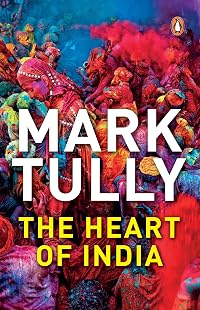
This is the first book by William Dalrymple that I have read, and I will certainly seek out more. He reminds me of a younger, historian version of Sir Mark Tully, in the way he melds his personal experiences with the history and culture of India. In this book, Dalrymple recounts his first year in Delhi, while exploring the history of the city. He works backwards, starting with the end of the british Raj and ending up with the Mahabharata. The book covers more than the history, though: it peers into the lives of the many and diverse Delhi-wallahs, from their friend the taxi driver, to the underworld of the hijras. Dalrymple is privedged, and his wealth and connections allow him to connect with many different sources, but i dont think show more thats a draw back or invalidates this well-read historian's non-fiction. Very interesting and humourous read. I wish I had paid more attention to the history of Delhi when I was there... show less
An enjoyable romp back through the history of Delhi as Dalrymple experiences the city and its environs over the course of a year (about 1990).
The history is interesting, as I did not know much at all about the Mughal past and that these invaders were a Muslim warrior caste that ruled over a Hindu population. However, the colour provided by Dalrymple's research and meetings with locals are what make the book a joy to read and live as more than an historical account.
The history is interesting, as I did not know much at all about the Mughal past and that these invaders were a Muslim warrior caste that ruled over a Hindu population. However, the colour provided by Dalrymple's research and meetings with locals are what make the book a joy to read and live as more than an historical account.
Between the twenties and the forties, Iris Portal’s youth had been spent in that colonial Delhi
‘In retrospect,’ I said. ‘Do you think British rule was justified?’
‘....But on balance I think you must never take land away from a people. A people’s land has a mystique. You can go and possibly order them about for a bit, perhaps introduce some new ideas, build a few good buildings, but then in the end you must go away and die in Cheltenham.’ Iris sighed. ‘And that, of course, is exactly what we did.’
******
I learned a lot of interesting from this book (partridge fights, Mumbai food deliverers' caste, eunuch caste etc.), interviews and dialogues very always a pleasure to read - humorous, lively, yet very often insightful. show more Why 4 stars then? Well, historical references and vignettes were sometimes a bit thick to wade through. Although there's probably nothing wrong with them and they're more than appropriate, it's just they're hard to digest on the go - one probably should savor them relaxed :) show less
‘In retrospect,’ I said. ‘Do you think British rule was justified?’
‘....But on balance I think you must never take land away from a people. A people’s land has a mystique. You can go and possibly order them about for a bit, perhaps introduce some new ideas, build a few good buildings, but then in the end you must go away and die in Cheltenham.’ Iris sighed. ‘And that, of course, is exactly what we did.’
******
I learned a lot of interesting from this book (partridge fights, Mumbai food deliverers' caste, eunuch caste etc.), interviews and dialogues very always a pleasure to read - humorous, lively, yet very often insightful. show more Why 4 stars then? Well, historical references and vignettes were sometimes a bit thick to wade through. Although there's probably nothing wrong with them and they're more than appropriate, it's just they're hard to digest on the go - one probably should savor them relaxed :) show less
The book's description makes you think there will be an element of the supernatural interwoven into the story, the biography of the city of Delhi, in interesting ways. I didn't find that. Instead this is a rambling look at the various layers and neighborhoods of the Delhi of today and on back for millennia. Don't get me wrong, I liked these stories. There are Dickensian elements in the moldering English holdovers; the ones left behind. There are haunted houses and superstitions a la Henry James. There is humor and irony galore. India and Indian people are a fascinating blend of cultures and superstitions, fictions and half-truths, extremes of asceticism and glamour; all soaked and nurtured by their sacred rivers and baked by their sun. show more This book wasn't a page-turner per se but I enjoyed reading it. show less
Members
- Recently Added By
Lists

Best of Travel Narratives
142 works; 28 members

Most Popular Books Tagged India
36 works; 5 members

Sense of place
156 works; 13 members
Author Information

37+ Works 12,607 Members
William Dalrymple wrote the highly acclaimed British best-seller In Xanadu when he was twenty-two. It won the 1990 Yorkshire Post Best First Work Award and a Scottish Arts Council Spring Book Award; it was also shortlisted for the John Llewelyn Rhys Memorial Prize. His second book, City of Djinns, won the 1994 Thomas Cook Travel Book Award and the show more Sunday Times Young British Writer of the Year Award. From the Holy Mountain was awarded the Scottish Arts Council Autumn Book Award for 1997; it was also shortlisted for the 1998 Thomas Cook Award, the John Lewelyn Rhys Memorial Prize, and the Duff Cooper Prize. A collection of his essays on India, The Age of Kali, was published in 1998. Dalrymple is a fellow of the Royal Society of Literature and of the Royal Asiatic Society and in 2002 was awarded the Mungo Park Medal by the Royal Scottish Geographic Society for his "outstanding contribution to travel literature." He is married to the artist Olivia Fraser, and they have three children. They now divide their time between London and Delhi show less
Some Editions
Awards and Honors
Common Knowledge
- Canonical title*
- Delhi. Un anno tra i misteri dell'India
- Original title
- City of Djinns: A Year in Delhi
- Original publication date
- 1993
- Important places
- Delhi, India
- First words
- It was in the citadel of Feroz Shah Kotla that I met my first Sufi.
- Last words
- (Click to show. Warning: May contain spoilers.)With a noise like a bursting dam, the world slowly dissolved into a great white waterfall.
- Blurbers
- Murphy, Dervla; Duncan, Emma; Fishlock, Trevor; Woodsworth, Nicholas; Morris, Jan; Lockwood, Christopher (show all 9); McKean, Charles; Tejpal, Tarun; Wetherby, Iain
*Some information comes from Common Knowledge in other languages. Click "Edit" for more information.
Classifications
Statistics
- Members
- 1,599
- Popularity
- 14,203
- Reviews
- 29
- Rating
- (4.03)
- Languages
- 5 — English, Estonian, French, Italian, Spanish
- Media
- Paper, Audiobook, Ebook
- ISBNs
- 14
- ASINs
- 13