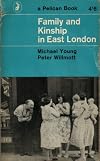
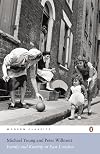
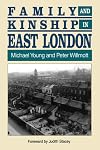
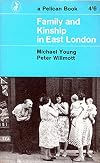
Family and Kinship in East London
by Michael Dunlop Young, Peter Willmott
On This Page
Description
First published in 1957 ,and reprinted with a new introduction in 1986, Michael Young and Peter Willmott's book on family and kinship in Bethnal Green in the 1950s is a classic in urban studies. A standard text in planning, housing, family studies and sociology, it predicted the failure in social terms of the great rehousing campaign which was getting under way in the 1950s. The tall flats built to replace the old 'slum' houses were unpopular. Social networks were broken up. The book had an show more immediate impact when it appeared - extracts were published in the newspapers, the sales were show lessTags
Recommendations



















Member Reviews
A seminal work of British sociology, this book made a massive impression on me when I first read it as a student in the 1970s, mainly because I had family who lived in that part of East London during the 1950s and 1960s, and it painted a detailed and accurate picture of life in Bethnal Green. That world has now gone, but this book is its testimonial. Recommended.
28 Jan 2008 - Kidney Research charity shop
An excellent Pelican book looking at post-war life in the East End, and contrasting it with life on one of the new estates to which the East End folk were being encouraged to move. Approaching the study of the families like an anthropologist would view exotic societies, it is also a very human, humane and special book - probably partly made so by the fact that one of the researchers lived in the area during the research period.
A fascinating book and an important one in the history of sociology and anthropology.
An excellent Pelican book looking at post-war life in the East End, and contrasting it with life on one of the new estates to which the East End folk were being encouraged to move. Approaching the study of the families like an anthropologist would view exotic societies, it is also a very human, humane and special book - probably partly made so by the fact that one of the researchers lived in the area during the research period.
A fascinating book and an important one in the history of sociology and anthropology.
This study provides a detailed desription of the structure of relationships and behaviour of the close-family communities of the working class in Bethnal Green in the East End of London, and the changes in these following their migration and fragmentation across to a newly built housing estate in Essex. Though a study of a particular group, patterns can be drawn common to communities across the UK and further afield.
We begin with a description of how the families in East London have lived in the preceding decades, the inter-family relationships between husbands and wives, parents and children, husbands and mothers-in-law, wives and mothers-in-law, and mothers and daughters, as well as between the wider family. From the point of view show more of an anthropologist, we learn the behaviours common to these relationships, the centring of families around the mothers, and the ties and conflicts that typically occur. There is also note of traditions and folk beliefs, and their parallels in other societies. In part two of the book, we find out how the ties of kinship are stretched as many of the residents move out of Bethnal Green to a new development. We hear about the effect on the wider family and structure of the community, and how this in turn feeds back to produce changes in the behaviour of individuals.
This book is mainly based on research carried out by the authors in East London, consisting of surveys and interviews. The topics covered are relatively comprehensive, and provide a good picture of this society, and the changes these have undergone in response to external pressures of the economy, housing availability, and wider social changes. The interviews quoted are frequently revealing and candid, and quite often amusing.
Overall this is a very easy and enjoyable book to read, with a lot of keen observation on the part of the authors, and plenty of humour. As a picture of a broad traditional community that has now changed, it is a valuable record for the historian, the sociologist, the anthropologist, and the general reader with an interest in social history. show less
We begin with a description of how the families in East London have lived in the preceding decades, the inter-family relationships between husbands and wives, parents and children, husbands and mothers-in-law, wives and mothers-in-law, and mothers and daughters, as well as between the wider family. From the point of view show more of an anthropologist, we learn the behaviours common to these relationships, the centring of families around the mothers, and the ties and conflicts that typically occur. There is also note of traditions and folk beliefs, and their parallels in other societies. In part two of the book, we find out how the ties of kinship are stretched as many of the residents move out of Bethnal Green to a new development. We hear about the effect on the wider family and structure of the community, and how this in turn feeds back to produce changes in the behaviour of individuals.
This book is mainly based on research carried out by the authors in East London, consisting of surveys and interviews. The topics covered are relatively comprehensive, and provide a good picture of this society, and the changes these have undergone in response to external pressures of the economy, housing availability, and wider social changes. The interviews quoted are frequently revealing and candid, and quite often amusing.
Overall this is a very easy and enjoyable book to read, with a lot of keen observation on the part of the authors, and plenty of humour. As a picture of a broad traditional community that has now changed, it is a valuable record for the historian, the sociologist, the anthropologist, and the general reader with an interest in social history. show less
The classic! Recent studies around the Dockland suggests that the changing housing policy undermined the social communities of the grandchildren of the families investigated here. This perceived breakdown of the the post war social contract fuels the racial tensions in the area when ironically the Asian communities mirror the world of 1950's east end
OK. Dated. I'm sure it meant a lot when it was published. But it's very much old hat now.
shelved at: 05 - Urban Design
One of the first studies to shape my view of the world, and what I wanted to understand. dh.2018
Members
- Recently Added By
Lists

Fiction about the Working Class
74 works; 10 members
Author Information
19+ Works 614 Members
6+ Works 249 Members
Some Editions
Series
Belongs to Publisher Series
Pelican Books (A595)
Common Knowledge
- Canonical title
- Family and Kinship in East London
- Original publication date
- 1957
- Important places
- Tower Hamlets, London, England, UK
- Dedication
- To Dorothy and Leonard
- Original language
- English
Classifications
- Genres
- Sociology, Nonfiction, General Nonfiction, History
- DDC/MDS
- 306.85094215 — Society, government, & culture Social sciences, sociology & anthropology Social Behavior - Dating, Marriage, Divorce Marriage, partnerships, unions; family Family History, geographic treatment, biography Europe England & Wales
- LCC
- HQ616 .Y6 — Social sciences The family. Marriage, Women and Sexuality The Family. Marriage. Women The family. Marriage. Home
- BISAC
Statistics
- Members
- 200
- Popularity
- 163,697
- Reviews
- 7
- Rating
- (4.08)
- Languages
- English, French
- Media
- Paper, Ebook
- ISBNs
- 11
- ASINs
- 9