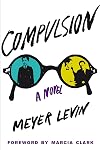
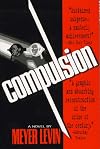
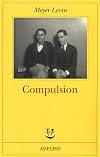
Compulsion
by Meyer Levin
On This Page
Description
Judd Steiner and Artie Straus have it all: wealth, intelligence, and the world at their feet as part of the elite, upper-crust Jewish community of 1920s Chicago. Artie is handsome, athletic, and popular, but he possesses a hidden, powerful sadistic streak and a desire to dominate. Judd is a weedy introvert, a genius who longs for a companion whom he can idolize and worship. Obsessed with Nietzsche's idea of the superhuman, both boys decide to prove that they are above the laws of man by show more arbitrarily picking and murdering a Jewish boy in their neighborhood. This new edition of Meyer Levin's classic literary thriller Compulsion reintroduces the fictionalized case of Leopold and Loeb - once considered the "crime of the century" - to a new generation. This incisive psychological portrait of two young murderers seized the imagination of an era and is generally recognized as paving the way for the first non-fiction novel. Compulsion forces us to ask what drives some further into darkness, and some to seek redemption. Heartbreaking as it is gripping, Compulsion is written with a tense and penetrating force that led the Los Angeles Times to call Levin, "the most significant Jewish writer of his times. " show lessTags
Recommendations




















Member Reviews
"This was a crime for its own sake. It was a crime in a vacuum, a crime in a perfectly frozen nothingness where the atmosphere of motive was totally absent."
This is a fictionalized account of the Leopold and Loeb kidnapping and murder case from the 1920's. The author was a cub reporter for a Chicago newspaper at the time and covered the case. He was also a fraternity brother and slight acquaintance of one of the perpetrators, and so had an interest in and some inside knowledge of the case. This book was written in the 1950's and is considered a worthy predecessor of In Cold Blood and other "nonfiction novels."
The point of view in the novel alternates between the Leopold and Loeb characters (in the book Judd and Artie) and that of Sid, show more the reporter persona. We follow Leopold and Loeb's obsessive friendship, their planning of what they consider to be the perfect crime (due to their self-perceived super-intelligence), and then the execution of the crime. Then the media frenzy began, and all the clues they left behind despite their superior intelligence, soon led to their capture. The novel continues with a detailed description of their trial and their ultimate conviction.
At the time of the trial, Freudian theory was just beginning to gain popular acceptance, and a great number of psychiatric theories were expounded at the trial to try to explain the crime. The book went on at great length about some of the theories, and I sometimes tired of them. (I note that when the book was written in the1950's Freudian analysis was perhaps approaching the height of its popularity.)
Although perhaps slightly dated, the book is well-written, and a complete picture of this so-called "crime of the century." Recommended.
3 stars show less
This is a fictionalized account of the Leopold and Loeb kidnapping and murder case from the 1920's. The author was a cub reporter for a Chicago newspaper at the time and covered the case. He was also a fraternity brother and slight acquaintance of one of the perpetrators, and so had an interest in and some inside knowledge of the case. This book was written in the 1950's and is considered a worthy predecessor of In Cold Blood and other "nonfiction novels."
The point of view in the novel alternates between the Leopold and Loeb characters (in the book Judd and Artie) and that of Sid, show more the reporter persona. We follow Leopold and Loeb's obsessive friendship, their planning of what they consider to be the perfect crime (due to their self-perceived super-intelligence), and then the execution of the crime. Then the media frenzy began, and all the clues they left behind despite their superior intelligence, soon led to their capture. The novel continues with a detailed description of their trial and their ultimate conviction.
At the time of the trial, Freudian theory was just beginning to gain popular acceptance, and a great number of psychiatric theories were expounded at the trial to try to explain the crime. The book went on at great length about some of the theories, and I sometimes tired of them. (I note that when the book was written in the1950's Freudian analysis was perhaps approaching the height of its popularity.)
Although perhaps slightly dated, the book is well-written, and a complete picture of this so-called "crime of the century." Recommended.
3 stars show less
I had to prompts to finally read this novelization of the Leopold and Loeb murder. I recently enjoyed again the Orson Welles depiction of Clarence Darrow in the Compulsion film. Then, I found an inscribed copy of the same hardcover edition. So, I will read the un-unscribed one and then put it in a Little Free Library.
I really enjoyed this telling, which I am sure comes very close to the truth, at least how it was perceived at the time since Levin as a young reporter was assigned to cover the trial and uses many direct quotes from testimony, etc.
Along with Caril, this also really undermines any support I have for the death penalty.
I really enjoyed this telling, which I am sure comes very close to the truth, at least how it was perceived at the time since Levin as a young reporter was assigned to cover the trial and uses many direct quotes from testimony, etc.
Along with Caril, this also really undermines any support I have for the death penalty.
Two eighteen year-old boys, Judd Steiner and Artie Strauss, are both brilliant, having graduated from the University of Chicago already. They are the sons of millionaires and live a life of luxury as neighbors in a wealthy section of Chicago. Artie is one of the most popular boys on campus and has a reputation with the girls. Many see his relationship with Judd as one of pity for the small, weird boy who no one else likes.
When the young son of another neighbor, also a millionaire, is found stuffed in a drainage pipe, Artie can't stop himself from taking part in the investigation. He leads newspaper reporters to the clues, even blurts out how he would have done it. He knows everything because he and Judd committed the murder. The arrest show more and trial of the two boys reveals their bizarre relationship and the fact that they murdered for no other reason than to have the experience and get away with it.
This is an account of the Leopold and Loeb murder case of the 1920's, when two wealthy boys murdered another local boy. They were defended by Clarence Darrow, represented here as the character of Jonathan Wilk. There is much delving into the sick minds of the murderers, a lot of psychology, philosophy and some surprisingly graphic language and images, considering this book was written in 1956. I like that Levin wrote from the perspective of Sid Silver, a classmate of the killers and cub reporter to one of the major newspapers. The book has a tone of both sympathy for the waste of three lives while giving the honest facts of the callousness of the behavior of the murderers. show less
When the young son of another neighbor, also a millionaire, is found stuffed in a drainage pipe, Artie can't stop himself from taking part in the investigation. He leads newspaper reporters to the clues, even blurts out how he would have done it. He knows everything because he and Judd committed the murder. The arrest show more and trial of the two boys reveals their bizarre relationship and the fact that they murdered for no other reason than to have the experience and get away with it.
This is an account of the Leopold and Loeb murder case of the 1920's, when two wealthy boys murdered another local boy. They were defended by Clarence Darrow, represented here as the character of Jonathan Wilk. There is much delving into the sick minds of the murderers, a lot of psychology, philosophy and some surprisingly graphic language and images, considering this book was written in 1956. I like that Levin wrote from the perspective of Sid Silver, a classmate of the killers and cub reporter to one of the major newspapers. The book has a tone of both sympathy for the waste of three lives while giving the honest facts of the callousness of the behavior of the murderers. show less
3023 Compulsion, by Meyer Levin (read 17 Oct 1997) This novel is based very closely on the Leopold-Loeb murder of Bobby Franks in 1924. The names are changed, but otherwise it is nearly verbatim. This book is very good on the events leading to the crime and after it up through the time they confess. Then the book drags some since there is so much psychiatric discussion. But the trial is good when the summing up is set out--Darrow's speech is a masterpiece. A very worth while book to read.
what the two protagonists did was terrible, considering they were both born to very wealthy families and were both academically brilliant, they didn't expect to be caught. they were, and there ensued a lengthy trial, muddled with lawyers, public officials, psychiatrists, and lots of wrangling among the experts. This is a book that is hard to put down if you are a fan of true crime. This is an account. Real names are withheld). Incidentally, Levin was a reporter for a Chicago newspaper and therefore had a front-row seat.
Just finished reading this book yesterday and was impressed by the large bulk of detail provided by the author. Given that he was a journalist and had to work quickly to write each article for a deadlne at the paper, I find it impressive how he could switch gears and work by contrast on a very long work such as this.
As with other books that I have reviewed such as All the President's Men and Lenin, The Novel, I realize that there is another challenge involved, in addition to the length, and that is, how to make the transition from a journalistic style to a novelistic style, whatever that is.
I would now like to proceed to looking up what other books this author may have written and also see some of the actual newspaper archives of that show more era in Chicago about Leopold and Loeb. show less
As with other books that I have reviewed such as All the President's Men and Lenin, The Novel, I realize that there is another challenge involved, in addition to the length, and that is, how to make the transition from a journalistic style to a novelistic style, whatever that is.
I would now like to proceed to looking up what other books this author may have written and also see some of the actual newspaper archives of that show more era in Chicago about Leopold and Loeb. show less
This was fascinating to read as the "defense" in court used psychology, seemingly before psychology was known and accepted in the judicial system.
Members
- Recently Added By
Lists

Legal Stories
84 works; 12 members

mstrust's scary list
34 works; 1 member

Publisher's Weekly Bestsellers - Part II - 1940 - 1979
355 works; 5 members

2025 Books
19 works; 1 member
Author Information

39+ Works 1,423 Members
Some Editions
Awards and Honors
Distinctions
Notable Lists
Work Relationships
Has the adaptation
Common Knowledge
- Canonical title*
- Crime
- Original title
- Compulsion
- Original publication date
- 1956
- People/Characters
- Nathan Leopold; Richard Loeb; Bobby Franks; Clarence Darrow
- Important places
- Chicago, Illinois, USA; Illinois, USA
- Important events
- Murder of Bobby Franks
- Related movies
- Compulsion (1959 | IMDb)
*Some information comes from Common Knowledge in other languages. Click "Edit" for more information.
Classifications
Statistics
- Members
- 328
- Popularity
- 96,965
- Reviews
- 10
- Rating
- (3.92)
- Languages
- 6 — Danish, English, French, German, Italian, Spanish
- Media
- Paper, Audiobook, Ebook
- ISBNs
- 20
- ASINs
- 18