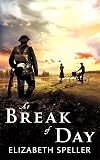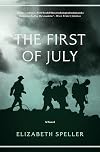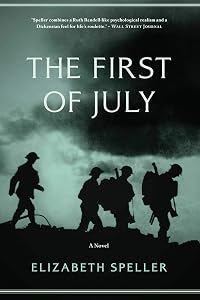
At Break of Day
by Elizabeth Speller
On This Page
Description
During World War I, four Allied soldiers experience the Battle of the Somme together in this "utterly gripping" historical novel (Booklist, starred review).On July 1, 1913, four very different men are leading four very different lives. Benedict is a British music student. Jean-Baptiste is a French blacksmith apprentice. Harry is living a life of comfort with his American wife in New York, while working-class Frank, a carpenter and coffinmaker, spends his spare time racing bicycles in show more London.
Exactly three years later, it is just after seven in the morning, and there are a few seconds of peace as the guns on the Somme fall silent and larks soar across the battlefield, singing as they fly over the trenches. What follows is a day of catastrophe in which Allied casualties number almost one hundred thousand. A horror that would have been unimaginable not so long ago will forever change the lives of Benedict, Jean-Baptiste, Harry, and Frank.
From an author who "combines a Ruth Rendell–like psychological realism and a Dickensian feel for life's roulette," The First of July is an unforgettable epic that captures the chaos of the early twentieth century (The Wall Street Journal). "Gritty, disturbing, moody, and intensely real, the novel's psychological impact is like those of Mary Doria Russell's A Thread of Grace and Denis Johnson's Tree of Smoke and asks readers to consider war's high costs" (Booklist, starred review).
. show less
Tags
Recommendations


















Member Reviews
The lives of four young men intertwine in this exceptional novel about the events leading up to the Battle of the Somme. Beginning shortly before the outbreak of hostilities, Speller focuses on just a few individuals to provide an up-close and personal look at the chaos of the Western Front. If you are looking for a book that will provide an overall view of the war or even of this battle, you might want to look elsewhere. Instead, Speller does an outstanding job of letting us see the human tragedy of war: pain, longing, and loss mixed with moments of exquisite beauty.
The First of July is a novel about four men whose lives touch very briefly until July 1, 1916, the first day of the Battle of the Somme when their survival depends on each other's actions. They come from disparate backgrounds. Jean-Baptiate is a young Frenchman just out of school who lives with his mother in a tiny village on the River Somme. He knows the river the way most men know the streets where they live; the marshes, the currents, the birds and trees. When he leaves his beloved home it is not so much to seek his fortune as it is that he feels betrayed by those he loves. Frank is a savvy young man from Devon, the son of a coffin-maker. He is mad about cycling and dreams of becoming a professional racer. He is a conscientious show more worker who weights each opportunity carefully to see how it can help him reach his specified goals. Benedict is a classical music scholar who is talented enough to aspire to be organ master at a great cathedral. He is not, however, as gifted as his best chum Theo, who is a musical genius. Finally, older than these men by nearly a decade, there is Harry who is of a privileged background and has spent the last ten years in American making a fortune in textiles.
Speller spends more than half the book on the backgrounds of these men so that the reader understands them and cares what happens to them. She is more successful with the back stories of Jean-Baptiste and Frank, the lower class lads. Benedict is duped by his friend Theo so often and keeps returning to be further humiliated that I became frustrated with his hero-worship. And Harry seemed to have wandered in from a gothic romance with his back story of mistresses, unnecessary aliases, passionate loves, and murky family relationships. I got bored with him very quickly because he did such inexplicably stupid things to complicate his life when it was not necessary at all.
When the war begins, none of the characters rushes to join the service, yet their reasons for eventually doing so are so true to their natures. Pragmatic Frank sees conscription coming and when the opportunity arises to join the cyclist messenger corps, he grabs the opportunity. Benedict joins because Theo is joining, and is let down once again by his friend. Jean-Baptist is swept up in the defence of his homeland and Harry, stiff upper lip all the way, becomes an officer in his county regiment.
The strongest part of the book, the latter half, is a graphic depiction of the tragedy of this war and how four men are swept into the bloodiest day in British military history through the senseless decisions of men who are nowhere near the front lines. Nothing they can do, short of mutiny, can stop the inevitable slaughter. They will become heroes despite themselves. The final question is "For what?" show less
Speller spends more than half the book on the backgrounds of these men so that the reader understands them and cares what happens to them. She is more successful with the back stories of Jean-Baptiste and Frank, the lower class lads. Benedict is duped by his friend Theo so often and keeps returning to be further humiliated that I became frustrated with his hero-worship. And Harry seemed to have wandered in from a gothic romance with his back story of mistresses, unnecessary aliases, passionate loves, and murky family relationships. I got bored with him very quickly because he did such inexplicably stupid things to complicate his life when it was not necessary at all.
When the war begins, none of the characters rushes to join the service, yet their reasons for eventually doing so are so true to their natures. Pragmatic Frank sees conscription coming and when the opportunity arises to join the cyclist messenger corps, he grabs the opportunity. Benedict joins because Theo is joining, and is let down once again by his friend. Jean-Baptist is swept up in the defence of his homeland and Harry, stiff upper lip all the way, becomes an officer in his county regiment.
The strongest part of the book, the latter half, is a graphic depiction of the tragedy of this war and how four men are swept into the bloodiest day in British military history through the senseless decisions of men who are nowhere near the front lines. Nothing they can do, short of mutiny, can stop the inevitable slaughter. They will become heroes despite themselves. The final question is "For what?" show less
This novel begins in 1913; then World War I breaks out and leads up to the Battle of the Somme [which "began on the middle day, of the middle year of the War", July 1, 1916], the battle itself and aftermath. This is the story of four different men from different social classes: the Englishmen, Benedict, gentle organ student at Gloucester Cathedral and son of a vicar; Frank, a haberdasher and son of a coffin maker; Harry, the titled son, who runs off to America; and Jean-Baptiste, the French peasant lad. The novel took me right into the lives of these men. Each joins the military in a different unit, for his own reason. The pacing was just right and the book well plotted. The prose was excellent. There was not a wasted word. The show more characterizations were fully fleshed-out and I felt as though these men were believable and people I could know. I could feel their hope, aspirations, emotions. The chapters alternate among each of the four. You feel the passage of time. Each Part of the novel is entitled a particular year, then The Plan, The Day, Afterwards. The novel describes the war experiences of each man; because of the war and information each receives, the life of each will be changed forever. Their lives intertwine. Maybe the men do not realize this. The connections felt real to me, though incredible. The last few poignant chapters brought tears to my eyes. I feel this book will someday become a classic of WWI fiction show less
This is the third novel by Elizabeth Speller, a stand-alone novel, following the brilliant; The Return of Captain John Emmet and The Strange Fate of Kitty Easton, which feature a character in the years following WW1. This novel follows the fortunes of four very different men, just before and during the First World War.
Next year of course it will be a hundred years since the outbreak of WW1 – so the publication of this novel then is very timely, pulling no punches, it is an emotional, evocative story. The landscapes, characters and incidents of this novel will stay in the mind for some time, as the reader embarks on a journey that will take them back to the 1st July 1916. (The US edition of this novel is called The First of July). show more
“Some day he would steal a boat and row all the way to the sea. He sat on the bank of the river, where willows trailed on the surface of the water and where carp sometimes basked – a flash of silver just under the surface – and he threw a stone into the tiny scum of broken leaves and twigs, caught in the river’s slow bend. In high summer everything here was green – the water, the trees, the bright duckweed – and the smell; the beginning of slightly rotten vegetation, the deep smell of mud and fat eels who lived on flesh and everything mad with growing. “
Four men whose fates are destined to come together on that dreadful day of 1st July 1916 – the first and most disastrous day of the battle of the Somme, four men from different backgrounds with different hopes and dreams, Jean-Baptiste, Frank, Harry, and Benedict. Jean-Baptiste is a young French man, the son of a widow, he loves the river near to his town of Corbie, befriended by the local doctor, he feels betrayed when he finds his friend is also his mother’s lover, running off to Paris he find comradeship with a group of workmen –with whom he joins up when war comes. Frank, the son of a Devonshire coffin maker, has gone to London getting work in Debenhams department store, his one great desire is to own his own bicycle. Resisting the clamour to join up when war comes, Frank has been influenced by rabble rousing anti-war cries – however following the death of a friend – whose bicycle he is looking after - early in the war, Frank joins the 7th Hunts ( Cyclists) battalion. Harry is the son of a baronet, now living prosperously in America, newly married to Marina, he initially tries to get on with his life, but he is English and as war comes he realises he too must answer the call. Harry has not revealed the truth of his family background to his wife, or that he once had a brief love affair with the woman who later became his step-mother. Benedict is a musical scholar, the son of a Devonshire clergyman, enthralled by his synaesthesia he loves his music but fears he will never be as good as his gifted friend Theo. Theo persuades Benedict to join up, Theo becomes a pilot, Benedict joins he Royal Field Artillery, though they are able to share a cottage in France where Benedict continues to be concerned by his own complicated feelings for Theo.
Opening in 1913 – At Break of Day follows the fates of these men, as events lead them inexorably to the fields of France where on the first bloodiest day of the battle of the Somme their paths will cross.
“There were rumours flying like bullets, humming overhead with no fixed target. He wave had broken and here was its vicious undertow; with the casualties came all shades of truth and speculation. The unbroken wire, the broken promises (this was mostly the young ones who still believed in such things). All those shells, they said, the cross fire from machine guns that had never been taken out. Men had been mown
down as soon as they left the trench, or were left dying on the wire; they’d tried to hide in fox-holes but found them stuffed with corpses.”
In the opening section of book, we are introduced slowly to Jean-Baptiste, Frank, Benedict and Harry, I thoroughly enjoyed how the stories of these men were built up, I found myself thoroughly engaged with these characters, and began to worry for them as the story and the war took told. I particularly loved Frank’s and Jean-Baptiste’s stories - they are the characters I will remember best and longest – moving and unforgettable. Speller’s descriptions of the French countryside slowly torn apart by the ravages of war are fabulous, and surely must show a deep affection for the country.
This was an engrossing read, beautifully written, atmospheric and rich in historical detail. Taking the reader from London department stores, a Gloucestershire music school, the streets of New York and a small French town on the banks of the Seine in 1913 – to a field hospital in a French Abbey, to the filth and devastation of the trenches in the middle of the war, Elizabeth Speller faithfully blends fabulous storytelling with excellent research. show less
Next year of course it will be a hundred years since the outbreak of WW1 – so the publication of this novel then is very timely, pulling no punches, it is an emotional, evocative story. The landscapes, characters and incidents of this novel will stay in the mind for some time, as the reader embarks on a journey that will take them back to the 1st July 1916. (The US edition of this novel is called The First of July). show more
“Some day he would steal a boat and row all the way to the sea. He sat on the bank of the river, where willows trailed on the surface of the water and where carp sometimes basked – a flash of silver just under the surface – and he threw a stone into the tiny scum of broken leaves and twigs, caught in the river’s slow bend. In high summer everything here was green – the water, the trees, the bright duckweed – and the smell; the beginning of slightly rotten vegetation, the deep smell of mud and fat eels who lived on flesh and everything mad with growing. “
Four men whose fates are destined to come together on that dreadful day of 1st July 1916 – the first and most disastrous day of the battle of the Somme, four men from different backgrounds with different hopes and dreams, Jean-Baptiste, Frank, Harry, and Benedict. Jean-Baptiste is a young French man, the son of a widow, he loves the river near to his town of Corbie, befriended by the local doctor, he feels betrayed when he finds his friend is also his mother’s lover, running off to Paris he find comradeship with a group of workmen –with whom he joins up when war comes. Frank, the son of a Devonshire coffin maker, has gone to London getting work in Debenhams department store, his one great desire is to own his own bicycle. Resisting the clamour to join up when war comes, Frank has been influenced by rabble rousing anti-war cries – however following the death of a friend – whose bicycle he is looking after - early in the war, Frank joins the 7th Hunts ( Cyclists) battalion. Harry is the son of a baronet, now living prosperously in America, newly married to Marina, he initially tries to get on with his life, but he is English and as war comes he realises he too must answer the call. Harry has not revealed the truth of his family background to his wife, or that he once had a brief love affair with the woman who later became his step-mother. Benedict is a musical scholar, the son of a Devonshire clergyman, enthralled by his synaesthesia he loves his music but fears he will never be as good as his gifted friend Theo. Theo persuades Benedict to join up, Theo becomes a pilot, Benedict joins he Royal Field Artillery, though they are able to share a cottage in France where Benedict continues to be concerned by his own complicated feelings for Theo.
Opening in 1913 – At Break of Day follows the fates of these men, as events lead them inexorably to the fields of France where on the first bloodiest day of the battle of the Somme their paths will cross.
“There were rumours flying like bullets, humming overhead with no fixed target. He wave had broken and here was its vicious undertow; with the casualties came all shades of truth and speculation. The unbroken wire, the broken promises (this was mostly the young ones who still believed in such things). All those shells, they said, the cross fire from machine guns that had never been taken out. Men had been mown
down as soon as they left the trench, or were left dying on the wire; they’d tried to hide in fox-holes but found them stuffed with corpses.”
In the opening section of book, we are introduced slowly to Jean-Baptiste, Frank, Benedict and Harry, I thoroughly enjoyed how the stories of these men were built up, I found myself thoroughly engaged with these characters, and began to worry for them as the story and the war took told. I particularly loved Frank’s and Jean-Baptiste’s stories - they are the characters I will remember best and longest – moving and unforgettable. Speller’s descriptions of the French countryside slowly torn apart by the ravages of war are fabulous, and surely must show a deep affection for the country.
This was an engrossing read, beautifully written, atmospheric and rich in historical detail. Taking the reader from London department stores, a Gloucestershire music school, the streets of New York and a small French town on the banks of the Seine in 1913 – to a field hospital in a French Abbey, to the filth and devastation of the trenches in the middle of the war, Elizabeth Speller faithfully blends fabulous storytelling with excellent research. show less
Although getting to know the characters took a good few chapters, Elizabeth Speller's novel about the Battle of the Somme (which began July 1, 1916) is all the more powerful once that connection is made. Frank the coffin maker's son and poor devoted Benedict got to me the most, I think. A comparative review would perhaps be Birdsong without the modern-day bookending - Speller lets the horror of war speak for itself.
I really liked Elizabeth Speller's first two books which dealt, in part, with the aftermath of World War 1. In this she looks back at the war and the preceding years from the viewpoints of four men whose lives briefly, but crucially, intersect. As with her earlier works the writing is eloquent without becoming too complex as she draws you into their lives. One review described it as "heart-rending", another as "heart-wrenching", either way it is a very moving novel. It brought back memories of my grandfather who was "one of the lucky ones"who survived the nightmare of the Somme.
Speller certainly has the ability to craft a well-plotted, tightly constructed novel. I found that they way this novel was written was amazing. Four men from diverse backgrounds all find themselves involved in fighting in France during World War I. We first learn about these men from separate chapters, each devoted to one of the men, and thus we learn their hopes and dreams, about their lives and loves and the reader becomes emotionally vested in each of these men.
That is not to say that this is written to pluck at the heartstrings, it is not, it is written very sentimentally, it is their words and actions that draw us in, at times their inner thoughts. Benedict was particularly interesting to me as he and Theo are organists. Benedict show more sees great rushes of color when the music is played and I was very disappointed when this was dropped as I continued reading.
I should. however, trusted Speller more because once again an organ is played, with wonderful colors and emoticons. At the time of the playing a very poignant moment is displayed and I see now why she dropped this thread, only to resurrect it at a powerful time. The men never know each other well, but they do play key parts in each others lives and these moments are threaded in and out like the weaving of a intricate tapestry. They are ,of course ,all headed for the Battle of the Somme, where so many lives were lost.
Who will live and who will die in this brilliant novel of wartime and the toll it takes on all. Wonderful book. show less
That is not to say that this is written to pluck at the heartstrings, it is not, it is written very sentimentally, it is their words and actions that draw us in, at times their inner thoughts. Benedict was particularly interesting to me as he and Theo are organists. Benedict show more sees great rushes of color when the music is played and I was very disappointed when this was dropped as I continued reading.
I should. however, trusted Speller more because once again an organ is played, with wonderful colors and emoticons. At the time of the playing a very poignant moment is displayed and I see now why she dropped this thread, only to resurrect it at a powerful time. The men never know each other well, but they do play key parts in each others lives and these moments are threaded in and out like the weaving of a intricate tapestry. They are ,of course ,all headed for the Battle of the Somme, where so many lives were lost.
Who will live and who will die in this brilliant novel of wartime and the toll it takes on all. Wonderful book. show less
Members
- Recently Added By
Lists

Books Read in 2014
2,343 works; 89 members

Books about World War I
80 works; 14 members

World War I Fiction
94 works; 15 members
Author Information

8+ Works 1,163 Members
Awards and Honors
Distinctions
Common Knowledge
- Canonical title
- At Break of Day
- Original title
- At Break of Day
- Alternate titles
- The First of July; At Break of Day
- Original publication date
- 2013
- People/Characters
- Jean-baptiste Mallet; Vignon, the doctor; Widow Godet; Frank Stanton; Frederick Richmond; Benedict Chatto (show all 21); Dr. Brewer; Agnes Bradstock; Armond Godet; Monsieur de Portiers; Lucien Laporte; Puncheon; Novello; George; Duval; Therzon; Dick; Phillips; Frank Huntingdon; Mr. Pierce; Robert
- Important places
- Somme River, France; Gloucestershire, England, UK; Paris, France; New York, New York, USA; Picadilly Circus; Germany (show all 7); London, England, UK
- Important events
- The Battle of the Somme (1916)
Classifications
Statistics
- Members
- 99
- Popularity
- 326,717
- Reviews
- 9
- Rating
- (4.02)
- Languages
- English
- Media
- Paper, Audiobook, Ebook
- ISBNs
- 12
- ASINs
- 3