On This Page
Description
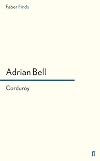
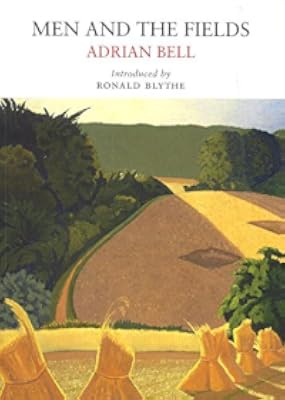
"Corduroy" was first published in 1930. It was followed by "Silver Ley "in 1931 and "The Cherry Tree """in 1932. Together they form a trilogy that has been described as 'the classic account of a twentieth-century Englishman's conversion to rural life'." "In "Corduroy" the author's experiences as a farm apprentice in Suffolk are described. The tone is affectionate, humourous and not in the least patronizing. At times there is an elegiac strain not dissimilar to Edward Thomas. The three books show more constitute a threnody for, what was then, a vanishing, pre-mechanized way, of farming and rural life. show lessTags
Recommendations



















Member Reviews
Bell’s father had been withering about his son’s literary ambitions but agreed to let him learn agriculture and sent him as a paying guest to a farming family in a village near Bury St Edmunds. ‘I was flying from the threat of an office life,’ Bell writes on the first page of the book. Yet when he arrived one autumn day on an old motorbike he felt all wrong for the part – too much of a ‘gent’ with his weak hands, his boots which were unlike anyone else’s, and his inability to understand the Suffolk dialect.
Like many townies, he assumed at first that the yokels were somewhat simple, but soon his own ignorance of the countryside and initial inability to do the most basic physical tasks taught him a new respect. A farmer, show more he discovered, stored away in his head thousands of facts about animals, crops and fodder, while his eye for a pig was ‘as subtle as an artist’s’.
Bell’s eye was subtle too. He grew to love the land, and Corduroy is filled with the most precise yet poetic descriptions of the countryside and of farming life. It was a book, his son the former MP Martin Bell tells us, that many soldiers from the villages of England took with them in their kitbags to the war zones of the Second World War to remind them of the world of peace and sanity they had left behind. For Corduroy is not simply a period piece – it captures what is unchanging about the lives of those who live from, rather than simply on, the land. show less
Like many townies, he assumed at first that the yokels were somewhat simple, but soon his own ignorance of the countryside and initial inability to do the most basic physical tasks taught him a new respect. A farmer, show more he discovered, stored away in his head thousands of facts about animals, crops and fodder, while his eye for a pig was ‘as subtle as an artist’s’.
Bell’s eye was subtle too. He grew to love the land, and Corduroy is filled with the most precise yet poetic descriptions of the countryside and of farming life. It was a book, his son the former MP Martin Bell tells us, that many soldiers from the villages of England took with them in their kitbags to the war zones of the Second World War to remind them of the world of peace and sanity they had left behind. For Corduroy is not simply a period piece – it captures what is unchanging about the lives of those who live from, rather than simply on, the land. show less
For some reason, my daughter got totally enraptured by this book and insisted I read it. My friendly local library tracked down a copy in Maine and snagged it for me. Of course, I could have just bought a copy from Amazon, but what's the fun in that? Librarians are such nice people that any excuse to interact with one is a good excuse.
Anyway, this is the story (autobiographical) of a young man, Adrian Bell, who leaves London to apprentice on Mr. Colville's farm in Suffolk. Bell knows literally nothing about farming, crops, animals, implements, the organization of land preparation, planting and sowing. So, he takes us along on his learning journey. It's a most fascinating read. The time is just after World War I, and most farming is show more still done as in the "old days".
So we get an amazing look as to how things were done, the changes in the seasons, people's attachment to the land and so forth. By the end of his first year of apprenticeship, Bell begins to think about a small farm of his own. He buys that at the end of the book. I gather that there are two subsequent volumes in which Bell further details his adventures in becoming a farmer. This was a most interesting book, and I'm seriously thinking about importuning my local librarians to hunt me up the next volume of the trilogy. show less
Anyway, this is the story (autobiographical) of a young man, Adrian Bell, who leaves London to apprentice on Mr. Colville's farm in Suffolk. Bell knows literally nothing about farming, crops, animals, implements, the organization of land preparation, planting and sowing. So, he takes us along on his learning journey. It's a most fascinating read. The time is just after World War I, and most farming is show more still done as in the "old days".
So we get an amazing look as to how things were done, the changes in the seasons, people's attachment to the land and so forth. By the end of his first year of apprenticeship, Bell begins to think about a small farm of his own. He buys that at the end of the book. I gather that there are two subsequent volumes in which Bell further details his adventures in becoming a farmer. This was a most interesting book, and I'm seriously thinking about importuning my local librarians to hunt me up the next volume of the trilogy. show less
This makes a fascinating part of the historical record. For reasons unknown, Adrian Bell decided after WWI, aged about 19, that he wanted to become a farmer. He persuaded his father, a London newpaper editor, to arrange for him to spend a year in Suffolk, helping and learning from a yeoman farmer.
This is his account of that year, written some ten years later, by which time the old country ways he recorded had already disappeared. He writes, not only about the farm and its workers, but the household, meals, hunting, agricultural shows.
This is his account of that year, written some ten years later, by which time the old country ways he recorded had already disappeared. He writes, not only about the farm and its workers, but the household, meals, hunting, agricultural shows.
A chance referral which introduced me to charming almost other wordly place of rural UK 1930.
Bell became a journalist and compiler of cross words http://www.adrianbellsociety.co.uk/
Bell became a journalist and compiler of cross words http://www.adrianbellsociety.co.uk/
Ratings
Members
- Recently Added By
Author Information

26 Works 525 Members
Awards and Honors
Notable Lists
Series

Belongs to Publisher Series
Work Relationships
Is contained in
Common Knowledge
- Canonical title
- Corduroy
- Original publication date
- 1930-05
- People/Characters
- Mr Colville
- Important places
- Suffolk, England, UK
- First words
- I was upon the fringe of Suffolk, a county rich in agricultural detail, missed by my untutored eye.
- Last words
- (Click to show. Warning: May contain spoilers.)I lit my lamp and opened my new account-book at the first page.
Classifications
Statistics
- Members
- 162
- Popularity
- 202,969
- Reviews
- 4
- Rating
- (3.64)
- Languages
- English, French
- Media
- Paper, Ebook
- ISBNs
- 10
- ASINs
- 10