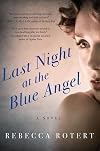
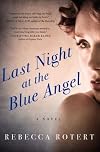
Last Night at the Blue Angel
by Rebecca Rotert
On This Page
Description
Set against the backdrop of the early 1960s Chicago jazz scene, a highly ambitious and stylish literary debut that combines the atmosphere and period detail of Amor Towles' Rules of Civility with the emotional depth and drama of The Memory Keeper's Daughter, about a talented but troubled singer, her precocious ten-year-old daughter, and their heartbreaking relationship.It is the early 1960s, and Chicago is a city of uneasy tensions—segregation, sexual experimentation, free love, the Cold show more War—but it is also home to one of the country's most vibrant jazz scenes. Naomi Hill, a singer at the Blue Angel club, has been poised on the brink of stardom for nearly ten years. Finally, her big break arrives—the cover of Look magazine. But success has come at enormous personal cost. Beautiful and magnetic, Naomi is a fiercely ambitious yet extremely self-destructive woman whose charms are irresistible and dangerous for those around her. No one knows this better than Sophia, her clever ten-year-old daughter.
For Sophia, Naomi is the center of her universe. As the only child of a single, unconventional mother, growing up in an adult world, Sophia has seen things beyond her years and her understanding. Unsettled by her uncertain home life, she harbors the terrible fear that the world could end at any moment, and compulsively keeps a running list of practical objects she will need to reinvent once nuclear catastrophe strikes. Her one constant is Jim, the photographer who is her best friend, surrogate father, and protector. But Jim is deeply in love with Naomi—a situation that adds to Sophia's anxiety.
Told from the alternating perspectives of Sophia and Naomi, their powerful and wrenching story unfolds in layers, revealing Sophia's struggle for her mother's love with Naomi's desperate journey to stardom and the colorful cadre of close friends who shaped her along the way.
Sophisticated yet poignant, Last Night at the Blue Angel is an unforgettable tale about what happens when our passion for the life we want is at sharp odds with the life we have. It is a story ripe with surprising twists and revelations, and an ending that is bound to break your heart.
. show less
Tags
Recommendations



















Member Reviews
I was quite impressed by this first novel by author Rebecca Rotert. The story involves the singer Naomi Hill and her daughter Sophia as they alternate telling their stories, first of Naomi's childhood and her struggle to win fame as a jazz singer and then of her daughter's struggle to find her place in her mother's world where everything is constantly changing. The one exception to their chaotic lives is the constant presence of Jim, a passionate photographer of both old buildings and of Naomi. He loves Naomi and is willing to accept her as she is, but more importantly he loves Sophia and gives her the stability and attention that her mother can only achieve on occasion. The other two important characters to both Naomi and Sophia are show more Sister Eye and her sibling Rita. The book explores different kinds of love, the ways women can be torn between having a career or having the conventional life of husband and family, and by how we survive loss of all different kinds. This book kept me interested the whole way through. show less
 This review was written for LibraryThing Early Reviewers.
There is something quite timeless about Last Night at the Blue Angel that makes it easy for readers to completely lose track of the era in which it is set. While Naomi’s lifestyle choices and Sophia’s situation are ultra-modern even for the sixties, it is as if Naomi’s nights at the Blue Angel are nightly travels back in time to the heady days of the Jazz Era. The references to the Cold War, racial politics, television, music, and fashion are all jarring in their modernity. While this sense of timelessness can cause issues with the flow of the narrative, they also serve to add to the overall charm of the story.
Naomi and Sophia are two very distinct personalities, something that their alternative perspectives highlight. Ms. Rotert show more draws on a reader’s sympathies with Sophia, the little girl who loves her mother but fiercely desires a father figure and life of relative normalcy. Forced to be the grown-up in their little family, she is wise beyond her years and too mature for her own good, but her voice maintains an innocence that befits her age. While readers may be leery of a child narrator, her voice is refreshingly honest without being childish, and the pragmatism she displays belies her age. Sophia is truly a good girl, and it breaks a reader’s heart that she must endure such drama at the hands of her mother.
Conversely, Naomi is the type of character it is easy for readers to condemn, but she is also a pitiable figure. Naomi’s narration tends to draw on her memories, showing readers how she landed in a Chicago jazz bar from her origins in rural Kansas, the choices she made along the way, and how those choices shaped her personality and her world. Her drive for success is palpable, although it is obvious from her words and actions that she never intended to morph into the self-involved woman Sophia knows as her mother. Much of her harshness is a learned behavior deriving specifically from her devastating experiences at the hands of friends and family. Yet, Ms. Rotert is careful to show that not all of Naomi’s issues are the result of others. There is a coldness to her that is an innate part of her personality, as seen best in her attitude towards her daughter. Perhaps it is because Ms. Rotert introduces readers to the charming Sophia first, but Naomi never quite generates the same amount of admiration and respect with readers that Sophia does.
Last Night at the Blue Angel is an ambitious and admirable novel. The story includes bi-racial relationships at a time when the intermingling of races in any fashion was still illegal. There is a strong gay/lesbian/bisexual element within the story. Naomi is a single mother when women were shunned for having a child out of wedlock. These are all scenarios that were shocking in the 1960s and still make people uncomfortable today. The story makes a deliberate statement on these controversial topics, showing how society should be and that all forms of friendship and love are acceptable even if they do not follow the traditional template. Naomi and Sophia are remarkable in their capacity to embrace the untraditional and find happiness and love in alternative ways. This noteworthy acceptability of all lifestyle choices as combined with the eerie timeless quality of the backdrop creates a stunning and unique story about love and family for the ages. show less
Naomi and Sophia are two very distinct personalities, something that their alternative perspectives highlight. Ms. Rotert show more draws on a reader’s sympathies with Sophia, the little girl who loves her mother but fiercely desires a father figure and life of relative normalcy. Forced to be the grown-up in their little family, she is wise beyond her years and too mature for her own good, but her voice maintains an innocence that befits her age. While readers may be leery of a child narrator, her voice is refreshingly honest without being childish, and the pragmatism she displays belies her age. Sophia is truly a good girl, and it breaks a reader’s heart that she must endure such drama at the hands of her mother.
Conversely, Naomi is the type of character it is easy for readers to condemn, but she is also a pitiable figure. Naomi’s narration tends to draw on her memories, showing readers how she landed in a Chicago jazz bar from her origins in rural Kansas, the choices she made along the way, and how those choices shaped her personality and her world. Her drive for success is palpable, although it is obvious from her words and actions that she never intended to morph into the self-involved woman Sophia knows as her mother. Much of her harshness is a learned behavior deriving specifically from her devastating experiences at the hands of friends and family. Yet, Ms. Rotert is careful to show that not all of Naomi’s issues are the result of others. There is a coldness to her that is an innate part of her personality, as seen best in her attitude towards her daughter. Perhaps it is because Ms. Rotert introduces readers to the charming Sophia first, but Naomi never quite generates the same amount of admiration and respect with readers that Sophia does.
Last Night at the Blue Angel is an ambitious and admirable novel. The story includes bi-racial relationships at a time when the intermingling of races in any fashion was still illegal. There is a strong gay/lesbian/bisexual element within the story. Naomi is a single mother when women were shunned for having a child out of wedlock. These are all scenarios that were shocking in the 1960s and still make people uncomfortable today. The story makes a deliberate statement on these controversial topics, showing how society should be and that all forms of friendship and love are acceptable even if they do not follow the traditional template. Naomi and Sophia are remarkable in their capacity to embrace the untraditional and find happiness and love in alternative ways. This noteworthy acceptability of all lifestyle choices as combined with the eerie timeless quality of the backdrop creates a stunning and unique story about love and family for the ages. show less
I cannot believe that this book is a debut novel for Rebecca Rotert. This book will lift you up, and then suddenly cast you down. It will rip out your insides and then calmly place them back in. My heart broke over and over for ten year old Sophia. There is a mind-numbing sadness at times in this book, but then in the next chapter something warm and wonderful happens, and hope soars again. This so exactly portrays the emotions that Sophia's mother Naomi experiences in her never-ending search for stardom and fame. The time is 1960's Chicago and the backdrop is a hot and sultry jazz club called The Blue Angel. The story is told in the first person from two viewpoints - little precocious Sophia and her talented but perplexing mother Naomi. show more The writing is smooth and poetic and it carries the reader along formidably to the very tragic ending. The cost that unrelenting ambition has on people close to the person with the ambition is calamitous and it spares no one in its wake. This is a heartbreaker of a book, bur so wonderfully written that it almost becomes a part of you as you read it. I highly recommend it. show less
This is a deeply moving story of love, sexuality, music, coming of age and Chicago. It is a stunning work for a first novel by talented Rotert.
When I struggle to finish a mediocre book, because I hate to be a quitter, I keep checking on how many pages are left. With “Last Night at the Blue Angel” I kept checking on the number of pages remaining because I didn’t want it to end.
I found this novel tremendously engaging. Rotert creates vivid images of the nightclub scene in Chicago in the 60's. To some degree, “Last Night at the Blue Angel” is historical fiction. The primary setting is Chicago in 1965, with the beginnings of desegregation and the destruction of treasures of American architecture stirring interest in historic show more preservation.
Yes, the lifestyle and parenting of protagonist Jazz singer Naomi Hill can be shocking at first, but given the circumstances, it becomes understandable. Her daughter, Sophia, raised in hotels and backstage, with lesbians, transvestites, and nuns, yes, nuns, is a bright, inquisitive, self-reliant, sensitive, caring, affectionate girl. Roles are generally reversed, with 10-year-old Sophia often mothering Naomi, who lives an unstable and disruptive life involving liberal alcohol use.
Normally, I shy away from stories concerning difficult circumstances for young children or heartbreak. However, author Rotert blended love, happiness and adventure so well with the obstacles and struggles faced by the characters that I embraced it all as a rich narrative. show less
When I struggle to finish a mediocre book, because I hate to be a quitter, I keep checking on how many pages are left. With “Last Night at the Blue Angel” I kept checking on the number of pages remaining because I didn’t want it to end.
I found this novel tremendously engaging. Rotert creates vivid images of the nightclub scene in Chicago in the 60's. To some degree, “Last Night at the Blue Angel” is historical fiction. The primary setting is Chicago in 1965, with the beginnings of desegregation and the destruction of treasures of American architecture stirring interest in historic show more preservation.
Yes, the lifestyle and parenting of protagonist Jazz singer Naomi Hill can be shocking at first, but given the circumstances, it becomes understandable. Her daughter, Sophia, raised in hotels and backstage, with lesbians, transvestites, and nuns, yes, nuns, is a bright, inquisitive, self-reliant, sensitive, caring, affectionate girl. Roles are generally reversed, with 10-year-old Sophia often mothering Naomi, who lives an unstable and disruptive life involving liberal alcohol use.
Normally, I shy away from stories concerning difficult circumstances for young children or heartbreak. However, author Rotert blended love, happiness and adventure so well with the obstacles and struggles faced by the characters that I embraced it all as a rich narrative. show less
As a fan of literary historical fiction, Rebecca Rotert's Last Night at the Blue Angel caught my eye when it was released in hardcover. However, I didn't happen to read it as a new release, so I was happy to be reminded of the work's existence -- and very lucky to receive a free copy for review, to boot from the Library Thing Early Reviewer Program -- upon the release of the paperback edition earlier this year.
Given the critical acclaim the book received, the particular focus of the narrative on two primary characters' (mother and daughter pair Naomi and Sophie) psychological experiences of events, and the exciting time and place (1960's Chicago), I expected author Rebecca Rotert's narrative to actually capture my imagination fully.
It show more was a rewarding read on the whole; Rotert succeeded in creating multi-dimensional characters that interested this reader from start to finish. The two personalities have real depth and compel interesting events to occur and thus carry the storyline organically -- rather than being buffeted about by plot elements of greater scale and significance. That said, I've read a lot of excellent literary historical fiction; luckily for readers like me it's a talent-crowded field. When I invest my energy in a work, I want to read a writer who crafts characters who not only engage my interest but whose stories become part of my life experience -- whose personas and fates stay impressed on my memory in valuable ways for long after I finish the novel.
Rotert failed to meet this standard for me, but it wasn't for lack of trying. She certainly employed literary devices to achieve this effect for her readers. Most notably, the novel switches from first-person perspective between the two protagonists, and their words are represented in italics -- an unusual choice, which in my experience had the effect of reminding me over and over of the particular personal nature of the narrative voice. This device didn't create a greater fascination in my mind or an illusion of greater intimacy between the personalities on the page and myself as reader. I was just aware of the effort Rotert was making to close that gap.
Perhaps one reason this technique didn't help engage me very closely and lastingly with the characters and the novel as a whole is that the narrative technique lent itself to easy-to-read, light prose consisting of short, to the point statements. This made the novel a very quick read, and while this may indeed make the book very appealing to some readers, it may have barred my immersion in Rotert's narrative.
I'd like to read this author again and see her go deeper and immerse us more deeply in her living craft. It's a well-written, interesting novel, and I recommend it to readers who will not be disappointed with anything less than those commendable qualities. show less
Given the critical acclaim the book received, the particular focus of the narrative on two primary characters' (mother and daughter pair Naomi and Sophie) psychological experiences of events, and the exciting time and place (1960's Chicago), I expected author Rebecca Rotert's narrative to actually capture my imagination fully.
It show more was a rewarding read on the whole; Rotert succeeded in creating multi-dimensional characters that interested this reader from start to finish. The two personalities have real depth and compel interesting events to occur and thus carry the storyline organically -- rather than being buffeted about by plot elements of greater scale and significance. That said, I've read a lot of excellent literary historical fiction; luckily for readers like me it's a talent-crowded field. When I invest my energy in a work, I want to read a writer who crafts characters who not only engage my interest but whose stories become part of my life experience -- whose personas and fates stay impressed on my memory in valuable ways for long after I finish the novel.
Rotert failed to meet this standard for me, but it wasn't for lack of trying. She certainly employed literary devices to achieve this effect for her readers. Most notably, the novel switches from first-person perspective between the two protagonists, and their words are represented in italics -- an unusual choice, which in my experience had the effect of reminding me over and over of the particular personal nature of the narrative voice. This device didn't create a greater fascination in my mind or an illusion of greater intimacy between the personalities on the page and myself as reader. I was just aware of the effort Rotert was making to close that gap.
Perhaps one reason this technique didn't help engage me very closely and lastingly with the characters and the novel as a whole is that the narrative technique lent itself to easy-to-read, light prose consisting of short, to the point statements. This made the novel a very quick read, and while this may indeed make the book very appealing to some readers, it may have barred my immersion in Rotert's narrative.
I'd like to read this author again and see her go deeper and immerse us more deeply in her living craft. It's a well-written, interesting novel, and I recommend it to readers who will not be disappointed with anything less than those commendable qualities. show less
This review was written for LibraryThing Early Reviewers.Mothers and daughters can have all sorts of relationships. Some are close and loving while others are distant or estranged. Some mothers raise their children while other children are basically abandoned to raise themselves. And yet no matter what our relationship with our mothers, not knowing any other way of life, we assume our experience is the common one. We crave love, acceptance, attention, and acknowledgement from our mothers. In Rebecca Rotert's novel, Last Night at the Blue Angel, set in 1965 Chicago, Naomi, a single mother, sings in a rundown nightclub and strives for an ever elusive fame while her innocent but wise ten year old daughter, Sophia, aches for Naomi's attention as she tries to hold her talented but fragile mother show more together.
The novel opens on the night that Naomi finally becomes famous but the spotlight of the narrative is very quickly and firmly on the precocious Sophia perched on her stool in the wings watching the mother she adores. Sophia worries about life after a nuclear bomb and she keeps lists of the necessary things that she will have to reinvent in the event of such a major disaster. Her world is not perfect but it is her world and she wants nothing more than to preserve it as it is. Since Naomi is too consumed with her career and self-involved to be a particularly attentive mother, Sophia is lucky to be surrounded by an extended family of her and Naomi's own making. Jim, a photographer documenting the ruins of old Chicago architecture before it is forever lost and in love with Naomi, helps Sophia manage her mother and acts as a steadying influence and surrogate father. Sister Eye is a teacher at Sophia's school who has known Naomi since before she left her small Kansas town, driven out by small minded prejudice. And it is with Sister Eye and Rita that Naomi lived while she found her footing, when she discovered she was pregnant with Sophia, and who are as much Sophia's family as if they shared blood.
The novel eventually alternates between Sophia and Naomi's narration with Sophia telling the tale of the immediate past and Naomi filling in the even further past events that led her to flee Kansas. When Naomi tells her tale, it fills the gaps and explains things in Sophia's narrative in some unexpected ways. Even so, Sophia's narration is the stronger, more sympathetic one. Sophia is an appealing character, accepting and winsome, and her fierce love for her mother is poignant while her loyalty and love for the others in her life is overwhelming. Naomi has been battered by life far more than her daughter but some of that battering is a result of her own choices. Most of the relationships are well developed here but there are two incredibly important ones, with David and with Laura, that are underdeveloped and scant despite their significance to the story as a whole. The ending is bittersweet and gives a hint of how Sophia will face growing up to match the maturity she already possesses.
The novel, like I imagine Naomi's voice, is sultry and full of longing for real beauty and for love and family. It is well written, telling a story that is both beautiful and tragic. Tackling prejudice, racism, sexuality, the terrible price of fame, and durability versus vulnerability, this novel is a slow, jazzy paean, heart-wrenching and languid. show less
The novel opens on the night that Naomi finally becomes famous but the spotlight of the narrative is very quickly and firmly on the precocious Sophia perched on her stool in the wings watching the mother she adores. Sophia worries about life after a nuclear bomb and she keeps lists of the necessary things that she will have to reinvent in the event of such a major disaster. Her world is not perfect but it is her world and she wants nothing more than to preserve it as it is. Since Naomi is too consumed with her career and self-involved to be a particularly attentive mother, Sophia is lucky to be surrounded by an extended family of her and Naomi's own making. Jim, a photographer documenting the ruins of old Chicago architecture before it is forever lost and in love with Naomi, helps Sophia manage her mother and acts as a steadying influence and surrogate father. Sister Eye is a teacher at Sophia's school who has known Naomi since before she left her small Kansas town, driven out by small minded prejudice. And it is with Sister Eye and Rita that Naomi lived while she found her footing, when she discovered she was pregnant with Sophia, and who are as much Sophia's family as if they shared blood.
The novel eventually alternates between Sophia and Naomi's narration with Sophia telling the tale of the immediate past and Naomi filling in the even further past events that led her to flee Kansas. When Naomi tells her tale, it fills the gaps and explains things in Sophia's narrative in some unexpected ways. Even so, Sophia's narration is the stronger, more sympathetic one. Sophia is an appealing character, accepting and winsome, and her fierce love for her mother is poignant while her loyalty and love for the others in her life is overwhelming. Naomi has been battered by life far more than her daughter but some of that battering is a result of her own choices. Most of the relationships are well developed here but there are two incredibly important ones, with David and with Laura, that are underdeveloped and scant despite their significance to the story as a whole. The ending is bittersweet and gives a hint of how Sophia will face growing up to match the maturity she already possesses.
The novel, like I imagine Naomi's voice, is sultry and full of longing for real beauty and for love and family. It is well written, telling a story that is both beautiful and tragic. Tackling prejudice, racism, sexuality, the terrible price of fame, and durability versus vulnerability, this novel is a slow, jazzy paean, heart-wrenching and languid. show less
I enjoyed this one a lot (compliments of LibraryThing). It is 1965 in Chicago--segregation, the Cold War, and razing of some old Chicago buildings all play a part. A single mother, the talented Naomi, sings at The Blue Angel nightclub to support herself and her 10 year old daughter Sophia. Sophia is said to look like Howdy Doody, and yearns for the day when she will be as beautiful and popular as Naomi. Everyone loves Naomi, yet she cannot settle on who to love back. There are many affairs with men and women alike; but Naomi removes herself from any real emotions, even as someone from her past appears in her audience one night and "complicates" things.
Naomi's best friend Jim from early days in Chicago is the closest thing to a dad that show more Sophia has ever had; but Naomi doesn't grasp the importance or the meaning of their relationship. Jim is a photographer and focuses his camera on deteriorating architecture he feels should be salvaged, and on Naomi, landing her a cover on Look magazine.
The story is told in alternating POV by Sophia in 1965 and Naomi in 1955, when she first came to Chicago with an ex-nun on her arm and Sophia in her womb. It is easy to understand and empathise with little Sophia. Naomi takes much longer to get to know, but I found nothing about her to like. By the end I found her quite appalling.
What Sophia says about her in the opening of her first chapter sums it up:
"Mother is a singer. I live in her dark margin." show less
Naomi's best friend Jim from early days in Chicago is the closest thing to a dad that show more Sophia has ever had; but Naomi doesn't grasp the importance or the meaning of their relationship. Jim is a photographer and focuses his camera on deteriorating architecture he feels should be salvaged, and on Naomi, landing her a cover on Look magazine.
The story is told in alternating POV by Sophia in 1965 and Naomi in 1955, when she first came to Chicago with an ex-nun on her arm and Sophia in her womb. It is easy to understand and empathise with little Sophia. Naomi takes much longer to get to know, but I found nothing about her to like. By the end I found her quite appalling.
What Sophia says about her in the opening of her first chapter sums it up:
"Mother is a singer. I live in her dark margin." show less
This review was written for LibraryThing Early Reviewers.Members
- Recently Added By
Lists

Dublin Literary Award Longlist 2016
148 works; 4 members
Author Information
1+ Work 167 Members
Awards and Honors
Common Knowledge
- Canonical title
- Last Night at the Blue Angel
- Original publication date
- 2014-07-01
- Important places
- Chicago, Illinois, USA
Classifications
Statistics
- Members
- 167
- Popularity
- 195,965
- Reviews
- 25
- Rating
- (3.99)
- Languages
- English
- Media
- Paper, Audiobook, Ebook
- ISBNs
- 9
- UPCs
- 1
- ASINs
- 3