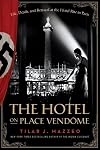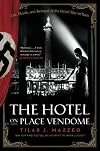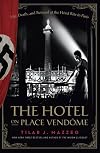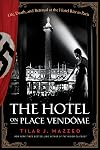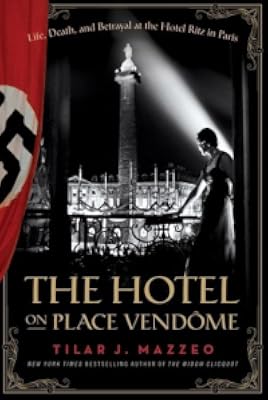
The Hotel on Place Vendome: Life, Death, and Betrayal at the Hotel Ritz in Paris
by Tilar J. Mazzeo
On This Page
Description
Set against the backdrop of the Nazi occupation of World War II, The Hôtel on Place Vendôme is the captivating history of Paris's world-famous Hôtel Ritz-a breathtaking tale of glamour, opulence, and celebrity; dangerous liaisons, espionage, and resistance-from Tilar J. Mazzeo, the New York Times bestselling author of The Widow Clicquot and The Secret of Chanel No. 5 When France fell to the Germans in June 1940, the legendary Hôtel Ritz on the Place Vendôme-an icon of Paris frequented show more by film stars and celebrity writers, American heiresses and risqué flappers, playboys, and princes-was the only luxury hotel of its kind allowed in the occupied city by order of Adolf Hitler. Tilar J. Mazzeo traces the history of this cultural landmark from its opening in fin de siècle Paris. At its center, The Hotel on Place Vendôme is an extraordinary chronicle of life at the Ritz during wartime, when the Hôtel was simultaneously headquarters to the highest-ranking German officers, such as Reichsmarshal Hermann Göring, and home to exclusive patrons, including Coco Chanel. Mazzeo takes us into the grand palace's suites, bars, dining rooms, and wine cellars, revealing a hotbed of illicit affairs and deadly intrigue, as well as stunning acts of defiance and treachery. Rich in detail, illustrated with black-and-white photos, The Hotel on Place Vendôme is a remarkable look at this extraordinary crucible where the future of post-war France-and all of post-war Europe-was transformed. show lessTags
Recommendations
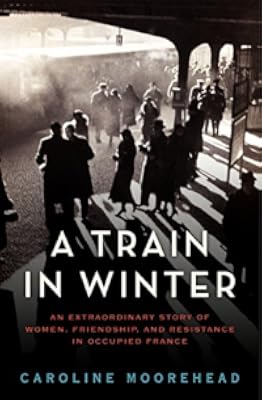
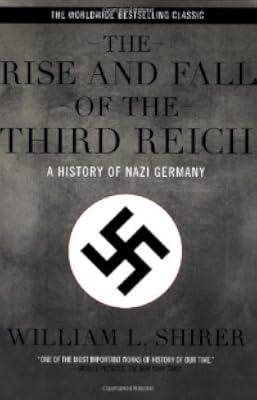
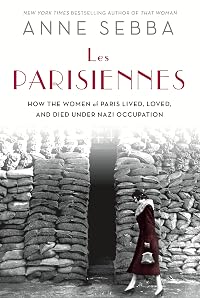
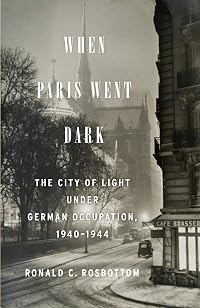



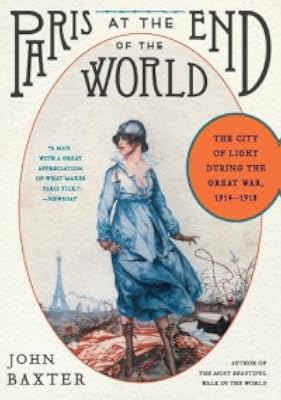


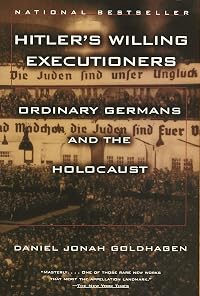
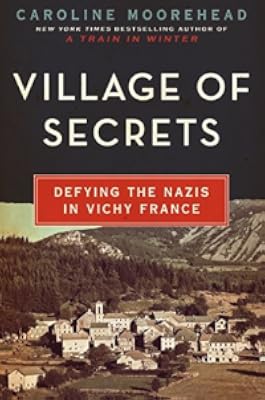
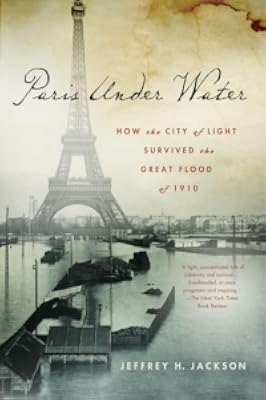





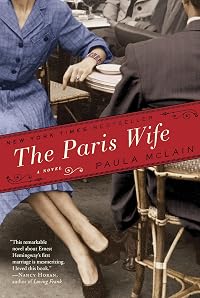


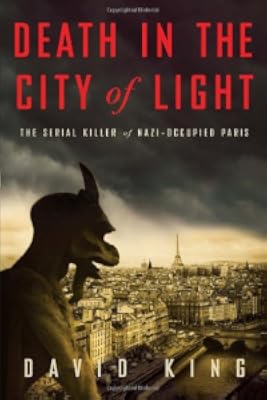



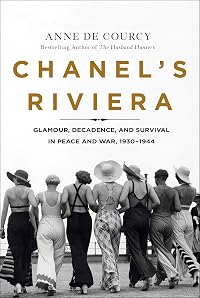
Member Recommendations
sloreck Many of the same individuals discussed in both books: Hemingway, Gellhorn, and Capa
Member Reviews
Review first published on BookLikes:
http://brokentune.booklikes.com/post/825604/the-hotel-on-place-vendome
(This review is abridged and edited for GoodReads.)
If you are looking at this book, please don't be misguided by the cover and the publisher's blurb - the book does reveal a great deal on Paris during the German occupation but it does not exclusively focus on the personalities of Nazi generals. Rather it is the story of hotel Ritz from its first opening to its present day - but it is told using the stories of the people who used to live, visit, dine, and run the hotel.
It is a good story made even more remarkable by well researched insights into the Ritz family, Marcel Proust, the Dreyfusards, Winston Churchill, Charles De Gaulle, show more Georges Mandel, Coco Chanel, Ernest Hemingway, Robert Capa, Marlene Dietrich, Ingrid Bergman, Jean Cocteau, Picasso, ... and a whole band of other personalities.
Of course, as promised by the dust jacket blurb, there is abundant information on the German occupation of Paris but the book also describes the sheer incredible situation of where employees of the hotel would use their position to pass information to the resistance or organise false passports.
What surprised me most about the book was that it was written in an engaging style where each chapter dealt with a different pairing or grouping of people to tell a story, but chapter by chapter, the stories interlinked. It is really clever writing. And I guess, it is this that made it difficult for me to put the book down. show less
http://brokentune.booklikes.com/post/825604/the-hotel-on-place-vendome
(This review is abridged and edited for GoodReads.)
If you are looking at this book, please don't be misguided by the cover and the publisher's blurb - the book does reveal a great deal on Paris during the German occupation but it does not exclusively focus on the personalities of Nazi generals. Rather it is the story of hotel Ritz from its first opening to its present day - but it is told using the stories of the people who used to live, visit, dine, and run the hotel.
It is a good story made even more remarkable by well researched insights into the Ritz family, Marcel Proust, the Dreyfusards, Winston Churchill, Charles De Gaulle, show more Georges Mandel, Coco Chanel, Ernest Hemingway, Robert Capa, Marlene Dietrich, Ingrid Bergman, Jean Cocteau, Picasso, ... and a whole band of other personalities.
Of course, as promised by the dust jacket blurb, there is abundant information on the German occupation of Paris but the book also describes the sheer incredible situation of where employees of the hotel would use their position to pass information to the resistance or organise false passports.
What surprised me most about the book was that it was written in an engaging style where each chapter dealt with a different pairing or grouping of people to tell a story, but chapter by chapter, the stories interlinked. It is really clever writing. And I guess, it is this that made it difficult for me to put the book down. show less
This entertaining history of the Paris Hôtel Ritz is told through stories of the many people who lived, worked, loved, drank, argued, and partied there, starting in La Belle Époque with hotel’s 1898 opening while the Dreyfus affair was polarizing French aristocrats, artists, and intellectuals. Soon the then unknown Marcel Proust became one of the regulars, gathering inspiration from the hotel’s patrons and staff for what would become his literary opus. The Ritz was a new style of luxury hotel but Oscar Wilde hated it because he found it all so very modern and jarring. The elevators were too fast, the electric lights too bright, and Wilde much preferred calling for a removable basin to having indoor plumbing with a permanent sink show more in his suite.
Though the book’s tales continue even past the time Princess Diana slipped out of one of the hotel’s back doors hoping to avoid the paparazzi shortly before their pursuit helped cause her death, the book’s focus is on life in the WWII era with all its bizarre contradictions and complications during the Nazi occupation and then liberation of Paris. Joseph Goebbels gave the order that Paris should be happy and gay--or else--so parties were held, plays were produced and love affairs were conducted even as some citizens were disappearing off the streets never to be seen again and the French Underground was working covertly to oust the invaders.
Aristocrats, philosophers, journalists, artists, authors, spies, German commanders, and members of the French Resistance all mingled at the Ritz which gives this book plenty of sometimes shocking anecdotes, all delivered in a chatty style but backed up by pages of reference notes. Hemingway who planned to liberate the Ritz without the help of the military, Coco Chanel who had a German lover, and Sartre, Cocteau, Wallis Simpson, and Hermann Wilhelm Göring are among the many notables who make appearances in this book. With just 238 pages of text this is a fast, fascinating read. show less
Though the book’s tales continue even past the time Princess Diana slipped out of one of the hotel’s back doors hoping to avoid the paparazzi shortly before their pursuit helped cause her death, the book’s focus is on life in the WWII era with all its bizarre contradictions and complications during the Nazi occupation and then liberation of Paris. Joseph Goebbels gave the order that Paris should be happy and gay--or else--so parties were held, plays were produced and love affairs were conducted even as some citizens were disappearing off the streets never to be seen again and the French Underground was working covertly to oust the invaders.
Aristocrats, philosophers, journalists, artists, authors, spies, German commanders, and members of the French Resistance all mingled at the Ritz which gives this book plenty of sometimes shocking anecdotes, all delivered in a chatty style but backed up by pages of reference notes. Hemingway who planned to liberate the Ritz without the help of the military, Coco Chanel who had a German lover, and Sartre, Cocteau, Wallis Simpson, and Hermann Wilhelm Göring are among the many notables who make appearances in this book. With just 238 pages of text this is a fast, fascinating read. show less
When I first bought this book (based on reviews by BL friends) I couldn't wait to get started on it, but RL was busy at the time. In my excitement, I showed it to my mother-in-law, who promptly borrowed it. She returned it quickly, but the buzz had worn off and the book languished in my TBR for a couple of years.
I picked it up this week and happened to read the "other works" list in the front and saw that Mazzeo also wrote The Widow Clicquot, a book I started reading a couple of years ago and put back down because the florid writing was killing me. I almost put this book back in the pile after seeing that, but fortunately, I didn't.
Someone mentioned in their review that this narrative history read like a soap opera; I could definitely show more see some of that in a few of the chapters, but mostly what I got out of the book was that even amongst the very, very rich there were those that just wanted to get through it with little notice or involvement (Jean Cocteau), those that used the occupation to further their own ends (Coco Chanel), those that treated it as a game (Hemingway) and those who felt they were above it all (Arletty). Interspersed among the glitterati were those that were quietly fighting the good fight under everyone's noses.
But what struck me as slightly hyperbolic before I read the book, became clear by the end: an astounding amount of history originated or passed through the Hotel Ritz during World War II. Mazzeo writes an engrossing narrative describing the highlights (and low) in a structure that mostly makes sense and is easy to follow; a few times her backtracking left me flipping back pages to get back on the timeline, but overall it was a very easy, interesting and absorbing read.
This book certainly gave me an education: Hemingway's competitiveness, Chanel's anti-semitism and was-she/wasn't-she spy status, Edward and Wallis' fascism. But one story was the best: the story of Lieutenant Alexandre Rosenberg. I won't spoil it here, but wow... against astronomic odds... So. very. awesome.
I dinged it 1/2 star because there were some egregious copyediting errors, including one phrase repeated within a sentence. Lots of missing articles, and a few instances of excessive use of a single word in a paragraph or sentence. Really obvious stuff that should have been caught. The author also hints at further developments to be revealed later in the narrative but then never reveals them. (Mazzeo foreshadows that Laura Mae Corrigan faces trouble at the end of the war, after winning two medals for service, but then never mentions her again.)
Overall though, an excellent read; really interesting and one I'd not hesitate to recommend to someone interested in narrative histories. show less
I picked it up this week and happened to read the "other works" list in the front and saw that Mazzeo also wrote The Widow Clicquot, a book I started reading a couple of years ago and put back down because the florid writing was killing me. I almost put this book back in the pile after seeing that, but fortunately, I didn't.
Someone mentioned in their review that this narrative history read like a soap opera; I could definitely show more see some of that in a few of the chapters, but mostly what I got out of the book was that even amongst the very, very rich there were those that just wanted to get through it with little notice or involvement (Jean Cocteau), those that used the occupation to further their own ends (Coco Chanel), those that treated it as a game (Hemingway) and those who felt they were above it all (Arletty). Interspersed among the glitterati were those that were quietly fighting the good fight under everyone's noses.
But what struck me as slightly hyperbolic before I read the book, became clear by the end: an astounding amount of history originated or passed through the Hotel Ritz during World War II. Mazzeo writes an engrossing narrative describing the highlights (and low) in a structure that mostly makes sense and is easy to follow; a few times her backtracking left me flipping back pages to get back on the timeline, but overall it was a very easy, interesting and absorbing read.
This book certainly gave me an education: Hemingway's competitiveness, Chanel's anti-semitism and was-she/wasn't-she spy status, Edward and Wallis' fascism. But one story was the best: the story of Lieutenant Alexandre Rosenberg. I won't spoil it here, but wow... against astronomic odds... So. very. awesome.
I dinged it 1/2 star because there were some egregious copyediting errors, including one phrase repeated within a sentence. Lots of missing articles, and a few instances of excessive use of a single word in a paragraph or sentence. Really obvious stuff that should have been caught. The author also hints at further developments to be revealed later in the narrative but then never reveals them. (Mazzeo foreshadows that Laura Mae Corrigan faces trouble at the end of the war, after winning two medals for service, but then never mentions her again.)
Overall though, an excellent read; really interesting and one I'd not hesitate to recommend to someone interested in narrative histories. show less
I loved this study of the hotel's clients over the decades. The place itself is the leading character and its use as the backdrop for history in the making was very effective. Several people have criticized the choppiness of the narrative and there are some jarring discontinuities. However, the story is too fascinating for this to spoil the book.
This is an interesting topic treated as a mix of history and gossip. The author refers to some of the people by their first names only and others by their surnames only. Often this happens in the same paragraph. I found the coy chapter about "Marcel" and the Dreyfus Affair particular annoying. Throughout the chapter we are given "Marcel's" story as if there was some mystery about which "Marcel" we are reading. I have little knowledge of French history but it didn't take me long to figure it out. Then at the end of the chapter we get the big revelation. Duh!
This event was described early in the book and it probably made me more critical of the history/gossip presentation. I suppose this is done to make history more dramatic and palatable show more to the non-historian but this attempt made an interesting subject less instead of more interesting.
I read a copy from my local library. show less
This event was described early in the book and it probably made me more critical of the history/gossip presentation. I suppose this is done to make history more dramatic and palatable show more to the non-historian but this attempt made an interesting subject less instead of more interesting.
I read a copy from my local library. show less
Mazzeo tells an interesting story with emphasis on the years around World War II. It seemed to me that she still had a lot of material left at the end and just appended it, and didn't really edit that material. Just a couple Google searches would have improved the book. She talks about Barbara Hutton, as the Woolworth 'drugstore' heiress. She was a Woolworth heiress, but Woolworth's was a five and dime. Was she thinking Walgreen's? She also states that Ernest Hemingway committed suicide in Key West. It was in Idaho. There was also some confusion about military ranks. On one page an individual is a Lieutenant Colonel, and then a few pages later he has been demoted to Lieutenant. Little editing things like these throw the whole story into show more question. It's a good story with lots of interesting characters, but if I had caught similar lapses of fact checking earlier in the book, I would have put it down as poorly written and edited popular history. show less
There's a reason they sing songs about the Ritz. It was a fabulous hotel to meet, greet, and eat in the city of lights, Paris. From it's inception, just before the turn of the twentieth century, it was de rigueur for the rich and famous to party, make love, and plan the future of Europe from inside it's lavishly decorated walls. In the 1920's and 30's it was the home for the Lost Generation of writers artists and expatriates. Before and during World War II, it was still the place to be seen for which ever side was currently occupying Paris. German officers including, Reichsmarshal Hermann Goring, flocked to it like bees to honey. They rubbed elbows with film stars, cabaret performers, politicians, the aristocracy, and the filthy rich of show more Europe. It was also a great gathering spot for spies and double agents from both sides in the war. They could be hidden among the guests, both military and civilian, as well as the staff, who might work for either side. The stories of the people who led these lives are extremely interesting. Most are fraught with danger and suspense. Some are sprinkled with humor. Many are appalling in the revelation of acts of cruelty and inhumanity that were suffered by so many. It is revealing of the injustices of this world, that some can be so cruel to others, yet escape judgement. A mesmerizing true story. Book provided for review by Amazon Vine. show less
Members
- Recently Added By
Author Information

15 Works 2,936 Members
Tilar J. Mazzeo is a New York Times bestselling author of books that include The Widow Clicquot: The Story of a Champagne Empire and the Woman Who Ruled It, The Secret of Chanel No. 5: The Intimate Story of the World's Most Famous Perfume, and The Hotel On The Place Vendôme: Life, Death, And Betrayal At The Hôtel Ritz In Paris. She also writes show more extensively on wine for the media and is the author of The Back Lane Wineries of Napa, The Back Lane Wineries of Sonoma, and the forthcoming guide to The Back Lane Wineries of the Pacific Northwest. She received her Ph.D. from the University of Washington, Seattle, and today writes narrative nonfiction and memoir on the history of war, women, and luxury. She teaches English as the Clara C. Piper Associate Professor of English at Colby College and teaches narrative nonfiction at writer's workshops in the Canadian Gulf Islands of British Columbia. (Bowker Author Biography) show less
Common Knowledge
- Original publication date
- 2014
- People/Characters
- Ernest Hemingway; Robert Capa; Hermann Göring; Martha Gellhorn; César Ritz; Auguste Escoffier (show all 11); Coco Chanel; Marcel Proust; F. Scott Fitzgerald; Charles Ritz; Jean Cocteau
- Important places
- Hôtel Ritz, Paris, France; Place Vendôme, Paris, France; France; Paris, France
- Important events
- World War II (1939 | 1945); World War II, German Occupation of France (1940 | 1944); D-Day (1944-06-06)
Classifications
- Genres
- History, Nonfiction, General Nonfiction
- DDC/MDS
- 647.94443 — Applied science & technology Home economics & family management Management of public households (Institutional housekeeping) Specific kinds of public households and institutions Lodging for temporary residents; bed and breakfast, hotels, hostels, inns, motels, resorts
- LCC
- TX941 .R5 .M39 — Technology Home economics Home economics Hospitality industry. Hotels, clubs,
- BISAC
Statistics
- Members
- 340
- Popularity
- 93,353
- Reviews
- 8
- Rating
- (3.61)
- Languages
- English, Portuguese (Portugal)
- Media
- Paper, Audiobook, Ebook
- ISBNs
- 8
- ASINs
- 6