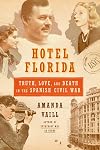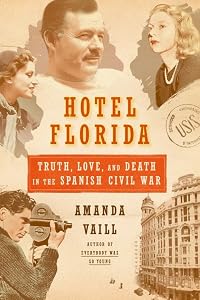
Hotel Florida: Truth, Love, and Death in the Spanish Civil War
by Amanda Vaill
On This Page
Description
"A spellbinding story of love amid the devastation of the Spanish Civil War Madrid, 1936. In a city blasted by a civil war that many fear will cross borders and engulf Europe--a conflict one writer will call "the decisive thing of the century"--six people meet and find their lives changed forever. Ernest Hemingway, his career stalled, his marriage sour, hopes that this war will give him fresh material and new romance; Martha Gellhorn, an ambitious novice journalist hungry for love and show more experience, thinks she will find both with Hemingway in Spain. Robert Capa and Gerda Taro, idealistic young photographers based in Paris, want to capture history in the making and are inventing modern photojournalism in the process. And Arturo Barea, chief of Madrid's loyalist foreign press office, and Ilsa Kulcsar, his Austrian deputy, are struggling to balance truth-telling with loyalty to their sometimes compromised cause--a struggle that places both of them in peril. Hotel Florida traces the tangled wartime destinies of these three couples against the backdrop of a critical moment in history. As Hemingway put it, "You could learn as much at the Hotel Florida in those years as you could anywhere in the world." From the raw material of unpublished letters and diaries, official documents, and recovered reels of film, Amanda Vaill has created a narrative of love and reinvention that is, finally, a story about truth: finding it out, telling it, and living it--whatever the cost"-- show lessTags
Recommendations



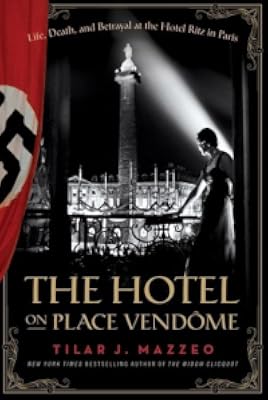
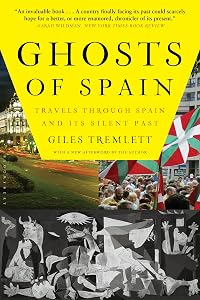
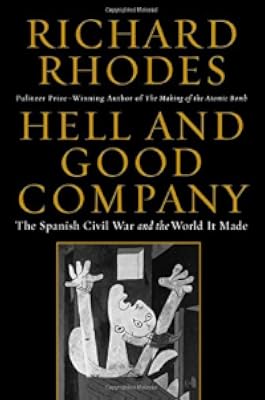
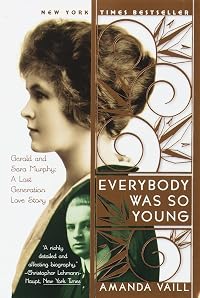
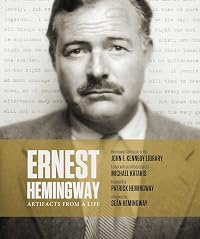
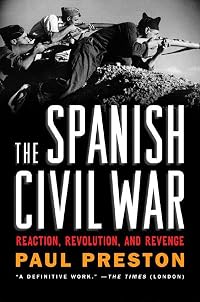

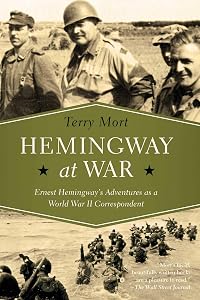
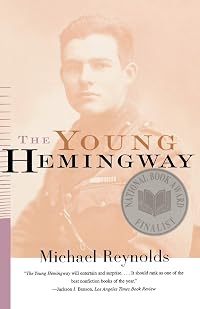
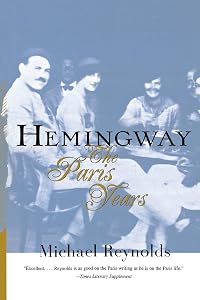
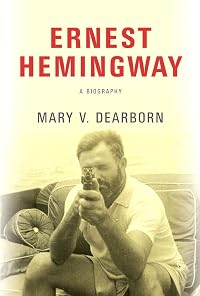
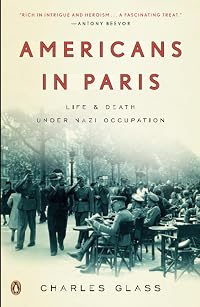
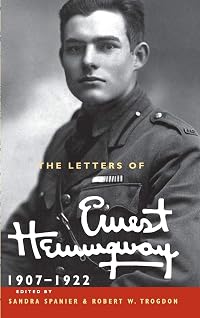


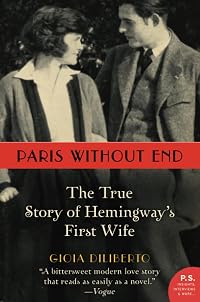
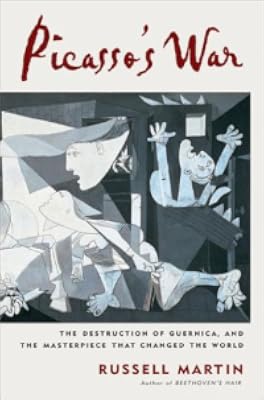
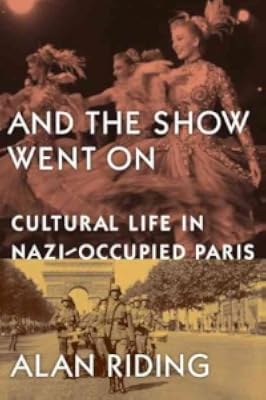

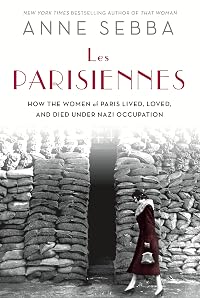
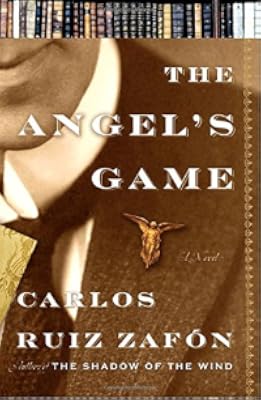
Member Recommendations
sloreck Many of the same individuals discussed in both books: Hemingway, Gellhorn, and Capa
Member Reviews
The Spanish Civil War is such a complicated subject that it's hard to tell the story clearly. I'm not sure Vaill's strategy of using these three couples as lenses worked perfectly, but it's an interesting approach. In such a tangled story, it's good for a reader to be able to latch on to specific characters. However, why not focus on the political leaders of the various groups? Perhaps that angle has been overused.
I have a good deal of background knowledge on this subject so I'm not sure if this is a good book for those who are coming to the subject fresh or not. If nothing else, it makes clear how confusing the Spanish Civil War was, then and now, and how tragic and unfair: the legitimately elected government of Spain was ultimately show more overthrown by a military rebellion backed by German and Italian resources, despite a Non-Intervention Pact signed by the European powers.
Quotes
In less than a week, the fascists' rebellion had triggered the very revolution they had spent the past five years resisting. And working together, the armed workers and the government's own forces had prevented an immediate fascist victory. (July 1936, Madrid, p. 18)
"My guts aren't as brave as my camera" -Capa, November 1936, Madrid (84)
Virginia Woolf's essay "Three Guineas" inspired by Capa's and other images from Madrid (88)
"These are terrible times. To overcome them we have to be terrible ourselves." -Pepe Quintanilla to John Dos Passos, April 1937, Madrid (175)
...this was war, and you had to fall in line with whatever the leadership told you. (Hemingway implied to Dos Passos, April 1937, Madrid, p. 176)
"It's this bloody Non-Intervention Committee that is the root of all evil," [Eric Blair a.k.a. George Orwell] said [to Dos Passos]: with Britain, France, and the United States refusing to support the government, the only friend Spain had was the Societ Union, and Stalin was using that friendship as leverage. (May 1937, Barcelona, p. 187)
Suddenly Spain's war had become an experimental exercise - which will prevail, fascism or socialism? Whose weapons are stronger, Germany's or Russia's? - that the rest of the world was watching with interest. Or worse: for although the powers-that-be in Europe and America hoped militant fascism might be weakened by the war, they actively didn't want the Russian Communists and their de facto protegees, the Spanish government, to win it - that would make communism too powerful.
We're condemned in advance, Barea thought. We can't win, but we have to fight. Maybe we'll be saved if an antifascist war starts in Europe; maybe all we can do is carry on and give the other countries time to arm themselves. (May 1937, Madrid, p. 197)
"You get an absurd feeling that somehow it's unfair still to be alive." -Gerda Taro, July 1937 (225)
"It is not always easy to stand aside and be unable to do anything except record the sufferings around one." -Robert Capa, Barcelona, January 1939 (345)
"Fascism is a lie told by bullies. A writer who will not lie cannot live under fascism." (Hemingway, June 1937, New York, p. 202)
"The war photographer's most fervent wish is for unemployment." -Robert Capa (229)
"[Hemingway] is living in a world so entirely his own," wrote Scott Fitzgerald to Max Perkins...
that it is impossible to help him, even if I felt close to him at the moment, which I don't." (August 1937, New York, 237)
"I will occupy Spain town by town, village by village...I can assure you that I am not interested in territory, but in inhabitants. The reconquest of the territory is the means, the redemption of the inhabitants the end. I cannot shorten the war by even one day..." -Franco to Italian ambassador (fall 1937, Madrid, 259)
"We [Spain] aren't used to intelligent women yet." -priest Leocadio Lobo to Ilsa (fall 1937, Madrid, 261)
In war you can shoot the people who deserve to be shot. (Herb Matthews, December 1937, Teruel, 276)
"What goes on here [in Spain] seems to be the affair of all of us who do not want a world whose bible is Mein Kampf." -Gellhorn to Eleanor Roosevelt (April 1938, Barcelona, 308)
"In a war, you can never admit, even to yourself, that all is lost. Because when you will admit it is lost you will be beaten." -Hemingway (331)
Capa was "always very brave and always saying how frightened he was. He had none of Hemingway's bravado." (Gellhorn, November 1938, Barcelona, 338)
"There will be no mediation, because criminals and their victims cannot live together." -Franco, January 1939 (343)
...and Capa taking pictures as if the camera were a shield against his feelings. (346)
Hemingway "was always a spectator who wanted to be an actor, and who wanted to write as if he had been an actor. Yet it is not enough to look on: to write truthfully you must live, and you must feel what you are living." (Barea, "Not Spain But Hemingway," 357)
Gellhorn had "no intention of being a footnote in someone else's life." (360) show less
I have a good deal of background knowledge on this subject so I'm not sure if this is a good book for those who are coming to the subject fresh or not. If nothing else, it makes clear how confusing the Spanish Civil War was, then and now, and how tragic and unfair: the legitimately elected government of Spain was ultimately show more overthrown by a military rebellion backed by German and Italian resources, despite a Non-Intervention Pact signed by the European powers.
Quotes
In less than a week, the fascists' rebellion had triggered the very revolution they had spent the past five years resisting. And working together, the armed workers and the government's own forces had prevented an immediate fascist victory. (July 1936, Madrid, p. 18)
"My guts aren't as brave as my camera" -Capa, November 1936, Madrid (84)
Virginia Woolf's essay "Three Guineas" inspired by Capa's and other images from Madrid (88)
"These are terrible times. To overcome them we have to be terrible ourselves." -Pepe Quintanilla to John Dos Passos, April 1937, Madrid (175)
...this was war, and you had to fall in line with whatever the leadership told you. (Hemingway implied to Dos Passos, April 1937, Madrid, p. 176)
"It's this bloody Non-Intervention Committee that is the root of all evil," [Eric Blair a.k.a. George Orwell] said [to Dos Passos]: with Britain, France, and the United States refusing to support the government, the only friend Spain had was the Societ Union, and Stalin was using that friendship as leverage. (May 1937, Barcelona, p. 187)
Suddenly Spain's war had become an experimental exercise - which will prevail, fascism or socialism? Whose weapons are stronger, Germany's or Russia's? - that the rest of the world was watching with interest. Or worse: for although the powers-that-be in Europe and America hoped militant fascism might be weakened by the war, they actively didn't want the Russian Communists and their de facto protegees, the Spanish government, to win it - that would make communism too powerful.
We're condemned in advance, Barea thought. We can't win, but we have to fight. Maybe we'll be saved if an antifascist war starts in Europe; maybe all we can do is carry on and give the other countries time to arm themselves. (May 1937, Madrid, p. 197)
"You get an absurd feeling that somehow it's unfair still to be alive." -Gerda Taro, July 1937 (225)
"It is not always easy to stand aside and be unable to do anything except record the sufferings around one." -Robert Capa, Barcelona, January 1939 (345)
"Fascism is a lie told by bullies. A writer who will not lie cannot live under fascism." (Hemingway, June 1937, New York, p. 202)
"The war photographer's most fervent wish is for unemployment." -Robert Capa (229)
"[Hemingway] is living in a world so entirely his own," wrote Scott Fitzgerald to Max Perkins...
that it is impossible to help him, even if I felt close to him at the moment, which I don't." (August 1937, New York, 237)
"I will occupy Spain town by town, village by village...I can assure you that I am not interested in territory, but in inhabitants. The reconquest of the territory is the means, the redemption of the inhabitants the end. I cannot shorten the war by even one day..." -Franco to Italian ambassador (fall 1937, Madrid, 259)
"We [Spain] aren't used to intelligent women yet." -priest Leocadio Lobo to Ilsa (fall 1937, Madrid, 261)
In war you can shoot the people who deserve to be shot. (Herb Matthews, December 1937, Teruel, 276)
"What goes on here [in Spain] seems to be the affair of all of us who do not want a world whose bible is Mein Kampf." -Gellhorn to Eleanor Roosevelt (April 1938, Barcelona, 308)
"In a war, you can never admit, even to yourself, that all is lost. Because when you will admit it is lost you will be beaten." -Hemingway (331)
Capa was "always very brave and always saying how frightened he was. He had none of Hemingway's bravado." (Gellhorn, November 1938, Barcelona, 338)
"There will be no mediation, because criminals and their victims cannot live together." -Franco, January 1939 (343)
...and Capa taking pictures as if the camera were a shield against his feelings. (346)
Hemingway "was always a spectator who wanted to be an actor, and who wanted to write as if he had been an actor. Yet it is not enough to look on: to write truthfully you must live, and you must feel what you are living." (Barea, "Not Spain But Hemingway," 357)
Gellhorn had "no intention of being a footnote in someone else's life." (360) show less
A gripping description of the Spanish Civil War and its implication for the rest of Europe as seen not through the eyes of the combatants, but through the eyes of three couples who wrote about it and photographed it. This felt more "up close and personal" and made sense out of a very confusing time period. Very readable. Pictures were included in the edition I read.
The telling of the story of the Spanish Civil War through the eyes of several different people including Ernest Hemingway, his girlfriend Martha Gellhorn, a couple of talented young photographers, a Spanish government official and a few others. What they all have in common is that from time to time they stated in the Hotel Florida in Madrid, Spain. This is a well researched book about the unsettled world of Spain during that time as well as the unsettled lives of the major characters portrayed. The reading of the book is well worth the investment of time required to look into their compelling lives.
My only issue with this well-researched book is the title. Hotel Florida seemed like a minor part of the narrative.
Correspondents, loyalists, insurgents, spies, adventurers, tourists, and even a few genuine patriots; war stories and love stories; true stories and damned lies--it's hard to tell which is which. Excellent!
I had a hard time getting through this book as I just did not find it that interesting as I had hoped for. Knowing little to begin with about the Spanish Civil War did not help. Not a great deal was given on it and I had a hard time keeping things straight between the Loyalists and the Nationalists. The book basically covers the lives and interactions of a group of people caught up in the conflict and the covering of it. Hemingway being the most famous and his affair with Martha Gelhorn. "For Whom the Bell Tolls", considered his seminal work came out of the experience of course. The book dragged for me with little of riveting action in my opinion. I am always amazed at the detail such authors go into in descriptions and conversations show more making one think they were actually there. I wonder often how much they interject themselves. show less
Het relaas van de Spaanse burgeroorlog waarin Robert Capa, Ernest Hemingway en Arturo Barea, samen met hun vrouwelijke partners (Gerda Taro, Martha Gellhorn en Ilse Pollak-Kulcsar), de hoofdrol spelen.
Members
- Recently Added By
Lists

Top Five Books of 2014
1,064 works; 398 members

Books about the Spanish Civil War
57 works; 3 members
Author Information

6+ Works 978 Members
Amanda Vaill is a writer and critic whose articles have appeared in the Washington Post, the Chicago Tribune, and magazines such as Esquire and GQ. Vaill's first book, published in 1998, was a biography of an American couple who were part of the Paris "Lost Generation" in the 1920s. In Everybody Was So Young: Gerald and Sara Murphy, A Lost show more Generation Love Story, Vaill focuses mainly on those years in France, when the Murphys were at the center of a artistic circle that included Pablo Picasso, Igor Stravinsky, Ernest Hemingway, and F. Scott Fitzgerald. (Fitzgerald used the Murphys as models for the characters Nicole and Dick Driver in Tender is the Night.) Amanda Vaill lives in New York. Before becoming a full-time writer, she was an executive editor at the Viking Penguin publishing house. (Bowker Author Biography) show less
Common Knowledge
- Original publication date
- 2014-04-24
- People/Characters
- Ernest Hemingway; Robert Capa; Gerda Taro; Martha Gellhorn; Arturo Barea
- Important places
- Spain; Madrid, Spain
- Important events
- Spanish Civil War (1936 | 1939)
Classifications
- Genres
- Nonfiction, History, General Nonfiction, Biography & Memoir
- DDC/MDS
- 946.0810922 — History & geography History of Europe Spain & Portugal Spain Second Republic; Dictatorship; Juan Carlos I; Felipe VI 1931- Second Republic; Spanish Civil War
- LCC
- DP260 .V35 — History of Europe, Asia, Africa and Oceania Spain – Portugal History of Spain History By period Modern Spain, 1479/1516- 20th century. 1886- Second Republic, 1931-1939
- BISAC
Statistics
- Members
- 216
- Popularity
- 151,263
- Reviews
- 8
- Rating
- (3.68)
- Languages
- 7 — Dutch, English, German, Italian, Portuguese, Spanish, Turkish
- Media
- Paper, Audiobook, Ebook
- ISBNs
- 20
- UPCs
- 1
- ASINs
- 4