
Terry Mort
Author of The Wrath of Cochise: The Bascom Affair and the Origins of the Apache Wars
About the Author
Terry Mort has degrees in literature from Princeton University and the University of Michigan. His short stories and articles have appeared in a number of national periodicals, and his historical novels, set in the West of the 1870s, were published in 2004. He is also the author of The Reasonable show more Art of Fly Fishing and the editor of Jack London on Adventure. He lives in Sonoita, Arizona. show less
Works by Terry Mort
The Wrath of Cochise: The Bascom Affair and the Origins of the Apache Wars (2013) 105 copies, 3 reviews
Tagged
Common Knowledge
- Birthdate
- alive
- Gender
- male
- Education
- Princeton University
- Short biography
- Terry Mort was born and raised in Poland, Ohio, and attended Princeton, where he wrote his senior thesis on the Hemingway Hero. Carlos Baker, Hemingway's official biographer, was one of the readers. Initially interested in a career in academics, Terry opted instead to enlist in the Navy and spent three years on active duty-- two on the West Coast, which included a tour of Vietnam.
- Nationality
- USA
- Birthplace
- Portland, Oregon, USA
- Associated Place (for map)
- Oregon, USA
Members
Reviews
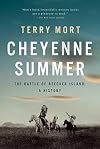
In Cheyenne Summer, Terry Mort takes a close look at one battle in eastern Colorado during the Indian Wars of the late 1800s. In the Battle of Beecher Island in 1868, Cheyenne and Sioux warriors fought US Army scouts, including two battalions of Black "Buffalo Soldiers."
Although Mort describes the battle as not strategically significant, he concludes that it was culturally and historically important. He uses the battle to frame a discussion about one of the most transformative periods in show more America's history -- including a discussion of what motivated the white settlers, the Cheyenne, and the US soldiers, both white and Black.
Having grown up at both ends of the Oregon Trail -- Nebraska as a child and Oregon from a teenager on -- I've picked up some of the sad history of how our country treated the Native Americans during the settlement of the Western frontier. But there is a lot to learn. Terry Mort’s new book was a fine place for me to start. show less
Although Mort describes the battle as not strategically significant, he concludes that it was culturally and historically important. He uses the battle to frame a discussion about one of the most transformative periods in show more America's history -- including a discussion of what motivated the white settlers, the Cheyenne, and the US soldiers, both white and Black.
Having grown up at both ends of the Oregon Trail -- Nebraska as a child and Oregon from a teenager on -- I've picked up some of the sad history of how our country treated the Native Americans during the settlement of the Western frontier. But there is a lot to learn. Terry Mort’s new book was a fine place for me to start. show less
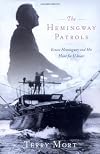
Considering that Hemingway and his Crook Factory cronies (I guess technically the term is for the land-based part of the operation, but I rather like it as an all-encompassing title) never actually encountered any U-Boats, Nazis, Falangists or Fifth-Columnists you might expect this to be a pretty thin volume with a lot of "fishfighting, fish slinging and fishshitting" to paraphrase Zelda Fitzgerald's famous summary of "The Sun Also Rises." Hemingway's third wife Martha Gellhorn would show more definitely have had a few choice words of a similar nature and probably expressed quite a few of them at the time.
I did actually enjoy Terry Mort's book quite a bit though due to his overall research on U-Boats and the Gulf and Caribbean theatres of World War II and on Hemingway's and Gellhorn's lives before and after their 1940-45 marriage. There were all kinds of tidbits and trivia that were interesting and Mort's description of sea-borne navigation by the stars was very evocative.
The logs of Hemingway's boat Pilar were quite sloppily kept and no great revelations come from there. The single longest entry of a possible distant U-boat sighting is quoted and is quite matter-of-fact. Whether Hemingway was just getting rare war-time fuel for his pleasure boat, gathering research for a future book (which somewhat materialized in the final section of "Islands in the Stream") or occasionally just creating a Boy's Own Adventure for his sons, his joy of the sea comes through in Terry Mort's book.
So along with Erika Robuck's "Hemingway's Girl", Paul Hendrickson's "Hemingway's Boat: Everything He Loved in Life, and Lost, 1934-1961" and, as Norman Mailer said when introducing Ernest Hemingway's youngest son Gregory's "Papa: A Personal Memoir", this is another book you can put in the column of "finally a book about Hemingway where you don't have to decide he is a son-of-a-bitch."
p.s. If you do want some Hemingway vs. Nazi spies there is always the fictional "The Crook Factory" by Dan Simmons. show less
I did actually enjoy Terry Mort's book quite a bit though due to his overall research on U-Boats and the Gulf and Caribbean theatres of World War II and on Hemingway's and Gellhorn's lives before and after their 1940-45 marriage. There were all kinds of tidbits and trivia that were interesting and Mort's description of sea-borne navigation by the stars was very evocative.
The logs of Hemingway's boat Pilar were quite sloppily kept and no great revelations come from there. The single longest entry of a possible distant U-boat sighting is quoted and is quite matter-of-fact. Whether Hemingway was just getting rare war-time fuel for his pleasure boat, gathering research for a future book (which somewhat materialized in the final section of "Islands in the Stream") or occasionally just creating a Boy's Own Adventure for his sons, his joy of the sea comes through in Terry Mort's book.
So along with Erika Robuck's "Hemingway's Girl", Paul Hendrickson's "Hemingway's Boat: Everything He Loved in Life, and Lost, 1934-1961" and, as Norman Mailer said when introducing Ernest Hemingway's youngest son Gregory's "Papa: A Personal Memoir", this is another book you can put in the column of "finally a book about Hemingway where you don't have to decide he is a son-of-a-bitch."
p.s. If you do want some Hemingway vs. Nazi spies there is always the fictional "The Crook Factory" by Dan Simmons. show less
That I picked up this book was mostly due to a desire to learn a bit more about the Cheyenne tribe in their prime, before I tackled something more academic, and I suppose that objective was achieved. However, the author writes much of this work in a voice that can be best described as "get off my front lawn," and I really have to wonder if Mort had any other objective but to spout rhetoric. A particular low point is, when writing about the U.S. Army at this moment in time, Mort snarls that show more matters might have gone better had Congress not "spent money on an army of bureaucrats and cronies." I'm not going to dispute the prevalence of corrupt behavior in the U.S. Congress of the late 1860s but, speaking as a recently retired federal archivist, who had reason to work with the period records of the Indian Bureau, Mort can just back off on anachronistically projecting back in time his apparent contempt for the current federal work force. If you take a few minutes to examine the 1869 "Registry of the U.S. Government (readily available on-line)," you'll see that barely 500 individuals worked for the Indian Bureau in that year; hardly an "army." Just another over-worked cadre of people trying to implement federal policy while keeping their heads above water.
I will note that Mort's retelling of the fight at Beecher Island is actually pretty good, but it's only about twenty percent of the book; another example of a strong magazine article trying to escape from a pot-boiler. show less
I will note that Mort's retelling of the fight at Beecher Island is actually pretty good, but it's only about twenty percent of the book; another example of a strong magazine article trying to escape from a pot-boiler. show less
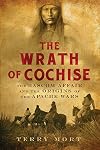
Waiting for Cochise
The Wrath of Cochise is all about context. The book is an extraordinary adventure in the geography, geology, climate, politics, history, anthropology, industry, history and sociology of the players in the area. But it is not a biography of Cochise, who makes a brief appearance at the beginning and at the end.
Terry Mort has gone to great lengths to put everything in perspective. He tells us about the problems of being a soldier, doing what amounts to police work in living show more conditions as bad or worse than southern slaves endured. He tells us about lack of communication, leading to assumptions, stereotypes, and hatreds based on stories, legends and rumors. Various soldiers are profiled in great depth, and we learn all about West Point and how it prepared – or didn’t prepare – men for this duty.
Best of all, there is a chapter on the nature of the Apache tribe(s). The tribe continually split up as numbers increased, because the Apache understood that smaller units were far more manageable socially, politically, environmentally and sustainably. Their use of language was extraordinary, with specific words and phrases having specific uses by different members. They never used someone’s name if they were present. Body language was critical.
They could not even imagine life separated from religion – they were one and the same. Their morals were strict within the tribe, but outside, they could kill and torture without a second thought. Cochise’s band lived by raiding, doing no farming of any kind itself. They had no artistic skills or crafts either. They didn’t value gold, but they hated the white miners who disturbed the sacred Earth. They were constantly at war with the Mexicans, who they considered worse than the white man, at least until the Americans took over the southwest and got very much in their face. At their campsites they were laughing, jovial and constantly joking with each other. In battle, their strategy was to avoid the slightest injury. Every life was precious. They hid, attacked, and fled. They were guerrilla fighters. They would never attack at night because they would not have control. And they would not attack the obviously well defended. All the Apache tribes together probably amounted to less than 2000 people.
Cochise’s band was one of four for the Chiricahua Apache, and had little or nothing to do with other branches, some of which his band fought. Not only was he not responsible for their actions, but with little means of communication, had little or no knowledge of their activities, either. All the more reason that is most unfortunate for Second Lieutenant George Bascom (“There is nothing more dangerous than a second lieutenant with a compass and a gun”) to invite him to parlay and then kidnap his family for the ransom of returning stolen goods (and a child) he had no part in stealing. This one obnoxious act turned into a war costing thousands of lives, almost all civilian. Mort tries to minimize our disgust by explaining that kidnap and ransom was business as usual in the southwest, but no amount of rationalization can smooth over the naiveté of a young officer whose only other service was on Governors Island in New York City. He had never fired a gun except in target practice. He did not speak Cochise’s language and knew nothing of his culture, history or environment.
It takes about 240 pages for Mort to get to this point in history, such is the groundwork he lays out. The final 60 pages detail the resulting mess – a ten year war that made Cochise into a chief of mythical proportions, and Bascom a minor embarrassment, obscured by the Civil War, which swept him up and away. The army left the area entirely, needing to fight its own back east, giving Cochise a false sense of permanent victory. Ten years after, Cochise negotiated a real peace, and he died two years later, thinking it would last forever. The truth of course was vastly different. show less
The Wrath of Cochise is all about context. The book is an extraordinary adventure in the geography, geology, climate, politics, history, anthropology, industry, history and sociology of the players in the area. But it is not a biography of Cochise, who makes a brief appearance at the beginning and at the end.
Terry Mort has gone to great lengths to put everything in perspective. He tells us about the problems of being a soldier, doing what amounts to police work in living show more conditions as bad or worse than southern slaves endured. He tells us about lack of communication, leading to assumptions, stereotypes, and hatreds based on stories, legends and rumors. Various soldiers are profiled in great depth, and we learn all about West Point and how it prepared – or didn’t prepare – men for this duty.
Best of all, there is a chapter on the nature of the Apache tribe(s). The tribe continually split up as numbers increased, because the Apache understood that smaller units were far more manageable socially, politically, environmentally and sustainably. Their use of language was extraordinary, with specific words and phrases having specific uses by different members. They never used someone’s name if they were present. Body language was critical.
They could not even imagine life separated from religion – they were one and the same. Their morals were strict within the tribe, but outside, they could kill and torture without a second thought. Cochise’s band lived by raiding, doing no farming of any kind itself. They had no artistic skills or crafts either. They didn’t value gold, but they hated the white miners who disturbed the sacred Earth. They were constantly at war with the Mexicans, who they considered worse than the white man, at least until the Americans took over the southwest and got very much in their face. At their campsites they were laughing, jovial and constantly joking with each other. In battle, their strategy was to avoid the slightest injury. Every life was precious. They hid, attacked, and fled. They were guerrilla fighters. They would never attack at night because they would not have control. And they would not attack the obviously well defended. All the Apache tribes together probably amounted to less than 2000 people.
Cochise’s band was one of four for the Chiricahua Apache, and had little or nothing to do with other branches, some of which his band fought. Not only was he not responsible for their actions, but with little means of communication, had little or no knowledge of their activities, either. All the more reason that is most unfortunate for Second Lieutenant George Bascom (“There is nothing more dangerous than a second lieutenant with a compass and a gun”) to invite him to parlay and then kidnap his family for the ransom of returning stolen goods (and a child) he had no part in stealing. This one obnoxious act turned into a war costing thousands of lives, almost all civilian. Mort tries to minimize our disgust by explaining that kidnap and ransom was business as usual in the southwest, but no amount of rationalization can smooth over the naiveté of a young officer whose only other service was on Governors Island in New York City. He had never fired a gun except in target practice. He did not speak Cochise’s language and knew nothing of his culture, history or environment.
It takes about 240 pages for Mort to get to this point in history, such is the groundwork he lays out. The final 60 pages detail the resulting mess – a ten year war that made Cochise into a chief of mythical proportions, and Bascom a minor embarrassment, obscured by the Civil War, which swept him up and away. The army left the area entirely, needing to fight its own back east, giving Cochise a false sense of permanent victory. Ten years after, Cochise negotiated a real peace, and he died two years later, thinking it would last forever. The truth of course was vastly different. show less
Lists
Awards

You May Also Like


Statistics
- Works
- 16
- Members
- 352
- Popularity
- #67,993
- Rating
- 3.9
- Reviews
- 6
- ISBNs
- 57